
Where to Donate or Recycle Clothes You No Longer Wear
How to sort old clothes quickly by wearable, repairable, or unusable condition to donate or recycle responsibly and avoid common donation pitfalls.
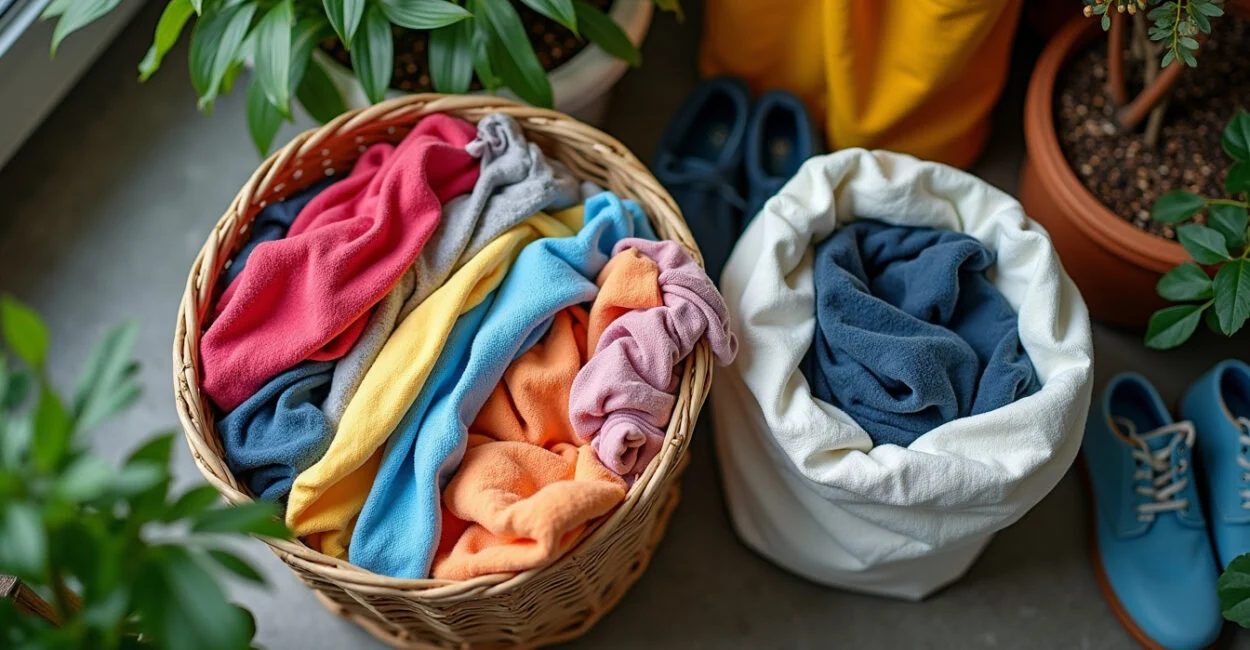 Sorting clothes for donation and recycling
Where to Donate or Recycle Clothes You No Longer Wear
A closet cleanout gets easier when you stop treating every unwanted item as a donation and sort by what it can still do.
To recycle old clothes responsibly, start with a quick condition check: clean, wearable pieces usually belong in a reuse route first; damaged textiles need a recycling program that confirms it accepts them. Items a program refuses may need another option, so check its current rules before you pack the bag.
That distinction saves a common headache: a donation center may have to sort out stained or torn items it cannot use. Think of the faded shirt with a broken zipper. If it can be repaired, set it aside; if not, find a textile collector that accepts damaged clothing. A collection bin is only a route, not a guarantee of what happens next.
Start with a Two-Minute Sort
Choose among three paths: wearable, repairable, or no longer usable. Wearable means clean, dry, and in condition someone could reasonably wear. Repairable means a small fix, such as replacing a button, could restore it. No longer usable means the item is too damaged or contaminated for ordinary wear.
Keep these piles separate from the start. A garment you no longer like may still be useful to someone else; a garment with holes may need textile recycling instead. Check local availability through the organization’s own website or phone line before driving over, because acceptance rules can differ by location.
Wearable Clothes: Donate, Resell, or Swap?
For clean, wearable clothing, offer reuse first. Donate to a charity or community organization that lists clothing as an accepted item, resell pieces that are in demand, or bring them to a clothing exchange. Each route has its own condition rules, and “donation” does not promise that every item will be given directly to another person.
Imagine a bag with a good winter coat and a stretched-out T-shirt. The coat may suit a local clothing drive; the T-shirt may not meet that group’s standards. Separating them prevents the usable piece from being held up by the unsuitable one. For another way to make thoughtful clothing choices, see these organic cotton basics.
Damaged Textiles Need a Different Route
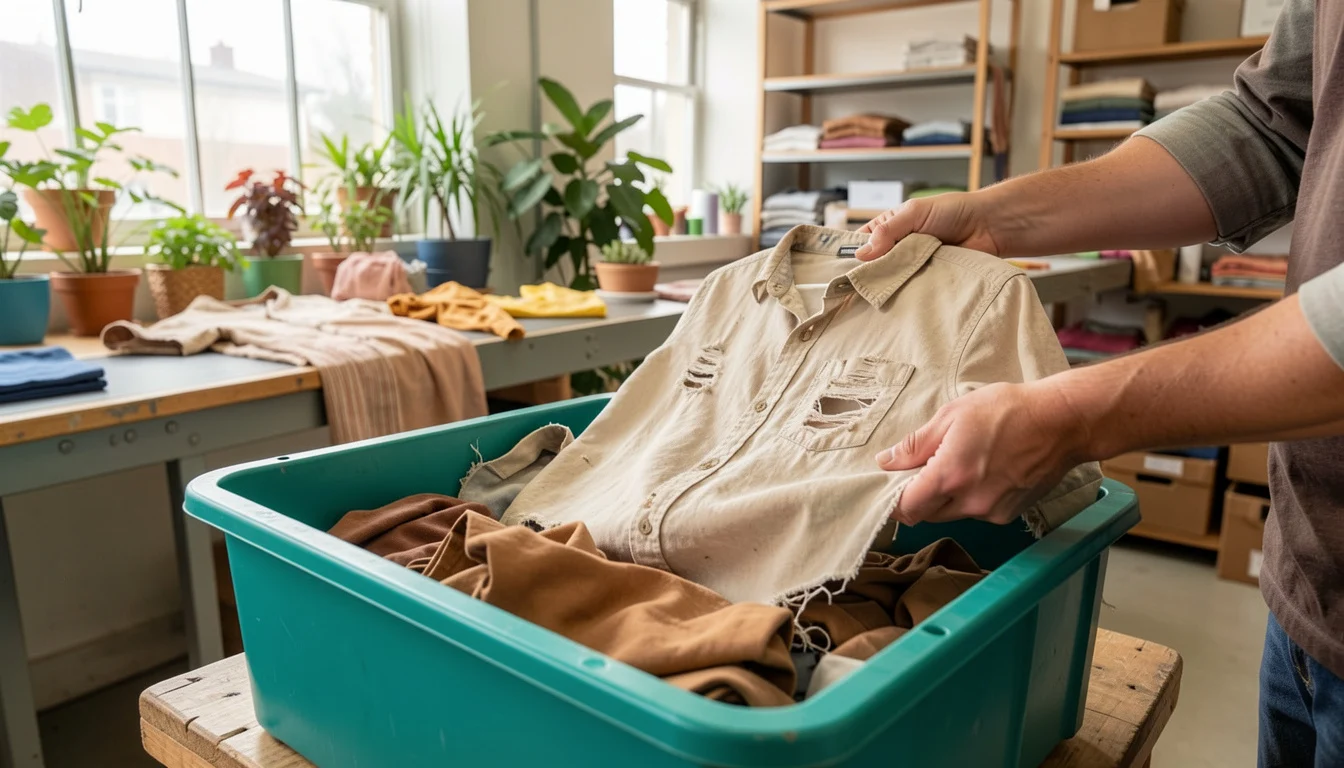
Textile recycling is the collection and processing of used textile materials for reuse or conversion into other products. In everyday terms, a recycling program may take fabric that a donation center cannot offer for wear, but acceptance depends on the program and the material.
Item or condition Possible next step Clean, wearable clothing Donation, resale, or exchange Small tear or missing button Repair, then reuse Torn or worn-out clothing Verified textile-recycling program Shoes, linens, or single socks Ask the program; acceptance varies Wet, moldy, or heavily soiled items Check rules; many programs may refuse them
The EPA’s textiles material-specific data explains how textiles are tracked in the United States. A program’s collected material may be sorted for reuse or other processing; don’t assume it will become new clothing unless the program confirms that outcome.
Finding Textile-Recycling Bins in Chicago
Chicago residents should use current City of Chicago Department of Streets and Sanitation guidance for city services, then check the operator’s own listing for any privately run or nonprofit drop-off site. Search the program’s current locator for “textile recycling” and confirm the exact address, hours, and accepted items before making the trip.
Do not assume a listed bin is city-run or still active. Locations can change, and a listing may cover only certain textiles. If you cannot confirm a site through its operator or official city guidance, hold the items until you can verify a suitable option.
Is H&M Still Accepting Old Clothes?
H&M has described a Garment Collecting program, but store participation, accepted items, and limits can vary and may change. Check H&M’s current U.S. Garment Collecting information and confirm with the specific store before making a trip; do not rely on an old directory or an unattended box.
A brand take-back point is a collection service, not proof that every garment becomes a new one. Follow the program’s stated process and avoid calling it closed-loop recycling unless H&M says that is the outcome for the items it accepts.
What Programs May Accept—or Refuse
Programs commonly ask for clothing and may also accept household textiles, shoes, or damaged fabric. Others restrict collection to particular items, materials, or brands. Check the fine print for wet or moldy textiles, heavily soiled items, accessories, and shoes; never assume a bin takes them just because they are textile-based.
- Don’t leave bags outside a full or closed collection point.
- Don’t put wet, moldy, or heavily soiled items in a donation bag.
- Don’t assume a take-back box accepts every brand or textile type.
Let the item’s condition and the program’s rules decide its next stop.
Prepare Items for the Next Recipient
Follow the recipient’s instructions, keep textiles clean and dry, and separate anything it says it will not take. A small practical detail matters: tie pairs of shoes together only if the program requests it, and keep a single sock out of a donation bag if the organization cannot use unmatched items.
For guidance on reducing household impact in other ways, explore these simple ways to cut your carbon footprint at home. Then label each bag by destination. One clear label can keep a reusable coat from ending up in the wrong pile.
Frequently Asked Questions
Should Clothes Be Washed Before Donating or Recycling?
Follow the recipient’s rules. In general, send clothing clean and dry; a recycling program may set different preparation instructions.
Can I Recycle a Single Sock?
Possibly, but check first. Some textile programs accept unmatched socks, while others limit what they collect.
Can a Clothing Item with a Broken Zipper Be Donated?
If it remains wearable or can be repaired, ask the recipient whether it accepts it. If it is no longer usable, look for a textile recycler that confirms it takes damaged clothing.
Do All Clothes in a Take-Back Bin Become New Clothes?
No such outcome should be assumed. The collector may sort items for reuse or other processing; check the program’s own description for what it says happens next.