
Corner Lot Landscaping Ideas for Privacy and Curb Appeal
How to design corner lot landscaping that balances privacy, curb appeal, and safety by layering plants to screen views from two street-facing sides effectively.
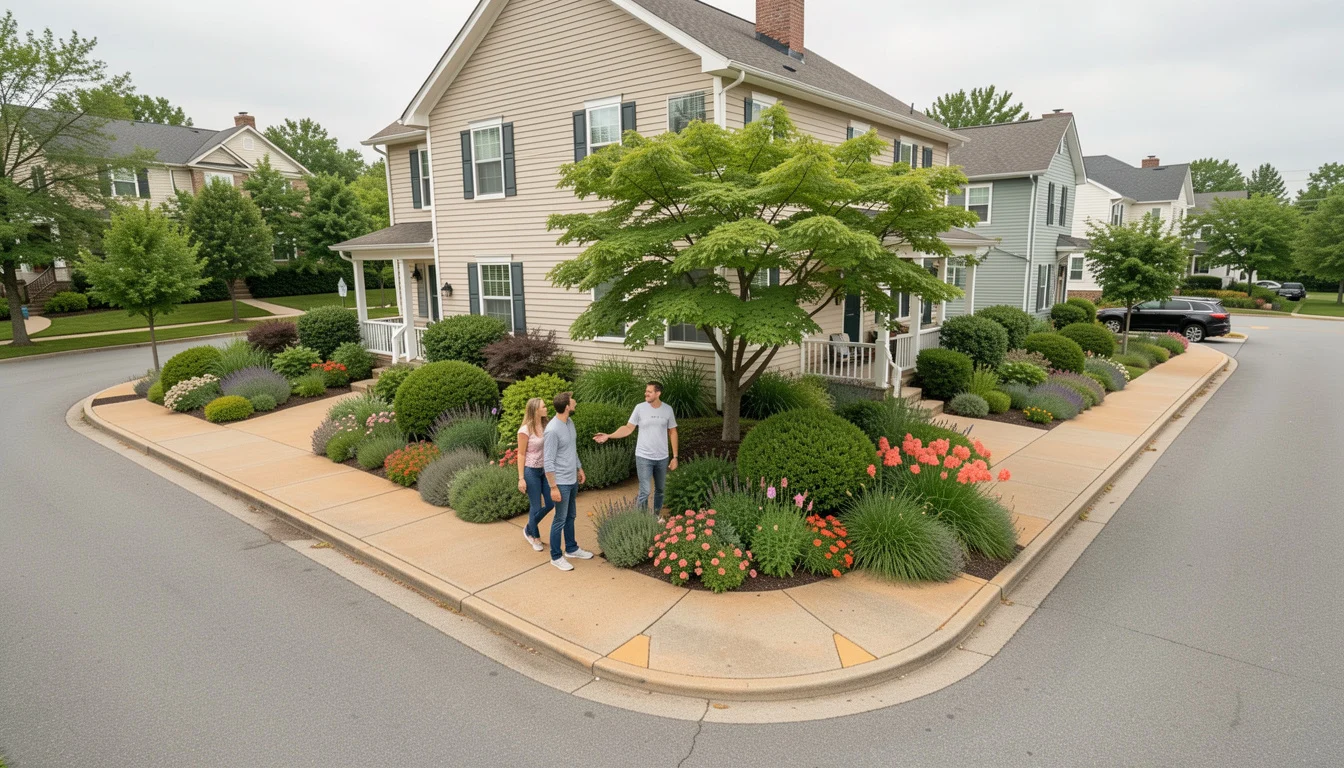 Layered planting softens a corner lot
A corner lot can feel exposed from two streets, but thoughtful planting can soften views without blocking the places where people need to see.
Corner lot landscaping has a different starting point from a typical front yard: your home and outdoor spaces face two public sides. That makes privacy, curb appeal, and safe sightlines part of the same plan.
Start by mapping what you want to screen, then use plants in layers. Keep growth low near driveways and intersections, and place taller screening where it protects a patio or window without creating a visual wall.
Why Corner Lot Landscaping Needs a Two-Sided Plan
Corner lot landscaping is the design of planting and outdoor features across two street-facing property edges, with access and visibility considered alongside appearance. In plain terms, a screen that works from one street may leave a patio exposed from the other, so plan for both views before buying plants.
Imagine a homeowner who adds a dense hedge along the side street to hide a seating area. From that angle, the patio disappears; from the cross street, the hedge blocks the view near the driveway. A few staggered shrubs set farther back could screen the seats while leaving the corner open.
The right screen depends on what needs privacy and where people approach the property. A window, patio, and whole yard call for different placement, not necessarily the same continuous boundary.
Map the Views Before Choosing Plants or Structures
Walk the property from both sidewalks and note exposed rooms, patio chairs, driveway entrances, sidewalks, utility equipment, drainage routes, and existing plants worth keeping. Look from a driver’s seated position and from a child’s height; a planting that seems low while standing can still obscure a critical view.
- Mark driveway exits and the corner area where sightlines matter most.
- Note where utilities, access paths, and water flow limit planting.
- Identify the exact windows or seating spots that feel exposed.
- Avoid placing tall or dense growth where it could obstruct visibility.
The Federal Highway Administration’s Manual on Uniform Traffic Control Devices provides traffic-control context, but it does not replace local rules for landscaping, fences, or sight triangles. Check municipal requirements before changing visibility near a street.
Build Privacy in Layers, Not as a Solid Wall
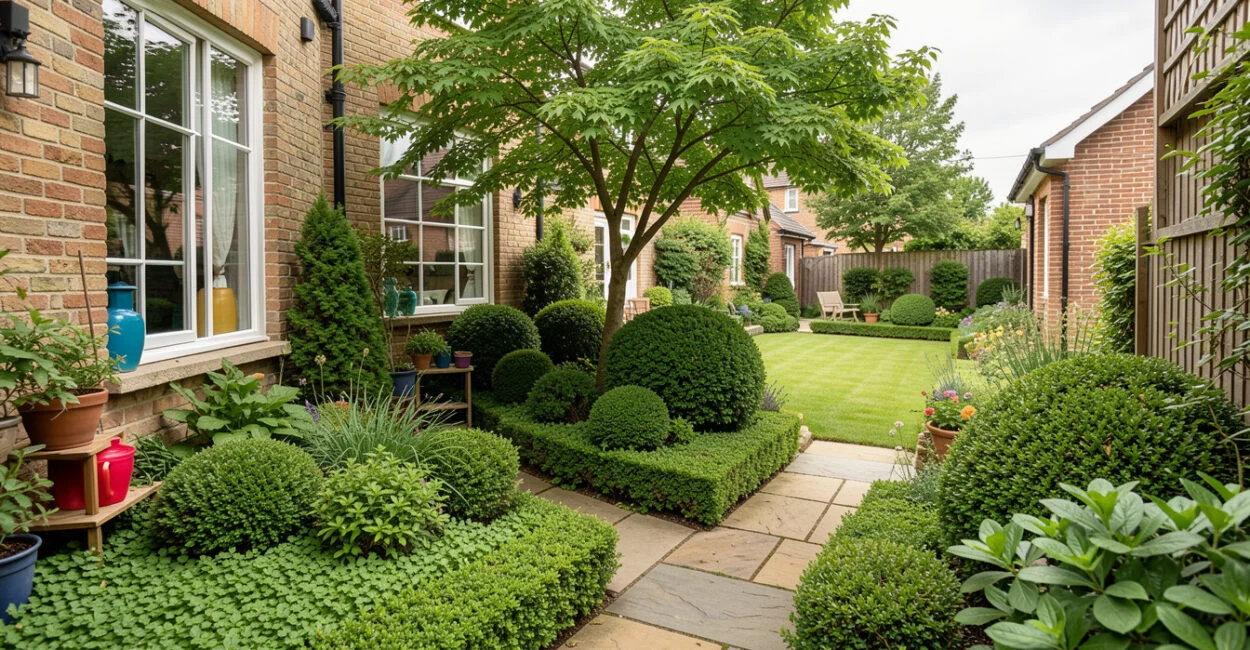
Layering means combining plants of different heights and densities so they screen selected views while leaving openings. Low groundcover can define a bed; medium shrubs can soften a view of a window; a small tree can add overhead cover near a patio. The American Horticultural Society’s AHS Encyclopedia of Gardening offers general planting guidance, but mature size and spacing still depend on the plant and site.
For a narrow planting area, compare options in context: spacing evergreen hedges in a narrow side yard can help you think through room for growth. Where light is limited, shade-tolerant evergreens for privacy may be worth researching.
Read also: Driveway Landscaping Ideas to Boost Luxury Curb Appeal
Staggering plants often gives more flexible screening than lining them up into a solid hedge. It also leaves room to prune and walk through the garden. Dense evergreen screens can still suit some sites, but they need adequate space and may demand regular trimming.
Choose Plants for the Site, Not Just the Corner
Match each plant to its light, soil moisture, and mature dimensions. Check regional suitability and expected size with your local cooperative extension service; names and hardiness alone do not tell you whether a plant will fit a particular corner.
Plant type Screening role Site and upkeep Low groundcover Softens bed edges without a tall visual barrier Choose for sun or shade and soil moisture; control spread as needed Deciduous shrub Filters views while allowing seasonal openness Match to light and water; prune for a clear shape Evergreen shrub Provides year-round screening in selected spots Check mature width, drainage, and pruning needs Small ornamental tree Adds height or overhead cover near a seating area Allow for canopy and roots; avoid blocking sightlines
The USDA PLANTS Database can help you check plant information, while a local extension service can advise on regional performance. Neither can account for every property condition, so confirm fit, drainage, and mature spread before planting.
Make the Street-Facing Corner Feel Welcoming
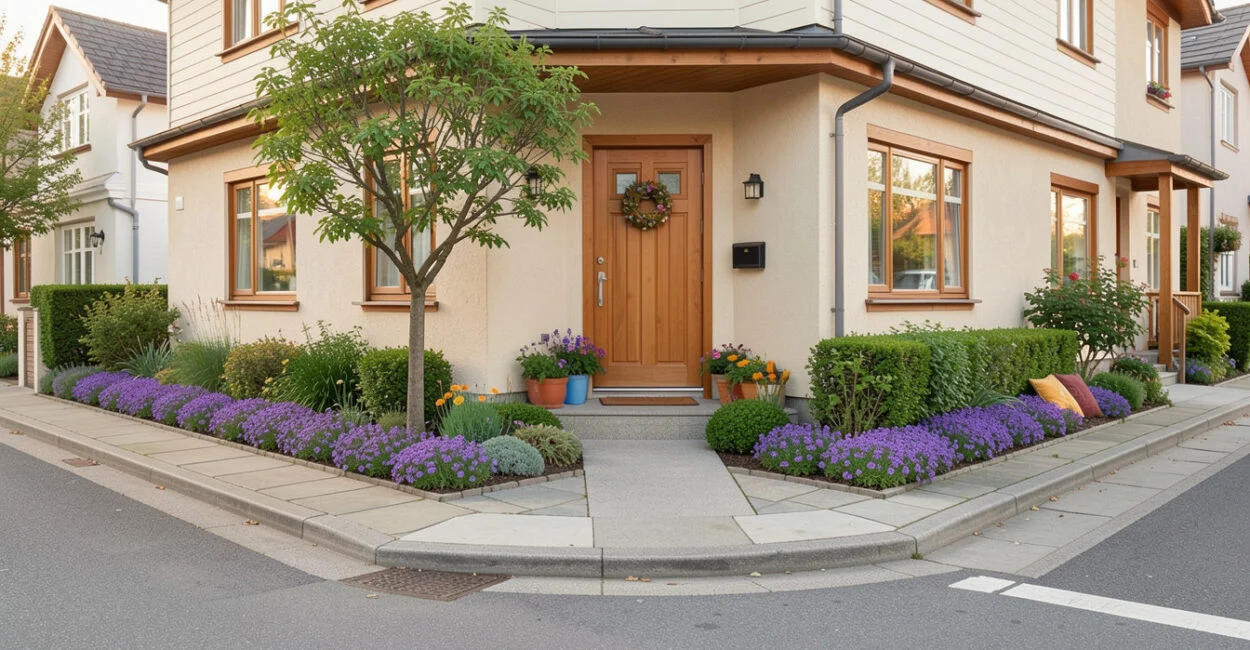
Give the corner one focal point, such as a specimen shrub or small tree set well back from the intersection. Repeat a flower color or plant shape along both frontages, then keep bed edges crisp and the entrance easy to spot.
A coherent planting scheme can connect two street views without making the yard feel like a display. For more ideas on improving the approach without overbuilding, see these affordable curb appeal landscaping ideas.
Try Low-Cost Improvements Before Adding Major Features
Start with what the yard already offers. The least expensive improvement depends on existing plants, materials, and the work you can do yourself, so avoid assuming that a new fence or a full replanting is the best first move.
- Keep healthy plants and divide them where appropriate.
- Refresh mulch in established beds, keeping it clear of trunks and stems.
- Edge existing borders to make the layout look deliberate.
- Add plants in phases, starting with the most exposed view.
Before adding a new bed, follow existing paths and observe where rainwater moves. A border that interrupts drainage or narrows a walkway can create more work than it solves.
Plan for Upkeep and Review the Layout over Time
Leave room for plants to reach their mature size, and decide how often you are willing to prune before choosing a dense screen. Check the view from both streets as shrubs grow; a clear corner today may become crowded later.
Seasonal appearance matters, too. Deciduous plants may filter views in summer and open them in winter, while evergreens offer more consistent cover but can need more space. Local climate, soil, and rules vary, so no single layout guarantees privacy or suits every corner lot.
Before installing a fence or changing planting near a street, check local requirements and sightline guidance. Then take one slow walk from each sidewalk: if the entrance reads clearly and the patio feels less exposed, the plan is doing its job.
📱 See this content as a Web Story
Frequently Asked Questions
Can a Corner Lot Have a Private Patio Without Screening the Whole Yard?
Yes. Focus screening around the patio, using staggered shrubs or a small tree while keeping street-facing sightlines open.
How Can Landscaping Make a Corner Lot Feel Less Exposed at Night?
Use layered planting to soften views into windows and seating areas, and consider shielded outdoor lighting aimed down. Avoid lighting that shines into neighboring homes or reduces visibility for drivers.
Should a Corner Lot Have a Fence Along Both Streets?
Not necessarily. Fences can define space, but local rules may limit their placement or height near streets and driveways. Check requirements before installation.
What Should I Plant Near a Corner Driveway?
Favor low-growing plants that preserve visibility, and keep taller growth set back from the driveway and intersection. Suitable species depend on local conditions and mature size.