
How to Choose Weatherproof Outdoor Speakers for a Patio
Comparing wired and Bluetooth outdoor patio speakers: how portability, sound coverage, and weather resistance affect your setup and which option fits your sp…
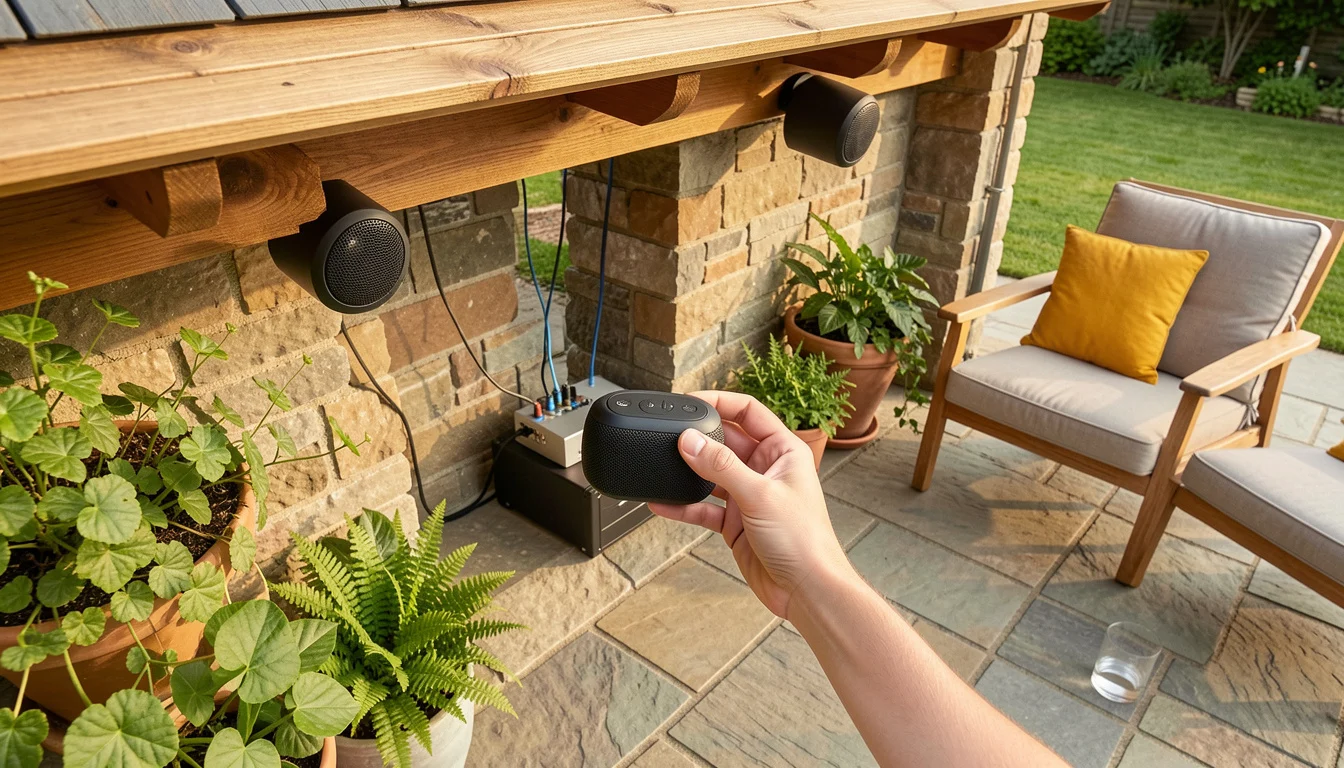 Comparing patio speaker setups outdoors
Choosing outdoor patio speakers comes down to three decisions: whether you want a portable Bluetooth speaker or a wired setup, how much of the patio needs sound, and how much weather exposure the equipment will face. The right match depends on your layout and installation plans; a weather-resistant label alone does not confirm that a speaker can stay outdoors year-round.
Wired or Bluetooth Outdoor Patio Speakers: Which Should You Choose?
Choose Bluetooth speakers for a patio where portability and easy setup matter most; choose wired speakers for more consistent coverage, permanent placement, or a larger listening area. For a compact space and occasional use, a portable speaker may be enough. For multiple listening zones, a wired outdoor speaker system offers more control, but it requires an amplifier and suitable wiring.
Wired Vs. Bluetooth Outdoor Speakers: The Main Differences
Bluetooth speakers combine an amplifier and speaker in one unit, and many run on a rechargeable battery. Passive wired speakers need power from a separate amplifier or receiver. Some outdoor systems combine wired speakers with a wireless source, so “wireless” can describe the connection to the music, not the speakers’ power or installation.
Criterion Bluetooth speaker Passive wired speaker Setup ✓ Little or no installation Needs speaker cable and placement Power ✓ Often battery-powered; check the model Needs a separate amplifier or receiver Portability ✓ Easy to move between areas Usually mounted or placed in a fixed position Multi-speaker coverage Depends on pairing and app features ✓ Easier to plan as a fixed system Permanent installation Less suited to a fixed, multi-zone setup ✓ Better suited to planned coverage Cost to compare Speaker price; possibly batteries or charging Speakers, amplifier, cable, and installation
Bluetooth range depends on the speaker, phone, obstacles, and radio interference; walls, metal structures, and other wireless devices can disrupt a connection. Check the manufacturer’s stated range and test the actual patio before fixing a speaker in place.
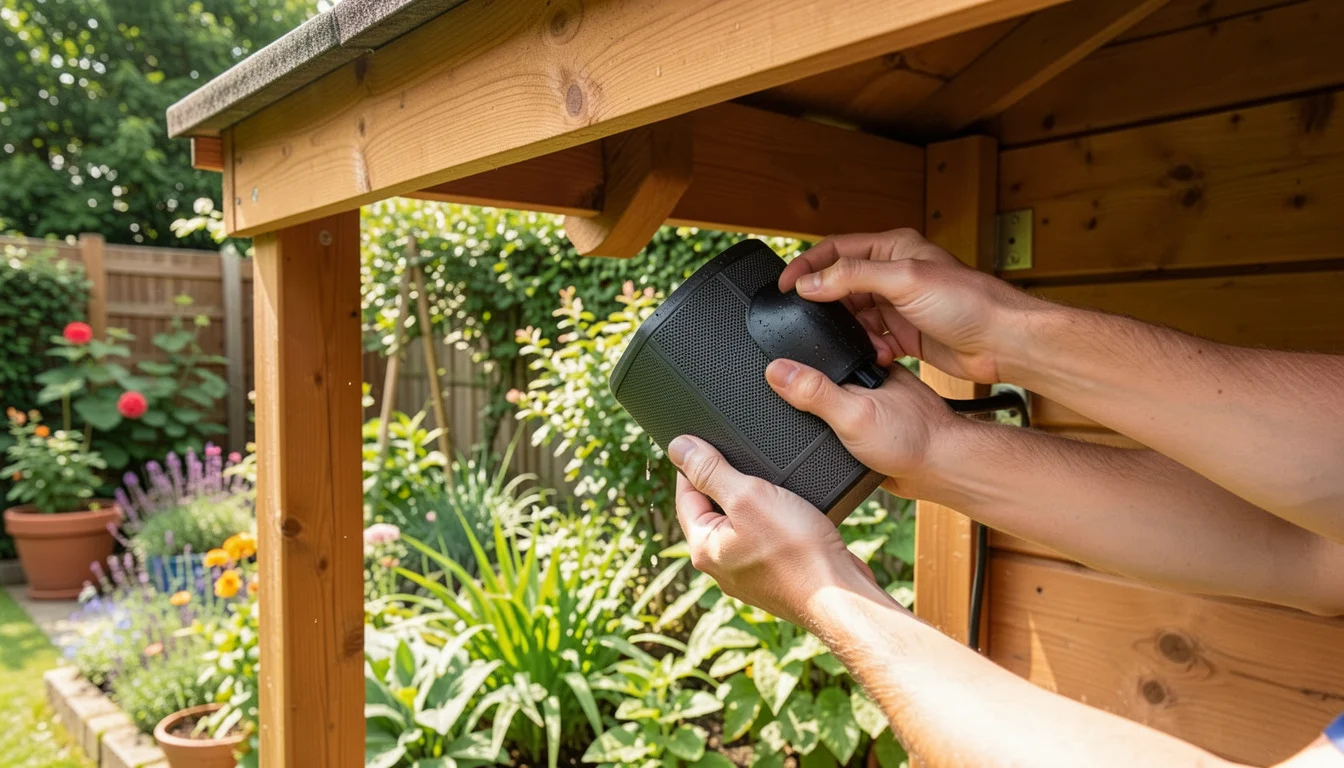
How Much Weather Protection Do Patio Speakers Need?
Ingress protection (IP) is a standardized rating of how well an enclosure resists the entry of solids and water under specified test conditions. In plain terms, an IP rating tells you what kind of exposure the speaker was tested to handle; it does not promise protection from every climate or installation.
The International Electrotechnical Commission’s explanation of IP ratings helps decode the rating. Also check the manufacturer’s outdoor-use instructions for UV exposure, temperature limits, mounting orientation, cable connections, and whether the product is intended for permanent outdoor use. NEMA 250 addresses enclosures for electrical equipment, but a NEMA enclosure rating and an IP rating are different systems and should not be treated as interchangeable.
Can Outdoor Speakers Stay Outside Year-Round?
Only if the specific model is rated and approved by its manufacturer for the exposure and climate at the installation site. Even then, sheltered placement, correctly sealed connections, and maintenance may matter. Bring portable speakers indoors when the manual calls for storage or when severe weather exceeds the stated limits.
What is the Difference Between Weather-Resistant and Waterproof Speakers?
Weather-resistant speakers are designed to withstand specified outdoor conditions, which may include limited moisture or temperature exposure. “Waterproof” is not a universal guarantee: check the exact IP rating and the manufacturer’s stated limits, since immersion, driving rain, salt air, and freezing conditions can impose different demands.
How Many Speakers Do You Need for Even Patio Coverage?
The number depends on the listening area, speaker dispersion, mounting height, obstructions, and desired volume. One portable speaker can work for a small seating area; a long or irregular patio may need several speakers spaced to avoid loud spots near a unit and quieter gaps farther away.
A common placement mistake is mounting every speaker at one end and turning the volume up to reach the opposite side. That can make nearby seats uncomfortably loud while leaving distant seats underserved. Place speakers to spread sound across the seating area, then test from several seats at a normal listening level before finalizing the mounts.
- Mark the seats where people will usually listen.
- Note walls, roof beams, plants, and other obstructions.
- Aim directional speakers toward the seating area, not a neighbor’s property.
- Keep speakers away from spots where water collects or sprinklers hit them.
- Test coverage across the patio before drilling or burying cable.
For a more comfortable entertaining layout, coordinate speaker placement with seating and the paths people use, as in these outdoor seating ideas for gatherings.
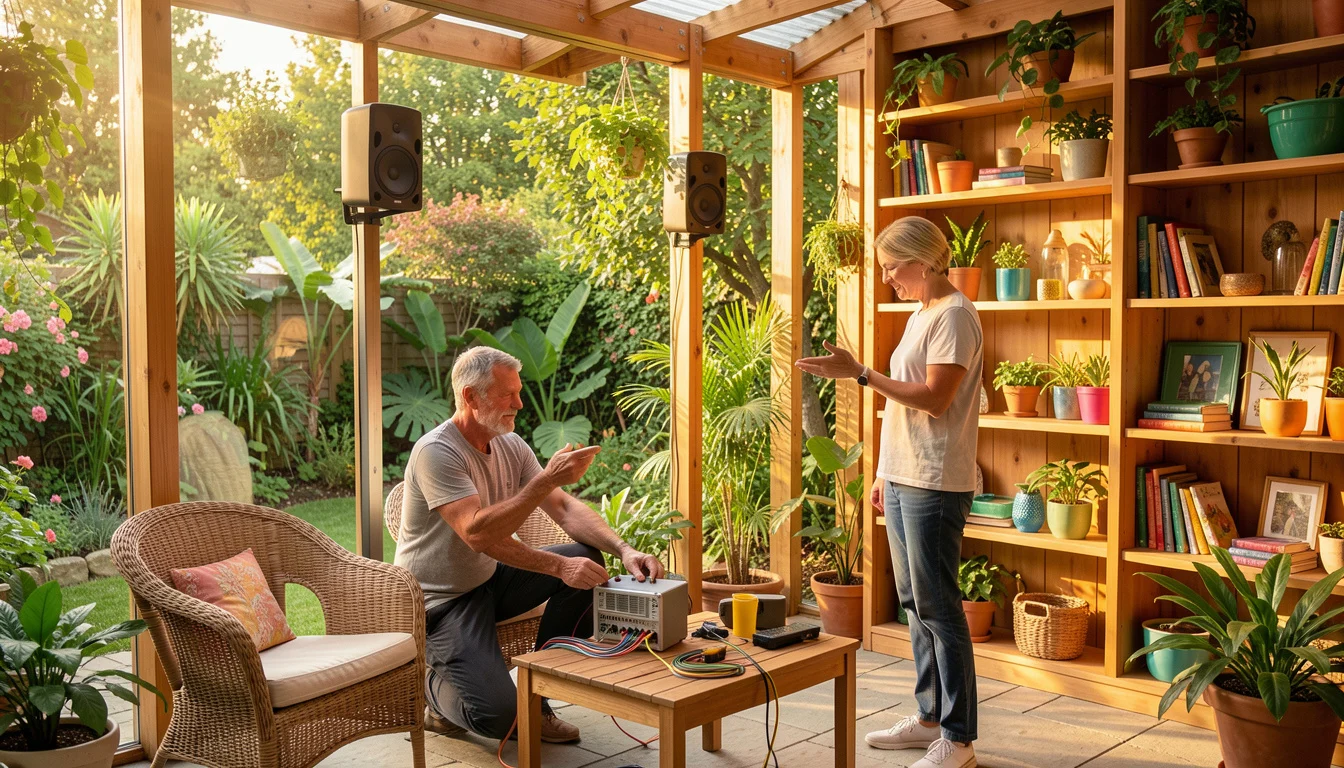
Do Patio Speakers Need a Separate Amplifier?
Passive wired patio speakers need an amplifier or receiver; powered speakers and self-contained Bluetooth speakers have amplification built in. Match an amplifier’s output and supported speaker impedance to the speaker manufacturer’s specifications, and use equipment approved for the installation environment.
A waterproof outdoor speaker system may still rely on an amplifier kept indoors or in a properly protected location. Plan the cable route, drainage, and connections before installation. The NEMA 250 enclosure standard concerns electrical equipment enclosures; it does not replace the speaker maker’s instructions for outdoor placement.
Systems from brands such as JBL and Sonance vary by model and category. Compare published weather ratings, power requirements, dispersion, mounting hardware, warranty terms, and compatibility rather than assuming a brand name establishes suitability. For outdoor Bluetooth options, check battery behavior, pairing features, and the exact exposure guidance for each model.
How to Compare Prices and Choose the Right Pair
Compare the full installed cost, not just the speaker price. A wired pair may also require an amplifier, outdoor-rated cable, mounts, and professional installation; a Bluetooth model may need charging or indoor storage. Prices and product specifications change, so verify current details with the manufacturer and seller before buying.
Choose Bluetooth If:
- You want a speaker you can carry inside or move around the yard.
- Your listening area is small enough for one unit or a supported paired setup.
- You prefer to avoid speaker wiring and amplifier planning.
Choose Wired Speakers If:
- You want fixed placement and planned coverage across a larger patio.
- You already have a compatible amplifier or are budgeting for a complete system.
- You want music from a phone or receiver without relying on a portable speaker’s battery.
For a high-end setup, spend on features that solve a real constraint, such as wider coverage, suitable weather protection, or integration with existing audio equipment. If neither fixed wiring nor Bluetooth-only coverage fits, consider a system with an amplifier indoors and outdoor-rated speakers connected by cable. Outdoor lighting can also shape the listening area; this patio string-light setup guide offers ideas for arranging party zones.
📱 See this content as a Web Story
Frequently Asked Questions
How Far Does Bluetooth Reach Outdoors?
There is no single dependable distance for every speaker and phone. The manufacturer’s range is a starting point, while walls, structures, interference, and device placement can shorten a connection.
Are Bluetooth Patio Speakers Suitable for a Large Yard?
They can work if the model’s coverage and pairing features suit the layout, but a single portable unit may leave distant areas quiet. For multiple zones, compare a planned system rather than assuming Bluetooth pairing will cover the whole yard.
Can I Connect Outdoor Speakers to My Home Receiver?
Often, if the receiver supports the speakers’ impedance and power requirements and the wiring route is appropriate. Check both manufacturers’ specifications before connecting them.
Should I Cover Outdoor Speakers When They Are Not in Use?
Follow the manufacturer’s care instructions. A cover can help in some setups, but a poorly fitted cover may trap moisture, so it should not be added without checking the product guidance.
Before purchase or installation, confirm current ratings and exposure limits in the specific speaker and amplifier manufacturers’ published specifications.