
Evergreen Ground Covers for Slopes That Hold Soil Year-Round
How to select evergreen groundcovers suited for slopes: matching plant options to sun, soil, and shade conditions to ensure year-round foliage and soil stabi…
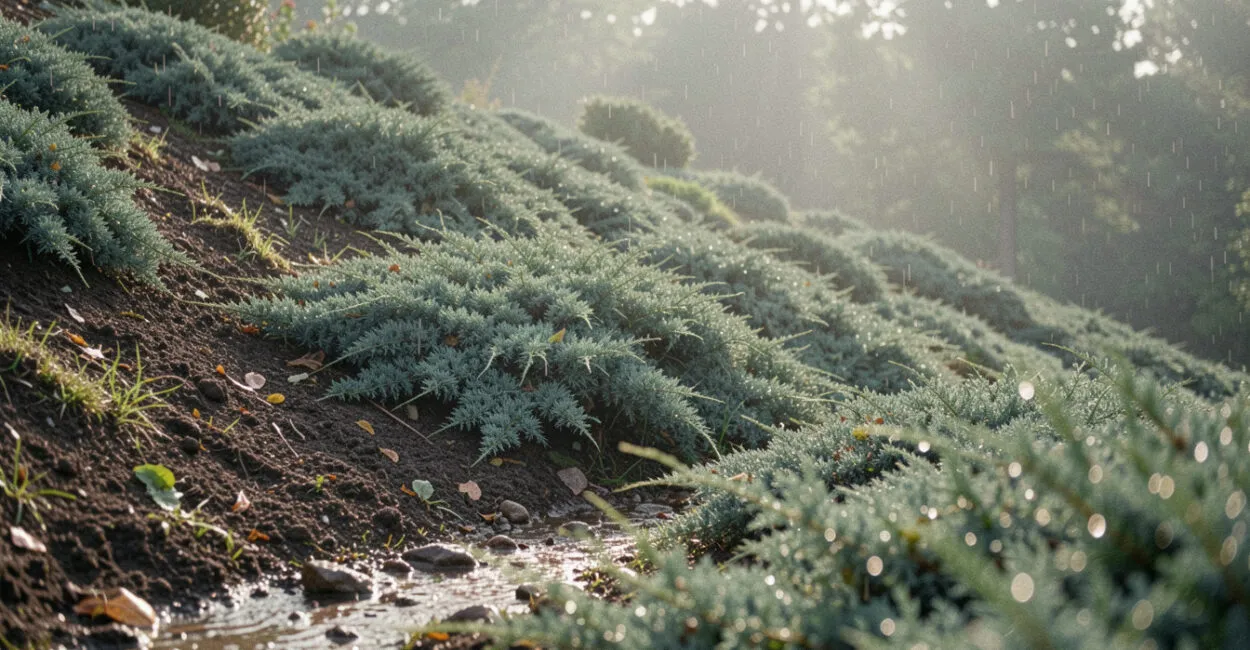 Creeping juniper mats anchor a rain-soaked slope
A bare slope can lose soil during a single hard rain, even when the rest of the yard stays put. The right evergreen groundcovers can keep foliage on that slope through winter, but plant choice must match the site: sun, drainage, climate, and the amount of water available while roots establish.
For sunny, dry slopes, creeping juniper is often a dependable starting point; bearberry suits many sunny sites with acidic, well-drained soil. Shady slopes call for different plants, such as creeping mahonia or regionally suitable native species. In every case, living cover helps only after plants take hold, and steep or actively eroding ground may need additional stabilization.
Choosing Evergreen Groundcovers for Slopes: Reliable Options at a Glance
For a slope, dependable evergreen choices include creeping juniper for sunny, dry ground; bearberry for sunny, acidic, well-drained soil; and creeping mahonia for shade in climates where it thrives. Choose a plant that fits the site first, then plan spacing and establishment care. Foliage provides year-round cover, while roots and planting density help determine how well the soil holds.
Plant Light and soil Spread and upkeep Creeping juniper (Juniperus horizontalis) Full sun; well-drained soil, including dry sites Low, spreading evergreen; allow room for cultivar differences and prune only as needed Bearberry (Arctostaphylos uva-ursi) Sun to light shade; acidic, sharply drained soil Slow to moderate establishment; avoid rich, wet soil Creeping mahonia (Mahonia repens) Part shade to shade; moist but well-drained soil Gradual spread; suited to cooler, regionally appropriate sites Allegheny spurge (Pachysandra procumbens) Shade; humus-rich, moist but drained soil Moderate spread; a native alternative for suitable eastern U.S. gardens
These are starting points, not universal prescriptions. Cultivars vary in mature width and hardiness, and a plant listed as evergreen may lose leaves or suffer winter damage in climates outside its comfort zone.
Diagnose the Slope Before You Buy Plants
Sun exposure, soil moisture, drainage, and regional climate narrow the choices quickly. Check the slope at different times of day, note where water runs after rain, and dig a small test hole to see whether the soil drains or stays saturated. A sunny upper bank can be dry while the foot of the same slope remains damp.
- Full sun and dry soil: Look first at creeping juniper; consider bearberry where soil is acidic and drainage is sharp.
- Shade and moderate moisture: Creeping mahonia or Allegheny spurge may fit, depending on region and winter conditions.
- Wet or compacted soil: Correct drainage or choose a species suited to the site before planting. Many woody groundcovers decline when roots sit in water.
Slope exposure matters, too. A south- or west-facing bank often dries faster and gets hotter than a shaded, north-facing one. For local climate and native-plant suitability, consult your state’s extension service or the USDA PLANTS Database. A plant’s native range is useful context, but it does not replace checking its needs against your specific soil and exposure.
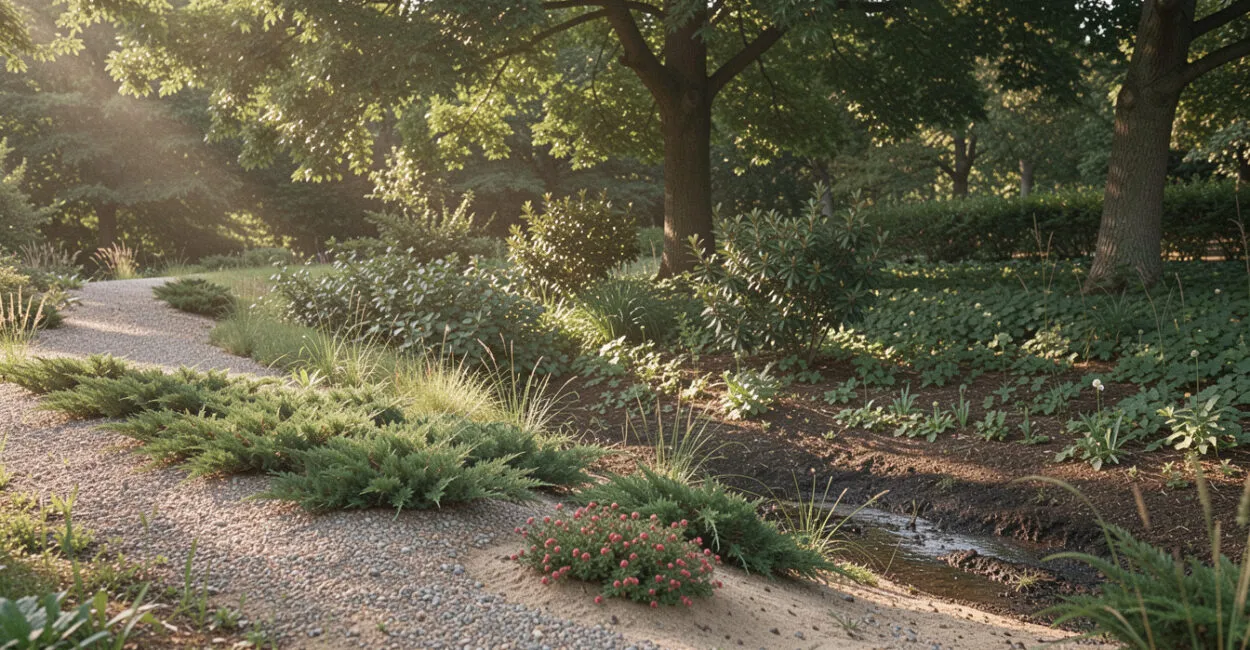
Compare Species by Site Fit, Not by Spread Alone
Creeping juniper is a strong option for open, sunny banks with good drainage. It tolerates dry conditions once established, but it can struggle in shade or persistently wet soil. Check the mature width of the named cultivar before setting spacing; varieties differ considerably.
Bearberry offers a low, woody mat and works best in acidic, sandy or otherwise well-drained soil. It is a poor match for heavy, wet ground or frequently fertilized beds. It may take patience to knit together, so it is better suited to a site where slow establishment is acceptable.
For shade, creeping mahonia and Allegheny spurge are options to assess against regional conditions. Allegheny spurge is native to parts of the eastern United States and can be a useful alternative to Japanese pachysandra in appropriate gardens. Avoid assuming that familiar plants such as English ivy or periwinkle are harmless everywhere; they can spread aggressively and become invasive in some regions.
Gardeners choosing native species for a broader planting can also consider how a slope planting connects with a landscape plan for native pollinators. The right companion plants depend on the site, and they should not crowd out the groundcover before it fills in.
Complete guide: 12 Best Groundcover Plants for Slopes to Control Erosion
Match Plants to Sun, Shade, and Soil Moisture
Sunny slopes favor plants that tolerate heat and drying soil. Creeping juniper is a common fit, while bearberry is worth considering where the soil is acidic and drains freely. Neither is a safe bet for a bank that stays soggy after storms.
Shady slopes need shade-adapted plants, but “shade” can mean anything from bright filtered light to deep, dry shade beneath mature trees. Creeping mahonia and Allegheny spurge suit some woodland conditions; persistent dryness beneath tree roots can still slow establishment. Check that the selected plant is hardy in your area and suited to the amount of light the slope actually receives.
Read also: Best Evergreen Privacy Plants for Narrow Side Yards
For moist sites, separate reliably moist soil from waterlogged soil. Many groundcovers tolerate the first but not the second. If the slope carries runoff from a roof, driveway, or uphill yard, redirecting or slowing that water may matter as much as selecting a tougher plant.
Why Evergreen Foliage Alone Cannot Stop Erosion
Evergreen cover means leaves or needles remain through much of the year; erosion control depends on how well plants protect the soil surface and bind soil with roots. A newly planted slope can still erode because young roots have not filled the soil, and spaces between plants leave exposed ground for raindrops and runoff to disturb.
Ground cover plants for erosion control work best as part of a plan: suitable root growth, close enough planting, careful establishment watering, and temporary protection where needed. On steep banks, sites with concentrated runoff, or slopes showing rills, slumping, or exposed roots, groundcovers alone may not be enough. A drainage or soil-stabilization professional can assess whether grading, erosion-control blankets, or other measures are needed.
The University of Minnesota Extension offers region-specific gardening guidance, while the USDA Natural Resources Conservation Service provides information on soil and conservation practices. Recommendations vary by soil, slope, and rainfall, so a plant that performs well on a gentle garden bank may not stabilize a steep, actively failing slope.
Planting on a Slope: Spacing and Establishment
Set spacing according to the plant’s mature width and the nursery’s guidance, rather than relying on one universal distance. As a rough planning method, plants with a mature spread of about 2 feet are often spaced around 18 to 24 inches apart; wider-spreading plants need more room. Closer spacing fills gaps sooner but raises the initial cost and can increase competition.
- Plant in a favorable season. Early fall or spring often gives roots time to establish before heat or deep cold, but the best window depends on local climate and the species.
- Prepare planting spots, not the whole bank. Remove perennial weeds and loosen soil where each plant will go. Avoid deep tilling on an unstable slope, which can disturb soil and increase runoff.
- Water slowly and check below the surface. Newly planted roots need consistent moisture without saturated soil. A short, fast spray may run downhill before it soaks in.
- Protect exposed soil between plants. Use a suitable biodegradable erosion-control blanket or another locally recommended method where runoff could wash soil away before plants spread.
Coverage may take two or more growing seasons, and drought, shade, soil, and plant size at installation can stretch that timeline. For instance, a sunny bank planted with small junipers may look sparse after the first season even if the plants are healthy. Mulch or a temporary erosion blanket can protect the open ground while roots expand, but keep material from piling against plant crowns.
Maintenance, Common Problems, and the Next Step
Once established, creeping juniper and bearberry usually need less routine watering than moisture-loving shade plants, provided the site suits them. Low maintenance still means checking for weeds, dead sections, and runoff damage. Pruning needs vary by species; cutting back into old, leafless wood can leave some evergreens unable to recover.
Watch for warning signs: yellowing or dieback in persistently wet soil, bare patches where plants fail to root, and narrow channels that show water is concentrating downhill. Fast-spreading groundcover is not automatically the best choice if it escapes its bed or crowds nearby plants. For pet-conscious planting near paths or play areas, compare the slope plan with these groundcovers selected for dogs and foot traffic.
Before buying, map the slope’s sun, drainage, and runoff, then match those conditions to a plant’s mature size and regional suitability. If soil is already moving or water cuts channels through the bank, address the runoff and stabilization problem before relying on foliage to cover it.
📱 See this content as a Web Story
Frequently Asked Questions
How Far Apart Should Evergreen Groundcovers Be Planted on a Slope?
Use the mature spread as your guide. For a plant expected to reach about 2 feet wide, roughly 18 to 24 inches between plants is a reasonable starting estimate, but follow species and cultivar recommendations for a more accurate plan.
How Long Does It Take for Groundcover to Fill In?
Often two or more growing seasons, though site conditions and plant size can change that. Dry soil, deep shade, and slow-growing species usually delay a continuous cover.
Which Option Needs the Least Upkeep Once Established?
Creeping juniper is often a low-maintenance choice for a sunny, well-drained slope. It still needs occasional checks for weeds, winter damage, and runoff, and it will not thrive in every climate or soil.
Can I Plant Evergreen Groundcover on a Steep Slope with Active Erosion?
Groundcover alone may not control active erosion on a steep or unstable bank. If you see slumping, exposed roots, or runoff channels, have the drainage and slope assessed and consider temporary erosion protection or other stabilization measures while plants establish.