

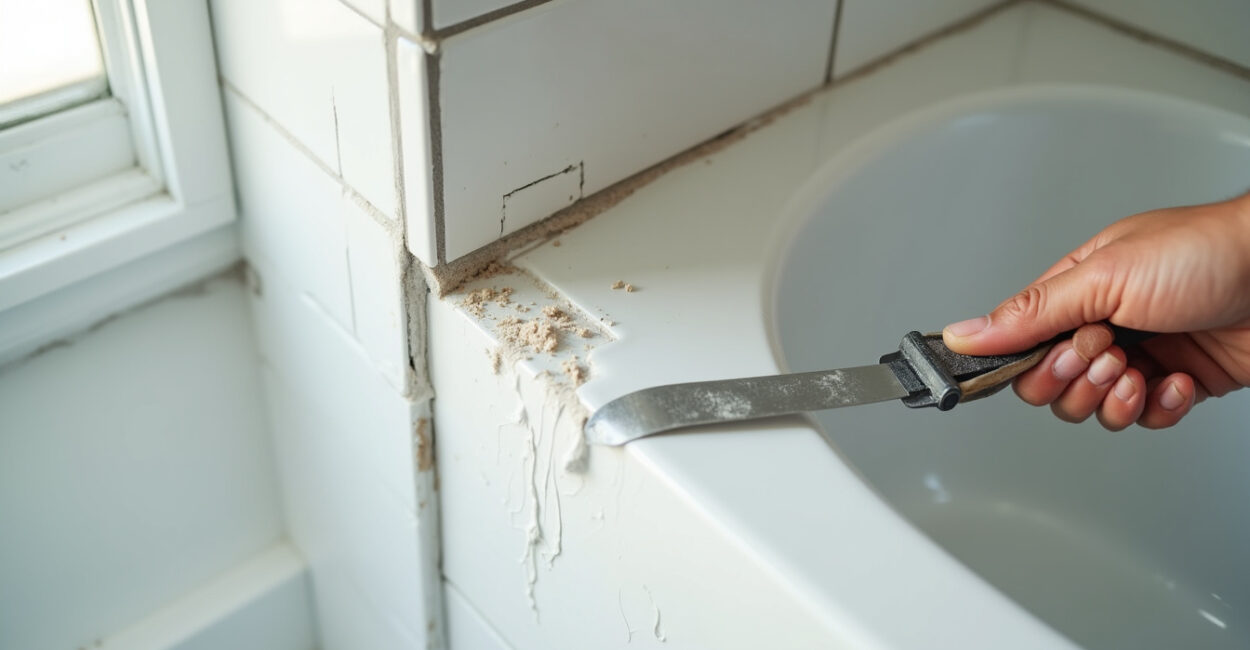
Pull too hard too soon, and the bead tears instead of lifting cleanly.
Easy caulk removal mistakes usually start the same way: the edge looks loose, so you grab the strip and yank. That’s how bathroom corners get ragged fast. The cleaner move is slower for the first few seconds, then faster overall.
Easy Caulk Removal Mistakes That Leave Bathroom Edges Messy is really about one thing: protecting the joint while you remove it. If you score, soften, and lift in the right order, you save time and keep the tile line sharp.
Why Pulling the Bead is the First Mistake
Caulk is a bonded sealant, not a sticker. When you pull before the seal breaks, you often rip small strips into the corner and leave gummy residue behind. That residue is what makes the next bead look lumpy.
The technical idea is simple: you want to break adhesion at the wall and tub line before you create tension. In plain English, don’t use force as your first tool. A utility knife, caulk remover, or plastic scraper does less damage than your fingers ever will.
The fastest removal is usually the one that feels too careful at the start. That’s the part most people skip, and it is the core of easy caulk removal mistakes.
The Cleanest Removal Method Starts with a Small Cut
Score both edges of the bead first, then lift a short section and work in small lengths. If the caulk is silicone, a remover gel can help soften old material; if it’s latex, warm water and patience often do the job. The goal is separation, not force.
Here’s the comparison that matters: yanking a full strip often leaves a torn seam, while cutting and peeling in short runs keeps the edges sharp. I’ve seen bathroom corners go from “freshly renovated” to “half-done rental” in one bad pull.
- Cut along both edges before lifting.
- Use a plastic blade on tile to avoid scratches.
- Pull at a low angle, not straight out.
- Stop if the strip starts shredding.
According to Family Handyman’s caulk removal guide, patience and edge scoring matter more than brute strength. The same logic shows up in product guidance from DAP’s surface preparation resources: clean removal depends on prep, not just the next bead.

What to Avoid If You Want Sharp Bathroom Edges
The ugliest easy caulk removal mistakes happen after the bead comes off. People rush the cleanup, leave behind thin film, then seal over it. That creates weak adhesion and makes the new line look cloudy or crooked.
Watch for these traps:
- Using metal blades on glossy tile.
- Ripping before the seal is fully cut.
- Skipping solvent or residue cleanup.
- Re-caulking while the surface is still damp.
One installer I watched had a simple rule: “If the old line is stubborn, slow down before you speed up.” He’d lose two extra minutes removing residue, then save twenty when the new bead went on straight. That tradeoff is the whole game.
Messy edges are usually not a caulk problem. They’re a removal problem.
If you want the next bead to look crisp, treat removal like prep work, not demolition.
How Do I Know If the Caulk is Silicone or Latex?
Silicone usually feels rubbery, resists water well, and is harder to paint. Latex or acrylic caulk tends to be softer and may peel more easily. If you’re unsure, test a tiny hidden spot with a remover or ask the product label before using a solvent. The wrong cleaner can smear one type while barely affecting the other.
What Tool Works Best for Bathroom Caulk Removal?
A sharp utility knife, a plastic scraper, and a caulk remover tool cover most jobs. For delicate tile, plastic is safer because it lowers the risk of scratching the surface. The best tool is the one that lets you cut the edges first and lift in small sections instead of ripping long strips.
Should I Use Heat to Remove Caulk?
Sometimes, but only carefully. Mild heat can help soften stubborn material, especially on older beads, but too much heat can damage finishes or make the caulk smear. In most bathrooms, scoring and a proper remover work better than trying to melt the whole line loose.
Why Does New Caulk Look Bad After I Remove the Old One?
Usually because residue stayed behind or the surface wasn’t fully dry. Even a thin film can stop the new bead from bonding cleanly, which leads to uneven edges. If the old line came off in a torn strip, spend extra time cleaning the joint before recaulking.
What’s the Biggest Easy Caulk Removal Mistake Overall?
Pulling too hard too soon. That single move tears the joint, leaves adhesive behind, and turns a quick task into a cleanup job. The cleaner method is slower at first, but it protects the edge line and makes the new caulk look much better.