

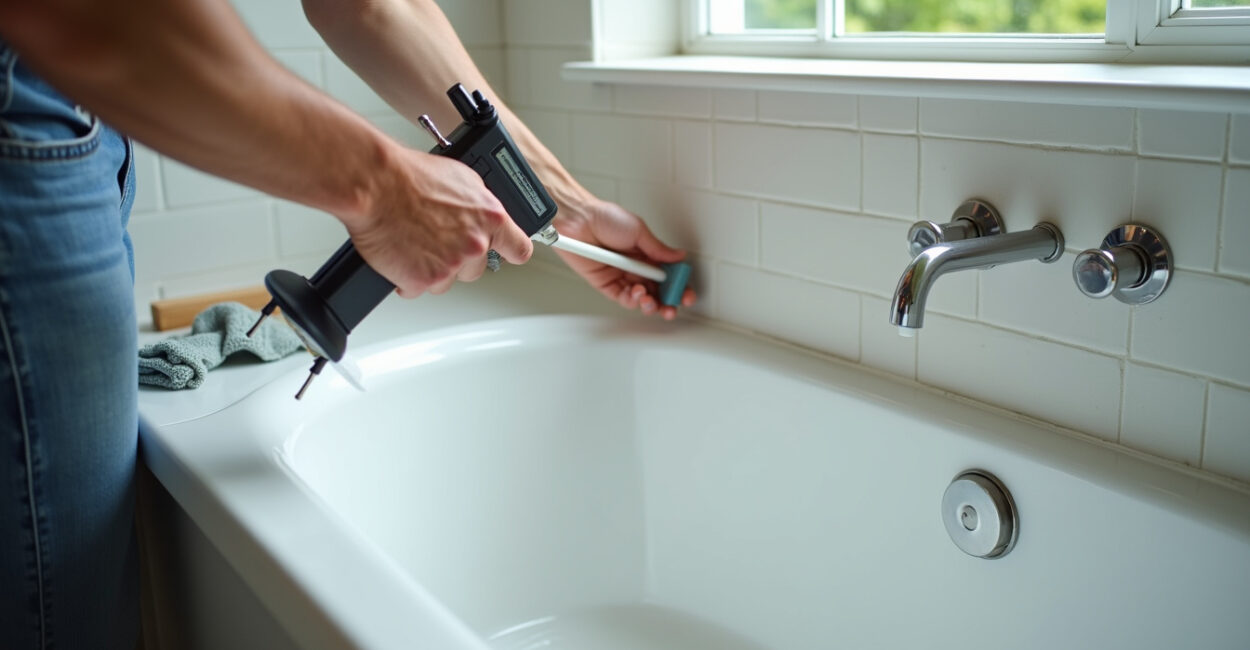
The damp finger trick works—until it doesn’t. The cleanest how to smooth bathroom caulk bead finish depends on bead size, timing, and the tool in your hand.
That’s why two bathrooms can use the same tube of caulk and still end up looking completely different. If your line is lumpy, dragged, or hollowed out, the problem is usually not “your touch.” It’s the bead you laid down first.
Start with the Bead, Not Your Finger
Caulk smoothing is the final shaping of an extrusion bead: a thin line of sealant forced into a joint, then leveled before it skins over. In plain English, if the bead is too big, no finishing trick will save it. For a cleaner how to smooth bathroom caulk bead result, aim for a smaller, steady line that just fills the gap.
The best finish starts with less caulk than you think. A narrow bead is easier to tool, leaves fewer ridges, and bonds better at the edges. If you overfill, you end up scraping off the excess instead of smoothing the joint. That’s why the line often looks better after a second pass than after the first mess.
The Right Tool Changes the Finish
A damp finger is only one option, and not always the best one. A caulk finishing tool, plastic spoon, or silicone scraper can keep the bead uniform without pulling material out of the joint. The point is to press, not drag. Pressing shapes the bead; dragging tears it.
- Use a finger for short, simple seams.
- Use a tool for long tub edges or visible corners.
- Keep a paper towel nearby to wipe buildup fast.
- Work one section at a time so the surface stays wet.
Here’s the practical difference: a fingertip gives softness, but a tool gives consistency. In bathrooms, consistency usually wins. The joint around a tub or sink is too visible for random waves. If you want a crisp line, the tool matters as much as the caulk.

Timing is the Part Most People Miss
Caulk starts to skin over fast, which means your window to smooth it is short. If you wait too long, the surface grabs and the finish turns ragged. If you move too soon, you can pull the bead away from the edge. The sweet spot is right after application, while the caulk is still pliable but not runny.
One contractor I watched on a remodel did something simple: he ran a short bead, then smoothed it immediately in one motion, then moved on. No back-and-forth. No “fixing” the same spot five times. One clean pass beats three anxious ones. For more on safe sealants and bathroom use, see the EPA Safer Choice program and the National Institute of Standards and Technology for material guidance.
Clean caulk looks simple because the real work happened before the smoothing started.
Can I Smooth Caulk with Just My Finger?
Yes, but it works best on small, forgiving joints. A wet finger can leave a nice finish, yet it often fails on wider beads or deep corners. If the bead is too heavy, your finger will pull material out instead of leveling it. For a better how to smooth bathroom caulk bead result, think of your finger as a shaping tool—not a rescue plan.
How Soon Should I Smooth Bathroom Caulk?
Usually right after applying it, while it is still workable. Once a skin forms, the surface drags and the edge can tear. That timing varies by product, room temperature, and humidity. Read the tube, but don’t wait around. In practice, short sections work better than trying to caulk the whole tub before touching anything.
What is the Best Tool for a Clean Bead?
A dedicated caulk finishing tool is the most reliable choice for long, visible lines. It gives even pressure and a straighter edge than a fingertip. For tight spots, a gloved finger or small silicone tool can work well too. The best tool is the one that matches the joint size and lets you move fast without overworking the bead.
Why Does My Caulk Look Uneven After Smoothing?
Uneven caulk usually means the bead was too large, the pressure changed mid-stroke, or the caulk had already started to skin. A damp finger can hide those mistakes for a moment, but it won’t fix them. If you see ripples, stop, remove the bad section, and reapply a smaller bead instead of trying to polish a bad one.
Should I Use Water, Soap, or a Finishing Spray?
Water is often enough for many silicone- or latex-based caulks, but compatibility matters. Some products respond better to a light tool glide than to extra moisture. Too much water or soap can weaken the edge or make cleanup messy. Check the product instructions first, because the wrong lubricant can improve the look briefly and hurt the seal later.
How Do I Know If I Used Too Much Caulk?
If the bead bulges out past the joint, smears onto both sides, or takes multiple passes to shape, it’s probably too much. A good bead just fills the gap and leaves a narrow, controlled edge. More caulk does not mean a better seal. In bathrooms, restraint usually gives the cleaner, more professional finish.
What separates amateur caulk from a pro-looking line is not magic. It’s a smaller bead, the right tool, and the nerve to smooth it once—at the right moment. That’s the whole game.