

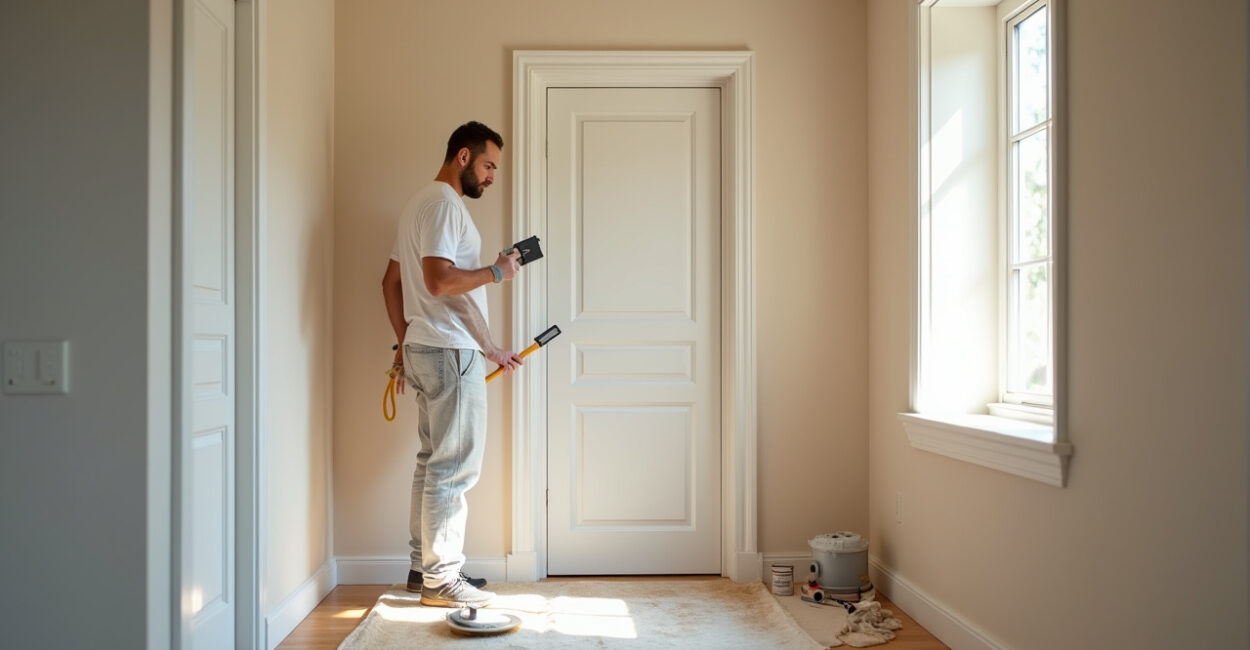
Freshly painted interior doors change the way a room feels more than most people expect. A dull, chipped slab in a hallway pulls the eye immediately, while a clean satin finish makes the whole space look cared for. If you are looking for how to paint interior doors, the real answer is not “just roll on a coat of paint.” It is about surface prep, the right sheen, and knowing when to brush versus spray.
This guide walks through the process the way experienced painters handle it in real homes: how to prep the door, which tools actually matter, what finish lasts, and the mistakes that cause lap marks, brush marks, and sticky edges. The goal is a smoother result with fewer regrets.
O Que Você Precisa Saber
- Surface prep matters more than the paint brand; dust, grease, and glossy old coatings cause most failures.
- Satin or semi-gloss is usually the safest choice for interior doors because it cleans easily and resists scuffs.
- Removing the door is not always required, but taking it off the hinges makes the finish noticeably cleaner.
- Brush-and-roll can work well on paneled doors if you keep a wet edge and avoid overworking the paint.
- Most bad results come from rushing recoat time, painting over dirty hardware, or closing the door too soon.
How to Paint Interior Doors Without Leaving Brush Marks
The technical answer is straightforward: you are building a smooth, even film coating on a vertical substrate that gets touched constantly. In plain English, that means the surface must be clean, slightly dulled, and coated in thin, controlled layers. The finish only looks professional when the prep and application method match the door’s condition.
That is why a door painted over old kitchen grime, silicone residue, or semi-gloss that was never sanded will often look worse after the “upgrade.” The paint may dry, but it will not bond evenly. For a good reference on general paint prep and coating behavior, the U.S. Department of Energy’s painting and staining guidance explains why surface condition affects durability, even though their focus is broader than doors.
What a Good Door Finish Actually Means
A good interior door finish is smooth to the eye, even in reflected light, and hard enough to survive repeated hand contact. That does not mean mirror-perfect on every old door. On older slab doors with dents or factory texture, the real target is a uniform sheen with no lap lines, ridges, or visible dry brush tracks. If the paint looks consistent when you stand at normal hallway distance, you have won.
Brush, Roll, or Spray
Brush-and-roll is the most practical method for most homeowners. A foam roller lays down paint quickly on flat areas, and a high-quality angled brush handles panels and edges. Spraying can produce the cleanest finish, but only when you can mask carefully and control overspray. On occupied homes, that extra setup often eats more time than it saves.
For most interior doors, the best finish comes from thin coats, careful sanding, and restraint: the less you disturb paint while it starts to set, the smoother it dries.
Prep Work That Makes the Difference
This is where most of the real outcome is decided. If you skip prep, you are gambling on adhesion and appearance. A door can look fine for a few days and still fail later at the edges, around the knob hole, or where fingerprints build up.
Remove Hardware or Mask It?
Removing the handle set, latch, and hinges gives the cleanest result. If that is not realistic, tape off the hardware carefully and accept that the job will take longer. Paint on metal trim looks amateur fast, especially around lever handles and strike plates.
Sanding, Cleaning, and De-glossing
Start by washing the door with a degreasing cleaner, then sand lightly with 120- to 220-grit paper. You are not stripping the door; you are creating tooth so the new paint can grip. If the existing surface is very glossy, a liquid de-glosser or a thorough scuff-sand helps. The This Old House door-painting guide is a solid practical reference for these prep steps, especially for paneled doors.
On a hallway door with years of hand oils near the knob, I once saw a perfect-looking repaint fail in a week because the painter sanded but never cleaned the surface afterward. The finish peeled in little crescent shapes right where people push the door open. That kind of failure is common, and it is usually preventable.

The Right Paint, Primer, and Sheen for Interior Doors
The best coating choice depends on what is already on the door and how hard the surface gets used. For most homes, an enamel-style water-based trim paint is the safest pick because it levels well, dries faster than old oil systems, and cleans up easily. Primer matters when you are covering bare wood, stain bleed, patched spots, or a drastic color change.
Best Sheen Choices
- Matte/flat: hides flaws, but it is not ideal for doors because it marks and cleans poorly.
- Eggshell: workable in low-traffic rooms, though it is still softer than most people want on a door.
- Satin: the best all-around choice for many interior doors.
- Semi-gloss: more reflective, easier to wipe, and common for trim-heavy homes.
There is a real tradeoff here. More sheen usually means better cleanability and greater visibility of surface flaws. Less sheen hides imperfections but sacrifices durability. If the door is older and uneven, satin is often the sweet spot.
When Primer is Non-Negotiable
Use primer if the door has bare wood, patched filler, tannin bleed, or a dark finish that keeps flashing through the new color. Oil-based stain blockers are still useful in those situations, although many water-based bonding primers now perform very well. The Bob Vila door-painting overview also notes that primer is the difference between “looks okay now” and “lasts for years.”
The difference between a durable repaint and a disappointing one usually shows up in the first 48 hours, not the first 48 weeks.
Step-By-Step Painting Method That Works in Real Homes
Here is the sequence I trust most: remove or mask hardware, clean the surface, sand, vacuum, wipe with a tack cloth or damp microfiber, prime where needed, then paint in thin coats. Most people fail by trying to make one coat do the work of two. That almost always leads to drips, uneven sheen, or tacky corners.
Painting a Paneled Door
Start with the recessed panels, then move to the rails and stiles, and finish with the larger flat areas. This order reduces the chance of dragging wet paint across finished sections. Work from top to bottom so any dust or tiny drips fall onto areas you have not painted yet. Keep the brush lightly loaded; overloaded bristles are what create ridges at the panel edges.
Painting a Flat Slab Door
Flat doors are easier, but they expose roller technique. Use a small foam roller for the broad faces and tip off any bubbles with a light brush pass. Roll in long, continuous strokes and stop before the paint starts to tack. If you chase a drying edge, the surface will show it forever in side light.
Drying Time and Recoat Timing
Respect the label directions, but also respect the room conditions. Humidity, airflow, and temperature all affect cure time. A door may feel dry to the touch and still be soft enough to stick to the jamb. That is why closing a freshly painted door too soon is one of the most common avoidable mistakes.

Common Mistakes That Ruin a Good Paint Job
Most mistakes are boring, which is exactly why they keep happening. They are not dramatic failures; they are small shortcuts that compound. The paint might look fine at 10 feet, but the flaws show up when the hallway light hits the edge or when a hand touches the lower rail every day.
- Skipping cleaning before sanding leaves grease under the coating.
- Using too much paint causes runs around panel profiles and bottom edges.
- Painting in a dusty room traps debris in the finish.
- Closing the door before it has cured creates sticking and torn edges.
- Choosing the wrong sheen can make dents and old repairs jump out.
Limit to keep in mind: this method works best on standard wood or previously painted interior doors. It is less forgiving on damaged hollow-core doors, warped slabs, or surfaces with active moisture problems. If the substrate is failing, paint will not hide that for long.
How to Handle Old Paint, Stain, and Problem Surfaces
Not every door is a clean repaint. Some are coated in decades of layered paint, some are stained wood, and some have patchy repairs that need extra attention. If the existing paint is sound, you can usually scuff-sand and repaint. If it is peeling, you have to remove loose material first or the new coat will fail with it.
When to Use Bonding Primer
Bonding primer helps on tricky surfaces such as glossy old enamel, stained wood, or areas that resist adhesion. It is not a magic fix for bad prep, but it can save time on doors that are otherwise stable. On very slick factory finishes, it gives the new coat a better chance to hold up to daily use.
Mini Example from a Real Hallway Job
A narrow upstairs hall had six mismatched doors: two stained oak, three old white enamel, and one patched hollow-core slab. The owner wanted all of them to match without replacing the hardware. The best result came from using bonding primer on the stained doors, satin enamel on all six, and a foam roller for the flat faces. The doors looked like they belonged to the same house again, which is the real point of the project.
How to Keep the Finish Looking Good After It Dries
The job is not over when the last coat goes on. Fresh paint needs a gentle cure period, and the first week matters a lot. Avoid slamming the door, hanging wet towels on the knob, or wiping the surface with aggressive cleaners. A soft cloth and mild soap are enough for normal cleaning once the paint has hardened.
For long-term durability, check the latch side and bottom edge every few months. Those spots take the most contact and tend to chip first. If you catch tiny nicks early, a small touch-up prevents the whole door from aging unevenly.
Practical Next Steps
The smartest move is to treat one door as a test run before committing to every room. That lets you confirm the sheen, drying time, and brush feel in your own lighting. If the first door looks right, the rest of the house becomes a repeatable process instead of a guess.
Start with the highest-traffic door in the house, because that is where poor prep shows up fastest. If the finish holds there, it will usually hold everywhere else. Choose a satin or semi-gloss enamel, prep carefully, and give the coating time to cure before you put the door back into hard use.
FAQ
Should I Remove Interior Doors Before Painting Them?
Removing the door usually gives the cleanest result because you can paint flat, control drips, and reach the edges more easily. That said, it is not always required if the door is light, the room is tight, or the hinges are in good shape. The tradeoff is that painting in place demands more masking and more patience around the jamb and hardware. If you want a near-factory look, taking the door off is the better choice.
What is the Best Paint Finish for Interior Doors?
Satin is the most practical all-around finish for many homes because it balances durability, cleanability, and appearance. Semi-gloss is a strong option if the door gets heavy traffic or if the rest of the trim is already glossy. Flat finishes hide flaws, but they are harder to keep looking fresh. The best choice is usually the one that matches the room’s trim without highlighting every dent and repair.
Do I Need to Sand Every Interior Door Before Painting?
Yes, at least lightly. Sanding creates enough tooth for the new coating to grip, especially on glossy or previously painted surfaces. You do not need to strip the door unless the existing paint is failing, but you do need to dull the sheen and smooth out rough patches. A quick scuff-sand often makes the difference between a finish that bonds well and one that chips early.
How Long Should I Wait Before Closing a Freshly Painted Door?
Wait until the paint is dry to the touch and then give it extra time before closing it fully. In many cases, several hours is not enough, even if the surface feels dry. Temperature and humidity change curing speed a lot, so a cool, damp room can extend the wait substantially. When in doubt, leave the door slightly open overnight so the finish does not stick to the jamb.
Can I Paint over Old Painted Doors Without Primer?
Sometimes, yes, but only if the old paint is sound, clean, and not too glossy. If the surface is stained, patched, or showing bleed-through, primer is the safer move. Primer also helps when you are changing from a dark color to a light one, or when the old coating is unknown. Skipping primer may save time today, but it often costs more in touch-ups later.