

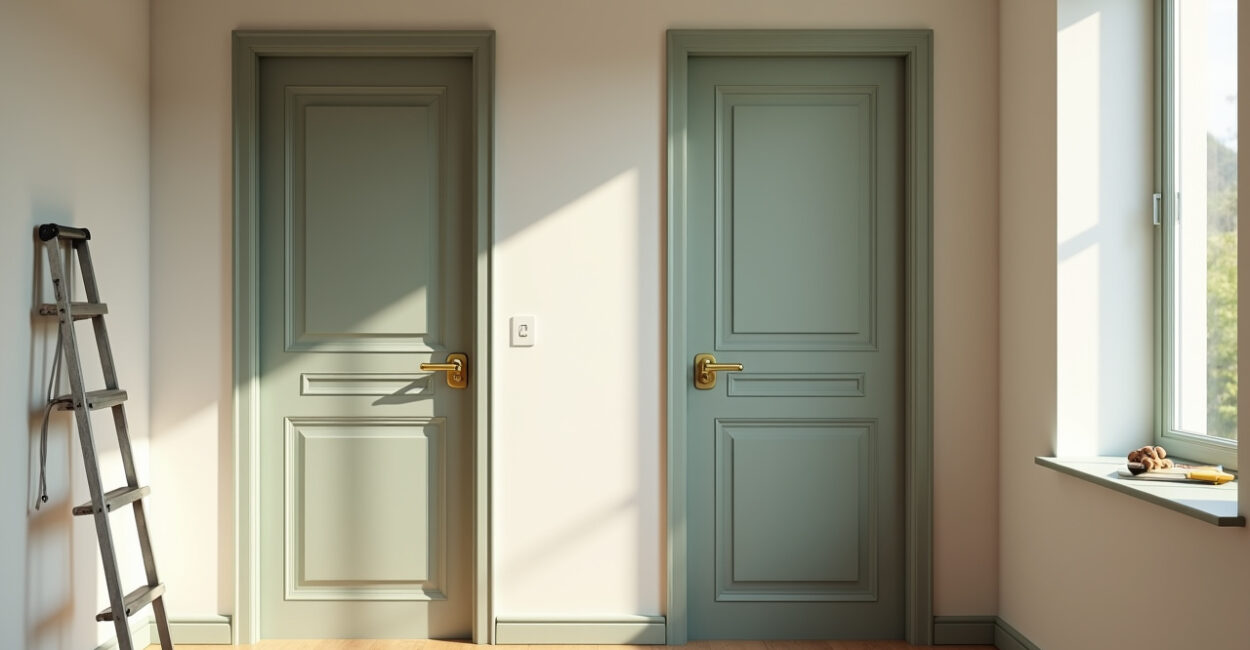
Interior doors can change the feel of a room faster than almost any other surface, and they do it without the cost or disruption of full replacement. The smartest budget interior door makeover ideas focus on surface, proportion, and hardware, because those are the details people notice first when they walk into a space.
If your doors look tired, bland, or mismatched, you usually do not need new slabs. A good makeover can come from paint, trim, a cleaner finish, better hinges, and updated knobs or levers. The trick is choosing upgrades that look intentional instead of patched together, and that is where a lot of cheap-looking makeovers go wrong.
What You Need to Know
- A painted interior door usually delivers the biggest visual change per dollar because color affects how the door reads in the room.
- Hardware swaps matter most when the existing knobs, hinges, and latch plates look dated or inconsistent across the house.
- Adding trim or simple molding creates a custom look, but the layout has to match the door style or it can feel forced.
- The best budget upgrades solve one problem at a time: color, shape, sheen, or texture—not all four at once.
- Prep work is the difference between a finish that lasts and one that chips within months.
Budget Interior Door Makeover Ideas That Refresh the Whole Room
In practical terms, a door makeover is a low-cost surface renovation that improves how an existing interior door looks and feels without replacing the slab, frame, or casing. That matters because most interior doors are structurally fine long after their style looks dated. The visual payoff comes from treating the door like part of the architecture, not just a utility panel you ignore.
The best projects combine one bold change with a few quiet ones. For example, a clean repaint can do most of the heavy lifting, while a new handle set or a sharper gloss level finishes the job. If the door is hollow-core, flat, or builder-grade, the right details can make it read more expensive than it is.
The Changes People Notice First
Color is usually the first thing your eye catches, followed by shine, then hardware shape. That is why a matte beige door with shiny brass knobs can feel off even if each element is fine on its own. The finish has to work as a whole. A door that looks cohesive with the wall, trim, and floor always feels better than one that tries too hard to stand alone.
On a tight budget, the fastest visual upgrade is usually not new construction; it is better contrast, cleaner edges, and hardware that matches the rest of the room.
Paint Choices That Make Cheap Doors Look Intentional
Paint is the highest-return update because it changes both color and surface quality in one step. A satin or semi-gloss finish is often the practical choice for interior doors because it resists fingerprints better than flat paint and wipes down more easily. That is one reason experienced remodelers often favor washable finishes on high-touch surfaces.
Colors That Work Without Fighting the Room
- Match the trim: This gives a calm, built-in look and works well in smaller homes.
- Go darker than the walls: Charcoal, olive, or deep navy can add depth without making the room feel busy.
- Use a warm white: Better than bright white if your trim already has a softer undertone.
- Paint the door a statement color: Best when the room already has neutral walls and simple furnishings.
Prep matters more than the brand name on the can. Lightly sanding, cleaning with a degreaser, and removing old drips or brush marks will do more for the result than spending extra on specialty paint. If you skip prep, the finish may look fine for a week and then start showing every fingerprint and edge flaw.
When Paint Alone is Enough
Paint is usually enough when the door profile is still clean and the problem is just tired color or a glossy, mismatched finish. It is less effective when the slab has heavy dents, deep grain, or awkward proportions that make the door look plain even after repainting. In those cases, adding trim or panel detail can create the illusion of a more custom door.

Trim and Molding Tricks for a Custom Look
Adding applied molding is one of the smartest budget interior door makeover ideas because it changes the door’s architecture, not just its color. A flat slab can look like a five-panel door with the right layout, and that shift instantly makes the room feel more finished. This approach works best with lightweight trim pieces, construction adhesive, and careful measuring.
Simple Patterns That Actually Work
The safest layouts are symmetrical and proportional to the door’s height. Two vertical rectangles suit many modern interiors. A classic four-panel arrangement feels more traditional. Wide frames with narrow inner lines can also mimic expensive millwork without requiring a carpenter-level build.
The difference between a budget door upgrade and a cheap-looking one is usually proportion: the molding has to fit the door’s scale, not just cover the surface.
Common Mistakes to Avoid
- Using trim that is too bulky for a thin hollow-core door.
- Overcomplicating the panel pattern on short doors.
- Skipping caulk at the seams, which leaves shadows and gaps after painting.
- Placing molding too close to the edges, where it can interfere with hardware.
Whoever works with doors regularly knows this: the best-looking trim jobs are usually the simplest ones. If you try to force a highly detailed design onto a basic door, the result often looks like a craft project rather than built-in millwork. Simpler lines age better and are easier to repair later.
Hardware Swaps That Change the Feel Fast
Door hardware has a surprisingly large impact because it is the part you touch every day. New knobs, levers, hinges, and strike plates can make old doors feel tighter, quieter, and more unified. According to the U.S. Department of Energy, air leakage and poor fit are real performance issues in building openings, which is why a simple hardware refresh sometimes improves more than appearance alone.
What to Replace First
- Knobs or levers: Replace these when the finish is worn, sticky, or visually outdated.
- Hinges: Swap or repaint them if they are tarnished or mismatched across the home.
- Latch plates: Small detail, but they matter when you want the door to look clean at the edge.
- Stops and bumpers: Useful when the door slams or marks the wall.
Lever handles often feel more current than round knobs, but the wrong finish can make them look disconnected from the rest of the home. Matte black, aged bronze, and brushed nickel are the most forgiving choices because they hide fingerprints better than polished metals. If your house already has mixed finishes, aim for consistency on the same floor at minimum.
A Quick Real-world Example
I once saw a hallway with six plain, yellowed doors that looked ready for replacement. The owner spent less than the cost of one new door on paint, new hinges, and updated levers in one finish. The hallway did not become dramatic; it became coherent. That was the win. People stopped noticing the doors as “old” and started reading them as part of the house’s style.

Finish Upgrades: Sheen, Texture, and Small Repairs
Some doors do not need a redesign; they need correction. Dull patches, roller marks, chipped edges, and uneven sheen are what make a door feel neglected. A careful finish pass can fix that fast. In many cases, painting guidance from trusted renovation sources emphasizes the same point: good surface prep and controlled application matter more than elaborate products.
Small Fixes with Outsized Impact
- Fill dents and dings: Use lightweight filler, sand smooth, and prime the patch before painting.
- Touch up edges: Door edges get nicked constantly and are easy to overlook.
- Standardize sheen: Mismatched gloss levels make even a fresh door look patched.
- Seal raw wood or repaired spots: Primer keeps the topcoat from flashing through.
There is one limit here: if the door slab is badly warped, swollen from moisture, or cracked through the core, cosmetics will only go so far. Finish work cannot correct structural failure. That is the point where repair stops making financial sense and replacement starts to look reasonable.
Decorative Options for Rental-Friendly or Low-Commitment Updates
Not every project allows paint, drilling, or permanent trim. Rentals, short-term setups, and homes in transition need reversible ideas. Peel-and-stick trim tape, removable decals, and temporary film finishes can still change the look of a door if the surface is clean and smooth. These options are not as durable as paint, but they can be useful when permanence is the problem.
Best Choices When You Cannot Make Permanent Changes
- Removable wallpaper or film on the flat center of a slab door.
- Adhesive trim strips for a faux panel effect.
- Temporary vinyl wraps for a cleaner, more uniform finish.
- Freestanding room styling that makes the door feel more intentional, such as matching wall art or coordinated hardware colors.
The catch is durability. Moisture, repeated contact, and heat near sunny hallways can make removable products lift at the corners. They are a good fit for cosmetic upgrades, but not for doors that take heavy daily abuse. In a busy family hall, paint still wins long term.
Temporary finishes are useful when you need flexibility, but paint and hardware remain the most durable value upgrades for interior doors.
How to Choose the Right Upgrade for Each Door
The smartest budget move is not giving every door the same treatment. A bedroom door, pantry door, bathroom door, and closet door have different demands. A bathroom door needs moisture-resistant paint and a hardware finish that cleans easily. A closet door may only need color correction and a better knob. A main hallway door may justify trim detail because it sets the tone for the rest of the home.
| Door Type | Best Budget Upgrade | Why It Works |
|---|---|---|
| Bedroom | Paint + new knob | Low wear, high visual payoff |
| Bathroom | Washable paint + lever handle | Easy to clean and practical for daily use |
| Closet | Color refresh only | Often needs less investment than visible doors |
| Hallway or entry transition | Trim detail + hardware update | Most visible, so the finish needs more polish |
For fire-rated or specialty doors, do not add thick trim, heavy adhesives, or hardware that interferes with the door’s function. Check the door label and keep the original rating intact. If you are unsure, follow the manufacturer’s instructions or local building guidance rather than guessing. Building standards can vary, and that is one place where a budget shortcut can create a real problem.
What Makes a Budget Makeover Look Expensive
The expensive-looking result is rarely about spending more. It comes from restraint, repetition, and clean lines. Repeat one or two finishes across the house. Keep trim proportions consistent. Use a sheen that makes sense for the room. And do not combine too many design ideas on one door just because they are cheap individually.
If you want the best return, start with the ugliest door in the most visible spot. That gives you the strongest before-and-after effect and helps set a standard for the rest of the house. After that, work room by room so the finishes stay consistent instead of random.
Next Steps
Pick one door and decide whether the main issue is color, shape, hardware, or finish quality. Then choose the smallest upgrade that solves that problem cleanly. If the slab is fine, paint and hardware will often be enough. If the door feels flat or builder-grade, add molding with simple proportions. The goal is not to impress people with how much work you did; it is to make the door look like it belonged there all along.
Frequently Asked Questions
What is the Cheapest Way to Update an Interior Door?
The cheapest update is usually a thorough clean followed by paint. If the hardware is still functional, repainting the slab and touching up the edge details can create a major visual change for very little money. A new knob or lever is the next best add-on if the existing finish looks worn. In many homes, that combination delivers the biggest improvement without opening the door to a larger project.
Should I Paint Both Sides of an Interior Door the Same Color?
Not always. If one side faces a hallway and the other side faces a bedroom or bathroom, the best choice depends on the room palette and trim color on each side. Painting both sides the same color creates continuity, but using different colors can work when one room needs the door to blend in. The important thing is to keep the finish and sheen consistent so the door still feels like one object.
Can I Make a Flat Hollow-core Door Look More Expensive?
Yes, and that is one of the easiest places to get a strong return. Flat slab doors respond well to applied molding, careful paint, and updated hardware because they lack built-in detail. The key is proportion: narrow trim and a clean layout usually look better than oversized decorative pieces. If the door is damaged, fix the surface first so the upgrade does not highlight flaws instead of hiding them.
What Finish is Best for Interior Doors?
Satin and semi-gloss are the most practical choices for most interior doors. Satin hides minor imperfections a little better, while semi-gloss is easier to wipe down and tends to show detail more sharply. Flat paint is usually a poor fit because fingerprints and scuffs appear quickly. The best option depends on traffic, but a washable finish is usually worth it on doors you touch often.
When is It Better to Replace a Door Instead of Refinishing It?
Replacement makes more sense when the door is warped, cracked, swollen from moisture, or so damaged that repairs keep reappearing. It also becomes smarter if the door no longer fits the frame properly or the cost of labor and materials approaches the price of a new slab. Cosmetic fixes are great for tired-looking doors, but they cannot solve structural problems. That is the line where spending more actually saves money later.