
When to Divide Perennials for Healthier, Fuller Garden Beds
When to divide perennials based on bloom time, local climate, and growth habits to ensure healthy root regrowth before temperature extremes affect the plant.
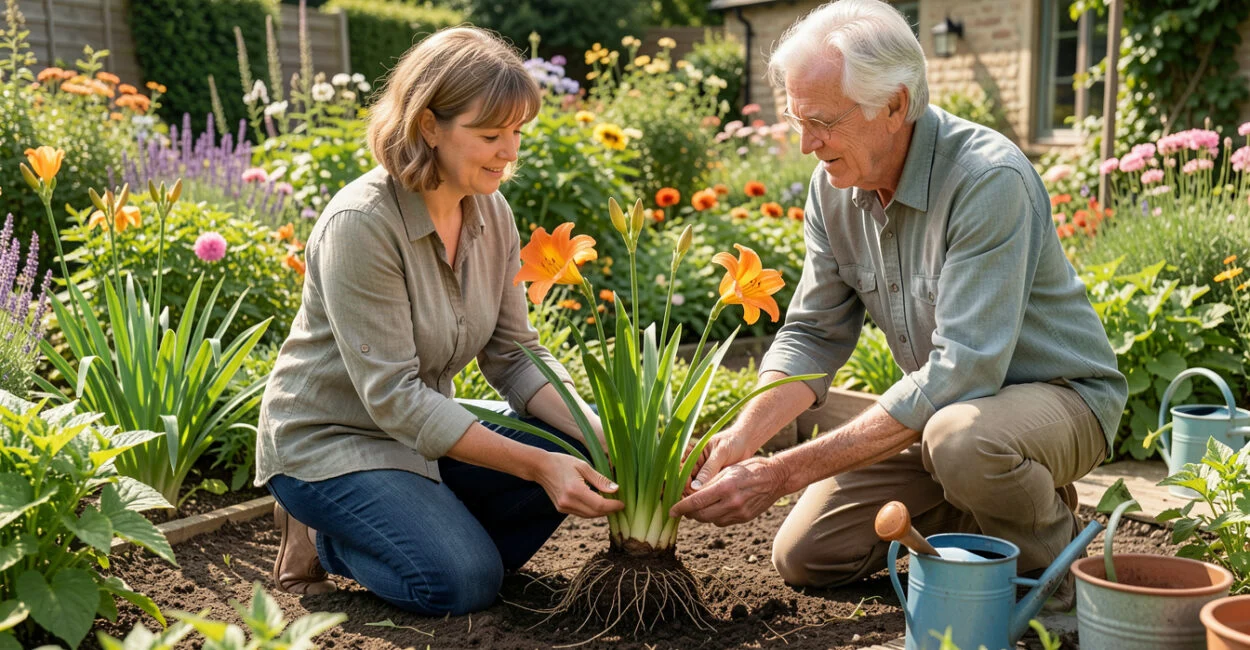 Gardeners divide a healthy perennial clump
A crowded perennial can look ready for a split just as the weather makes dividing it a risky move.
When to divide perennials depends first on when they flower and how much time they’ll have to settle in before temperature extremes. A useful rule: divide spring- and summer-blooming perennials in early fall or spring; many fall bloomers do better when divided in spring.
That’s a starting point, not a calendar command. Local frost timing and the plant’s growth habit matter, so a late-blooming clump may need to wait even when October feels like the obvious moment.
1. When to Divide Perennials: Start with Bloom Time
Divide a perennial when it has a suitable stretch of mild growing weather to regrow roots before heat, drought, or hard frost. For many spring and summer bloomers, that means early fall or spring; for many fall bloomers, spring is safer. Your region and the species can shift that window.
Fall dividing can work well where soil stays workable and roots have time to establish before the ground freezes. In colder areas, a late division may leave a plant poorly settled; in hot regions, spring or early fall may avoid summer stress. The Royal Horticultural Society and University of Minnesota Extension both recommend timing division around flowering and local growing conditions.
Imagine a late-blooming aster that has just finished flowering. Dividing it because “plants get split after bloom” sounds sensible, but an early frost could arrive before new roots take hold. Waiting until spring may give that clump a better start.
2. Look for a Plant That Needs the Space
Division is a way to renew an established clump, not a chore to schedule by age. Look for a thinning or dead center, fewer flowers than in previous seasons, stems crowded together, or a plant spreading beyond its allotted space.
A bare middle with healthy growth around the edge often signals that the clump has outgrown its center. Still, some perennials naturally form open shapes, and reduced flowering can also come from shade, drought, or poor soil. Check the growing conditions before reaching for a spade.
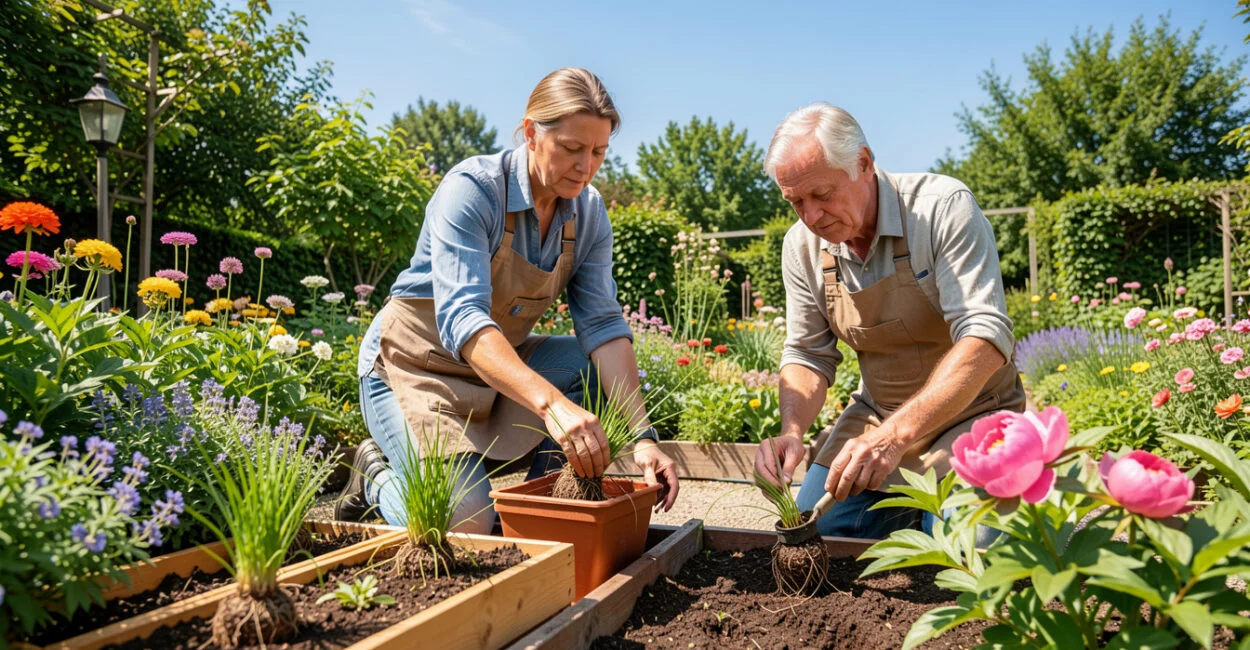
3. Separate Clump-Formers from Plants That Resent Disturbance
Many clump-forming perennials, including hostas, daylilies, and ornamental grasses, can be divided when healthy sections have both roots and shoots. Plants that spread by runners or have delicate roots may call for a different method, while some taprooted or woody perennials dislike being split. Check species-specific guidance before dividing.
Division gives you new plants, but every piece needs enough viable roots and growing points to recover. For ideas on choosing long-lived flowers for a bed, browse these easy cottage garden perennials.
4. Use This Seasonal Guide as a Starting Point
Bloom season Typical division window Spring Early fall or spring Summer Early fall or spring Fall Usually spring
These are broad patterns, not guarantees. The University of Minnesota Extension’s guidance on dividing perennials emphasizes timing by bloom season and the need to let plants establish. In places with an early freeze, choose the spring option for late-season bloomers; in mild climates, local conditions may allow more flexibility.
5. Divide the Clump Without Stripping Its Vigor
Choose a cool, overcast day if possible, and have the new planting spot ready before lifting the plant. Water the perennial beforehand if the soil is dry, which helps reduce stress and makes the root ball easier to handle.
- Lift the clump with a spade, keeping as much of the root system intact as practical.
- Separate it by hand or with a clean, sharp tool, discarding dead or weak sections.
- Keep divisions that have healthy roots and shoots; avoid tiny fragments with little chance to establish.
- Replant promptly at the same depth the plant was growing before, then water thoroughly.
One easy-to-miss detail: roots left exposed while you prepare a planting hole can dry quickly, especially in sun or wind. Keep divisions shaded and moist, and get them back into the ground without delay.
6. Aftercare Buys Time Before Weather Turns
Water after planting and keep the soil evenly moist while new roots establish, adjusting for rainfall and the plant’s needs. Avoid waterlogging, and don’t bury the crown deeper than it was before division; planting too deep can invite rot or weaken growth.
Skip a heavy dose of fertilizer at planting. A stressed division needs good soil contact, suitable moisture, and time to root, not a push of fast growth. Clemson Cooperative Extension’s perennial division guidance also advises choosing the right season and replanting divisions well.
7. If You Miss the Window, Don’t Force It
If the ideal season has passed, waiting for the next suitable window is often kinder than dividing during heat, drought, or just before freezing weather. Summer division can work for some plants in cool, moist conditions, but heat raises stress and makes consistent watering more important.
For an unusual species, a frost-sensitive perennial, or a plant already struggling, consult local extension advice before acting. A plant that stays intact until spring is often better off than one split at the wrong time.
📱 See this content as a Web Story
Frequently Asked Questions
Can I Divide Perennials in Fall?
Yes, many spring- and summer-blooming perennials can be divided in early fall, provided they have time to establish before hard frost.
Can I Divide a Perennial in Summer?
Sometimes, but heat and dry soil make recovery harder. Divide only when species guidance supports it, and be ready to water consistently.
What If I Miss the Best Time to Divide?
Wait for the next favorable season rather than forcing the job. The safer window depends on the plant, local frost dates, and growing conditions.
How Do I Know Each Division Will Grow?
Keep sections with healthy roots and at least one viable shoot or growing point. Small rootless pieces are less likely to establish.
Before you divide, check two things: whether the plant actually needs it and whether the weather gives it time to recover. That pause can be the difference between a refreshed clump and a struggling one.