
How to Reduce Paper Waste at Home Without Going Paperless
Reduce paper waste at home without going paperless: skip unnecessary printouts, reuse clean sheets and packaging, and follow local recycling rules.
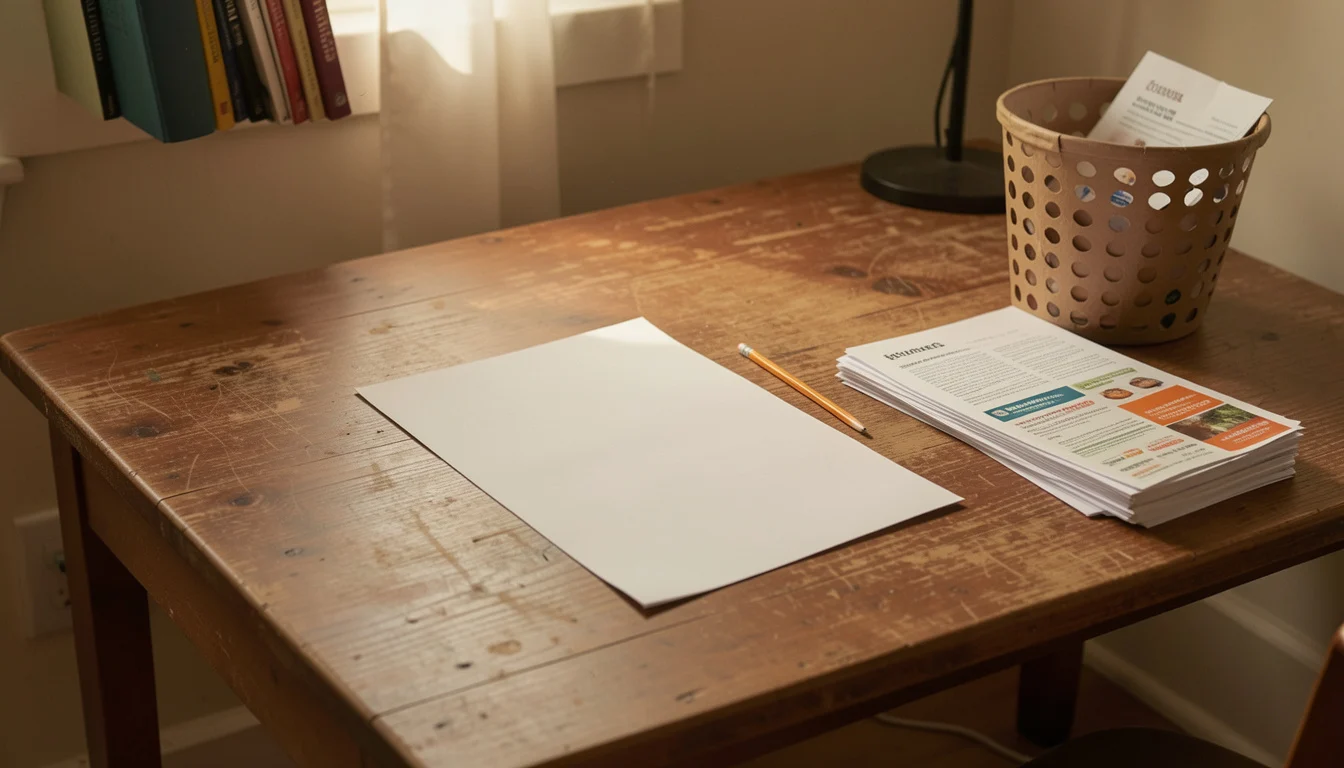 Clean sheets ready for another use
A stack of one-sided printouts, a drawer full of takeout menus, and a roll of paper towels can add up to a lot of avoidable paper at home. To reduce paper waste, skip paper you do not need, reuse clean sheets and packaging when they still have a purpose, and recycle only what your local program accepts.
You do not need to give up books, notebooks, or important paper records. The useful order is to reduce first, reuse what remains, then recycle or dispose of what cannot serve another purpose.
How Can You Reduce Paper Waste Without Going Paperless?
Paper waste is paper discarded when it could have been avoided, reused, or managed through an available recycling program. At home, reducing it means preventing unnecessary use, getting more value from usable paper, and following local rules for what is left. The best changes are the ones that fit your household’s routines and needs.
A digital option is not right for every task. Some people prefer paper for reading, recordkeeping, or accessibility, and some documents need a physical copy. Keep the paper that serves a real purpose; focus on the sheets and products that go unused.
Use less paper when you can, get another use from clean paper when it makes sense, and check local rules before recycling what remains.
Where Does Paper Waste Come from at Home?
Common paper waste examples include unwanted mail, duplicate printouts, paper towels and napkins, packaging, and sheets used on only one side. Which source matters most depends on the household: one home may discard lots of shipping boxes, while another uses more disposable cleaning products.
For a week, notice what paper you throw away most often. This is a quick way to spot a change that could stick, not a formal audit. A sheet used once for a short note may be easy to replace with a scrap; a paper towel used for a messy cleanup may still be the sensible choice.
Paper reduction also fits into wider household habits. These beginner-friendly sustainable living steps can help you choose changes that feel manageable rather than turning daily life into a list of rules.
What Everyday Changes Save the Most Paper?
Start with paper you can avoid without losing convenience or access. For documents that work well on screen, review them digitally; when you need a printout, check the layout and print only the pages you will use. Double-sided printing can cut the number of sheets for many documents, though single-sided pages may be better for forms, writing, or accessibility.
Unwanted mail can be reduced by using the sender’s opt-out process or a relevant local service where available. The Federal Trade Commission’s guidance on stopping unwanted mail explains options in the United States, but no single method stops every mailing.
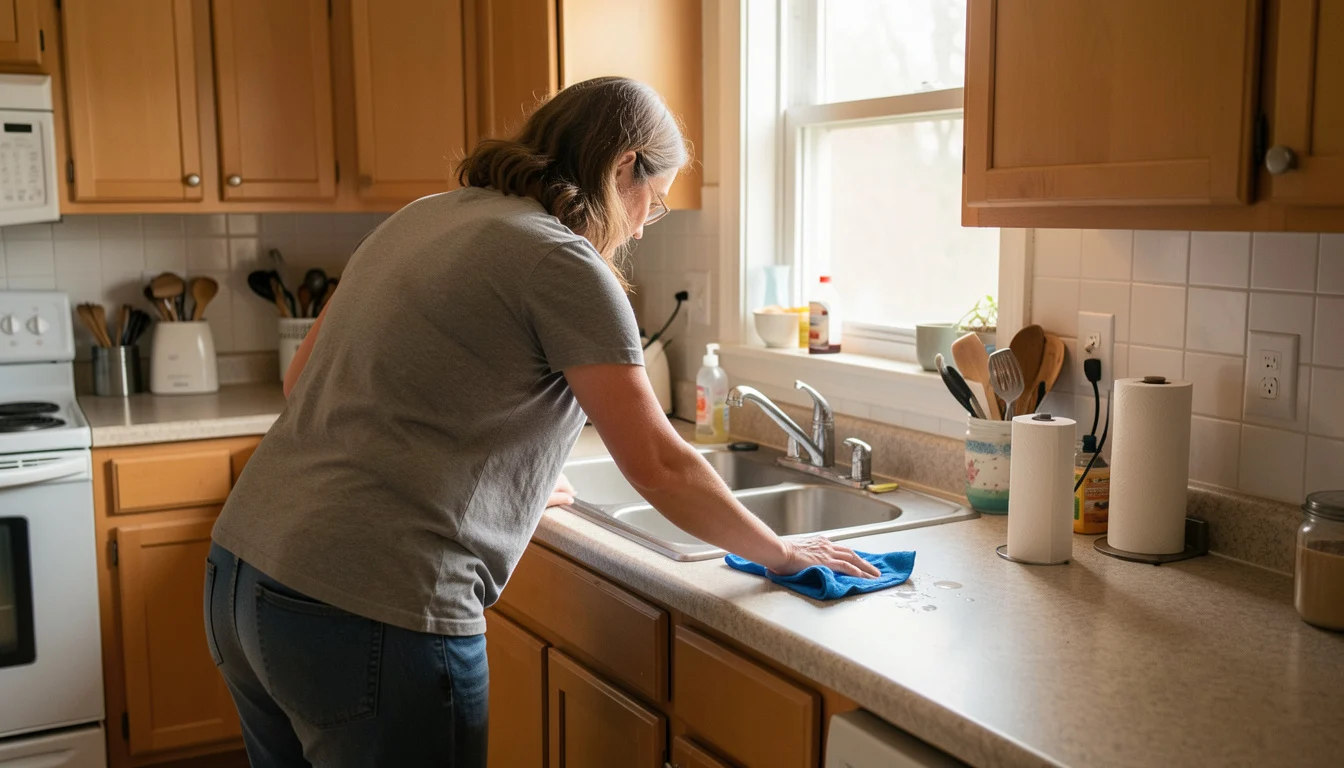
For suitable cleaning and meal tasks, washable cloths and napkins can replace some disposable products. Keep paper towels for jobs where a disposable sheet is useful, such as handling a small spill you do not want to put in the laundry. If you are also working on water use, consider these ways to reduce water use at home as a separate set of practical changes.
These 10 ways to save paper focus on everyday decisions rather than a paper-free household:
- Print only when a paper copy is needed.
- Preview documents before printing.
- Print double-sided when appropriate.
- Use blank page backs for drafts or notes.
- Reuse suitable envelopes and packaging.
- Keep scrap paper in one accessible place.
- Opt out of unwanted mail where possible.
- Use digital statements or notices when convenient.
- Try washable napkins or cloths for suitable tasks.
- Check local recycling instructions before discarding paper.
How Can You Reuse Paper Waste Before Recycling It?
Reuse clean, dry paper when it is suitable for the next job. Use blank backs for notes or drafts, save intact envelopes for household correspondence, and keep gift bags or wrapping paper that can be used again.
A small scrap-paper tray near a desk or printer makes reuse easier, provided it does not become a pile no one can sort through. Keep only pieces that are large enough for a likely task. Wet, greasy, or dirty paper may be unpleasant or unsuitable to reuse, and paper that has contacted food or bodily fluids should not be repurposed for a task where cleanliness matters.
Reusing paper is a lot like making a repaired item last longer: the second use should be practical, not a reason to store material indefinitely. The same principle appears in repairing clothes to extend their useful life.
Which Paper Can You Recycle or Dispose Of?
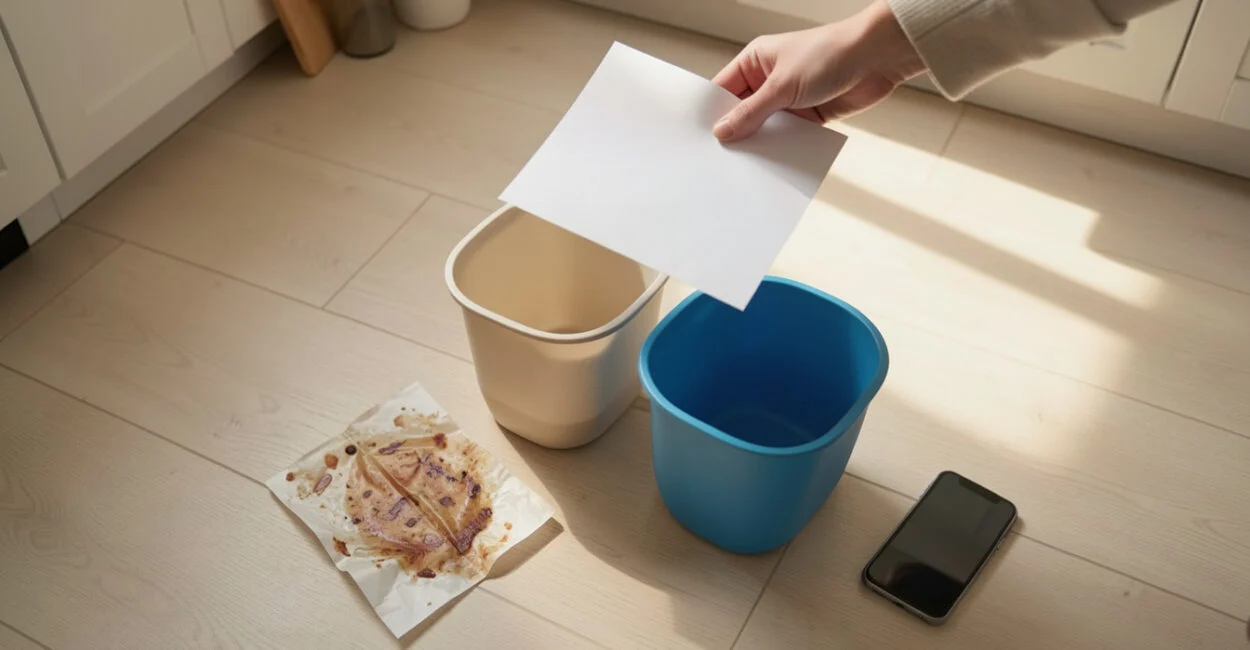
Recycle paper only if your local program accepts that type of paper in its current condition. Rules vary by municipality and collection service, so check your waste authority’s instructions for coated, wet, greasy, or shredded paper before putting it in a bin.
The U.S. Environmental Protection Agency explains that recycling guidance depends on the material and local collection system. Its recycling guide for common household materials is a useful starting point, but your local program’s instructions take precedence.
Paper item or condition
Possible next step
What to verify locally
Clean, dry paper accepted by the local program
Recycle
Whether that paper type is accepted
Greasy, wet, or food-soiled paper
Follow local disposal instructions
Whether any portion is accepted
Shredded paper
Follow local program instructions
Whether it is accepted and how it must be contained
Paper not accepted for recycling
Use the locally specified residual-waste route
Local disposal guidance
Paper suitable for another use
Reuse before disposal
Whether it is clean and fit for that use
Do not burn paper as a disposal method. Burning can create smoke and a fire hazard; use an accepted recycling route or the local residual-waste stream instead. Some materials, such as receipts, cartons, tissues, and shredded paper, have rules that differ by program, so avoid assuming they all belong in the same bin.
How Can You Make Paper-Saving Habits Stick?
Choose two or three changes to start, such as opting out of a mailing, using both sides of suitable sheets, or switching some napkin use to washable cloth. Put a scrap-paper tray where people actually write or print, and keep a reusable shopping list where it is easy to find.
At work, the same approach can help reduce unnecessary copies: review documents digitally when practical and print double-sided where it suits the task. Schools might use double-sided worksheets or reusable writing surfaces, subject to learning goals, teacher preferences, and accessibility needs. These are adaptations, not one-size-fits-all rules.
After a few weeks, check whether the household is buying fewer disposable paper products or throwing away fewer usable sheets. If a change creates extra hassle or does not fit a particular task, adjust it. The point is to reduce avoidable waste without making essential routines harder.
What Are the Main Paper-Waste Decisions?
Question
Short answer
Do I need a paper copy?
Print only when a physical copy serves a purpose.
Can I use this sheet again?
Reuse it if it is clean, dry, and suitable for the next task.
Does it belong in recycling?
Check whether your local program accepts that paper type and condition.
What should I do first?
Pick two or three changes based on the paper your household discards most.
Start by noticing what paper your household discards most often this week. Choose two practical changes, then check your local waste authority’s instructions before recycling unfamiliar paper.
📱 See this content as a Web Story
Frequently Asked Questions
Can Receipts Go in the Recycling Bin?
Receipt materials and local recycling rules vary. Check your local program’s guidance rather than assuming every receipt belongs with other paper.
Should I Keep Every Envelope and Scrap Sheet for Reuse?
No. Keep only items that are clean, usable, and likely to serve a real purpose. A small, sorted supply helps; a growing pile that no one uses does not.
Are Digital Documents Always the Greener Choice?
No single format is best for every person or task. Digital access depends on devices, connectivity, accessibility, and personal needs, so choose it when it is convenient and useful rather than treating it as a requirement.
How Can a Household Remind Everyone to Use Less Paper?
Place a short note near the printer or scrap-paper tray with a specific prompt, such as “Preview, then print double-sided if it works.” A visible reminder is more useful when it supports a habit the household has already chosen.