
How to Choose a Reusable Menstrual Product That’s Right for You
Comparison of reusable menstrual products by type, capacity, and cleaning method to help choose the best fit for your flow, comfort, and care routine.
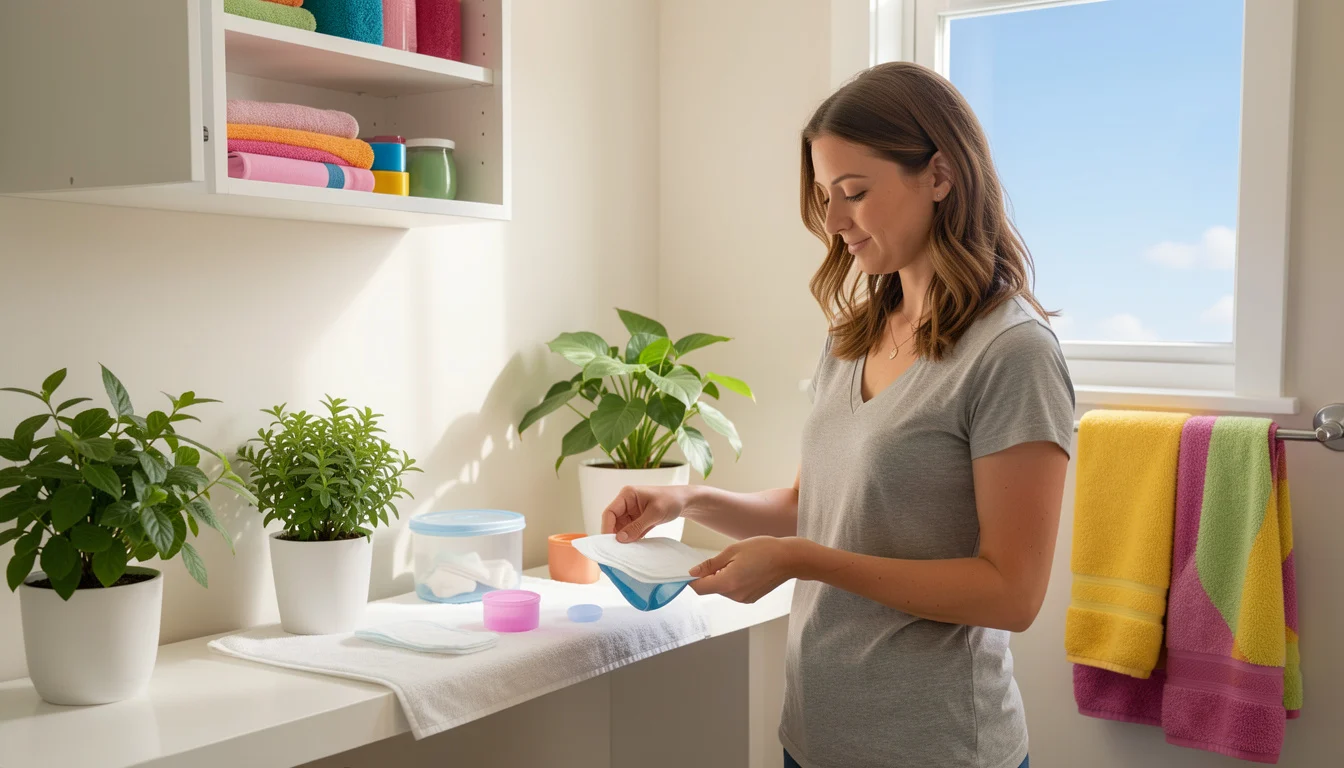 Comparing reusable period product options
Choosing a reusable menstrual product comes down to how you want to wear it, how much it needs to hold, and how you’ll clean it. Cloth pads and period underwear absorb menstrual fluid externally; cups and discs collect it internally. The right option depends on your flow, comfort, routine, and care preferences.
Reusable Menstrual Products at a Glance
Cloth pads or period underwear may suit people who prefer an external product; a cup or disc may work better for someone comfortable with internal insertion and cleaning. For heavy flow, compare product capacity and change intervals rather than relying on a product label alone. Many people also use a reusable product with a disposable backup while learning how it fits.
- Choose cloth pads if you want a washable option that sits in your underwear.
- Choose period underwear if you prefer an absorbent garment without a separate pad.
- Choose a cup if you want an internal collector that forms a seal when positioned correctly.
- Choose a disc if you prefer an internal collector that sits higher in the vaginal canal, near the cervix.
Compare the Main Types of Reusable Period Products
Cloth pads and period underwear absorb fluid, while cups and discs collect it. That difference shapes how each product fits, feels, and needs to be emptied or washed. A leak can still happen with any type if the fit, position, capacity, or change timing is wrong.
Criterion
Cloth pads
Period underwear
Cups
Discs
How it works
Absorbs fluid externally
Absorbs fluid in a built-in gusset
Collects fluid internally
Collects fluid internally
Fit
Attaches to underwear with snaps or another fastener
Fits like underwear; sizing matters
Requires insertion and a secure position
Requires insertion and placement behind the pubic bone
Capacity
Varies by size and absorbency
Varies by style and absorbency
Varies by model
Varies by model
Learning curve
Low; check that it stays in place
Low; choose a comfortable fit
Moderate; insertion and removal take practice
Moderate; positioning and removal take practice
Care
Wash according to the label
Wash according to the label
Empty, clean, and store as directed
Empty, clean, and store as directed
Often a better fit for
People who prefer a separate external product
People who want an absorbent garment
People comfortable with a reusable internal collector
People comfortable with a reusable internal collector
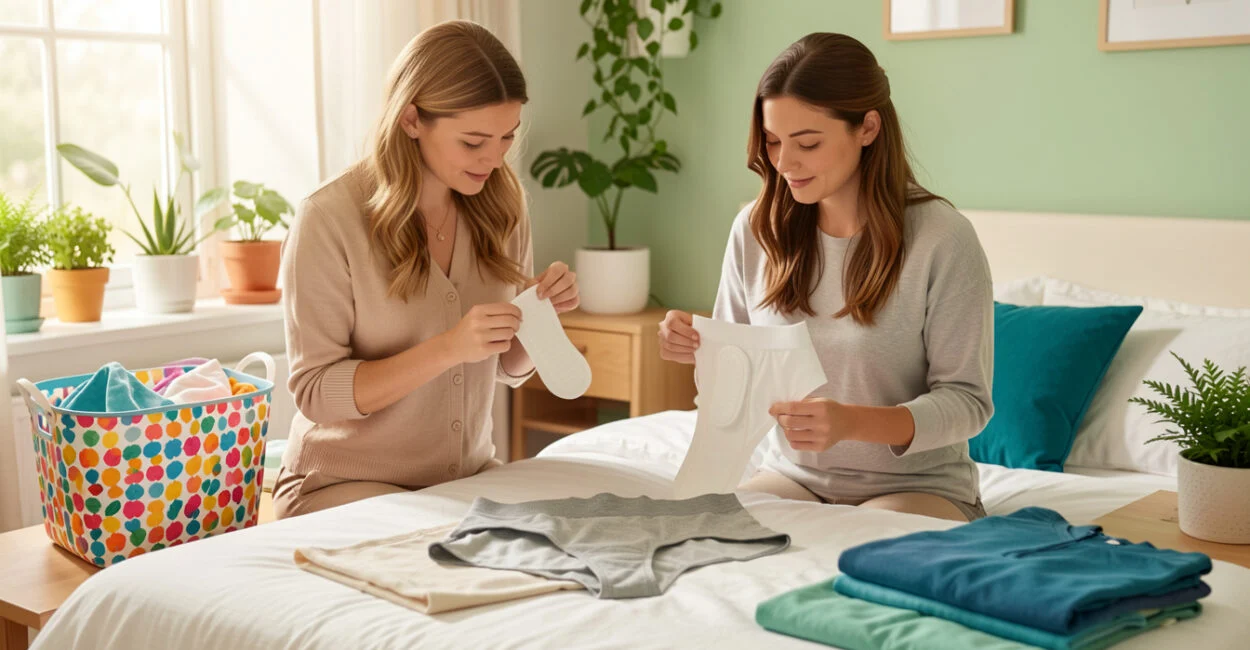
Choose for Your Flow, Fit, and Daily Routine
For an easier learning curve, cloth pads or period underwear generally have the edge. They avoid insertion, though the garment or pad still needs to match your flow and stay comfortably in place. Cups and discs can be more discreet under clothing, but their fit depends on placement, anatomy, and comfort with internal products.
Absorbency labels are not a direct measure across brands or product types. Compare the maker’s capacity information and recommended change guidance, and consider how your flow varies from day to day. If you’re looking for the best reusable period pads, start with the pad’s dimensions, absorbency description, and fastening style rather than the word “best” in a listing.
For a longer vulva-to-back coverage area, compare extra long pads for heavy periods by their actual length and shape. A longer pad may offer more coverage, but length alone does not tell you how much fluid it holds. People with heavy flow or clots may prefer a backup combination while they learn how quickly a particular product fills; cloth pads for heavy periods are available in different sizes and absorbencies.
Fit is personal, and general product guidance cannot predict whether a specific cup or disc will suit someone’s anatomy. If you have pain with insertion, a medical condition that affects product use, or concerns about your bleeding, ask a healthcare professional rather than forcing a product that feels wrong.
Using Reusable Products for Heavy Periods and Overnight
For heavy flow or overnight use, check the product’s stated capacity and change instructions, then make a plan that leaves room for your own flow pattern. Some people combine products, such as a cup with period underwear as backup, or a cloth pad with absorbent underwear. No combination guarantees leak prevention.
One common mistake is choosing a product by length or “heavy flow” labeling alone. Length describes coverage, not necessarily absorbency; check both dimensions and capacity information, and note whether the product is intended for overnight wear. If you wake up with leaks, consider whether the product shifted, reached capacity, or was not positioned as intended.
Clots can occur during menstruation, but reusable products are not a way to assess whether bleeding is medically concerning. Seek medical advice if your bleeding is unusually heavy for you, disrupts daily activities, or comes with symptoms that worry you.
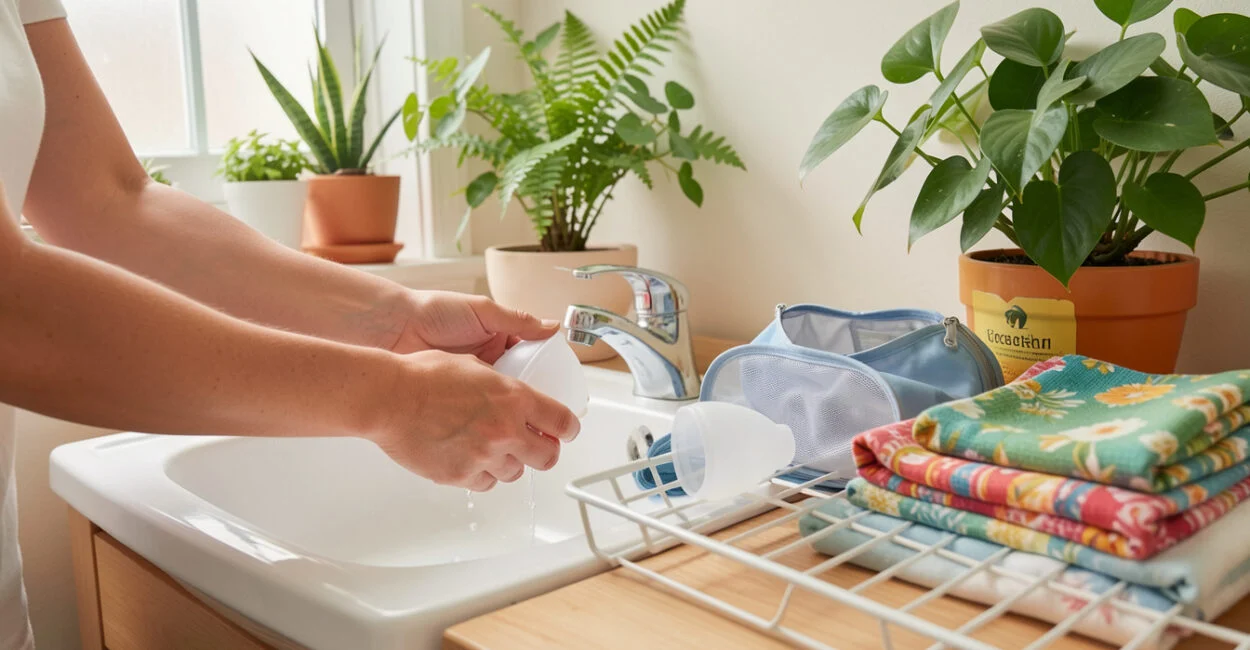
Cleaning, Storage, and Care
Reusable menstrual products can be used safely when you follow the manufacturer’s care and wear instructions and wash your hands before handling internal products. The U.S. Food and Drug Administration’s menstrual cup information explains that cups are regulated medical devices and advises users to follow the product’s directions. The NHS also provides guidance on menstrual cup use and care.
Care methods vary by material and construction. Follow the product label for washing, drying, and storage; avoid assuming that every fabric can tolerate the same detergent, temperature, or drying method. A damp product stored for a long time may develop odor or mildew, so let washable items dry fully before putting them away.
How Should You Handle Reusable Products Away from Home?
For products that need changing while you’re out, carry a clean spare and a leak-resistant pouch for used items. If you use a cup or disc, plan for a place to empty and rinse it when needed; access to a private sink may vary. Wash your hands before and after handling the product, and follow its specific cleaning instructions when you get home.
Cost, Materials, and Sustainability Trade-Offs
Reusable options usually require a larger initial purchase than a single disposable item, and the total cost depends on how many products you need, how often you use them, and how long they last. Compare the current price and care requirements for the specific products you’re considering; avoid assuming a fixed amount of savings.
Materials also affect feel and upkeep. Fabric products may use cotton or synthetic fibers, while cups and discs are made from materials specified by their manufacturers. Product lifespan and environmental impact depend on use, washing, materials, and eventual disposal, so a reusable option is not automatically the best fit for every person or household. For broader context, see this guide to choosing durable, eco-friendly goods.
For fabric choices, organic cotton basics can help explain what to look for in textile descriptions. For other bathroom items, this overview of plastic-free bathroom essentials offers related product research context; neither resource establishes the performance of a specific menstrual product.
How to Choose and What to Check Before Buying
Before buying, decide whether you want an external absorbent product or an internal collector, then compare fit, capacity, learning curve, and care. Product names and listings can help you find options, but they are not independent performance recommendations.
- Check dimensions, absorbency or capacity details, and the manufacturer’s change guidance.
- Review the material, washing instructions, and any stated limitations on use.
- Consider whether you can clean or store the product conveniently at work, school, or while traveling.
- Read sizing information and return policies, particularly for underwear, cups, and discs.
- Searches such as “Tree Hugger cloth pads,” “Rael reusable pads,” and “Soft Taco reusable pads” can surface product examples to research. Compare current specifications directly with the maker, since product ranges and details can change.
People searching for how to make reusable menstrual pads should use reliable sewing and fabric-care guidance and choose materials that can be washed and dried thoroughly. A homemade pad’s absorbency and fit are not standardized, so test it at home with a backup before relying on it away from home.
Can Reusable Products Be Used for Swimming or Exercise?
Internal cups and discs may be options for swimming or exercise if they fit comfortably and the manufacturer’s directions allow that use. Pads and period underwear are worn externally, so they may not suit swimming; for exercise, check whether the garment or pad stays secure and feels comfortable. No product type works equally well for every activity or body.
When Should a Reusable Product Be Replaced?
Replace it if it is damaged, no longer fits or functions as intended, or develops persistent odor or staining that does not come out with label-directed care. Follow any lifespan or replacement guidance from the manufacturer. There is no single replacement schedule that applies to every material and product.
📱 See this content as a Web Story
Frequently Asked Questions
Are Cups or Discs Better for Beginners?
Neither is universally easier. A cup relies on its placement and seal, while a disc must sit in the correct position; comfort with insertion and removal varies. Review the instructions and consider starting with the product whose design and care routine feel manageable.
Can Cloth Pads and Period Underwear Be Used Together?
They can be layered if both fit comfortably and the combination does not shift or create irritation. Check each product’s care instructions, and treat the pairing as added absorbent coverage rather than a guarantee against leaks.
Are Reusable Products Suitable for Everyone?
No single type suits everyone. Sensory preferences, mobility, access to washing facilities, flow, and comfort with internal products all matter. If using a product causes pain or irritation, stop and consider another option or ask a healthcare professional.
Before purchasing, check current product specifications and care instructions on the manufacturer’s official website, and consult FDA, NHS, or ACOG guidance for health-related questions.