
How to Read a Garden Soil Test Before Adding Amendments
How to interpret garden soil test reports by understanding lab crop assumptions, pH values, rating scales, and appropriate recommendations for soil amendment…
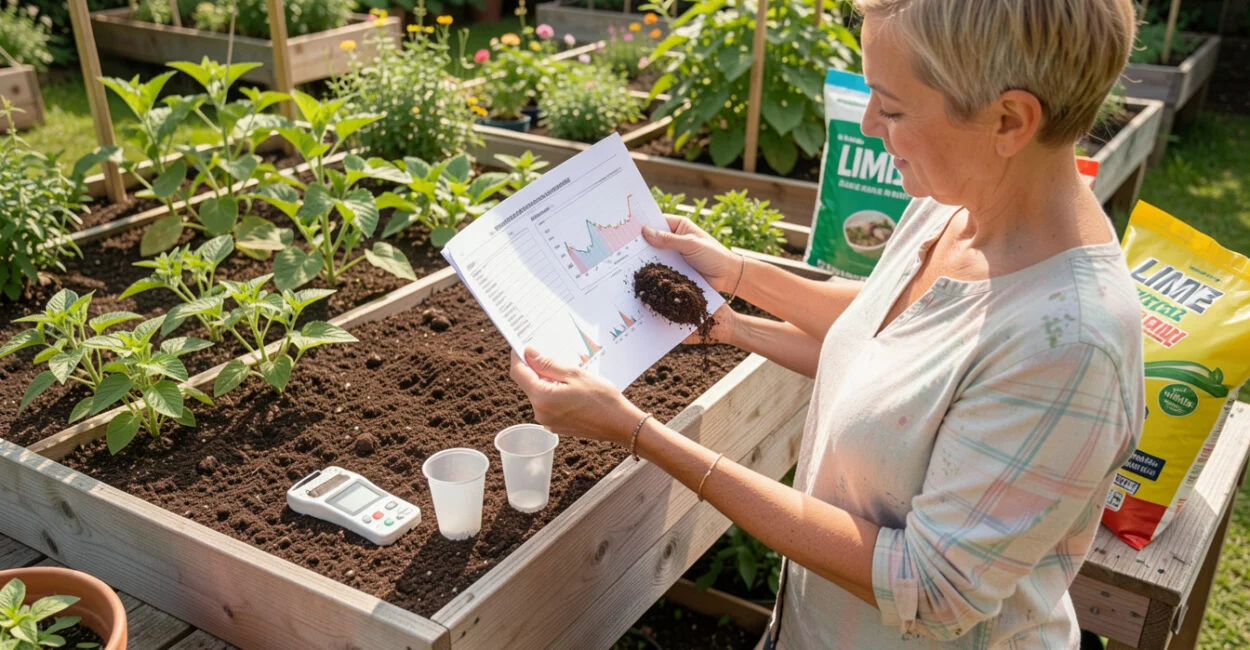 Reviewing soil results before amending a garden
A soil report can recommend lime, fertilizer, or both, even when your garden bed looks healthy. To read a garden soil test, start with the lab’s crop assumptions and rating scale, then check pH before deciding what nutrient results mean. The right next step may be an amendment, a different crop, or no addition at all.
Garden-bed tests are designed for soil in the ground. They do not use the same interpretation as a potting-mix analysis, so keep container advice separate from decisions about a vegetable or flower bed.
Before buying anything, find the sample date and note what was growing in the bed. A result describes the sample sent to the lab, not every corner of the garden or every future crop.
How to Read a Garden Soil Test Report
Read the report by identifying the crop or crop group the lab used, its rating scale, the units for each result, and the recommendation tied to those assumptions. Then check the tested area and application units before acting. A number alone does not tell you whether to add a product; its meaning depends on the lab’s method and your crop.
Look first for a summary or recommendation panel. Some laboratories give a direct application rate; others show a value such as “medium” or “adequate” and explain the scale elsewhere. Ratings and extraction methods differ among laboratories, so do not compare a result from one lab with another lab’s categories as if they were interchangeable.
Check whether the recommendation is for vegetables, flowers, lawns, or a named crop. A general vegetable recommendation may not fit a crop with unusual nutrient needs. The University of Massachusetts Amherst Soil and Plant Nutrient Testing Laboratory’s interpretation guidance explains how to connect results and recommendations to the lab’s stated assumptions.
Check Soil PH Before Interpreting Nutrient Levels
Soil pH measures acidity or alkalinity on a logarithmic scale; it helps explain whether nutrients are likely to be available to plants. A pH result is not a direct measurement of fertility, and the preferred range depends on the crop and local conditions.
When pH is outside a suitable range, a nutrient can be present in the soil yet less available to roots. That is why it is useful to read the pH result before treating a low nutrient rating as a straightforward fertilizer problem. The lab may recommend lime to raise pH or sulfur to lower it, but neither is a routine soil conditioner.
Match the pH recommendation to what you plan to grow. If the bed will hold several crops with different preferences, use a practical range that suits most of them rather than chasing a precise number for one crop. Soil type and local conditions affect how quickly a pH amendment works; a test cannot promise an exact change by a particular date.

Read the N-P-K Results and Ratings
An N-P-K soil test reports on nitrogen (N), phosphorus (P), and potassium (K), but the report may not provide a reliable soil measurement for every one of them. Many routine garden tests focus on phosphorus and potassium, while nitrogen recommendations may rely on crop needs, soil conditions, or other information rather than a single soil nitrate value.
Check whether the report lists a measured concentration, a rating, or both. The measured value may use units such as parts per million (ppm); the rating interprets that value using the lab’s method. “Low” or “high” is a classification, not an application rate. Follow the recommendation, and confirm whether it gives pounds of nutrient or pounds of fertilizer product per a stated area.
Phosphorus deserves particular care. Adding more when the report rates it adequate or high may increase nutrient buildup without helping the crop. If your garden plan includes vegetables spaced in a raised bed, use the bed’s actual dimensions when converting a lab’s area-based recommendation; do not apply a full-bed rate to a smaller patch.
Understand Organic Matter, CEC, and Other Reported Measures
Soil organic matter is the decomposed plant and animal material in soil. A soil organic matter test estimates its proportion, which can help explain soil structure and water- and nutrient-holding behavior. The result does not by itself tell you how much compost to add.
Read also: How to Start a Worm Composting Bin for Garden Soil
Cation exchange capacity (CEC) is a measure of how much positively charged nutrient ions soil can hold and exchange. A higher CEC often means greater nutrient-holding capacity; a lower CEC can mean nutrients move through the soil more readily. Texture and clay type affect CEC, so interpret it alongside the lab’s notes rather than treating one value as a quality score.
Some reports include soluble salts, electrical conductivity, or sodium-related measurements. These can flag salinity or related concerns, which matter because excess salts can interfere with water uptake and plant growth. If a result is flagged, ask the lab what the method and rating mean for your soil; adding fertilizer or compost without understanding the result may worsen the problem. USDA Natural Resources Conservation Service materials on soil quality indicators provide context for interpreting soil properties beyond nutrient ratings.
Match Soil Test Recommendations to Your Garden Bed
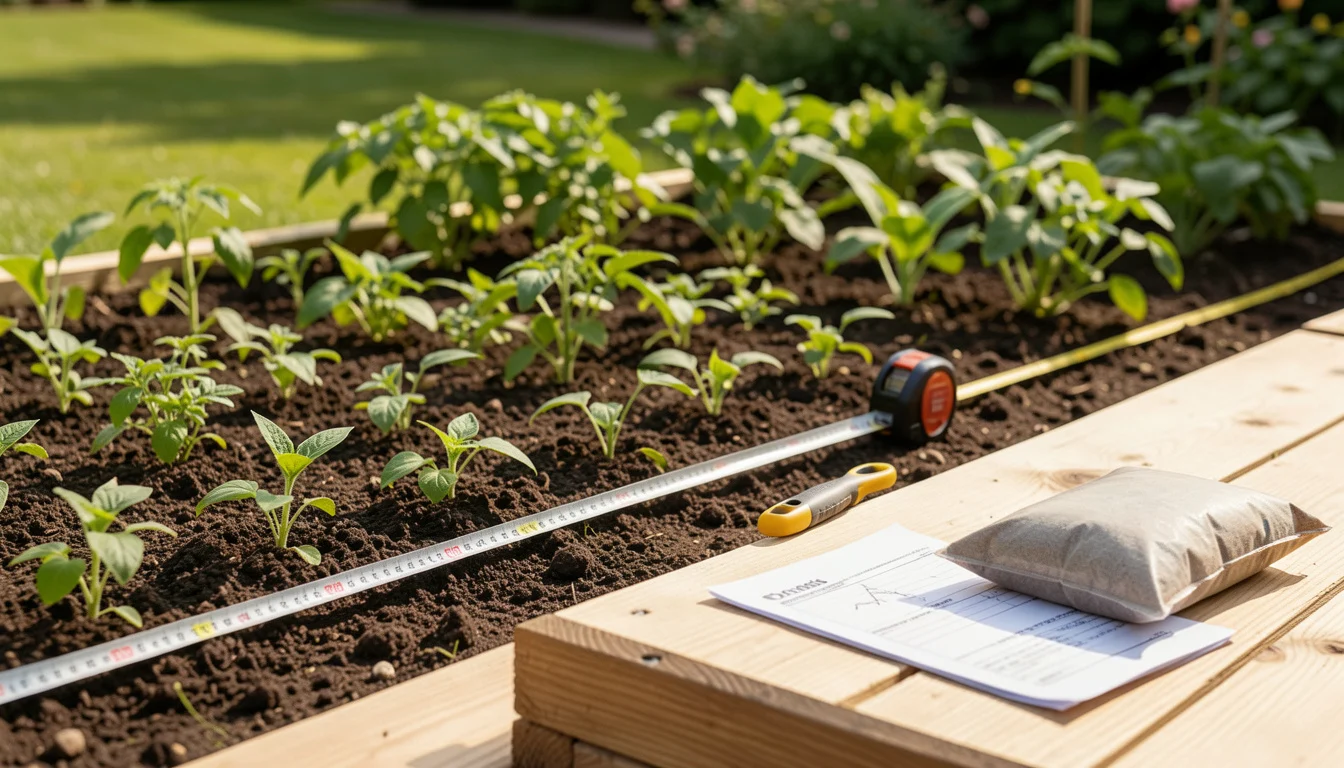
Before applying anything, check four details: crop, bed area, rate units, and timing. This catches a common mistake: reading a recommendation for a standard area and spreading that amount over a smaller bed. The fertilizer label and lab report must also agree on whether a rate refers to product weight or nutrient weight.
- Crop: Confirm the recommendation matches what you intend to grow.
- Area: Measure the bed, or the portion receiving treatment.
- Rate: Identify the product or nutrient basis and the area unit.
- Timing: Follow the lab’s guidance about incorporation and planting interval.
For example, if a lab recommends a stated amount per 1,000 square feet and your bed is 100 square feet, the bed represents one-tenth of that area. The matching amount is one-tenth of the stated rate, provided the recommendation applies to the same crop and product basis. This is an illustrative conversion, not a fertilizer prescription.
Gardeners planning successive crops can use the test results alongside a raised-bed succession planting plan. Crop timing matters: a recommendation intended for preplant incorporation may not suit a bed that is already planted.
Compare Common Amendments and Their Uses
Choose an amendment only when the test result, crop, and recommendation point to a need. The same product can be useful in one bed and unnecessary in another.
Amendment May address Check before use Lime Low pH, when the crop and lab recommendation call for raising it Use the report’s rate; lime type and soil conditions affect the result. Elemental sulfur High pH, when lowering pH is appropriate for the crop Change can be slow and depends on soil properties; do not apply by guesswork. N-P-K fertilizer A nutrient deficiency identified in the report or a crop-specific recommendation Match the product analysis and amount to the lab’s rate; excess nutrients can accumulate. Compost Adding organic material where soil condition and garden practice support it Compost can contain nutrients and salts. Repeated additions may raise phosphorus or soluble salts.
Compost is not automatically a safe substitute for fertilizer. Its nutrient content varies, and a bed with high phosphorus or salinity may need less nutrient-rich material, not more. For houseplants, use guidance intended for container media, such as this overview of potting mixes for houseplants, rather than applying garden-bed recommendations to a pot.
An amendment is justified when the lab result, crop need, and application rate point to the same action.
Make a Step-By-Step Plan Before Adding Anything
Use the report in this order: confirm the crop assumptions and test method, check pH, review nutrient ratings, then consider organic matter, CEC, and any flagged salts or sodium. Correct a documented limitation first; do not try to improve every number on the page.
If the report gives a range or rating without a clear action, consult the lab’s interpretation notes or contact the laboratory with the crop, sample location, and intended use. A rating alone does not justify an amendment. University of Minnesota Extension’s soil-testing guidance also explains why soil tests support decisions rather than provide a universal recipe.
How Often Should a Garden Bed Be Soil-Tested?
Retest on a schedule recommended by your local laboratory or extension service, and sooner if you make a major soil change or see a persistent problem. Many established beds do not need testing every season; the useful interval depends on soil conditions, crop intensity, and how much fertilizer or amendment has been applied.
Should I Take a Soil Sample Before or After Adding Compost or Fertilizer?
Take the sample before adding either. A recent application can affect the result and make it harder to assess the bed’s baseline. If you have already amended the soil, tell the lab what you added and when, and ask whether to wait before sampling.
What If the Report Gives a Range or Rating but No Clear Action?
Use the lab’s rating key and crop assumptions first. If the report still does not specify an action, do not guess at a rate; ask the lab or a local extension office to interpret the result for your crop and bed.
Can a Soil Test Report Show Salinity or Excess Nutrients?
Yes. Some tests report soluble salts or electrical conductivity, and nutrient results may show elevated phosphorus or potassium. Not every basic test includes salinity measures, so check the list of analyses on the report; request an appropriate follow-up test if the lab recommends one.
📱 See this content as a Web Story
Frequently Asked Questions
Can I Use a Garden Soil Test for Potting Mix?
Usually not. Garden laboratories calibrate recommendations for in-ground soil, while container media have different properties and need methods suited to potting mixes.
Why Do Two Laboratories Give Different Ratings for Similar Soil?
Labs may use different extraction methods, reporting units, rating thresholds, or crop assumptions. Compare the interpretation and recommendation from the same lab that analyzed the sample.
Should I Apply Fertilizer If Plants Look Pale?
Not from appearance alone. Pale leaves can have causes unrelated to a nutrient shortage, so use the soil report and check watering, roots, and plant-specific symptoms before fertilizing.
Does a High CEC Mean My Soil is Fertile?
No. CEC describes nutrient-holding capacity, not the amount of each nutrient available to plants. Read it alongside pH, nutrient results, organic matter, and the crop recommendation.