
Vertical Vegetables for Small Raised Beds: What to Grow
How vertical vegetables in raised beds free up soil space by training climbing crops like beans and cucumbers, with tips on support placement and avoiding sh…
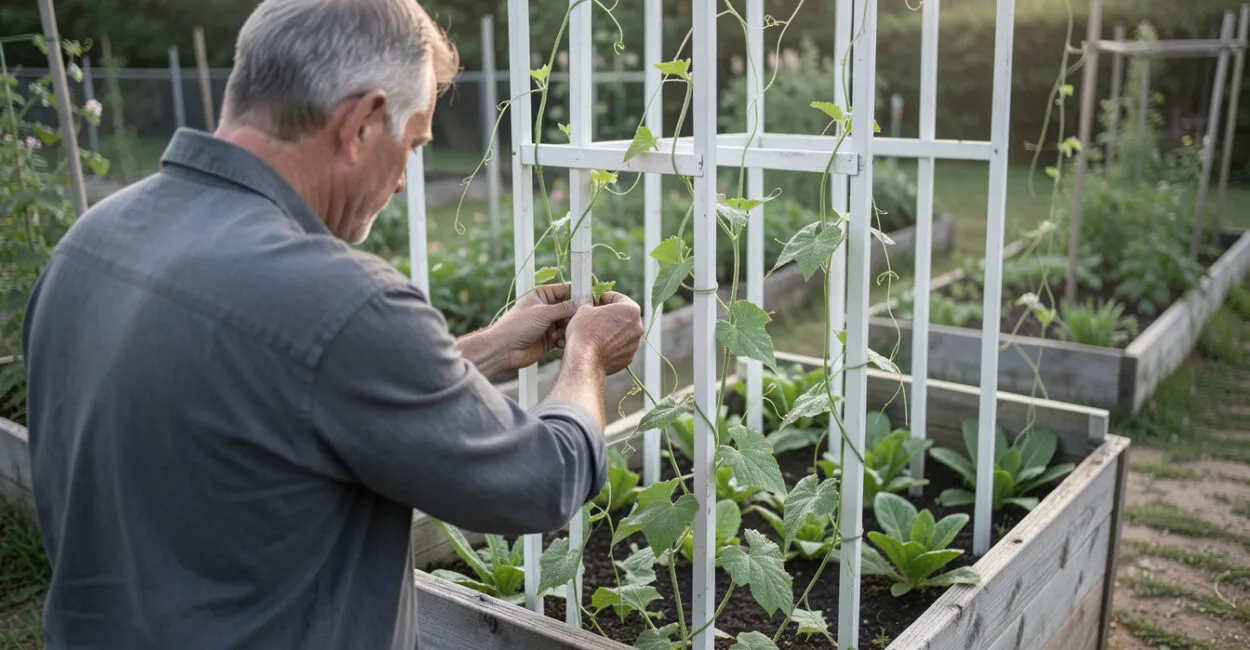 Training vines above a compact raised bed
A small raised bed can feel full long before it produces much food: sprawling vines take over paths and crowd shorter crops. Growing vertical vegetables lets climbing plants use space above the soil instead of spreading across it. For compact beds, climbing beans, peas, and cucumbers are the most useful choices, provided their supports are stable, well placed, and easy to reach.
Vertical growing is a space-saving method, not a way to make every vegetable climb. It works best when a crop naturally twines or has tendrils, and when the bed gets enough sun and water to support growth on a trellis. A little planning at planting time helps prevent shade, tangled vines, and overloaded supports later.
How Vertical Vegetables Save Space in a Raised Bed
Growing vegetables vertically means directing a climbing or vining crop up a support rather than letting its stems trail across the soil. In a small raised bed, that can preserve open ground for bush crops, roots, or a clear path for harvesting. The space saved depends on the crop’s mature spread and the support’s footprint; a trellis still occupies bed area and can cast shade.
Vertical growing also lifts leaves and fruit off the soil, which can make picking easier and improve airflow around a plant. It does not guarantee fewer pests or disease, and it does not remove the need for regular watering. The University of Minnesota Extension’s raised-bed guidance is a useful reference for planning bed layout and crop spacing.
A climbing crop saves raised-bed space only when its support keeps the vine contained without blocking light or access.
Which Vegetables Grow Well Vertically?
Climbing beans, peas, and cucumbers are reliable choices for growing upward in a home vegetable bed. Pole beans twine around slender supports, peas grip mesh or netting with tendrils, and cucumber vines can be guided onto a sturdy trellis. Choose a climbing variety: bush beans and bush cucumbers stay compact and do not need a tall support in the same way.
Crop How it climbs Support to consider Pole beans Twining stems wrap around narrow supports Sturdy poles, a tripod, or strong mesh Peas Tendrils catch on fine mesh or netting Netting, pea sticks, or a light grid Cucumbers Vines climb with tendrils and need guidance Firm mesh or a strong trellis
Other vining crops may be trained vertically, but fruit weight matters. Small-fruited varieties are generally easier to manage than heavy types; large cucumbers may need individual slings once they develop. Tomatoes and peppers often need stakes or cages to support their stems and fruit, but they do not climb by themselves, so they are supported vegetables rather than climbing vegetables.
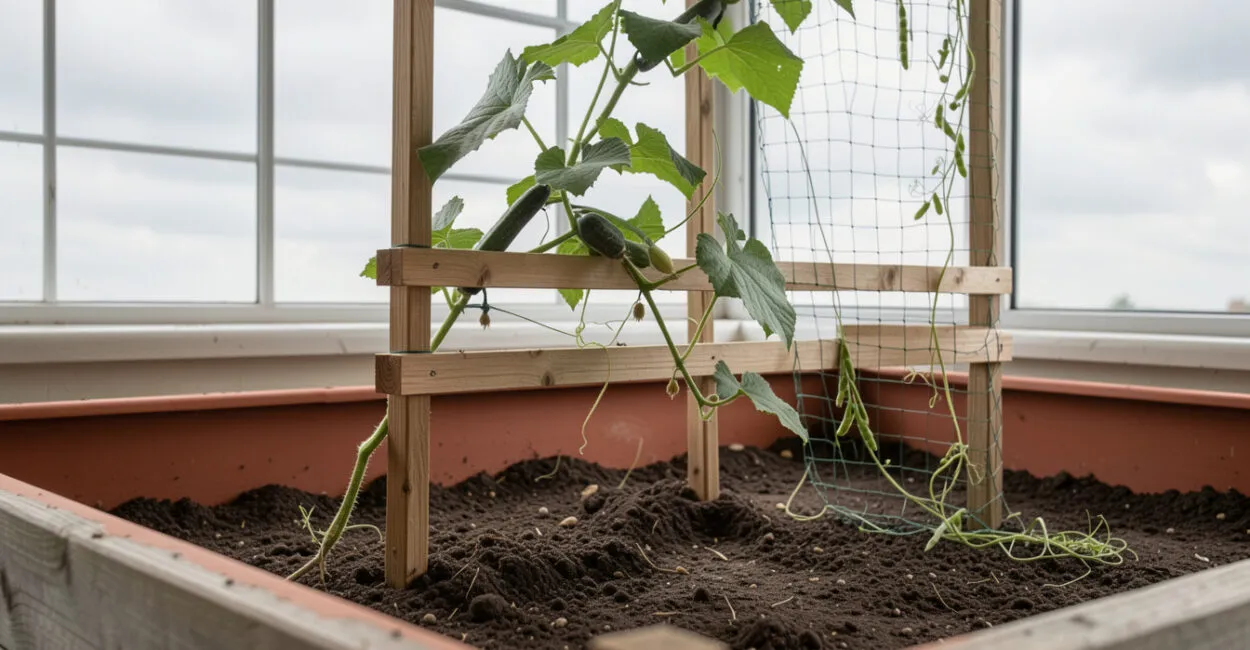
Choose Supports That Match the Crop
A support should suit the plant’s climbing habit and carry the mature vine without bending or tipping. Peas can use relatively fine netting because their tendrils need narrow surfaces to catch. Pole beans need poles, strings, or mesh they can wrap around. Cucumbers call for a firmer structure that can hold leafy growth and developing fruit.
Complete guide: Best Vegetables for Raised Beds in Small Gardens: 12 Top Picks
In a raised bed, the key detail is how the support is anchored. Soil in a bed may be loose or shallow, so a tall panel pushed only a short way into the growing mix can wobble under wind and wet foliage. Secure it to the bed frame where appropriate, or use a freestanding structure with a broad, stable base. Leave enough room to reach the back of the bed and pick fruit without pulling vines away from the support.
Place Supports to Protect Sunlight and Access
Put a trellis where it will not shade crops that need full sun. In many gardens in the Northern Hemisphere, placing a tall support on the north side of a bed helps reduce the shadow it casts over shorter plants. The sun’s path, nearby walls, and the bed’s orientation all affect the result, so observe the site rather than relying on direction alone.
Read also: When to Divide Perennials for Healthier, Fuller Garden Beds
Airflow and access matter, too. A dense wall of foliage can make it hard to inspect leaves or reach vegetables tucked behind the trellis. Avoid planting a climbing crop where its mature vines will cover a narrow route or block sunlight from lettuce and other low-growing crops. For broader ideas on arranging limited growing space, see these small-space layout principles, then adapt them to the sun and access needs of a vegetable bed.
Plant and Train Vines Before They Tangle
Sow seeds or set transplants near the base of the support, following the spacing and depth on the seed packet. Leave room for air and for your hand to reach between plants; packing more seedlings beside a trellis can create a crowded, damp canopy. If the structure is meant to stand behind the plants, install it before sowing so roots and young stems are not disturbed later.
Check young vines as they grow. Pole beans often find their way onto a pole, but a pea stem may need its tendrils guided toward netting, and a cucumber may need gentle redirection. Use soft ties only when necessary, and keep them loose enough to avoid cutting into expanding stems. For plants that are supported but do not climb, such as tomatoes, tie the main stem to its stake as it grows.
Keep Climbing Crops Healthy and Secure
Climbing vegetables need consistent moisture, particularly as they flower and set fruit. Water at the soil level when possible, and check the bed more often during hot or windy weather because raised beds can dry faster than surrounding ground. The University of Maryland Extension’s raised-bed resource covers practical considerations for managing these growing conditions.
Harvest beans and cucumbers regularly so fruit does not become oversized and heavy on the vine. As the canopy fills in, look for stems that have slipped off the support, ties that have tightened, and connections that loosened after wind or rain. A quick check after a storm can prevent a loaded trellis from leaning into neighboring crops.
Know When Vertical Growing is a Poor Fit
Skip a tall support if the bed is shaded for much of the day, if the trellis would block a neighboring crop, or if the bed frame cannot safely anchor it. Heavy fruits, vigorous vines, and exposed sites put more strain on supports than light pea vines do. In those conditions, a compact bush variety or a lower, sturdier support may work better.
Vertical growing also cannot compensate for overcrowding or poor access. Before planting, sketch the bed with mature plant sizes in mind, then reserve space for both the crop and the support. If pest pressure is part of the problem, choose a specific response rather than expecting elevation alone to solve it; for example, learn how beneficial insects that feed on aphids fit into a garden’s pest management.
Start with one climbing crop and a support suited to its mature weight. Mark where the trellis will cast shade, confirm that it is anchored, and leave a reachable side for harvesting. That small trial will show whether vertical growing fits the light and layout of your raised bed before you commit more space.
📱 See this content as a Web Story
Frequently Asked Questions
Can I Grow Cucumbers Vertically in a Small Raised Bed?
Yes. Choose a climbing cucumber, install a firm trellis, and guide the young vines onto it. Support heavy fruit if it begins to pull on the vine.
Do Peas Need a Sturdy Trellis?
Peas are lighter than mature cucumber vines, so they can use netting or a simple grid. The support still needs secure anchoring, especially in a windy spot.
Should a Trellis Go on the North or South Side of a Raised Bed?
In many Northern Hemisphere gardens, the north side is a useful starting point for a tall trellis because it is less likely to shade shorter crops. Check the actual sun path and nearby obstructions before choosing the final position.
Can Tomatoes Count as Vertical Vegetables?
Tomatoes can grow upright on stakes, strings, or cages, but they do not climb by themselves. They need a grower to attach and support the stems as the plant develops.
How Do I Keep a Raised-bed Trellis from Tipping Over?
Anchor it to the bed frame or use a stable freestanding design, and account for the weight of wet foliage and mature fruit. Check connections after strong wind or rain, when a loose support can shift under load.