
How to Find a Wall Stud Without a Stud Finder
How to locate wall studs without a stud finder by tapping drywall, tracing screws with a magnet, and aligning shelf brackets for safe, reliable mounting points.
 Magnet tracing hidden wall fasteners
A wall can sound solid and still hide the wrong drilling spot; a magnet and a second clue can help you narrow the search before you commit.
To find a wall stud without a stud finder, start by tapping across the drywall, then use a magnet to trace screws or nails in a vertical line. Nearby outlets and switches can offer another clue. None proves a safe drilling point on its own.
A stud is a vertical framing member behind the wall surface, usually wood or metal, that can support a fastener when you use hardware suited to the material. The key is to locate a likely stud, then check that the spot works for your shelf and is safe to drill.
Start with the Shelf, Not the Wall
To locate a dependable mounting point without a stud finder, first consider the shelf’s load, bracket locations, and wall type. A light shelf with hardware designed for drywall may not need a stud; a heavier shelf or one holding dense items often needs stronger support. Check the shelf maker’s instructions before marking the wall.
Bracket placement matters, too. If the brackets cannot line up with framing, you may need a different shelf position or mounting method. For garage storage, compare the shelf’s intended use with advice on wall shelves versus ceiling racks before drilling.
Tap Across the Wall to Narrow the Search
Tap lightly across a horizontal line on the wall. Drywall between framing often sounds hollow; a spot over a stud tends to sound firmer and less resonant. Move a few inches at a time and mark where the sound changes, then tap above and below that area to see whether the firmer sound continues vertically.
Tapping identifies a likely zone, not a confirmed stud. Wall texture, insulation, plaster, and nearby corners can change the sound. A common mistake is to hear one firm spot and drill there; the sound may come from a pipe, blocking, or another feature behind the wall.
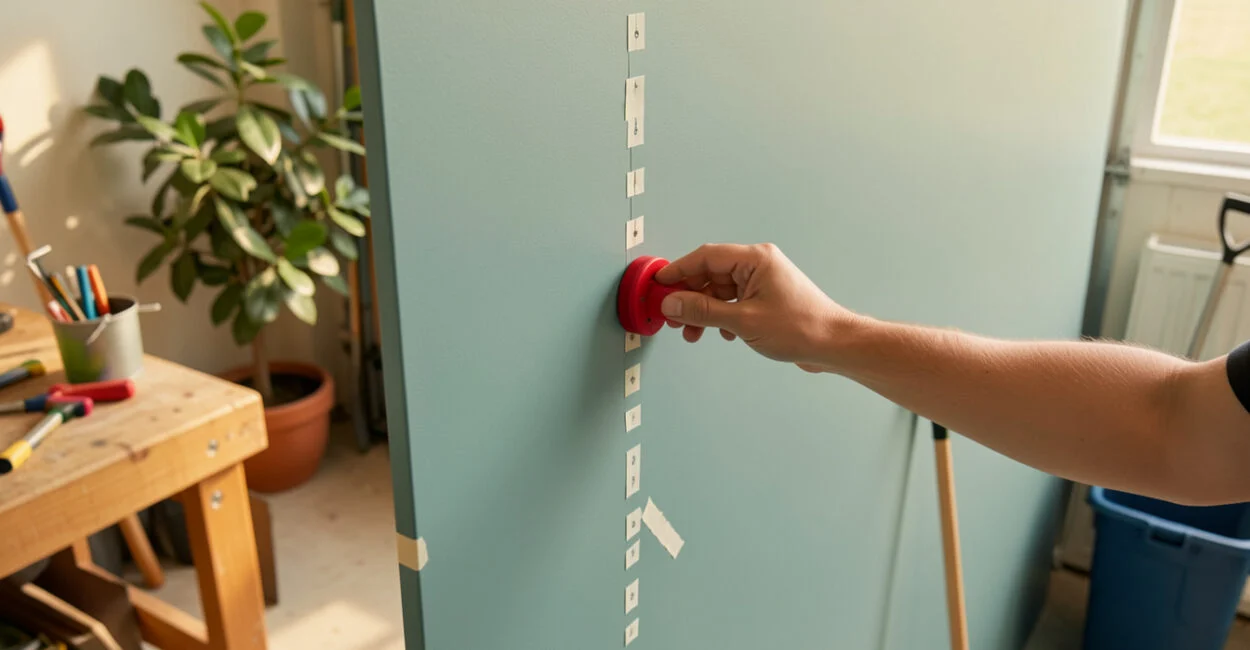
Use a Magnet to Trace Drywall Fasteners
A magnet can detect steel drywall screws or nails beneath paint and joint compound. A vertical line of fasteners is stronger evidence of a stud than one isolated sound, though it still does not tell you what else may be inside the wall.
- Move a small magnet slowly across the suspected area until it catches.
- Mark the spot lightly with a pencil or removable tape.
- Scan above and below it for more fasteners in line.
- Repeat the scan nearby to see whether a second vertical line appears.
Fasteners may be hidden by thick finishes, and a missed screw does not rule out a stud. If you’re planning a broader storage project, these garage storage fixes can help you plan shelf placement before you start making holes.
Check Outlets, Switches, Corners, and Trim
Electrical boxes are often fastened to a stud, so a box can give you a useful starting reference. But its position does not show which side the stud is on, and the box itself is not a safe place to drill. Use tapping or a magnet to check the surrounding area instead.
Baseboards and door or window trim can also offer clues: nails may mark framing, and studs are often positioned near openings and corners. These clues vary with construction and later repairs. Never drill near a switch or outlet based on guesswork alone. The Electrical Safety Foundation International (ESFI) advises caution around wiring; cables may run through framing. If you cannot judge the route, stop and get qualified help.
Compare the Clues Before Marking a Drill Point
Clue What it suggests Limitation Tapping A change from hollow to firmer sound Sound can be affected by wall construction Magnet Drywall fasteners that may follow framing One fastener alone does not confirm a stud Outlet or switch A nearby framing reference Does not reveal the stud’s side or wiring route
Look for agreement: a firmer sound and a vertical line of fasteners in the same area are more persuasive than either clue alone. Studs are often spaced at regular intervals, but that pattern is only a guide. Doors, corners, renovations, and older construction can disrupt it; don’t project a spacing pattern across the wall as proof.
Know When the Usual Clues Won’t Help
Plaster can make tapping less useful, while metal studs may not hold a magnet in the same way as drywall screws. In older homes or remodeled walls, framing can be irregular. The International Residential Code describes conventional framing requirements, but an existing wall may not match a standard layout. USG’s Gypsum Construction Handbook also covers drywall assemblies and installation.
If the clues disagree, the wall is plaster, or the shelf will carry a substantial load, borrow or buy a detector, or consult a professional. An organized garage storage plan is easier to revise on paper than after a misplaced hole needs patching.
Mount the Shelf Only After Confirming the Spot
Once the clues point to the same location, check the shelf instructions and choose fasteners suited to the stud material and load. Drill a small pilot hole where appropriate, using a depth that fits the fastener; stop if you meet unexpected resistance or suspect wiring, plumbing, or metal that you cannot identify. Never force the drill to make a clue fit.
A shelf bracket should sit flat, and its fastener should engage the framing or a wall anchor rated for the job. If the pilot hole does not behave as expected, pause and reassess rather than widening it blindly. The best mounting point is the one you can explain from evidence, not the one that merely looked right.
📱 See this content as a Web Story
Frequently Asked Questions
Can You Find a Stud Behind Plaster?
Yes, but plaster can make tapping harder to interpret, and lath may confuse some detectors. Try tracing fasteners with a magnet and confirm the location with more than one clue.
How Can You Tell If a Wall Has Metal Studs?
A magnet may locate drywall screws, but that alone does not identify the framing. If the wall’s construction is uncertain, use a detector designed to identify metal or ask a professional before choosing fasteners.
Does an Outlet Prove a Stud is Beside It?
No. A box is often attached to framing, but it does not show which side the stud occupies or where wiring runs.
What Should You Do When the Clues Disagree?
Don’t drill yet. Recheck the area with a different method, and use a detector or get qualified help if the wall type, wiring, or intended load remains uncertain.