
Sustainable Products: Choosing Durable, Eco-Friendly Goods
How sustainable products are evaluated across their full life cycle, balancing environmental and social impacts with durability, materials, and certifications.
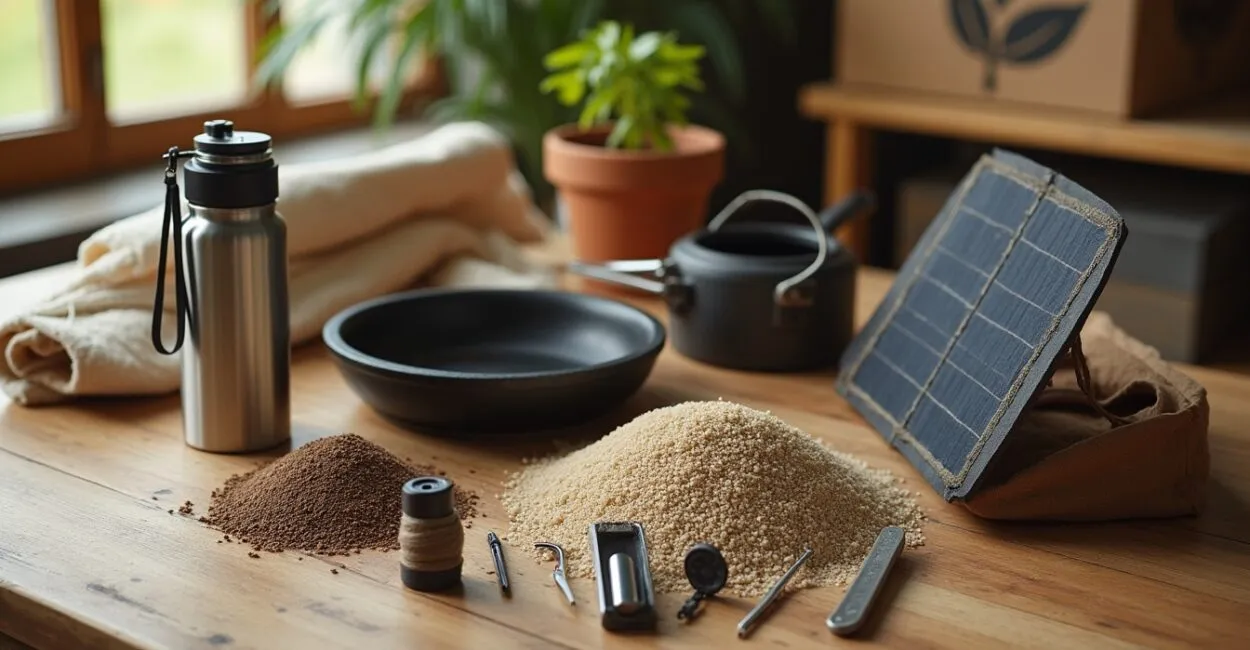 Durable reusable goods arranged with sustainable materials
📅 Updated on 10/11/2026
A product made from recycled material can still wear out quickly, rely on energy-intensive manufacturing, or be impossible to recycle where it is sold. Sustainable Products are goods assessed across their life cycle, from raw materials and production to use and end of life, with environmental and social impacts considered alongside performance.
For shoppers, that means checking whether an item fits its intended use and can be maintained or reused. For businesses, it means setting measurable requirements for design, suppliers, manufacturing, and disposal. No single material or label answers every question; the right choice depends on how the product is made, used, and handled afterward.
Key Points
- A sustainability assessment considers a product’s full life cycle, not just its main material or packaging.
- Durability often matters most when a product is replaced frequently and can be repaired or kept in service longer.
- Recycled and biodegradable describe different material properties; neither term guarantees a lower impact in every use case.
- Certifications apply to defined criteria and product scopes, so buyers should verify what a label actually covers.
What Are Sustainable Products?
A sustainable product is a good designed, sourced, manufactured, and used in ways that reduce environmental harm and address relevant social impacts across its life cycle, while still meeting its intended function and safety requirements. In plain terms, it should do its job well and create less avoidable harm from material extraction through disposal.
Life-cycle thinking can include raw material extraction, processing, transportation, manufacturing, energy and water use, maintenance, and end-of-life treatment. Social considerations may include worker safety, labor conditions, and responsible sourcing. The relative importance of each stage varies: a frequently used appliance, for example, may have a different impact profile from a single-use package.
Terms such as “natural,” “recycled,” and “biodegradable” describe particular attributes, not a complete sustainability verdict. A natural fiber may require substantial water or chemical processing; a recycled item may be difficult to recycle again if it combines materials; and biodegradation depends on the material and disposal conditions.
How to Evaluate Materials, Durability, and Manufacturing
Compare materials against the product’s actual function, expected service life, manufacturing needs, and likely end-of-life route. Material choice alone cannot establish which option has the lower overall impact; the answer may change with the product’s weight, lifespan, supply chain, and local waste infrastructure.
| Option | Potential value | What to check |
|---|---|---|
| Recycled content | Can reduce demand for virgin feedstock. | Recycled-content share, material quality, additives, and whether the finished item can be recycled again. |
| Biodegradable material | May break down under specified biological conditions. | Required temperature, moisture, processing time, and access to suitable composting or treatment facilities. |
| Durable conventional material | Can support long service life, repair, or repeated use. | Expected lifetime, repair access, replacement parts, and impacts from production and disposal. |
Durability should take priority over material innovation when premature failure drives repeat purchases and the product can realistically be repaired, maintained, or reused. A long-lasting item is less compelling if its design prevents repair or if it sits unused. In a practical procurement review, test closures, seams, hinges, and replaceable components: these small failure points often determine whether a product stays in service.
Manufacturing choices matter too. Ask suppliers about energy and water use, chemical controls, waste, and worker protections. A lower-impact material processed with poor controls may not be a better choice overall, and claims should be supported by records rather than a supplier’s broad assurances.
The U.S. Environmental Protection Agency’s overview of sustainable materials management explains why decisions should consider materials through their full life cycle, rather than focusing only on disposal.
Read also: 7 Sustainable Fashion Moves Transforming 2025 Wardrobes
How to Source Sustainable Products
Good sustainable product sourcing begins with a written specification. Define the product’s function, safety and quality requirements, preferred material attributes, expected service life, and the evidence suppliers must provide. This keeps procurement from substituting a vague “green” claim for a measurable requirement.
- Set priorities. Identify the most relevant impacts for the product, such as material origin, durability, chemical content, or packaging.
- Screen suppliers. Ask about facilities, subcontractors, traceability, labor practices, and environmental controls.
- Verify evidence. Request material specifications, test results, chain-of-custody records, audit scope, and current certificates where relevant.
- Check production readiness. Confirm that samples match the specification and that controls will remain in place during full-scale production.
A certificate for one factory, material, or product line does not automatically cover every item from the same supplier. Verify the certificate holder, covered site, product category, validity, and standard version. For higher-risk supply chains, documentation can be supplemented with independent audits, but an audit is a snapshot; it does not replace ongoing supplier oversight.
Read also: How to Choose a Reusable Menstrual Product That’s Right for You
Costs, Benefits, and Product Sustainability Trade-Offs
The cost of improving a product depends on the change. Switching materials may affect unit price, tooling, testing, or production yield; improving repairability may require spare parts, service instructions, or a different design. There is no reliable universal price, so teams should scope the change and compare full costs before committing.
Total cost of ownership includes purchase price and the costs of use, maintenance, repair, replacement, and disposal. For businesses, sourcing improvements can also involve supplier qualification, traceability systems, and staff time. For consumers, a higher upfront price may or may not pay off: compare expected life and repair costs rather than assuming a premium product will last longer.
Trade-offs are real. Recycled content can have limitations in availability or performance; lighter packaging may need stronger protective design; a biodegradable material may not break down in a home compost bin. The best option depends on product use and local infrastructure, and specialists may reach different conclusions when they use different life-cycle boundaries or assumptions.
Certifications, Eco-Labels, and Credible Marketing
A certification process generally involves checking a product, material, facility, or management system against a defined standard. Depending on the program, that can include document review, testing, an audit, and follow-up checks. Criteria and scope vary, so certification is evidence of meeting particular requirements, not a universal guarantee that a product is sustainable.
Before relying on an eco-label, find out who runs the program, what criteria it uses, which products or sites it covers, and whether claims receive independent verification. A self-declared statement and a third-party certification do not carry the same evidentiary weight. The Federal Trade Commission’s Green Guides offer U.S. guidance on avoiding deceptive environmental marketing claims.
Marketing should name the specific attribute and its scope. “Made with 60% recycled plastic by weight” is more informative than “eco-friendly,” provided the figure is documented and the claim makes clear which component it describes. Avoid broad claims such as “zero impact” or “fully sustainable”; they are difficult to substantiate across a product’s full life cycle.
A Practical Roadmap for Design, Testing, and Implementation
Start with one product category where the function and main impact areas are understood. Establish a baseline, document the current bill of materials and suppliers, and select an improvement that can be tested without compromising safety or performance.
- Set measurable design and sourcing requirements, including service-life and repair targets where appropriate.
- Test samples for performance, wear, maintenance, and compatibility with intended reuse or recycling routes.
- Run a limited production trial, then check quality, supplier records, and any customer or service feedback.
- Update purchasing specifications and marketing claims only after the evidence supports them.
Testing should reflect real use. A reusable container, for instance, needs checks for repeated opening, cleaning, and leakage, not only a material certificate. Keep test methods and acceptance criteria consistent so that a sustainability change does not quietly reduce product quality.
For life-cycle assessment methods, the International Organization for Standardization’s ISO 14040 overview describes the principles and framework used in life-cycle assessment. A formal assessment can add rigor, though its conclusions still depend on scope, data quality, and assumptions.
Frequently Asked Questions About Sustainable Products
What is the difference between recycled and biodegradable products?
“Recycled” describes material made partly or wholly from recovered inputs. “Biodegradable” describes the potential for biological breakdown under specified conditions. A product can be one, both, or neither, and the terms alone do not show which option has the lower life-cycle impact.
How does certification work for these products?
A certification program checks defined criteria within a stated scope, often through documentation review, testing, or audits. Verify the standard, covered product or facility, certificate status, and whether an independent organization conducts the assessment.
When should durability take priority over a new material?
Prioritize durability when early failure leads to frequent replacement and the item can be maintained or repaired. Compare expected service life and end-of-life options as well; durability offers less benefit when a product is rarely used or cannot be kept in service.
How much does it cost to improve a product’s sustainability?
Costs vary with the product and the change, so there is no dependable general price. Estimate material, design, testing, supplier, manufacturing, and ongoing maintenance costs, then compare them with the expected service life and replacement needs.
How can a business avoid greenwashing?
Use specific claims tied to documented evidence, and state which part of the product or process they cover. Avoid broad environmental promises, keep supporting records current, and check that any label applies to the exact product being marketed.
Can a product be sustainable if it is not certified?
Yes. Certification is one way to verify defined criteria, but it is not available or suitable for every product category. Without a label, buyers can still assess specifications, traceability, test results, and the supplier’s supporting documentation.
Choose one product you buy or specify often, then map its material, expected service life, repair options, supplier evidence, and disposal route. That small review will show which improvement is practical and which claim still needs proof.