
Rainwater Harvesting for Garden Use: A Beginner’s Guide
How to estimate rainwater collection, set up storage safely, and maintain your system for garden irrigation using roof runoff between storms.
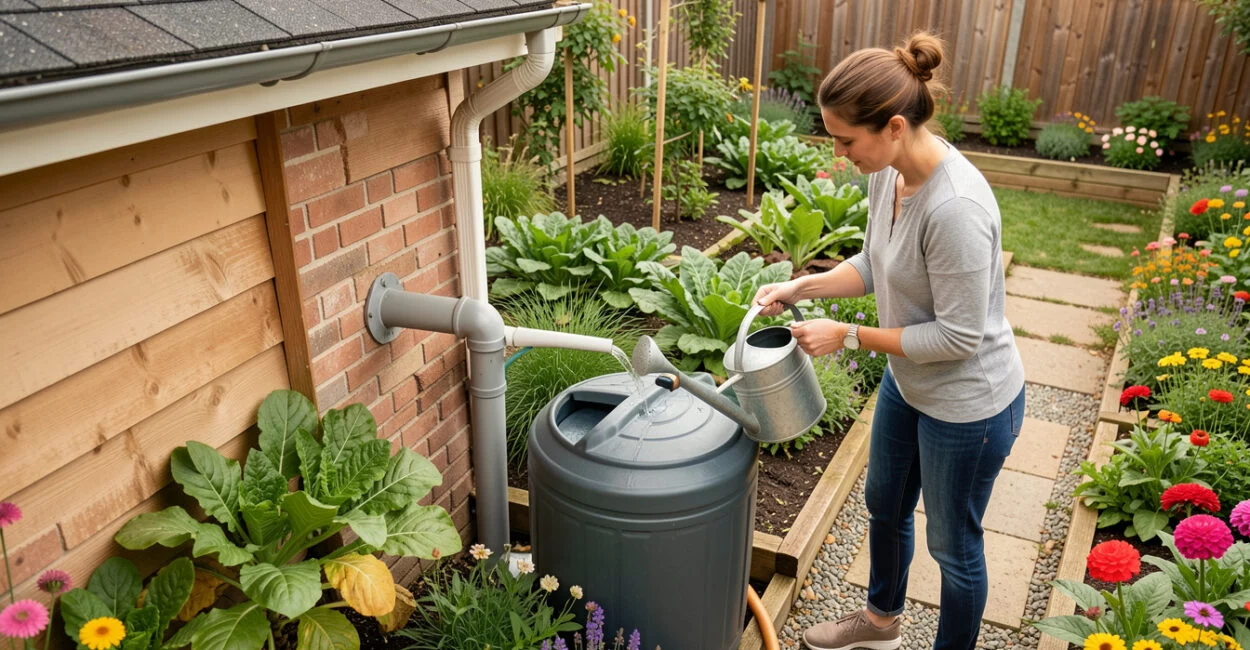 Filling a watering can from stored rainwater
Rainwater harvesting for a garden is the collection and storage of runoff, usually from a roof, for later use on plants. A simple system can supply water between storms, but its yield depends on roof area, rainfall, and how much water you can store. A well-planned setup also needs a stable base, covered storage, and a safe route for overflow.
This guide is for gardeners choosing a first rain barrel or larger tank, whether they have a small patio or a yard with several beds. You’ll learn how to estimate potential collection, set up the equipment, use stored water appropriately, and maintain the system through changing weather. Collection and storage are different from a rain garden, which manages runoff by directing it into the landscape to soak into the ground.
What is Rainwater Harvesting for a Garden?
Rainwater harvesting is the capture, conveyance, and storage of precipitation for later use. In a home garden, that often means guiding roof runoff through a gutter and downspout into a covered barrel or cistern. Put simply, it saves some water that would otherwise run off the roof so you can use it when plants need watering.
A rain garden serves a related but different purpose. It is a planted, shallow landscape feature designed to receive runoff and help it infiltrate into the soil; it does not necessarily store water in a tank for later use. Some properties use both: a barrel for stored irrigation water and a rain garden to manage the overflow.
Stored rainwater can be useful when rainfall and watering needs don’t line up. A storm may fill a barrel, then dry weather may leave containers or newly planted beds needing attention. Rainwater can also be more suitable than hard tap water for some plants, but that depends on the quality of the roof runoff and storage conditions.
There are limits. A small tank may fill during one storm and run out during a dry spell. A roof’s theoretical yield is not the same as the volume you can actually use: losses, tank capacity, overflow, and the timing of rainfall all matter. Rainwater collection can supplement a garden’s supply, but it cannot guarantee that the supply will cover every plant’s needs.
For a broader look at household choices that support resource-conscious living, see these practical steps for more sustainable everyday living.
Choose a Rainwater Collection System
Match the container to the water you can collect and use, the space available, and the way you plan to water. A rain barrel for a garden is a practical starting point beside a downspout. Larger tanks can hold more, but they need more room, a suitable base, and a plan for moving water out of storage.
Option Best fit Advantages Trade-offs Rain barrel Small yards, patios, or one or two beds Compact; often designed with a screened inlet and spigot Limited capacity; needs a level, strong base and overflow route Linked barrels Gardeners who need more storage but have limited tank space Can add capacity as needs grow Connections can leak; all containers need secure covers and planned overflow Large aboveground tank or cistern Larger gardens with space and a regular use for stored water More storage; may support a hose or pump Higher setup demands, including a substantial base and a way to deliver water Open container collection Very small, short-term collection where permitted Minimal equipment Exposed water can collect debris and attract mosquitoes; not a good long-term storage choice
Choose an opaque, covered container with a screened inlet and a way to drain or draw water. Check that the outlet is usable for your watering method. A spigot close to the bottom can fill a watering can, while a hose connection may need enough elevation to provide useful gravity flow. A pump adds options but also cost and maintenance.
Do not judge a tank by capacity alone. A large tank that cannot be placed securely, connected properly, or emptied before the next storm may be less useful than a smaller one you can manage. If you rent, confirm that you can attach a diverter or alter a downspout before buying equipment.
For a compact garden, start with one barrel and observe how often it fills and empties. Add linked storage only if the first container regularly overflows while the garden could use more water, and the site can safely support the added weight.
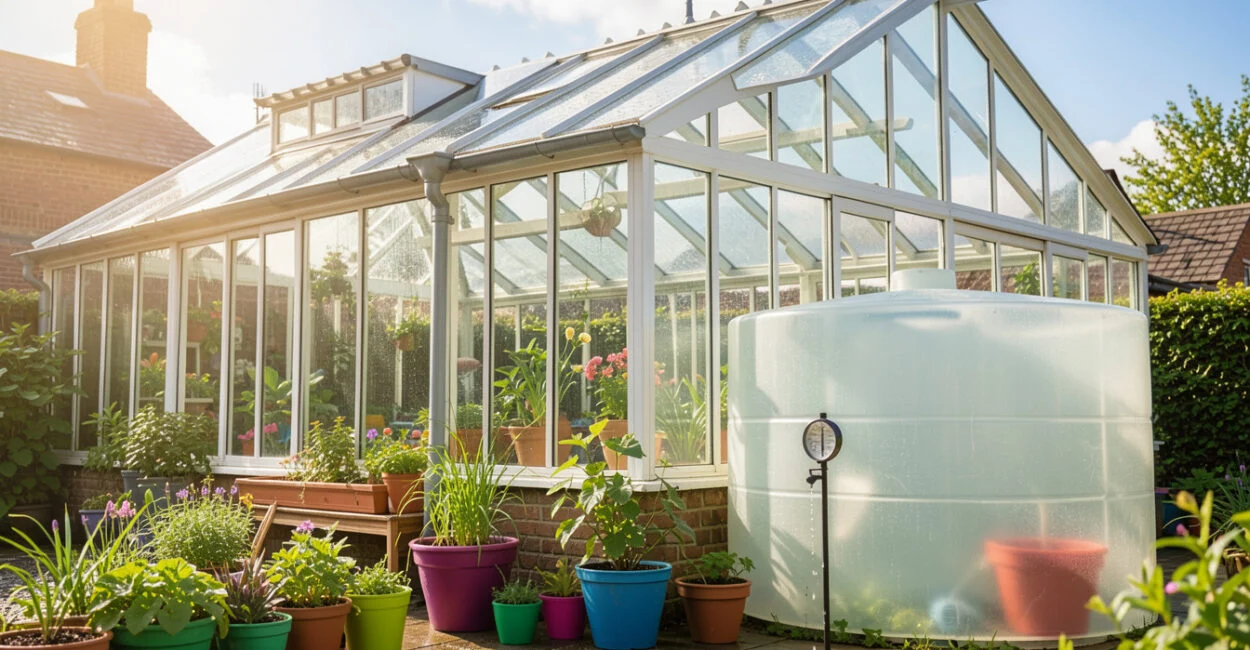
Estimate How Much Rainwater You Can Collect
A roof can yield about 0.623 gallons of water per square foot for every inch of rain before losses. To estimate a more realistic collection amount, multiply the roof area draining to the downspout by rainfall depth and 0.623, then apply a runoff-efficiency factor. The tank’s capacity limits how much of that water you can store.
Rainwater harvesting calculation: roof area (square feet) × rainfall (inches) × 0.623 × efficiency = estimated gallons. The efficiency factor accounts for water that does not reach the tank because of wet surfaces, leaks, splash, debris management, or other losses. For a rough planning example, use 0.8; actual performance varies with the roof, gutter condition, and collection setup.
Hypothetical example: Suppose 500 square feet of roof drains to one downspout, and a storm delivers 1 inch of rain. First calculate 500 × 1 × 0.623 = 311.5 gallons of theoretical runoff. Applying an assumed efficiency of 0.8 gives about 249 gallons, but a 55-gallon barrel can hold only 55 gallons at a time. The rest will overflow once the barrel is full.
The assumptions matter. The roof area must be the portion that actually drains to the selected downspout, not the house’s total floor area. Rain gauges or local rainfall records can help you estimate typical events, but a single storm does not predict how much water will be available through an entire dry period.
To estimate usable supply, compare collection with storage and demand. A container garden may use a barrel quickly in hot, dry weather; a cool spell may leave the same barrel full until the next storm. Track how often the tank fills, how much you draw, and whether overflow occurs. That simple record helps determine whether another barrel would improve supply or only add unused capacity.
The University of Arizona Cooperative Extension’s rainwater-harvesting guidance explains how local rainfall and site conditions shape collection. Its regional advice is useful for understanding the variables, but rainfall patterns and recommendations for Arizona should not be treated as universal.
Set Up a Beginner Rainwater Harvesting System
A basic rainwater harvesting system for a garden uses a suitable roof and downspout, a screened inlet, a diverter or connection, a covered tank, and an overflow outlet. Assemble the parts so water enters cleanly, the container remains stable, and excess runoff goes somewhere that will not damage the foundation or flood a neighbor’s property.
- Pick the location. Place the tank near a downspout and close enough to the plants you water. Choose a surface that stays level and can support the filled container. Water weighs about 8.34 pounds per gallon, so a full 55-gallon barrel weighs well over 450 pounds before accounting for the container itself.
- Check the roof and gutter. Remove leaves and sediment, repair leaks, and confirm that the downspout drains toward the planned tank. Avoid collecting from a roof or gutter with materials that could contaminate water unless you have checked whether that runoff is suitable for your intended use.
- Install inlet screening. Fit a secure screen at the gutter or tank inlet to keep leaves and larger debris out. Use fine mesh where appropriate, and make sure it stays in place rather than leaving gaps around the opening.
- Add a diverter or adapted downspout. A diverter directs water into the barrel and sends excess flow back into the downspout once the tank is full. Follow the product instructions and keep the connection accessible for inspection.
- Plan the overflow before connecting the tank. Direct overflow away from the house foundation, paths that become slippery, and neighboring property. A hose or pipe may carry it to a suitable planted area, provided the route will not cause erosion or standing water.
- Secure the container and test the system. Keep the lid fitted, secure the barrel against tipping, and check the stand and fittings. After the first rain, inspect the connection, overflow route, and base for leaks, movement, or pooling.
A common installation error is setting a full barrel on an improvised stand that shifts under the weight. The cause is often a base that is uneven, too narrow, or not built to bear a heavy load over time. Set the container on a firm, level surface, and use a manufacturer-approved stand or a properly built platform rather than stacking loose blocks.
A first-flush diverter can route the initial roof runoff away from storage, carrying some accumulated dust and debris with it. It can improve water quality, but it does not make the water potable or eliminate the need to clean gutters and screens. Whether you need one depends on roof condition, local debris, intended use, and how carefully the system is maintained.
Use Harvested Rainwater in the Garden
Harvested rainwater is generally suited to watering ornamental plants, lawns, and many food crops when it comes from a suitable roof and is stored in a clean, covered tank. Use a watering can, gravity-fed hose, or pump to direct it to the soil. Avoid splashing leaves and edible parts when water quality is uncertain.
Can harvested rainwater be used on vegetables and edible plants? Yes, it can be used on vegetables and other edible plants if the collection surface and storage system are suitable and the water is handled cleanly. Roof materials, accumulated animal droppings, airborne contaminants, and tank hygiene can affect quality. When in doubt, apply water to the soil near the roots rather than spraying the leaves or produce.
Use extra caution with crops that are eaten raw, particularly if the water could have been contaminated. A first-flush diverter and regular cleaning can reduce some sources of debris, but neither is a treatment system. Follow local public-health and agricultural guidance where available, and do not assume water that looks clear is safe to drink.
Stored rainwater can also be used for potted plants and newly planted beds, which may need more frequent attention than established plants. Prioritize uses based on plant need: check soil moisture before watering, and water at the root zone rather than applying a fixed amount on a calendar. Local soil type, temperature, wind, and plant species affect how quickly water is needed.
For a simple distribution setup, elevate the barrel enough to make filling a watering can convenient, while keeping the base stable and rated for the load. Gravity flow may be slow, especially when the barrel is nearly empty. A pump can help with longer hose runs, but it should be selected for the system’s height and flow needs rather than added automatically.
Stored water is most useful when the garden can use it before the next storm. If a barrel often sits full, consider drawing from it more consistently or directing overflow to a suitable landscape area. If it is empty soon after each storm, additional storage may help only if your roof and rainfall can refill it.
Keep the System Safe and Well Maintained
Keep stored rainwater covered and screened, remove debris from gutters and inlets, and inspect the tank and overflow after storms. These steps help limit mosquitoes, algae, clogs, and water damage. Maintenance needs depend on the tree cover, roof, local climate, and tank design, so use the equipment maker’s instructions alongside routine checks.
How can collected rainwater be kept from attracting mosquitoes? Use a tight-fitting lid and intact screens over every opening, including the overflow, and repair gaps promptly. Mosquitoes need access to standing water to breed, so an uncovered barrel or a screen that has pulled away from its frame defeats the protection. Keep nearby gutters clear as well; water trapped in a clogged gutter can become a separate breeding site.
- After storms, remove leaves and sediment from gutter guards, inlet screens, and the first-flush device.
- Check the lid, spigot, seams, connecting hoses, and overflow outlet for leaks or blockages.
- Look for standing water around the foundation or beneath the tank, and correct the overflow route if needed.
- Clean the tank when sediment or buildup warrants it, following the manufacturer’s instructions and local guidance.
Algae growth is more likely when sunlight reaches stored water. An opaque tank and covered openings help limit light, while keeping organic debris out reduces material that can break down in the container. A green film or odor is a sign to inspect and clean the system, not a reason to use chemicals without checking that they are safe for the tank, plants, and intended use.
What should be done with a rainwater system in freezing weather? Before a hard freeze, drain the barrel, diverter, connecting hoses, and other exposed parts, then disconnect or store equipment according to the manufacturer’s directions. Water expands as it freezes and can crack a full container or fittings. If the tank is designed for year-round use in freezing conditions, follow its specific winter instructions rather than assuming a standard barrel can stay full.
Local rules can affect whether you may collect roof runoff, how a system must be connected, and where overflow can go. Requirements vary by location and may depend on plumbing connections, property drainage, or water rights. Check with the relevant local authority before installing a large cistern, connecting the system to indoor plumbing, or changing drainage in a way that could affect another property.
The U.S. Environmental Protection Agency’s rain-barrel guidance describes basic collection and overflow considerations. The Texas A&M AgriLife Extension also provides regional water-management and rainwater-harvesting resources; consult local extension guidance for conditions specific to your area.
Plan a Simple First Setup
Choose a first system by answering four questions: How much garden do you water? Where can a tank sit securely? How much collection and storage can the site support? Will you use the water often enough to justify the equipment? These answers matter more than buying the largest tank available.
- Small patio or a few containers: Start with one compact, covered barrel if a downspout is nearby. A watering can may be enough; a pump is rarely the first thing to buy.
- Several beds and a reliable roof connection: Begin with a barrel sized to your space, then track how often it fills and empties. Consider linked containers if frequent overflow shows that additional storage would be useful.
- Large garden or long dry spells: Estimate roof yield and water demand before choosing a larger tank. More capacity cannot compensate for a small catchment area or extended periods without rain.
- Limited space, uncertain permission, or difficult drainage: Pause before installing a tank. A container may not fit safely, and an unplanned overflow can create problems. Check whether a smaller setup or a landscape infiltration feature is more appropriate.
Budget for the full setup, not just the tank: base, diverter, screens, fittings, overflow tubing, and any needed pump can add to the cost. If you rent, avoid cutting or permanently changing gutters without permission. A simple approach can be a better first step when the system is easy to inspect and maintain.
Keep a short record during the first season: note rainfall, when the tank fills, how quickly you use it, and where overflow goes. If it rarely fills, extra storage probably will not help. If it repeatedly overflows while plants need water later, a larger tank or additional barrels may be worth evaluating, provided the site can support them.
Start with one secure, covered container connected to a suitable downspout, then assess its performance before expanding. Confirm local requirements, give overflow a safe route, and use the water for garden tasks that suit its quality. That small trial provides the information needed to choose the next step without assuming stored rainwater will meet every watering need.
📱 See this content as a Web Story
Frequently Asked Questions
How Often Should a Rain Barrel Be Cleaned?
Inspect it regularly and clean it when sediment, leaves, or buildup collect inside. The timing varies with roof debris, nearby trees, and the tank design; follow the manufacturer’s directions for cleaning and drainage.
Can Rainwater Be Stored Indefinitely?
It is better to use stored water while it remains in good condition rather than treating it as permanent storage. Debris, heat, sunlight, and poor tank hygiene can affect water quality over time.
Can a Rain Barrel Be Connected to a Garden Hose?
Yes, if the barrel has a suitable outlet and enough elevation for gravity flow. A pump may be needed for stronger flow or a long hose run.
Is Rainwater Safe to Drink?
Water collected for garden irrigation should not be assumed safe to drink. Drinking-water use requires appropriate treatment and testing, along with compliance with local requirements.
Can a Rain Barrel Overflow During a Storm?
Yes. Once the container reaches capacity, excess water needs a clear route away from the foundation and neighboring property. Inspect the outlet after storms to make sure it is not blocked.
Can Rainwater Be Used for Indoor Plants?
It can be used for indoor plants if the collected water is suitable and clean. Avoid using water with an unusual odor, visible contamination, or signs of poor storage.