
How to Teach a Dog to Come When Called, Step by Step
Step-by-step guide to teaching your dog recall: start indoors with clear cues and rewards, then gradually add distance and distractions while using a leash f…
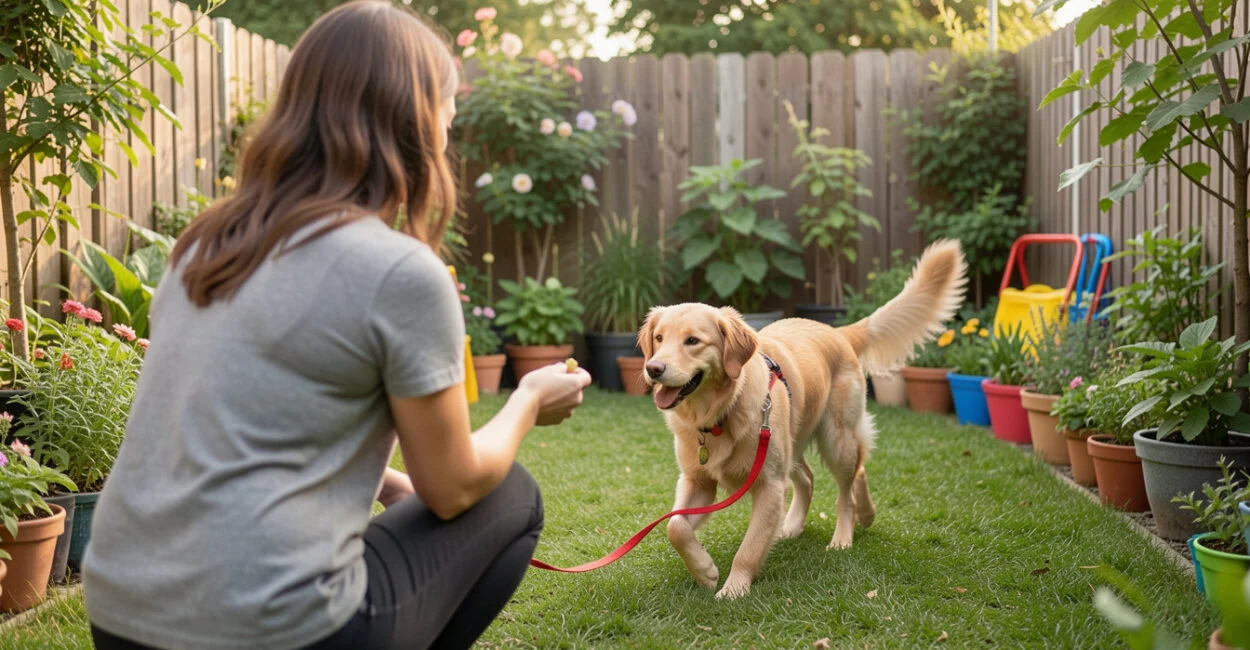 Rewarding a dog for coming back
A dog can sprint toward a squirrel before you finish saying “come.” To teach dog recall, start indoors with a clear cue and valuable rewards, then add distance and distractions in small steps while keeping your dog on a leash or long line. The goal is a practiced response, not a guarantee that every dog will return in every situation.
Recall is the trained behavior of turning toward you and moving back when cued. In everyday terms, your dog hears a word, leaves what they’re doing, and comes within reach. That response takes practice in different places, and safety management still matters.
Short, upbeat sessions make it easier to see what your dog can handle. If they stop responding, reduce the difficulty instead of repeating the cue or trying to force a return.
Recall Training at a Glance
- Pick one cue and use it only when you can help your dog succeed.
- Reward the return with something your dog values, such as food, play, or a chance to resume exploring.
- Increase only one challenge at a time: distance, distraction, or freedom to move.
- Use a leash or long line until your dog is reliable in a particular setting.
How to Teach a Dog to Come When Called, Step by Step
Teach recall by pairing one cue with a rewarding return in a quiet, secure place, then gradually practicing at greater distances and around mild distractions. Call once, encourage your dog to move toward you, and reward them when they arrive. Keep a leash or long line attached as you build reliability, and make the next session easier if your dog struggles.
- Choose a cue. Say it once in a cheerful voice when your dog is nearby and not absorbed in something else.
- Reward the turn and return. When your dog moves toward you, praise them; when they arrive, give a treat or start a quick game.
- Practice short recalls. Begin a few steps away in a quiet room. Release your dog back to what they were doing after rewarding them.
- Add one challenge at a time. Try more distance, a new location, or a mild distraction, but not all at once.
- Keep using safety equipment. A long line gives your dog room to move while preventing a failed recall from turning into a chase.
Returning to you should predict good things. The American Veterinary Society of Animal Behavior recommends reward-based methods in its Humane Dog Training Position Statement. That principle matters most when your dog has made a mistake: punishing them after they finally come can make the next return less likely.
Choose a Recall Cue and Make It Worth Responding To
A recall cue can be “come,” “here,” a whistle, or another consistent signal. Choose a word that everyone in the household can use the same way, and avoid using it casually throughout the day when you do not mean to ask for a return.
Some owners choose unique recall words for dogs to avoid a cue that has become background noise. That can help if a familiar word has been repeated without follow-through, but a new word only works if you give it a fresh, positive association. German recall words for dogs, such as Hier, are not inherently more effective than English cues; consistency and practice matter more than language.
Keep the cue distinct from everyday chatter. If you say “come” repeatedly to get your dog’s attention, the word can lose its meaning. Save it for moments when you have a good chance of following through, and use your dog’s name or a separate attention sound to get their focus first.
Start Recall Training in a Quiet, Secure Place
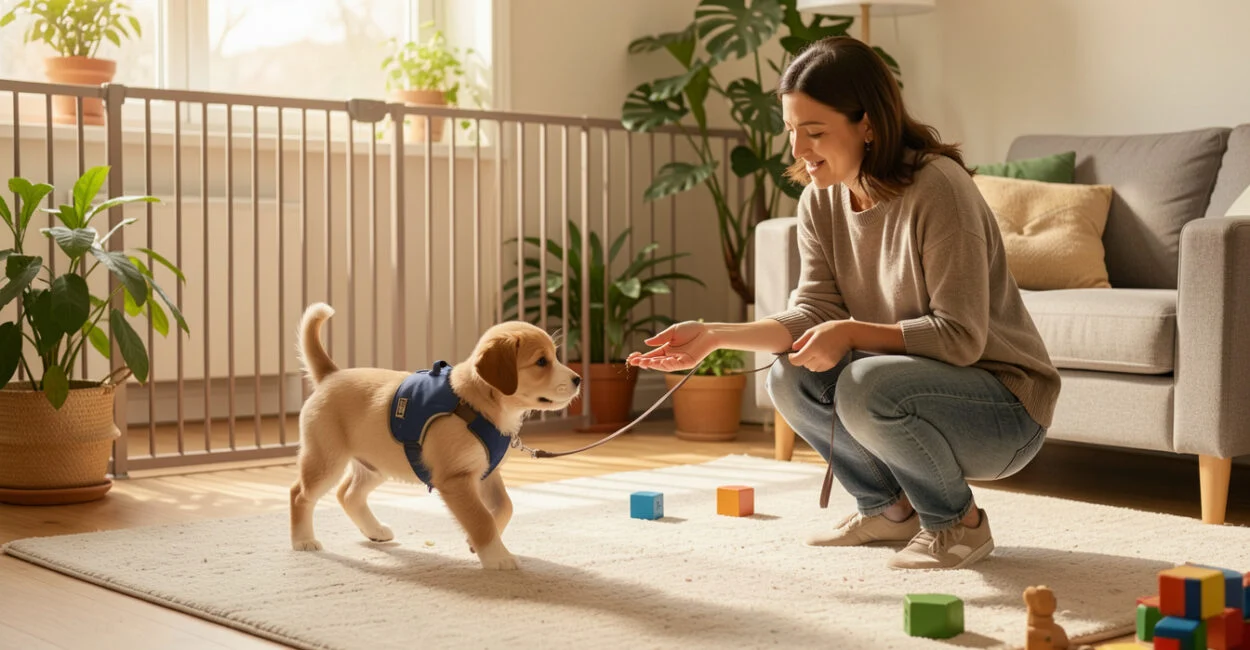
Begin in a familiar room or fenced area with few distractions. Work at a distance your dog can manage, sometimes just a few feet, and keep early sessions brief enough that your dog stays engaged. Several easy returns are more useful than a long session that ends with your dog ignoring the cue.
For outdoor practice, use a standard leash or a long line attached to a well-fitted harness. Keep the line loose when possible and avoid wrapping it around your hand; a running dog can pull hard. A long line is a safety tool, not a way to drag a dog back after calling.
Puppies can start learning recall as soon as they come home, using short, cheerful repetitions suited to their attention span. The American Kennel Club’s puppy recall guidance also emphasizes early practice and positive rewards. A puppy may respond well indoors and still need a leash outdoors; early learning does not equal off-leash readiness.
Build Reliability Around Distractions
For dog recall training with distractions, change one variable at a time. If your dog can return from ten feet away in the yard, try the same distance in a quieter part of a park before adding a closer dog or stronger scent. A dog who cannot disengage is telling you the setup is too difficult right now.
Stage Practice setting What to change next 1. Easy Indoors, a few feet away Add a little distance while keeping the room quiet. 2. Familiar Secure yard or enclosed area Keep the distance short; introduce one mild distraction. 3. Controlled outdoors Quiet open space with a long line Practice at different distances, then try a slightly busier time or place. 4. More challenging New settings with manageable activity Increase only one difficulty at a time, and keep the long line attached.
A useful decision rule: if your dog turns toward you but cannot complete the return, shorten the distance or reduce the distraction. If they do not turn at all, pause, move farther from the distraction, and rebuild with an easier repetition. The RSPCA’s recall-training guidance likewise recommends reward-based practice that builds gradually.
Troubleshoot Slow or Unreliable Recall
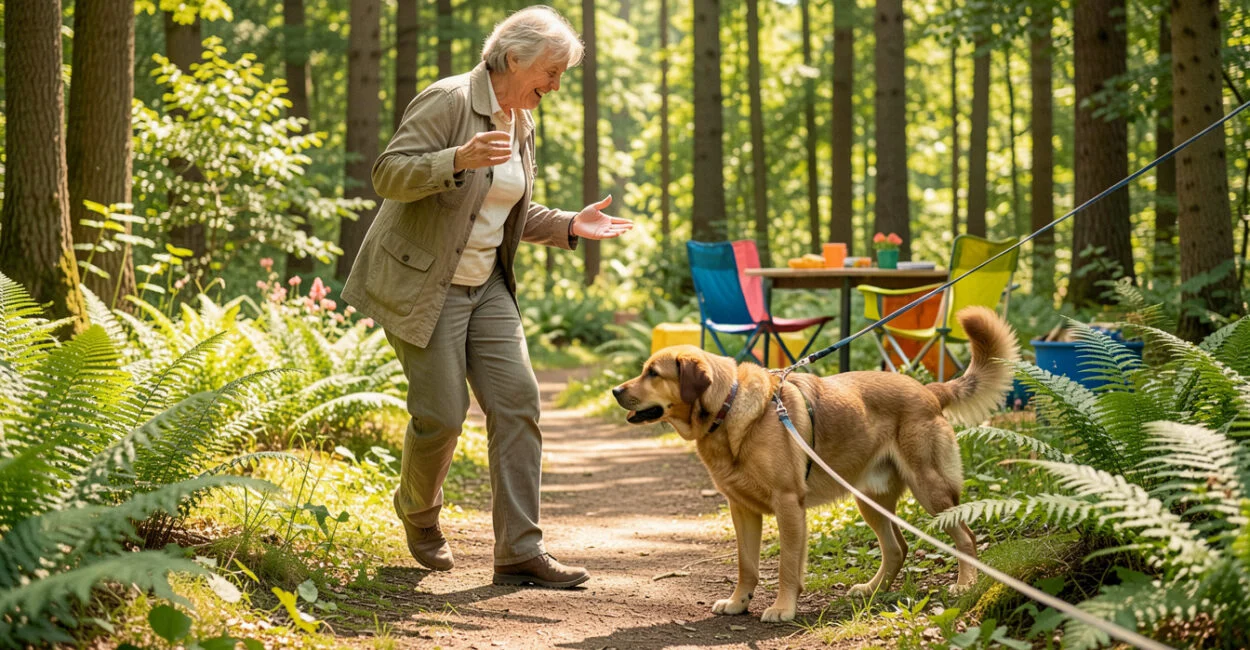
A dog ignoring recall is often responding to the situation, not displaying a character flaw. The scent trail, playmate, or distance may be more rewarding than the cue, or the dog may not yet understand what the word predicts in that setting. Calling from too far away is a common mistake: the dog hears the cue but has not practiced returning across that distance.
- If your dog looks at you but stays put: make a playful movement away, crouch, or take a few steps backward, then reward any movement toward you.
- If your dog is absorbed in a distraction: increase distance from it and try again when your dog can notice you.
- If the cue has been repeated: stop repeating it. Rebuild with an easier setup, and consider teaching a fresh cue with a clean history.
- If your dog avoids being caught: reward arrivals, briefly touch the collar, reward again, and then release them. This prevents “come” from predicting that fun always ends.
For teaching recall to a stubborn dog, make the practice more engaging rather than escalating pressure. Use a reward your dog genuinely wants, take turns calling between two people, or reward a return with permission to go back to sniffing. If fear, pain, or anxiety could be affecting the response, ask a veterinarian or qualified reward-based trainer to assess the situation; training alone may not resolve those issues.
Practice Recall Safely Off Leash
Try off-leash practice only in a legal, fully enclosed area after your dog has succeeded repeatedly on a long line in similar conditions. Choose a place with secure gates and enough distance from roads, livestock, and other hazards. Keep the long line on if you are unsure; there is no training deadline that requires removing it.
A recall cue cannot replace a fence, leash, or local leash rules. Dogs may fail to respond when frightened, highly aroused, or focused on something unusually compelling, even if they are well trained in calmer settings. If the consequence of a missed response could be serious, keep your dog physically secured.
Off-leash freedom is appropriate only when the setting is safe, the rules allow it, and the dog has practiced successfully under comparable conditions.
Keep Recall Strong over Time
Refresh the skill throughout your dog’s life with brief practice in different places. Reward most returns when the cue is new, the setting is difficult, or your dog has turned away from an enticing distraction; once the behavior is established, vary the rewards while continuing to make coming back worthwhile.
Use food, a favorite toy, a short game, or a release to resume sniffing. A practical maintenance habit is to call your dog once during an ordinary walk, reward the return, and let them continue exploring when it is safe. If responses weaken, go back to easier conditions and reinforce more often.
For more ideas on making rewards and activities engaging, see these scent-game ideas for small homes and indoor enrichment activities. They are written for cats, so adapt only the general idea of offering varied, safe activities to your dog.
Start with a few short recalls in a quiet room today. If your dog succeeds, add a little distance next time; if they do not, make the setup easier and reward the next successful return.
📱 See this content as a Web Story
Frequently Asked Questions
How Often Should I Practice Recall Once My Dog Knows It?
Use brief refreshers regularly rather than waiting for a problem to appear. Practice during ordinary routines and increase rewards when you add a new place or distraction.
Should I Call My Dog If I Think They Will Ignore Me?
Avoid testing the cue when the odds are poor. Move closer, reduce the distraction, or use the leash to keep your dog safe, then practice at a level where they can respond.
Can a Whistle Replace a Spoken Recall Cue?
Yes. A whistle can serve as a consistent recall signal, and some people find it carries well outdoors. Teach it with the same gradual, reward-based steps you would use for a spoken word.