
How to Repair Loose Cabinet Hinges Without Replacing Them
How to fix loose cabinet hinges by identifying if screws are loose, holes stripped, door misaligned, or damage to hinge or cabinet, with tailored repair steps.
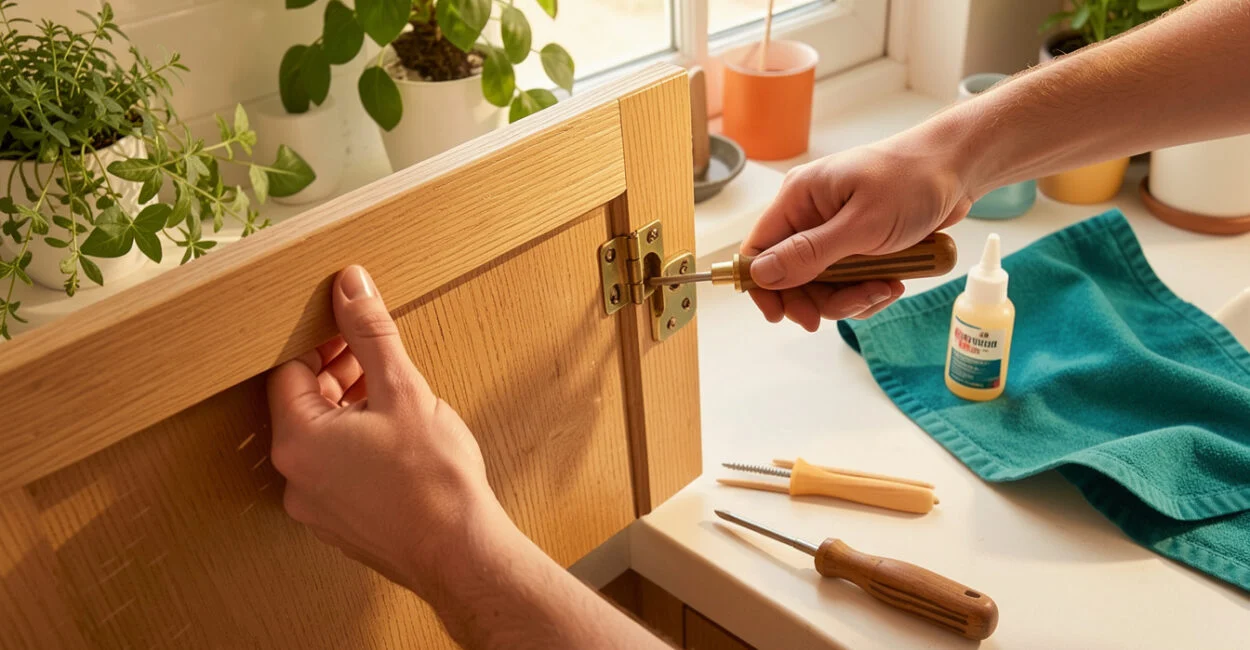 Tightening a loose cabinet hinge
A cabinet door that drops at one corner often needs a small repair, not a new hinge. To fix loose cabinet hinges, first find out whether the screws are loose, their holes are stripped, the door is misaligned, or the hinge plate or cabinet material is damaged. The right fix depends on that cause and on what the cabinet is made of.
Start with the door open and supported so its weight does not pull harder on the hinge. A few careful checks can tell you whether to tighten a screw, restore its grip, or adjust the hinge.
The most common concealed hinges have separate screws for mounting the hinge and adjusting the door. Mixing those up is an easy mistake: an adjustment screw can move the door, but it will not secure a loose mounting plate.
How Can You Fix Loose Cabinet Hinges?
You can often repair a loose cabinet hinge without replacing it by identifying what has failed and fixing that part. Tighten a sound screw that has backed out; restore a stripped hole with a material-appropriate repair; adjust a door that is crooked but firmly attached. If the hinge or the surrounding cabinet material is cracked or badly damaged, a screw adjustment alone will not hold.
Before touching the hardware, open the door and support its outer edge with one hand or a stable block. Look at the hinge-to-cabinet connection and the hinge-to-door connection separately. A loose plate at the cabinet side calls for a different repair than a sagging door with firmly attached hinges.
Hinge adjustment is the controlled repositioning of a door using the adjustment screws built into the hinge. In plain terms, it changes where the door sits; it does not repair a screw hole that no longer grips.
How Can You Tell Why a Cabinet Hinge is Loose?
Check for movement at the hinge, signs of failed screw grip, and damage to the wood or mounting plate before choosing a repair.
- Loose screw: The screw head sits proud, and the screw turns while still tightening into the hole. The surrounding material appears intact.
- Stripped screw hole: The screw spins without drawing the hinge plate tight, or it comes out with little resistance. The hole may look widened or chewed up.
- Misaligned door: The hinge and plate feel secure, but the door has an uneven gap, rubs against a neighbor, or sits too high or low.
- Damaged hinge or cabinet: A bent hinge arm, cracked plate, split wood, crumbling particleboard, or a plate that shifts with its screws suggests more than a simple adjustment.
Watch the mounting plate as you gently move the door. If the plate shifts against the cabinet, focus on its screws and the material around them. If the plate stays still but the door moves out of position, check the hinge adjustment.

What Tools and Materials Should You Gather?
Gather only what matches the diagnosis; extra force or an oversized screw can turn a small repair into a larger hole.
- A screwdriver that fits the screw head, often a Phillips or Pozidriv driver
- A flashlight and a small level or straightedge to inspect door position
- A support block, folded towel, or helper to steady the door
- For stripped holes in sound wood: a correctly sized hardwood dowel, wood glue, drill, and bit
- For minor damage: wooden toothpicks or matchsticks and wood glue, if the material and hole allow them
- For adjustment: the hinge manufacturer’s instructions, if available
Keep the work area clear so the door has room to open and the small screws do not disappear. A quick reset of a cluttered work area can make a small hardware repair easier to manage.
How Do You Tighten Cabinet Hinge Screws Without Damaging Them?
Use a well-fitting screwdriver and turn the screw until the hinge sits firmly against the cabinet or door, then stop; extra torque can strip the hole or damage the screw head.
Support the door first. Hold the screwdriver straight in the screw head and tighten in small turns. If the screw stops advancing but the plate still moves, do not keep forcing it. The hole may be stripped, or the screw may be the wrong size.
Check the hinge screws on both the door and cabinet sides, but distinguish mounting screws from adjustment screws. On a concealed hinge, the adjustment hardware often sits along the hinge arm, while mounting screws hold the hinge cup or plate in place. Manufacturer designs vary, so consult the hinge’s instructions rather than guessing which screw to turn.
When the plate is firm, close the door slowly and inspect the gaps. If the door remains crooked but the hinges do not move, proceed to an adjustment rather than tightening further.
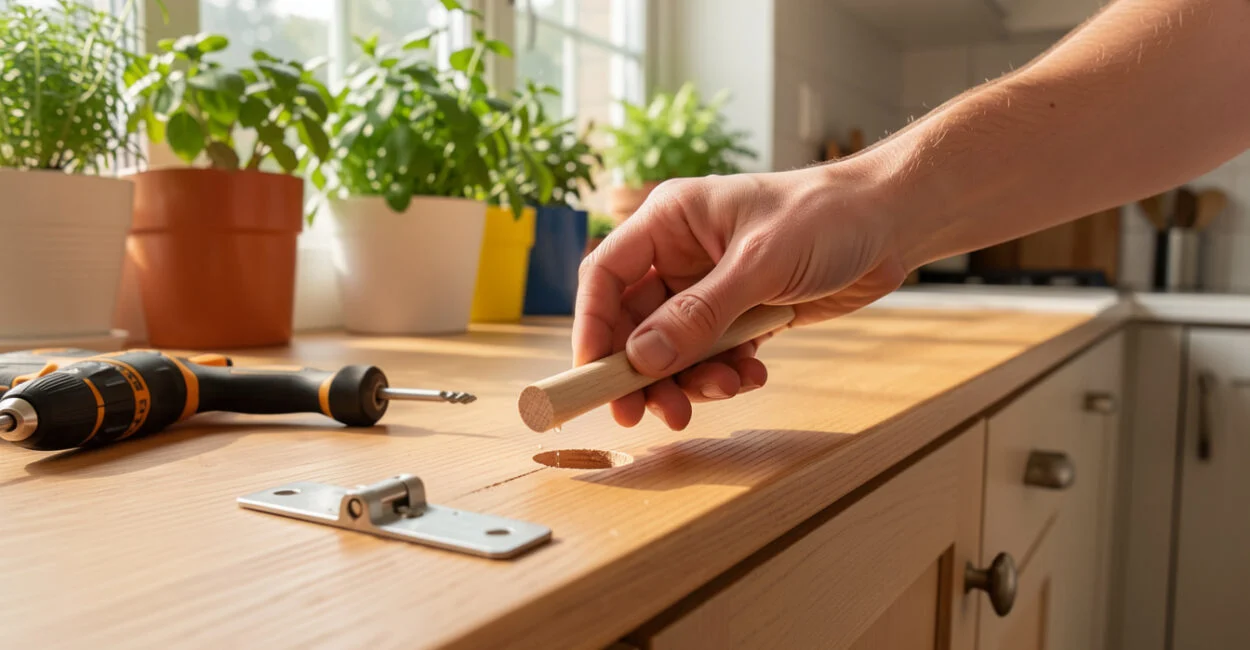
What Should You Do About Stripped Cabinet Hinge Screw Holes?
If a screw spins in its hole, restore the material’s grip before reinstalling it; the right cabinet hinge screw hole repair depends on the hole’s size and the cabinet material.
Hole or material condition Suitable repair Small, slightly enlarged hole in solid wood Glue in a few snug wooden toothpicks or a thin wood sliver, let the glue cure, trim flush, then make a pilot hole before reinstalling the screw. Worn or enlarged hole in sound solid wood Glue in a hardwood dowel that fits the hole, let it cure, trim flush, and drill a pilot hole sized for the screw. Damaged particleboard or MDF Assess the extent of the damage. A dowel or toothpick repair may not hold if the surrounding core has crumbled; a suitable repair plate or a sound new mounting location may be needed. Cracked, split, or damp cabinet material Address the damaged material first. Glue and a screw cannot reliably secure a hinge to wood that is still splitting or deteriorating.
Wood filler is generally a poor choice for a screw hole that must carry a door’s repeated pulling force. It can make a surface look smooth, but many fillers do not provide the same screw-holding grip as sound wood. The U.S. Forest Products Laboratory’s Wood Handbook: Wood as an Engineering Material explains wood’s material behavior; cabinet substrates such as particleboard and MDF have different limits from solid wood.
For a dowel repair, choose one that fits snugly without splitting the surrounding material. After the glue cures, drill a pilot hole narrower than the screw’s outside diameter, following the screw and material requirements. A hole that is too large leaves little grip; one that is too small can split the wood or make the screw difficult to drive.
A common case is a cabinet-side screw that spins while the hinge plate rocks. If the cabinet is solid wood and the hole is only modestly enlarged, a fitted dowel can restore a firm base. If the same movement comes from crumbling particleboard around the plate, adding a dowel may only shift the failure to the weakened material beside it.
How Do You Adjust a Cabinet Door That Sags or Sits Crooked?
Adjust a sagging cabinet door only after confirming that the hinges and mounting plates are firmly attached. Most concealed hinges provide adjustments for side-to-side position, depth, and height, but the screw locations and adjustment range depend on the hinge model.
Make small changes, then close the door and check its gaps. Side-to-side adjustment helps even the gap between adjacent doors; depth adjustment moves the door closer to or farther from the cabinet; height adjustment may require loosening the mounting plate screws and repositioning the door. Support the door while making height changes so it cannot drop unexpectedly.
Blum’s hinge assembly and adjustment documentation shows why it pays to identify the hinge model: adjustment methods differ among hinge systems. If the cabinet uses exposed hinges or an unfamiliar mechanism, do not assume the concealed-hinge directions apply.
A useful check is to adjust one hinge axis at a time. If the door’s gaps improve in one area but worsen elsewhere, undo the last small change and reassess the door position before moving another screw.
When is a Loose Hinge Too Damaged to Repair?
A hinge or cabinet needs more than a basic tightening when the hinge is bent or cracked, the mounting plate is broken, or the material around the screws no longer provides a stable anchor.
Replacing a damaged screw or hinge may be appropriate when the cabinet material remains sound. If the cabinet-side material is split, swollen from moisture, or crumbling across a wider area, repair the damaged substrate or use a properly supported mounting solution before relying on the hinge again. The repair method depends on the panel’s construction and the amount of sound material left.
There is a limit to what a small hole repair can do: it cannot restore strength to a panel that has deteriorated beyond the screw location. The Kitchen Cabinet Manufacturers Association offers care and maintenance guidance for cabinets; follow the cabinet maker’s instructions when finishes or materials require specific care.
If a door keeps pulling away after a sound repair, stop cycling it. Repeated opening can enlarge the damaged area and make a more substantial repair necessary.
How Can You Keep a Cabinet Hinge Repair from Coming Loose Again?
Prevent repeat failures by matching the screw to the hinge and cabinet, drilling pilot holes where needed, and avoiding overtightening.
Use a screw of the correct diameter and length for the hinge and panel. A longer screw is not automatically better: it can break through a thin panel or hit something behind it. When installing into repaired solid wood, drill a pilot hole that suits the screw and wood rather than driving the screw directly into the repair.
After the repair, open and close the door gently and check that the plate remains still. If the gap changes or the screw starts backing out, investigate the underlying material instead of tightening repeatedly. For broader cabinet care, KCMA’s guidance can help you avoid cleaning or moisture practices that may harm cabinet finishes or materials.
What is the Best Fix for Each Hinge Problem?
Problem Best next step Screw is backed out, hole is sound Tighten carefully with the correct driver. Screw spins in solid wood Restore the hole with a fitted wood repair, then drill a pilot hole. Door is crooked, hardware is secure Adjust the hinge in small increments and recheck the gaps. Hinge, plate, or cabinet material is damaged Repair or replace the damaged component or substrate before using the door.
Start by supporting the door and watching the hinge plate as you move it. That single check tells you whether to tighten, repair the screw hole, or adjust the door, and it helps prevent an unnecessary hinge replacement.
📱 See this content as a Web Story
Frequently Asked Questions
Can I Use a Longer Screw to Secure a Loose Hinge?
Only if the cabinet construction and clearance behind the mounting point allow it. A longer screw can split a panel, emerge through the other side, or hit concealed hardware, so confirm the material thickness and screw path first.
Should I Use Wood Glue on a Loose Hinge Screw?
Glue alone does not give a screw a reliable new thread to grip. For a small hole in solid wood, glue may secure a fitted wood sliver or dowel, but the repair still needs a correctly sized pilot hole after the glue cures.
Can I Adjust a Cabinet Door While It is Closed?
Make adjustments with the door open enough to access the hinge screws safely. Close it afterward to inspect the gaps and confirm the door does not rub.
Why Does a Cabinet Door Sag Again After Adjustment?
Adjustment changes the door’s position but does not strengthen loose screws or damaged cabinet material. If the sag returns, check whether a mounting plate is moving or a screw hole has lost its grip.
Do All Concealed Cabinet Hinges Adjust the Same Way?
No. Screw positions and adjustment ranges vary by hinge design and manufacturer. Identify the hinge or consult its instructions before turning adjustment screws.