
How to Stop Your Dog from Pulling on the Leash
How to stop your dog from pulling on the leash by rewarding slack-leash walking, starting in low-distraction areas and gradually adding real-world challenges.
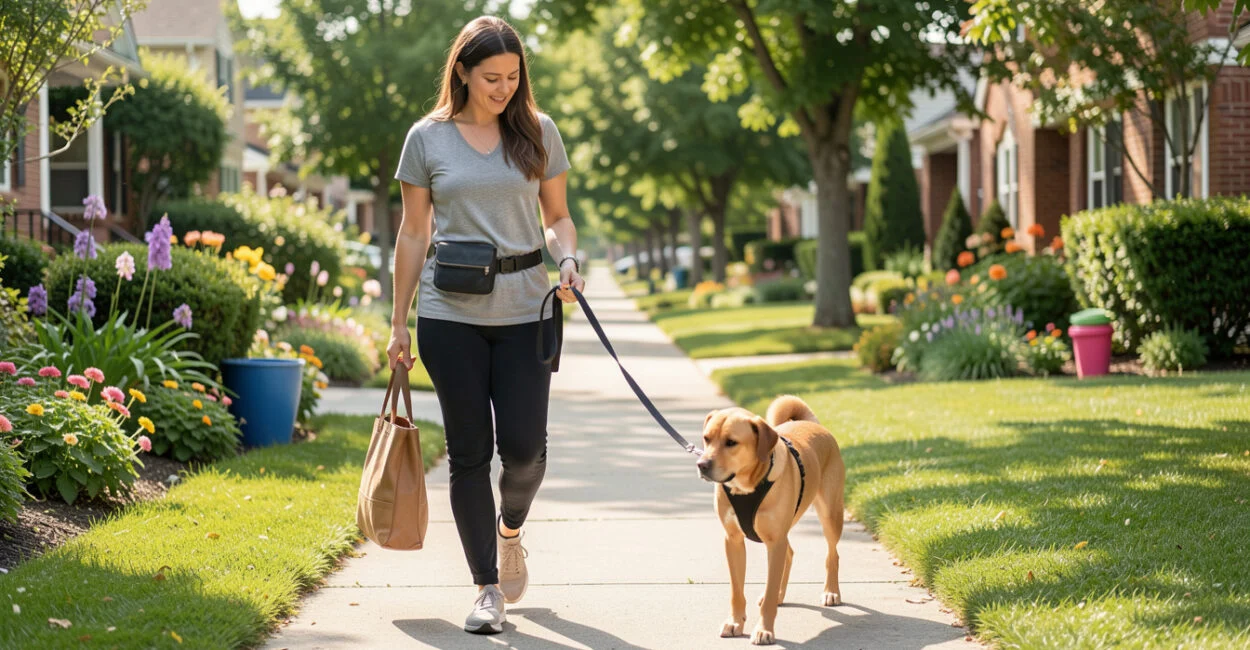 Practicing calm, loose-leash walking
A dog can turn a short walk into a tug-of-war before you reach the end of the driveway. To stop dog leash pulling, teach your dog that a loose leash keeps the walk moving and that staying near you earns rewards. Start somewhere quiet, then add real-world distractions in small steps.
Pulling is a learned habit, not a sign that your dog is trying to dominate you. The most useful change is to make the behavior you want—walking with slack in the leash—more rewarding and predictable than forging ahead.
Quick Facts
- Training goal: A slack leash, with your dog able to walk at a comfortable pace.
- Best starting point: A quiet indoor space or a low-distraction outdoor area.
- Reward options: Small treats, praise, sniffing, or moving toward a safe destination.
- Equipment: A well-fitted harness or flat collar, plus a standard leash.
- Practice length: Short sessions that end before your dog is too excited or tired.
Why Dogs Pull on the Leash—and How to Stop Dog Leash Pulling
Loose-leash walking is the skill of moving together while the leash hangs slack, without requiring your dog to stay in a formal heel. To teach it, reward your dog for being near you and for keeping the leash loose; when the leash tightens, pause or change direction calmly so pulling no longer gets your dog closer to what they want.
Dogs pull because the world is full of things worth reaching: a tree to sniff, a person to greet, or the next stretch of sidewalk. If pulling reliably gets them there, the walk itself rewards the behavior. Excitement, a fast human pace, and a long history of rehearsing the habit can all add to the problem.
A common mistake is to keep walking while the leash is taut, then ask for a loose leash only after the dog has already reached the exciting spot. That teaches the dog that pulling works often enough to keep trying. Instead, use access to the surroundings as a reward: moving forward or sniffing can follow a moment of slack leash.
Choose Safe, Comfortable Walking Equipment
Equipment can improve comfort and control, but it does not teach leash manners on its own. For many dogs that pull, a well-fitted, front-clip harness is a practical starting point; a flat collar may suit a dog that walks without putting pressure on the neck.
Equipment
Useful when
Check before walking
Flat collar
Your dog walks with little tension and is comfortable wearing one.
It should fit securely without restricting breathing or swallowing. Avoid relying on it for a dog that strains hard against the leash.
Back-clip harness
You want to attach the leash to the body rather than the neck.
Check for rubbing at the shoulders and armpits. Some dogs can lean into the leash and pull strongly in this style.
Front-clip harness
You want a leash attachment at the chest to help redirect forward movement.
Fit it so it does not chafe or restrict shoulder movement. Use gentle handling; do not yank the leash to turn the dog.
For a dog that pulls hard, avoid equipment that tightens, causes pain, or relies on a leash jerk. The AVSAB Humane Dog Training Position Statement supports reward-based training and advises against aversive methods. If a harness causes rubbing, changes your dog’s gait, or makes them resist being handled, stop using it and reassess the fit or style.
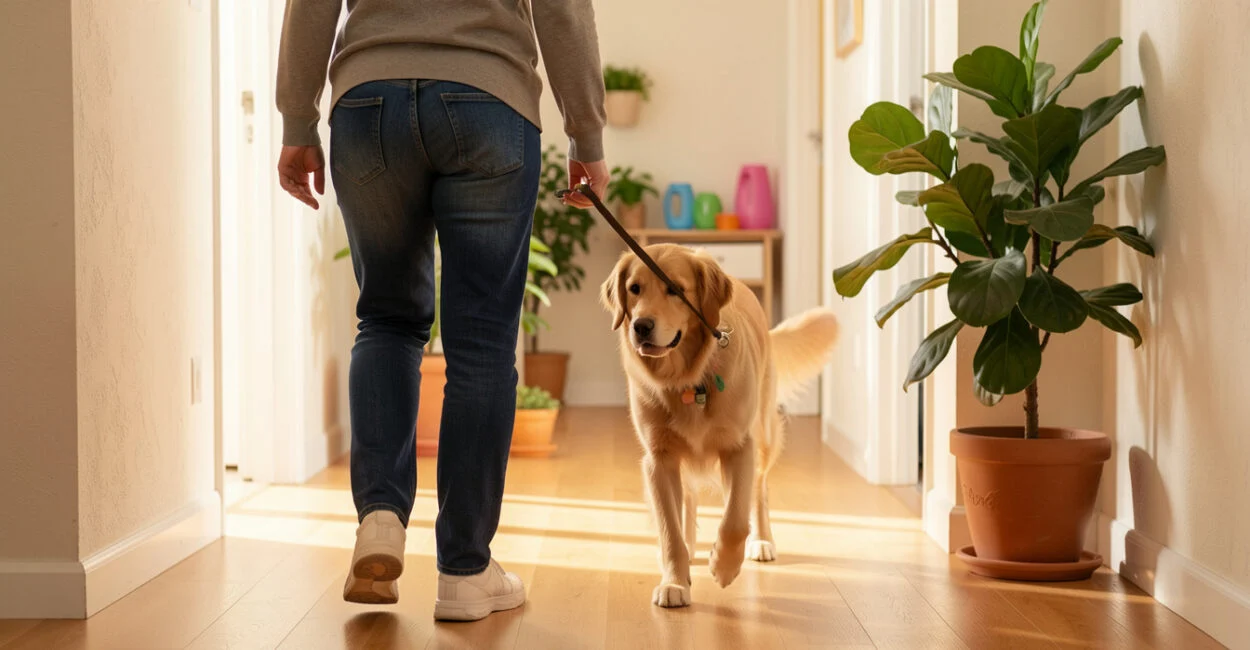
Teach a Loose-Leash Walking Cue Indoors
Start in a hallway or another quiet space where your dog can pay attention. Hold a few small treats near your leg, take one or two steps, and reward your dog when they stay close enough for the leash to remain loose. Add a cue such as “with me” once your dog is regularly choosing that position.
Keep the first practice brief. If your dog moves ahead and tightens the leash, pause, wait for them to turn back or create slack, then reward that choice and try again. Feed the treat beside your leg rather than reaching far in front; the reward’s position helps show your dog where staying close pays off.
Some dogs do better when you reward frequent check-ins: a glance toward you can earn a treat or a chance to sniff. The American Kennel Club’s leash-training guidance also recommends building the skill gradually rather than expecting a dog to manage a busy walk before practicing in easier settings.
Practice the Stop-And-Reset Method Outside
Yes, stop walking when your dog pulls, provided you can pause safely. The goal is to make forward progress depend on leash slack, not to punish the dog or hold them in place while they struggle.
- Choose a quiet route and bring small, easy-to-eat rewards.
- Start walking with the leash loose. Mark and reward a check-in or a few steps beside you.
- When the leash tightens, stop without jerking or pulling back. Keep your hands steady and wait for your dog to turn, step toward you, or otherwise release the tension.
- As soon as the leash slackens, praise and move forward again. If your dog is too excited to reset, calmly turn away from the distraction or create more distance.
- Repeat consistently, and end the practice if your dog is no longer able to respond.
There is one useful adjustment: if stopping makes your dog hit the end of the leash harder, do not wait through repeated lunges. Move away in a calm arc, use a barrier or a parked car to block the view when appropriate, and practice at a greater distance next time.
Add Distractions and Build Better Walks Gradually
Increase only one challenge at a time: location, duration, or distraction. For instance, practice in the yard first, then on a quiet sidewalk, and later at a greater distance from people or dogs. If your dog cannot take a treat or respond to their name, the setting is probably too difficult for learning right then.
Reward slack leash and voluntary check-ins before your dog starts pulling. Sniffing can be a reward too: ask for a moment of loose leash, then give a release cue such as “go sniff” near a safe patch of grass. This makes the walk more satisfying without letting the leash become a towline.
Some dogs need a separate outlet for energy before a training walk, such as food-search games at home. A household that also has cats may find ideas in indoor enrichment activities for cats, though cat activities are not a substitute for dog-specific exercise or leash practice.
Troubleshoot Lunging, Dog Encounters, and Slow Progress
What Should You Do If Your Dog Lunges Toward Other Dogs?
Create distance first; do not force a greeting or try to hold your dog close to the other dog. Turn and move away, step behind a visual barrier if available, and reward your dog for noticing the other dog without lunging when they are far enough away to stay calm.
Repeated lunging can reflect fear, frustration, or overexcitement, and the right plan depends on the cause. Avoid tight face-to-face approaches and crowded paths while you work on the behavior. If you cannot safely manage the leash, or your dog has bitten or nearly bitten, consult a qualified, reward-based trainer or veterinary behavior professional.
How Long Does It Take to Teach a Dog to Walk Without Pulling?
There is no reliable fixed timeline; progress depends on your dog’s history, the distractions around you, and how consistently people respond to pulling. Many dogs need repeated practice across weeks or longer, and a busy neighborhood may take more work than a quiet yard. Look for gradual improvement, such as more check-ins or shorter stretches of tension, rather than a perfect walk overnight.
The RSPCA’s loose-lead walking guidance emphasizes rewarding the behavior you want and practicing without allowing the lead to stay tight. If progress stalls, make the next session easier: reduce distractions, shorten the route, or switch to a better-fitting piece of equipment. For sudden changes in walking behavior, discomfort or a medical issue may also be worth discussing with your veterinarian.
Keep Training Consistent and Age-Appropriate
Practice in short bouts, especially with puppies, older dogs, or dogs that become overstimulated outdoors. A young puppy may manage only a few minutes of focused leash work before needing a break; an older dog may need a slower pace or a route with fewer slippery or uneven surfaces. Adjust the session to the individual dog rather than aiming for a fixed distance.
Everyone who walks the dog should use the same basic rule: slack leash makes the walk continue, while a tight leash pauses forward progress. Agree on the same cue and release word, and keep rewards easy to reach. If one person lets the dog pull to every tree while another stops each time, the dog receives mixed information and may keep testing what works.
Your next step is to choose a quiet place, check that the collar or harness fits without rubbing, and practice a few rewarded steps beside you. Move to a busier route only when your dog can repeat the skill in the easier setting.
📱 See this content as a Web Story
Frequently Asked Questions
Should I Use a Retractable Leash While Training?
A standard leash is usually easier for teaching because it gives you consistent slack and a clear sense of distance. A retractable leash can remain under tension and make it harder to notice when your dog is pulling.
Can I Let My Dog Sniff During a Training Walk?
Yes. Sniffing is rewarding for many dogs, so use it as part of the walk: reward a loose leash, then give your dog permission to explore a safe spot.
Should I Practice with Treats Every Time?
Treats are useful while the behavior is new or the environment is difficult. As your dog improves, vary the rewards with praise, forward movement, and sniffing, while continuing to reinforce good choices.
What If My Dog Freezes Instead of Walking?
Do not drag the dog forward. Check for discomfort, fear, heat, or an intimidating sound or surface, then give them space and reward a voluntary step. If freezing is new or persistent, ask your veterinarian about possible pain or health concerns.
Is a Head Halter a Good Option for a Dog That Pulls?
A head halter may help some handlers guide a strong dog, but it needs careful fitting and gradual conditioning. It is not a cure for pulling, and sudden leash pressure can injure or frighten a dog wearing one.