
How to Stop a Cat from Scratching Furniture Humanely
How to redirect your cat’s scratching to suitable posts or pads, protect furniture during adjustment, and reward positive behavior without punishment or decl…
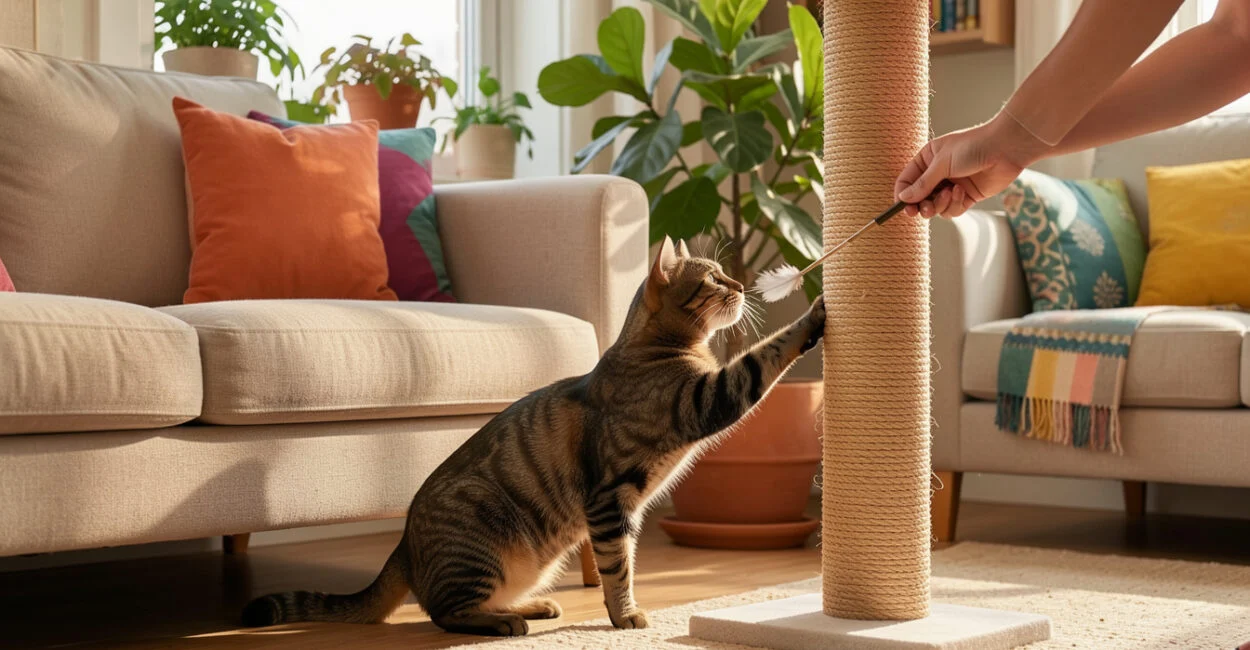 Cat redirected to a nearby scratcher
A cat can turn the same sofa corner into a scratching target day after day, even when a post sits across the room. To stop a cat from scratching furniture humanely, put a suitable scratcher beside the target, protect the surface while your cat adjusts, and reward use of the new spot. Punishment and declawing are not appropriate solutions.
Scratching is normal feline behavior, so success means guiding it toward an acceptable surface, not trying to eliminate the urge. The right setup depends on what your cat likes to scratch and where that behavior happens.
Posts, pads, and furniture protectors can all help, but no product works for every cat. A spray may discourage a particular cat from a particular surface, yet it cannot replace a scratcher that feels good to use.
How to Stop a Cat from Scratching Furniture Humanely
Place a stable scratcher right beside the furniture your cat targets, choosing a tall vertical post or a horizontal pad based on the cat’s preferred posture. Cover the vulnerable area with a well-fitted protector, then reward your cat when they scratch the alternative. Keep both in place while the new habit develops; moving the scratcher too soon can send the cat straight back to the sofa.
Watch what your cat does before choosing equipment. A cat that braces its front paws and stretches upward needs a tall, sturdy post. One that scratches a rug or mat may prefer a flat or angled pad.
This approach follows the guidance of the ASPCA on destructive scratching: provide acceptable scratching surfaces and make unwanted targets less appealing. It also fits the environmental approach in the AAFP/ISFM Feline Environmental Needs Guidelines.
Why Cats Scratch Furniture
Scratching is a normal feline behavior: cats use their claws to grip and stretch, shed the worn outer claw sheath, and leave visual and scent marks. Scent glands in the paws leave chemical signals when a cat scratches, which helps explain why familiar, prominent places can become preferred targets.
Do all cats scratch furniture? No. Some prefer their scratching posts, rugs, or other surfaces, while others choose upholstered furniture, wood, or carpet. A cat’s preference can reflect texture, orientation, location, and how stable the surface feels under its paws.
Scratching near a doorway, sofa, or other well-used area may serve as marking as well as claw maintenance. That makes a scratcher tucked into an out-of-the-way corner less useful than one placed beside the chosen target.
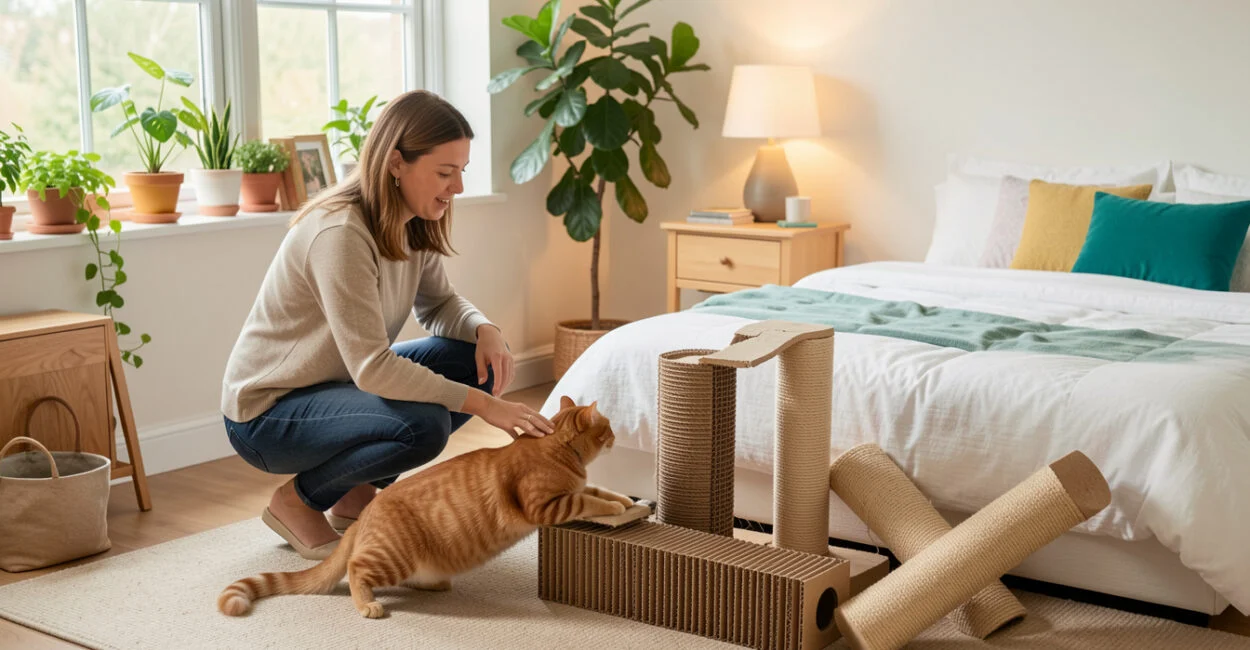
Choose and Position the Right Scratching Alternative
Match the scratcher to the behavior you see, rather than buying based on appearance alone. Sisal fabric or rope, corrugated cardboard, and carpet offer different textures; if your cat ignores one, try another before concluding that scratchers do not work.
- Check the orientation: Choose vertical for cats that stretch up, horizontal for cats that scratch floors, or an angled option if that resembles their usual posture.
- Check stability and size: The post should not wobble or tip when your cat leans into it, and a vertical post should allow a full-body stretch.
- Check the location: Start next to the furniture target or near a sleeping spot, where many cats are ready to stretch after waking.
- Check the texture: If your cat scratches upholstery, offer a material with a satisfying resistance and watch which option they use.
A common setup mistake is putting a small, wobbly post in a quiet corner and expecting it to compete with the broad, stable arm of a sofa. If the post shifts during use, the cat may abandon it; secure it or replace it before trying another deterrent. For more ways to make the home engaging, see these indoor cat enrichment ideas for small spaces.
Some cats benefit from more than one scratching location, especially in a larger home or when they target furniture in separate rooms. Keep the first alternative beside the target, then add another where the cat already spends time.
Protect Furniture While Your Cat Learns
A cat scratching furniture protector reduces access to a target while you build the new habit. Choose one by surface type, how it attaches, whether its appearance is acceptable to you, and whether it can withstand your cat’s claws. Test any adhesive or treatment on a hidden area first, and follow the product’s instructions.
Protector Best suited to Attachment and visibility Durability considerations Clear adhesive film Smooth upholstery or a sofa arm Adheres directly; usually less visible from a distance Check that adhesive is safe for the fabric and does not leave residue; replace if edges lift. Furniture guard panel Flat, exposed areas such as a sofa side May attach with adhesive or another fastener; can be noticeable Choose a panel that stays secure when scratched and does not create sharp edges. Washable cover or throw Broad seating surfaces and cushions Easy to remove; changes the furniture’s appearance Secure it so it does not bunch or slide, which can create an appealing moving surface. Temporary barrier A specific corner or narrow target area Attachment varies; may be visible or intrusive Inspect often for loose parts and remove any barrier your cat chews or pulls off.
For leather furniture, start with a fitted cover or a protector that the manufacturer confirms is safe for that leather finish. Avoid applying adhesive directly unless the furniture maker approves it; some finishes can mark, discolor, or peel. Pair the cover with a stable scratcher beside the targeted area, since a cat scratch furniture protector alone does not teach an alternative behavior.
Choose a barrier that does not snag claws or invite chewing. If your cat mouths or swallows pieces of a protector, remove it and ask your veterinarian about safer options.
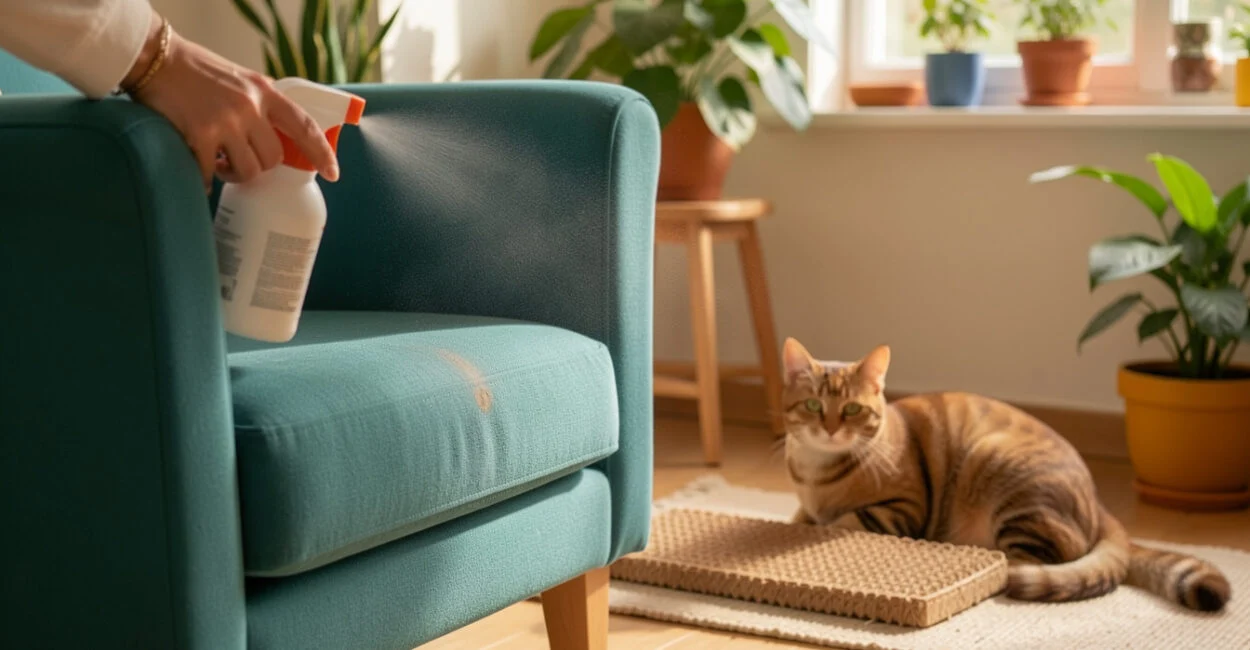
Do Cat Repellent Sprays Work on Furniture?
Do Cat Deterrent Sprays Stop Cats from Scratching Furniture?
A cat repellent spray for furniture may make a surface less appealing to some cats, but results vary and the spray does not meet the cat’s need to scratch. Check that the label specifically allows use on the material and around cats, follow its directions, and test an inconspicuous spot for discoloration or damage.
A cat scratch deterrent spray is best treated as a temporary support alongside a nearby scratcher and a physical protector. If the scent fades or the cat dislikes the alternative, scratching may return. “Best” is therefore a matter of fit and safety, not a guarantee: the best spray to stop cats from scratching furniture for one household may be ineffective or unsuitable in another.
Is Homemade Spray Safe or Effective for Deterring Scratching?
A homemade spray to stop cats from scratching furniture is hard to recommend because ingredients can irritate cats or damage upholstery, and homemade mixtures are not reliably tested for either. Avoid essential oils and citrus-based mixtures; cats can be sensitive to some concentrated oils, and liquids may stain or alter fabric and leather. A labeled product designed for the intended surface is a safer choice, though it still may not work for every cat.
A cat deterrent spray for peeing addresses urine marking or inappropriate elimination, a different behavior with different causes. It is not a furniture-scratching solution; new or repeated urination outside the litter box should be discussed with a veterinarian.
Redirect Scratching and Reinforce the Right Behavior
Make the desired choice easy to find and rewarding. When your cat uses the scratcher, offer a small treat, gentle praise, or a short play session if the cat enjoys it. Reward the behavior promptly so the connection is clear.
- Put the scratcher beside the furniture target and keep the protector in place.
- Invite interest with a toy or by placing a treat nearby; let the cat approach and scratch voluntarily.
- When scratching happens on furniture, calmly interrupt with a toy or guide attention to the nearby scratcher. Do not shout, spray the cat, or force its paws onto the post.
- Reward use of the scratcher, then keep the routine consistent across everyone in the household.
Play can help direct a cat’s energy toward an appropriate activity, but it is not a substitute for a scratcher with the right texture and position. For more options, explore simple scent games for cats and other enrichment activities.
A scratcher works best when it is stable, easy to reach, and placed where the cat already wants to scratch.
Troubleshooting Persistent Scratching
If your cat keeps scratching despite having a post, check the setup before adding more deterrents. Is the post steady? Does it let the cat stretch fully? Is its texture different from the preferred furniture? Is it close to the target, rather than hidden elsewhere? Adjust one factor at a time so you can tell what changes the cat’s choice.
Clean and maintain the scratcher as needed; worn cardboard may need replacing, while a loose rope or fabric can become unsafe. Keep the protector in place until your cat uses the alternative consistently, and avoid turning the scratcher into a forced interaction.
A sudden change in scratching, a reluctance to use a limb, or other changes in behavior warrant a veterinary check. Pain or illness can affect normal activity. If health concerns are ruled out and the behavior remains difficult to manage, ask your veterinarian for a referral to a qualified feline behavior professional. The Cornell Feline Health Center offers veterinary-reviewed information on feline health and behavior.
Start with the furniture your cat targets most: place a stable scratcher beside it, protect the vulnerable surface with a compatible barrier, and reward the first voluntary use. If the arrangement fails, change the scratcher’s texture, orientation, or position before relying on a spray.
📱 See this content as a Web Story
Frequently Asked Questions
Should I Trim My Cat’s Claws to Protect the Sofa?
Regular nail trims may reduce damage, but they do not remove the urge to scratch. Ask a veterinarian or veterinary technician to show you a safe technique if you are unsure.
Can Catnip Make a Scratcher More Appealing?
It may attract some cats, but not all cats respond to catnip. Use a small amount near the scratcher if your cat enjoys it, and keep the post’s placement and stability right.
When Can I Remove a Furniture Protector?
Wait until your cat has been choosing the alternative reliably and the original target no longer draws repeated scratching. Remove the protector gradually, and put it back if the cat returns to that spot.