
Cat Wall Shelves: Add Vertical Play Space to Small Homes
How cat wall shelves transform narrow spaces into vertical routes by combining safe climbing paths, strategic placement, and secure mounting for cats’ comfor…
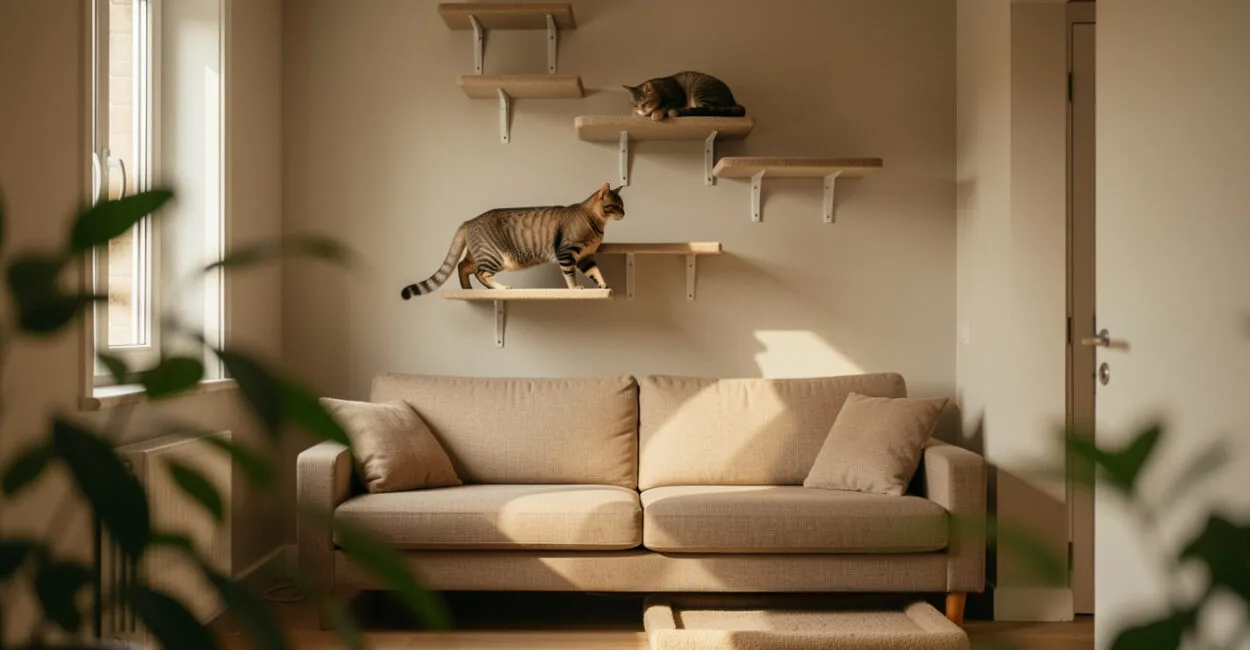 Tabby cats explore wall-mounted shelves above a sofa
A narrow apartment can give a cat more room to move without losing a single inch of floor space. Cat wall shelves create elevated places to climb, rest, and watch the room, but they work best when they form a safe route rather than a collection of disconnected perches.
Good planning starts with your cat’s size and mobility, the wall’s construction, and the furniture already in the room. With careful placement and secure mounting, even a short stretch of wall can become useful vertical territory.
How Cat Wall Shelves Make Small Homes More Cat-Friendly
Cat wall shelves are elevated platforms mounted to a wall to provide cats with places to climb, perch, rest, and observe without using floor space. In a small home, a connected arrangement can add usable territory while keeping pathways and living areas open. The most effective setup gives a cat more than one way to move between surfaces and a comfortable route back down.
Height can let cats watch activity from a quieter spot, while a sequence of low shelves can support gradual climbing. Placement matters: a perch above a radiator, a door that swings open, or a noisy appliance may be less inviting than its height suggests. The ASPCA’s general cat care guidance offers useful background on meeting cats’ environmental needs.
Diagnose the Room Before Choosing a Shelf Layout
Begin by looking at the room from your cat’s point of view. Note where the cat already jumps, where people walk, and which windows or quiet corners attract attention. A shelf above a sofa can make good use of an otherwise empty wall, but it should not put the cat directly over a doorway or a spot where someone may startle them.
Sketch the wall and mark doors, windows, furniture, outlets, and likely mounting locations. Leave enough room for a cat to turn around on each platform, and consider how the cat will get down. A tall endpoint with no practical descent route can turn an appealing perch into a place the cat hesitates to use.
- Use shelves to connect existing furniture, such as a sturdy bookcase or the back of a sofa, when those surfaces are stable and accessible.
- Keep a clear landing area below the route so a missed step does not lead onto a hard obstacle.
- Choose a wall that supports the cat’s preferred activity, such as watching outdoors or retreating from household traffic.
For a senior cat, a change in jumping or grooming habits can be a helpful prompt to reassess access. These grooming routine ideas for senior cats may help owners notice changes during regular care, though they do not replace veterinary advice.
Choose Shelves and Perches That Suit Your Cat
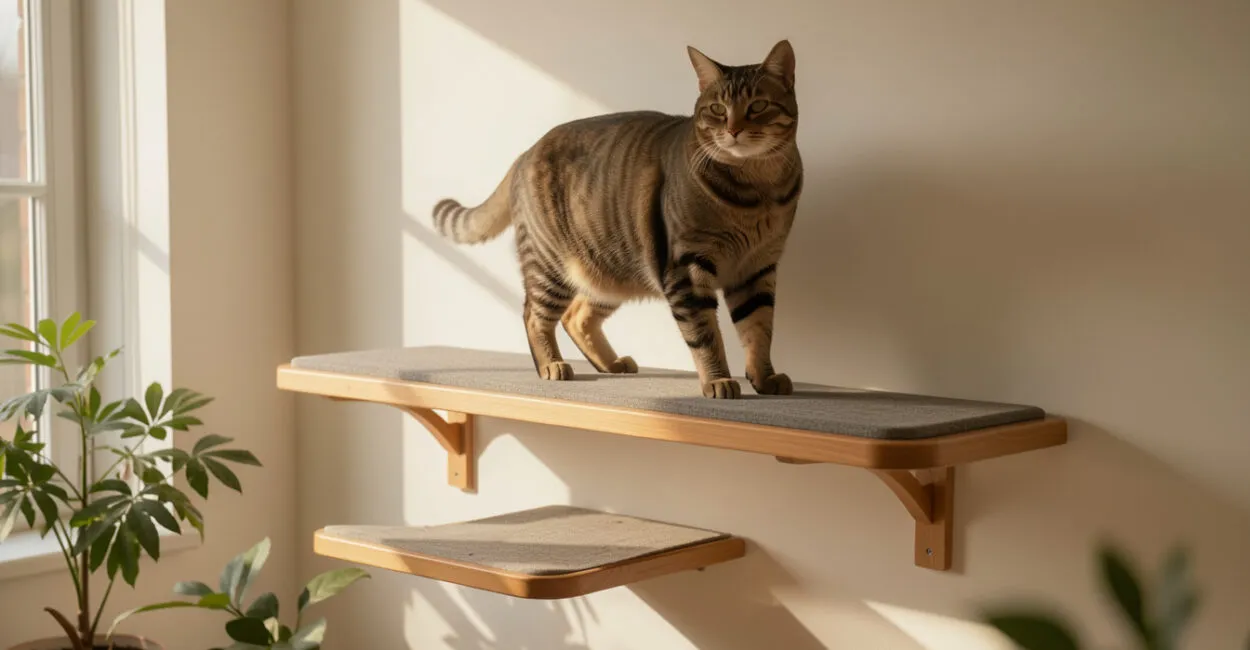
A shelf should offer enough room for the cat to stand, turn, and settle without balancing on an edge. Check the product’s stated load rating and dimensions, and treat the rating as one part of the decision: mounting method, wall condition, and how the cat lands also affect real-world stability. Wall-mounted cat shelves with a grippy surface are often more useful than smooth platforms that look sleek but feel slippery under paws.
Materials should be easy to inspect and keep clean. Carpet or replaceable fabric can improve traction, while unfinished or sealed wood may be easier to wipe down. Avoid sharp corners, loose coverings, and small gaps where a paw or claw could catch.
For a large cat, select broader platforms and verify the entire mounting assembly is rated for the load. Kittens may need lower steps and shorter gaps while their coordination develops. Older cats or cats with joint pain often do better with shallow step-ups, wider landing areas, and a route that does not require a long leap. For mobility changes, a veterinarian can help determine whether climbing remains appropriate.
There is no universal shelf size or weight limit that fits every cat and wall. A product’s rating cannot compensate for weak plaster, unsuitable fasteners, or a poorly installed bracket.
Complete guide: Indoor Cat Enrichment: 9 Activities for Small Spaces
Build a Connected Climbing Route with a Way Down
How far apart should cat wall shelves be? There is no single safe spacing for every cat; set the gap according to the cat’s comfortable jump, the shelf depth, and the landing surface. Start with a low, easy step and observe whether the cat can move between platforms without stretching, scrambling, or hesitating.
Arrange cat climbing shelves as a sequence of manageable transitions. Include a broad landing point where the cat can pause, and make sure the route back down is as usable as the way up. Some cats prefer descending in stages; others will jump to a nearby piece of furniture. Plan for the individual cat rather than assuming it will use the route exactly as drawn.
Read also: How to Trim Your Dog’s Nails Safely at Home
Example: In a studio apartment, a low platform beside a sofa can lead to a wider resting shelf near a window. A second, lower shelf provides a step back to the sofa rather than forcing a jump to the floor. The arrangement uses one wall and keeps the main walkway clear.
Install Cat Shelves Securely on the Right Wall
Safe cat shelf installation depends on identifying the wall material and using hardware designed for that surface. On drywall, fasteners should engage wall studs where possible; if the layout misses a stud, use anchors rated for the load and compatible with the shelf bracket. Plaster, masonry, and hollow walls require different fixings, so do not assume a drywall anchor will work in every wall.
Before drilling, check for electrical wiring and plumbing behind the proposed mounting points. A stud finder with wire-detection features can help, but it is not a guarantee. If the wall material is unclear, the planned load is substantial, or you suspect hidden services, consult a qualified installer rather than guessing.
The U.S. Consumer Product Safety Commission’s home safety guidance is a useful reminder to treat household installation hazards seriously. Follow the shelf maker’s instructions, use the specified fasteners, and do not substitute hardware based only on appearance.
Make the Route Comfortable for Kittens and Senior Cats
Accessible cat wall furniture has a low starting point, stable landings, and surfaces that provide traction. Kittens may need a route they can manage without a large leap; older cats may benefit from closer spacing and a broad resting perch between climbs. If a cat has trouble jumping, consult a veterinarian before encouraging a high route.
Give the cat an inviting way to try the shelves. A familiar blanket on a resting platform or a treat placed on a low step may encourage exploration, but avoid placing food where a startled cat could fall. Cats differ in their willingness to climb, and some will prefer a window perch at modest height to an elaborate wall route.
Owners caring for aging cats can also review practical guidance on grooming tools for short-haired senior cats as part of observing comfort and movement during routine care. A shelf layout should change if the cat’s balance, confidence, or ability to jump changes.
Test Stability and Recheck the Setup
Before inviting a cat onto a new route, apply firm hand pressure to each shelf and check for movement, creaking, or a widening gap at the wall. This is a basic check, not proof that the installation can safely handle a cat landing at speed. If a bracket shifts or the wall surface crumbles, take the shelf out of use and reassess the mounting.
Inspect brackets, screws, anchors, and shelf surfaces periodically, and again after moving furniture or changing the route. Look for loosened hardware, cracks, worn grip material, and signs that the cat avoids a particular step. A quick review after the first few climbs can reveal a problem that was not obvious when the shelves were empty.
Cat shelves cannot make every wall suitable or every climb appropriate. When the wall is damaged, the mounting location may hide pipes or wiring, or the cat has a mobility concern, pause the project and get qualified installation or veterinary guidance. Map one short route, verify each fixing, and let the cat set the pace before adding more platforms.
📱 See this content as a Web Story
Frequently Asked Questions
Can Cat Shelves Be Installed in a Rental Apartment?
They can be, but drilling may violate a lease or require written permission. Check the agreement first and ask the property manager before making holes; freestanding alternatives may be better when wall mounting is not allowed.
Do Cats Need a Carpeted Shelf Surface?
No. The key is dependable traction. Carpet, textured fabric, or a suitable non-slip surface can help, while smooth finishes may be harder to grip during a quick landing.
Should Every Shelf Be the Same Depth?
No. A narrow step may work as a transition, while a resting perch should give the cat enough room to settle and turn around. Choose dimensions based on the cat’s body and how the platform will be used.
What If My Cat Climbs Up but Will Not Come Down?
Offer an easier descent route, such as lower intermediate shelves or a nearby stable piece of furniture. Do not force the cat to jump; if it appears stuck, help it down calmly and rethink the spacing before encouraging another climb.
Can I Mount Shelves Directly Above a Bed or Sofa?
That placement may save wall space, but consider the risk of a fall and whether people below could be startled or injured. Use secure mounting, provide a safe route, and avoid placing a high-traffic landing zone over a person’s usual seat or sleeping spot.
How Can I Tell Whether My Cat is Comfortable Using the Route?
Watch for relaxed pauses, steady footing, and voluntary use in both directions. Repeated hesitation, slipping, or avoiding a platform suggests that the route, surface, or height needs adjustment.