
How to Choose Secondhand Furniture for a Lower-Waste Home
How to choose secondhand furniture by measuring space and delivery routes, budgeting for repairs, and inspecting condition to ensure lasting value and fit.
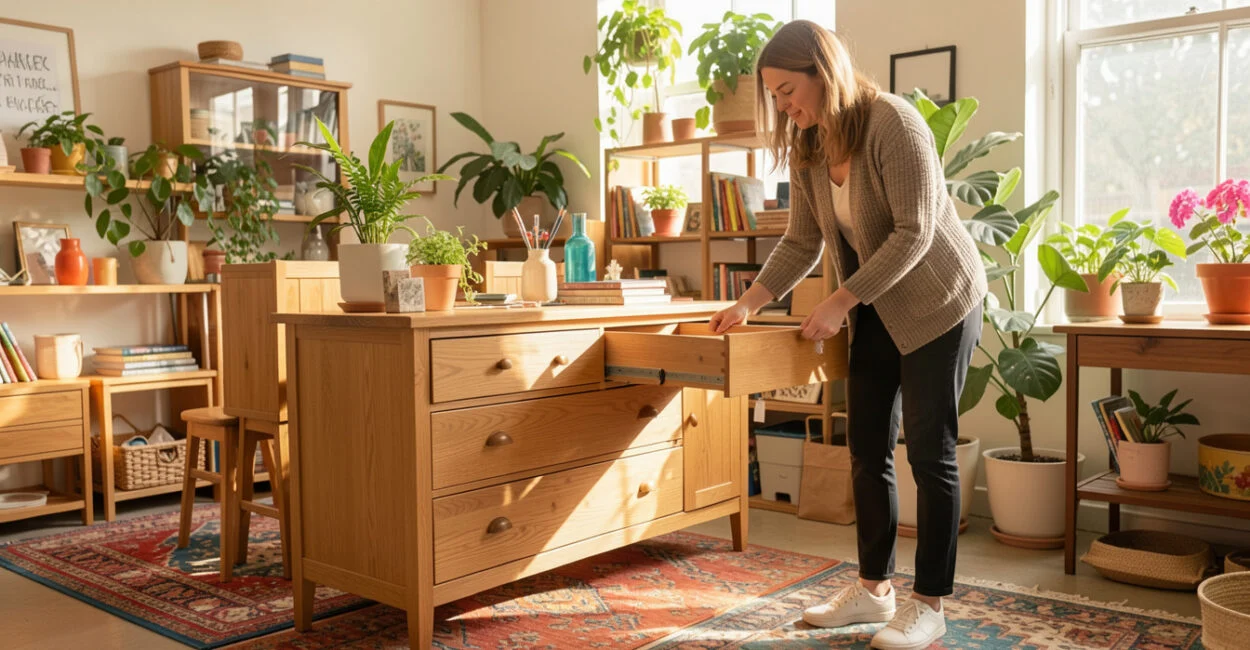 Measuring and inspecting a secondhand dresser
A bargain dresser can become an expensive mistake if it will not fit through the stairwell, has a failing drawer base, or needs more work than you can take on. Good secondhand furniture tips start before you shop: measure the space and delivery route, set a repair-inclusive budget, then inspect construction, cleanliness, and safety before committing.
Buying used can keep a serviceable piece in circulation, but “pre-owned” does not automatically mean durable, safe, or lower-impact. The best choice is one that meets a real need and can stay useful without costly repairs or wasteful transport.
Use the checks below to compare pieces on more than appearance and asking price. For a wider framework for assessing material choices, see this guide to choosing durable, eco-friendly goods.
Start Your Secondhand Furniture Search with Space, Needs, and Budget
To buy used furniture wisely, confirm that the piece fits your room, can pass through every doorway on the route, and suits the job you need it to do; then reserve money for transport, cleaning, and repairs. A low listing price is useful only if the item works in your home and remains worth keeping after those costs.
Measure the item’s width, height, and depth, then measure the narrowest doorway, stair landing, elevator, and hallway it must pass through. Account for legs, handles, removable shelves, and the clearance needed to turn a corner. If a seller provides only approximate dimensions, ask for exact measurements before arranging pickup.
Before browsing, write down what the item needs to hold, where it will go, and the highest total cost you can accept. This short checklist prevents a common waste trap: buying a piece because it looks useful, then discovering it does not fit or solve the problem.
- Measure the intended spot and the full access route.
- Decide which features are necessary and which are optional.
- Set a maximum budget that includes delivery and likely fixes.
- Choose a minimum condition: for example, drawers must slide and the frame must not wobble.
Choose Furniture with Durable Construction and Repairable Parts
Well-made furniture holds its shape under ordinary use, has joints that stay tight, and can be repaired without replacing the whole piece. Look for joinery that suits the item’s age and design, solidly attached legs, even drawer gaps, and parts such as knobs or runners that can be replaced.
Solid wood can often be sanded or repaired, but material alone does not guarantee quality. A well-built veneer piece may serve for years, while cracked veneer, swollen particleboard, or stripped screw holes can make a cheap item difficult to restore. Check the underside and back as well as the front; these areas often reveal loose joints, thin backing, or repairs hidden from view.
Think about the likely repair before buying. A missing knob is usually easy to address. A cracked load-bearing rail, badly warped panel, or damaged frame may require skilled work, and the repair cost can exceed the value of the furniture. The EPA’s Sustainable Materials Management: Furniture resources explain the broader value of keeping products and materials in use; a purchase only supports that aim if the piece remains useful.
Durability comes from sound joints, suitable materials, and repairs that keep the whole piece in service.
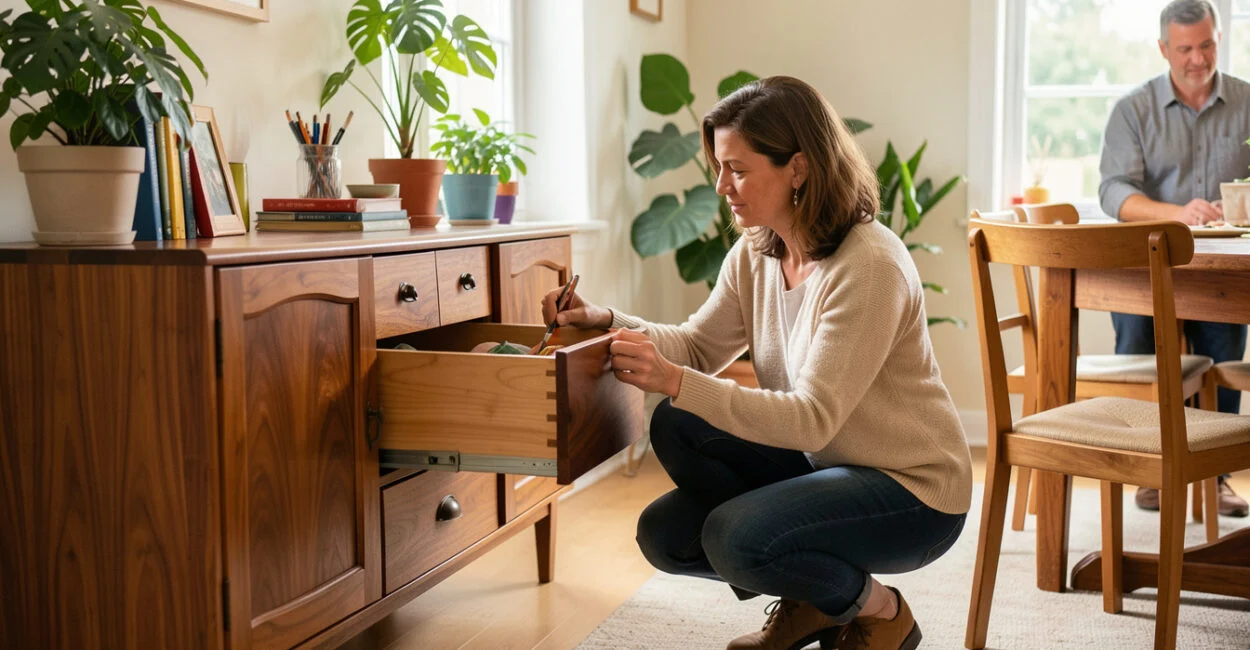
What Should You Inspect Before Buying Used Furniture?
Check how the furniture moves and bears weight, not just how it looks in a photo. Inspect the frame, joints, hardware, drawers, and hidden surfaces in good light, and ask permission before opening panels or moving the item.
Does the Frame Feel Stable?
For a table or chair, apply light pressure to each corner and check for rocking, creaking, or joints that shift. A slight wobble from an uneven floor can be misleading, so test it on a level surface if possible. For shelves, inspect the back panel and fastening points; for a bed frame, check the rails, slats, and center support.
Do Drawers, Doors, and Hardware Work?
Open every drawer fully and close it without lifting or forcing it. Look for a drawer that drops, binds, or has a split bottom, and check whether cabinet doors hang evenly and latch as intended. Missing hardware is usually manageable; stripped holes or a frame pulled out of square may point to deeper damage.
Are the Damage and Odors Manageable?
Look underneath and behind the piece for water stains, swelling, mold-like growth, fresh paint over damaged areas, and signs of wood-boring insects. A musty smell can come from storage conditions, but persistent smoke, pet, or damp odors may be difficult to remove from porous materials. Ask to see the item before paying, and avoid relying on heavily edited listing photos.
For upholstered furniture, inspect seams, piping, tufts, folds, and the underside of cushions with a flashlight. Look for live insects, shed skins, eggs, or dark spotting; ask where the piece has been stored and whether there has been a pest issue. The EPA’s bed bug guidance describes signs to watch for. A visual inspection cannot guarantee that an item is pest-free, so skip upholstered pieces if you cannot inspect them properly or the seller will not answer questions.
A clean-looking surface cannot confirm that hidden joints, cushion seams, or undersides are sound.
Check Used Furniture Safety, Cleanliness, and Recalls
Used furniture safety depends on the item’s design, condition, and intended user; take extra care with children’s products and upholstered pieces. Wipeable surfaces and stable construction do not replace checking for product recalls or age-specific hazards.
For a crib, high chair, play yard, or other children’s product, identify the model and manufacturer, then check the U.S. Consumer Product Safety Commission’s recall notices and resale guidance. Do not buy a product with missing safety parts, an unreadable identity label, an incomplete assembly, or a recall issue you cannot verify has been resolved. For cribs in particular, avoid improvising repairs or using an item whose history and condition you cannot confirm.
Clean surfaces according to the material: use a mild cleaner on compatible hard finishes, test it in an inconspicuous spot, and let the piece dry fully before use. Upholstery may need a professional cleaning method suited to its fabric, and not every odor or stain can be removed. If a piece has unknown finishes, peeling coatings, or extensive damage, the right handling depends on its material and age; do not sand or strip it until you know what precautions are needed.
How to Compare the True Cost of a Used Piece
Compare the purchase price with delivery, repairs, cleaning, and the time the furniture is likely to remain useful. Expected lifespan is an estimate, not a guarantee, so base it on the condition and construction you can verify rather than the seller’s optimism.
Cost factor
What to include
Decision check
Purchase
Asking price, tax if applicable, and any required hardware
Is the price fair for the condition and function?
Delivery
Pickup vehicle, rental, delivery fee, and help carrying
Can the piece reach your home without damage or an unsafe lift?
Repair
Parts, tools, and any professional labor
Can the defect be fixed without compromising stability?
Cleaning
Suitable supplies or upholstery cleaning
Is the likely result acceptable for the material and odor?
Likely lifespan
Expected useful years based on observed condition
Will it remain useful long enough to justify the total cost?
For example, imagine a used table priced at $80, with a $35 delivery charge and a $25 repair. Its immediate total is $140 before cleaning or any additional work. If a repair estimate raises that total beyond your budget, or the table still wobbles afterward, the low listing price does not make it good value.
Durability is one part of a lower-impact home, alongside how you use energy and other household resources. For related changes, see these energy-saving home habits and ideas for reducing your household footprint.
Buy, Transport, and Refresh with Less Waste
Before arranging a purchase, ask the seller for the item’s measurements, known damage, repair history, storage conditions, and whether all parts are included. Request current photos of the underside, back, drawer interiors, and upholstery seams when those areas are not shown. Clear answers reduce unnecessary trips and help you decide whether an inspection is worth making.
Plan pickup before paying: confirm the item fits your vehicle, identify who will carry it, and bring straps or blankets to protect it in transit. A large piece that needs a separate truck or several trips may carry a bigger cost and footprint than the listing suggests. When the item is too heavy or awkward to move safely, use a suitable delivery service rather than risking injury or damage.
Favor small, material-appropriate fixes that preserve the piece: tightening a joint, replacing a knob, or cleaning a compatible hard surface. For sanding, stripping, or refinishing, first identify the finish and follow product safety instructions; removing an old coating can create dust or expose materials that need special handling. A repair professional is the better option when a structural joint, load-bearing part, or unknown finish makes the work uncertain.
Know When to Walk Away from a Secondhand Piece
Walk away when the item’s safety, structure, or history cannot be checked well enough for its intended use. Persistent damp or smoke odor, suspected pests, unstable load-bearing joints, severe water damage, missing child-safety parts, and a seller who refuses a reasonable inspection are stronger warnings than surface scratches.
A repair project is worth considering when the defect is specific, the rest of the structure is sound, and you can confirm the repair method and total cost. If the problem is widespread or the estimate is uncertain, the piece may become waste after all. This is where the sustainability question has no universal answer: transport distance, repair needs, materials, and how long the item will be used all affect whether reuse is a better choice.
Before making an offer, compare your measurements and all-in cost against the item’s condition, then inspect it in person whenever possible. If it passes those checks and fits a genuine need, arrange transport that protects both the furniture and the people moving it.
📱 See this content as a Web Story
Frequently Asked Questions
Is Secondhand Furniture Always the More Sustainable Choice?
No. Reuse can keep a serviceable piece in circulation, but a short-lived item that needs extensive repairs or a long, costly delivery may not be the better option. Condition, transport, and expected use all matter.
Can a Strong Odor Be Removed from Used Furniture?
Sometimes, but the result depends on what caused the smell and how deeply it has entered the material. Do not assume that airing out or surface cleaning will remove smoke, damp, or pet odors from upholstery.
Should I Pay a Deposit Before Inspecting an Item?
Avoid paying a deposit if you have not confirmed the seller, the item, and the terms of the sale. For a private listing, agree in writing on the price, pickup arrangements, and what happens if the furniture does not match its description.
What Should I Bring to an In-Person Inspection?
Bring a tape measure and a flashlight. A phone can help you photograph damage, compare the listing, and check a children’s product model against recall notices.
Is Refinishing Always a Good Way to Save a Damaged Piece?
No. Refinishing may be worthwhile for a sound piece with a surface problem, but it will not correct a failed frame or badly swollen panels. Identify the existing finish before sanding or stripping, and seek qualified help if the material or safety precautions are unclear.
How Can I Avoid Buying a Piece That is Difficult to Resell or Donate?
Choose a size and function you expect to use for years, and check that common parts can be replaced. Avoid pieces with severe damage or unusual defects that would make their condition hard to explain to the next owner.