
How to Keep Food Fresh Longer and Reduce Household Waste
How to store food longer by controlling temperature, moisture, airflow, and packaging to preserve freshness, quality, and safety while reducing waste.
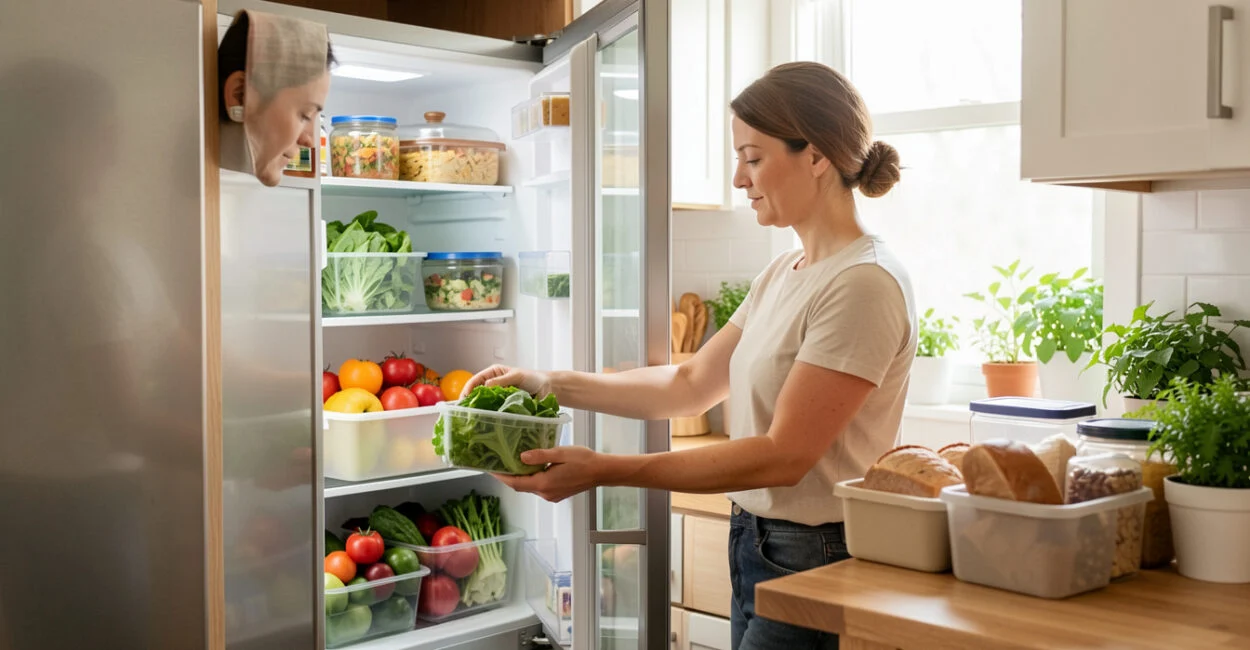 Organizing groceries to stay fresh longer
A bag of greens can wilt while a jar of leftovers gets pushed to the back of the fridge. To store food longer, match each item to the right temperature, moisture level, and packaging, then put foods you need to use soon where you can see them. A few consistent habits can extend quality and help prevent avoidable waste without weakening food-safety rules.
Freshness and safety are related, but they are not the same. Some storage steps preserve texture and flavor; safe temperatures, clean handling, and time limits help control harmful bacteria.
Before You Start: A Few Useful Checks
- Check that your refrigerator is set to 40°F or below and your freezer to 0°F.
- Make room for air to circulate, especially around refrigerator vents.
- Keep clean, food-safe containers and labels handy.
- Check package directions and date labels before deciding where food belongs.
1. Start with the Storage Basics to Store Food Longer
To store food longer, control temperature, moisture, airflow, and exposure to contamination. Keep perishable food cold, protect dry goods from humidity and pests, and use packaging that suits the item. These steps slow quality loss, while refrigeration and careful handling help limit food-safety risks.
Temperature comes first: a refrigerator that runs warm can shorten the usable life of perishable food, while a freezer at 0°F keeps food safe indefinitely from a safety standpoint, though quality can decline over time. Moisture needs vary. A sealed container helps prevent dry goods from absorbing humidity, while produce stored damp can spoil faster.
Use clean containers with tight-fitting lids for leftovers, and avoid packing a refrigerator so tightly that cold air cannot move. One easy-to-miss problem is putting warm, uncovered leftovers in a deep container: the center can cool slowly, and the food may also dry out or absorb odors. Divide large portions into shallow containers so they cool faster.
Good storage starts by matching each food to the temperature, moisture, and protection it needs.
2. Set Up Your Refrigerator for Better Food Storage
Keep the refrigerator at 40°F or below, using an appliance thermometer to check the actual temperature rather than trusting the dial. The door warms more often as it opens, so use it for condiments and other items whose labels allow door storage, not for foods that need the steadiest cold.
Store ready-to-eat foods above raw meat, poultry, and seafood. Keep raw items in leakproof packaging on a lower shelf or in a tray; this reduces the chance that their juices will drip onto other food. Refrigerate perishable groceries promptly, and follow package directions for foods such as opened milk or deli items.
Use airtight containers for leftovers and label them with the date they went into the refrigerator. The FDA’s Food Safety at Home guidance covers safe handling and storage, including the importance of keeping cold food cold. The exact quality window still depends on the food, its condition when purchased, and how consistently it stayed chilled.
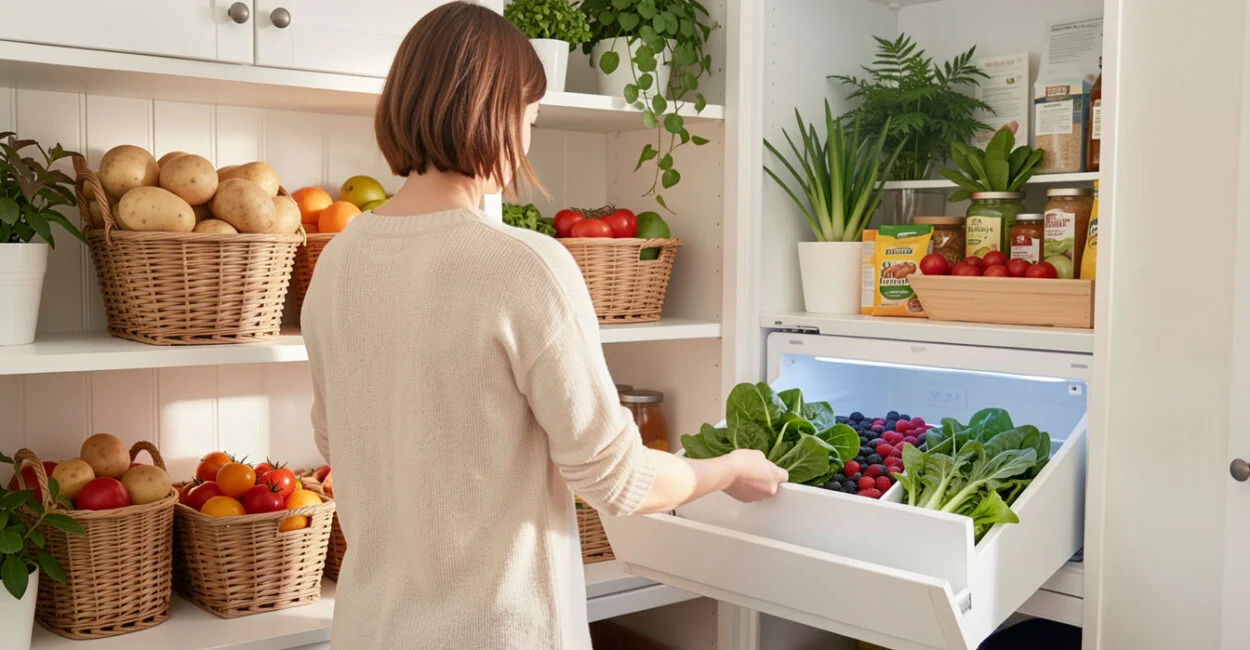
3. Store Fruits and Vegetables by Their Needs
Some produce keeps best in the refrigerator, while other items taste and ripen better at room temperature. Leafy greens, berries, and cut produce generally need refrigeration; whole tomatoes, bananas, and potatoes are often better kept out of the refrigerator, though the best choice can depend on ripeness, variety, and how soon you plan to eat them.
Should You Wash Produce Before Storing It?
Wash produce under running water before eating or preparing it; whether to wash it before storage depends on the item and how well you can dry it. Extra surface moisture can encourage mold or decay, so store most produce unwashed and wash it just before use. If you wash greens ahead for convenience, dry them thoroughly and store them with a clean absorbent towel in a container that allows some airflow.
Which Fruits and Vegetables Should Be Kept Apart?
Keep ethylene-producing fruits away from produce that is sensitive to the gas, particularly when you want to slow ripening. Apples, ripe bananas, avocados, and tomatoes can speed ripening in nearby items; leafy greens, broccoli, and carrots may deteriorate sooner when exposed. A practical test: if an item is ripening quickly on the counter, give it space from vegetables you want to keep firm.
Produce drawers help manage humidity, but drawer settings are not a substitute for separating foods that ripen at different speeds. Remove spoiled pieces promptly, since mold or leaking juice can affect nearby produce. For broader habits that prevent kitchen discards, see these low-waste kitchen swaps.
4. Protect Bread, Grains, and Pantry Staples
Store flour, rice, cereal, nuts, and dried beans in clean, airtight containers in a cool, dry cupboard. Sealing these foods limits moisture and helps keep pantry pests out. Keep them away from the stove, dishwasher, and sunny windows, where heat and humidity can shorten quality.
Bread usually stays fresher at room temperature for short-term use when wrapped to limit drying. Refrigeration can make bread stale faster, so freeze what you will not use soon. Freeze sliced bread in a well-sealed bag; you can remove only the slices needed. The USDA FoodKeeper resource offers storage guidance for many foods, but actual quality varies with packaging and storage conditions.
Check pantry packages for tears, moisture, insects, or damaged seals. If you find pests, discard infested food, clean the shelf, and inspect nearby packages before restocking. Dry goods can lose flavor or texture long before they become unsafe, so date labels and appearance help track quality, but they do not replace safe handling.
5. Freeze Food and Store Leftovers Safely
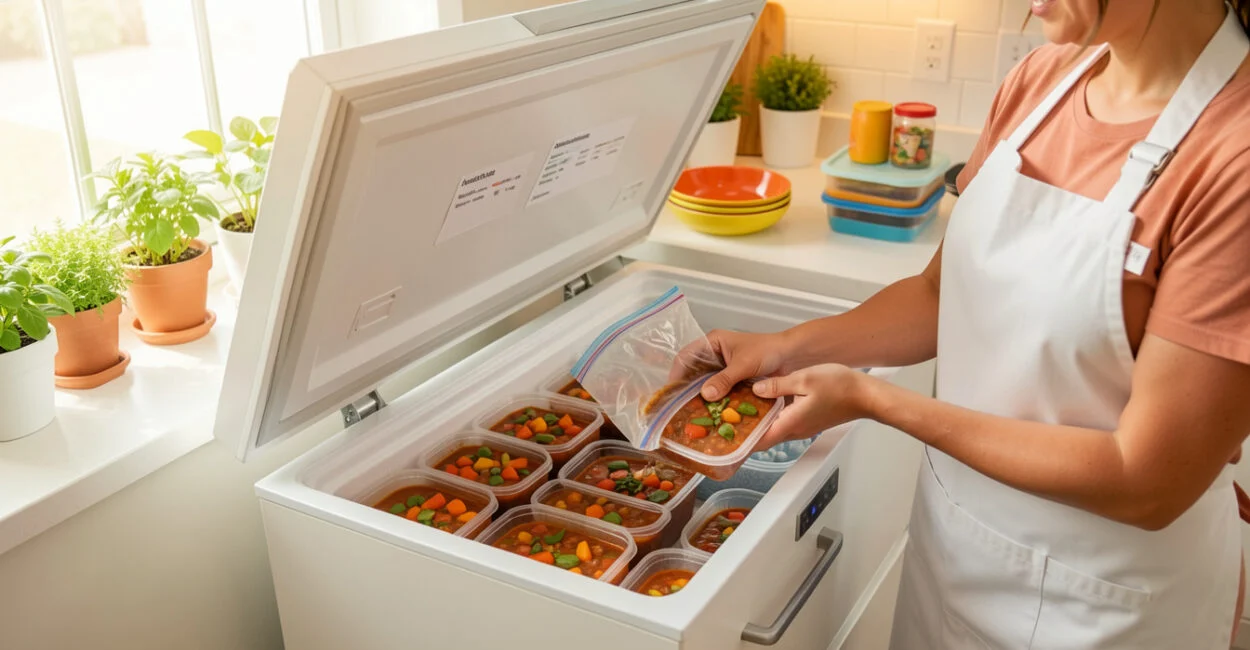
Freeze food in packaging designed for freezer use, remove excess air where practical, and leave room for liquids to expand. Label each package with its contents and freezing date; an unlabeled container is easy to overlook and hard to identify once frozen. Freezing preserves food safely at 0°F, but it does not improve food that was already spoiled or stop quality changes forever.
How Should You Cool and Store Leftovers?
Refrigerate leftovers within two hours, or within one hour when the surrounding temperature is above 90°F. Divide large amounts into shallow containers so they cool promptly, then cover and label them. Reheat leftovers until they reach 165°F, checking the center with a food thermometer.
Can You Refreeze Food After It Has Thawed?
Food thawed in the refrigerator can generally be refrozen, although its texture or flavor may suffer. Food thawed in cold water or a microwave should be cooked before refreezing. Do not refreeze food left at room temperature beyond safe time limits; if you are unsure how it thawed or how long it sat out, discard it.
How Can You Tell Whether Stored Food Should Be Discarded?
Discard food if it has been held at an unsafe temperature, shows mold where the food is not meant to be moldy, has a damaged seal, or is past a safety deadline such as a use-by date where that system applies. Do not rely on smell or appearance alone: disease-causing bacteria may not change a food’s look, taste, or odor. When storage history is uncertain, especially for perishable food, choose safety over a taste test.
Date-label rules differ by country and product. In the UK, the Food Standards Agency’s guidance on best-before and use-by dates explains that use-by dates are safety-related, while best-before dates concern quality. In the United States, check package instructions and applicable guidance rather than assuming every date label means the same thing.
6. Quick Storage Guide: Where Common Foods Belong
Food Best storage location Key tip Leafy greens Refrigerator Keep dry; use a clean absorbent towel if needed. Berries Refrigerator Keep dry and remove damaged berries. Whole tomatoes Room temperature until ripe Refrigerate if needed to slow further ripening. Potatoes Cool, dark, dry pantry Keep away from sunlight and excess moisture. Raw meat or poultry Refrigerator, on a lower shelf Use leakproof packaging to contain juices. Leftovers Refrigerator or freezer Use shallow, covered containers and add a date label. Bread Room temperature or freezer Freeze extra bread to preserve quality longer. Flour and dry grains Cool, dry pantry Seal tightly to limit moisture and pests.
This is a starting point, not a guarantee of shelf life. The food’s condition, packaging, refrigerator temperature, and handling all affect how long it remains good to eat.
7. Build a Low-Waste Routine and Fix Common Storage Mistakes
Before shopping, check the refrigerator, freezer, and pantry. Plan one or two meals around foods that need attention, then place those items in a visible “use first” area. This small change helps prevent a newer purchase from hiding an older one.
Rotate groceries by moving older items to the front, and freeze portions you will not use in time while they are still in good condition. If a recipe uses only part of an ingredient, plan a second meal for the remainder before putting it away. Pairing storage habits with a workable apartment composting setup can help manage unavoidable scraps, while prevention remains the better first step.
A common mistake is treating the refrigerator as the answer for every food. Cold can slow spoilage for many items, but it can harm the texture or ripening of some produce; check the item’s storage needs and package instructions. If the food has been mishandled or its safety history is unknown, do not try to rescue it by freezing or cooking.
For a useful first step today, set a refrigerator thermometer, move raw meat to a contained lower shelf, and gather foods that should be eaten soon. Check uncertain items against the FDA or USDA guidance before deciding whether to keep them.
📱 See this content as a Web Story
Frequently Asked Questions
Does Freezing Kill Bacteria in Food?
Freezing stops most bacteria from growing while the food remains frozen, but it does not reliably kill them. Handle and cook thawed food safely.
Should Bread Go in the Refrigerator?
Usually not for short-term storage, because refrigeration can make bread stale faster. Keep it wrapped at room temperature for near-term use or freeze extra bread for later.
Do “Best By” Dates Mean Food is Unsafe After That Date?
Not necessarily. Date-label meaning depends on the wording, product, and country; some dates indicate quality, while use-by dates can be safety-related. Follow package directions and local food-safety guidance.