
Helping Your Dog Adjust to a New Baby at Home
How to help your dog adjust to a new baby by gradually changing routines, managing access and attention, and rewarding calm behavior before the baby arrives.
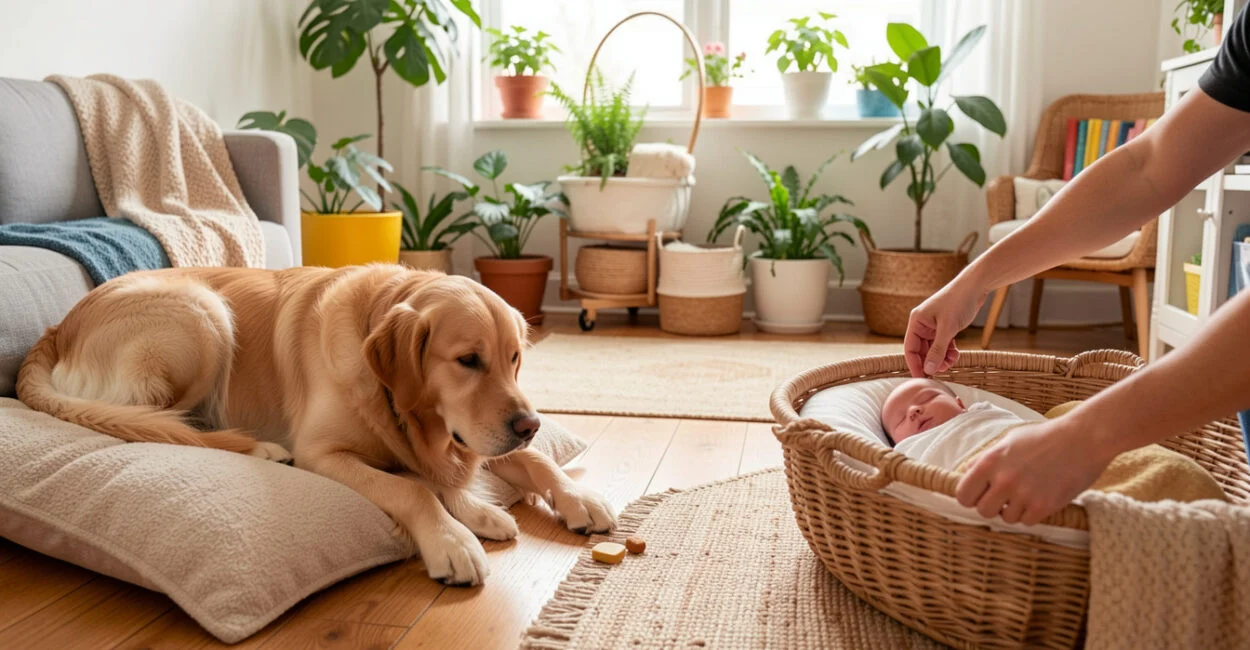 Giving the dog space near baby’s bassinet
A dog’s adjustment to a new baby often begins with the nursery door, the changed walk, and the first unfamiliar cries.
Helping your dog adjust to a new baby starts before the baby comes home. The goal is to make changes gradually, pair new experiences with calm rewards, and supervise every interaction. Don’t expect your dog to “get used to” a baby on its own.
Start by listing what will change: where your dog can go, when walks happen, and how much attention you can offer. Introduce those changes one at a time. A disrupted routine can be harder than the arrival itself, especially if the dog suddenly loses access to a favorite room or spends more time alone.
How to Help Your Dog Adjust to a New Baby: Start with the Routine
To help a dog adjust, identify changes in access, schedule, and attention, then practice them gradually before the baby arrives. Keep familiar routines where possible, and reward your dog for settling calmly in the places and at the times you expect to use later.
For example, if the dog’s bed will move out of the nursery, relocate it well ahead of time and make the new spot comfortable. If walks may happen at different hours, begin shifting them in small steps. A rushed change on the day you bring the baby home can leave the dog confused and unsettled.
Write down the likely changes first, then introduce them individually. If your dog will need to spend short periods behind a gate or in a separate room, practice those arrangements while the household is still calm. A gradual crate-training plan for a rescue dog can also help if a crate is already a suitable, positive option for your dog.
Let New Sounds and Baby Gear Become Familiar at the Dog’s Pace
Play recordings of baby sounds at a low volume while your dog is relaxed, and pair brief exposure with treats or another reward your dog enjoys. Stop or lower the volume if your dog becomes tense. The dog should always be able to move away; don’t carry or coax them toward a speaker, stroller, or crib.
Set up equipment early, then let it become part of the room without making it the center of attention. A stroller can be parked nearby before you practice moving it. Keep dangling straps and small items out of reach, and reward calm behavior without requiring a sniff or approach.
Give Your Dog a Retreat and Make Boundaries Predictable
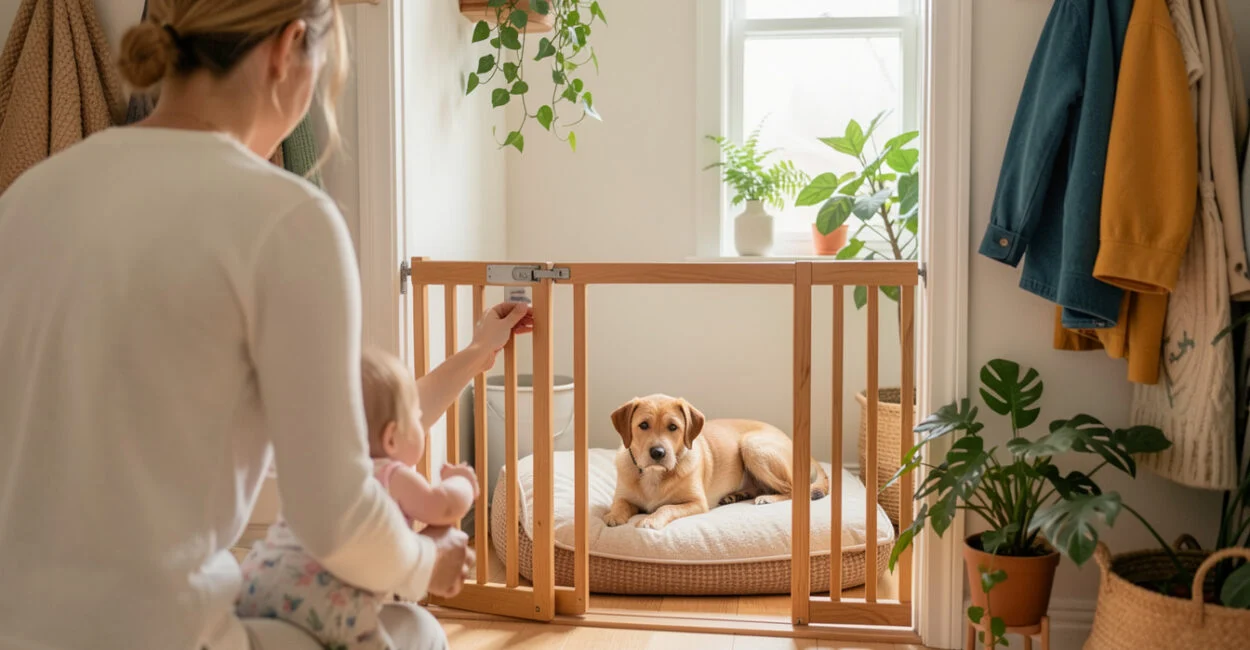
A safe retreat gives a dog a place to rest without being approached. It should remain available once the baby arrives, and adults—not the baby—should manage access to it. Use barriers to create clear, consistent boundaries rather than relying on the dog to guess where it may go.
- Retreat: Set up a bed or quiet area the dog can reach freely.
- Barriers: Use a gate or closed door to separate spaces when needed.
- Adult-managed access: Keep feeding, resting, and baby-care areas under adult supervision.
Never let a baby enter a dog’s retreat. A dog that can rest undisturbed is more likely to have a way to disengage when the house feels busy.
Keep the First Homecoming Calm and Spacious
Plan the first meeting around the dog’s comfort, not a photo opportunity. After arriving home, let the dog settle and approach only if relaxed. An adult can hold the baby while another handles the dog, with enough distance for the dog to watch or leave.
Direct contact is not required. Skip a greeting if the dog is excited, fearful, or distracted, and keep a barrier between them if that feels safer. The ASPCA’s guidance on dogs and babies also emphasizes careful preparation and supervision. No general checklist can guarantee safety for every dog; history, health, temperament, and the home setup matter.
Notice Small Stress Signals and Pause Early
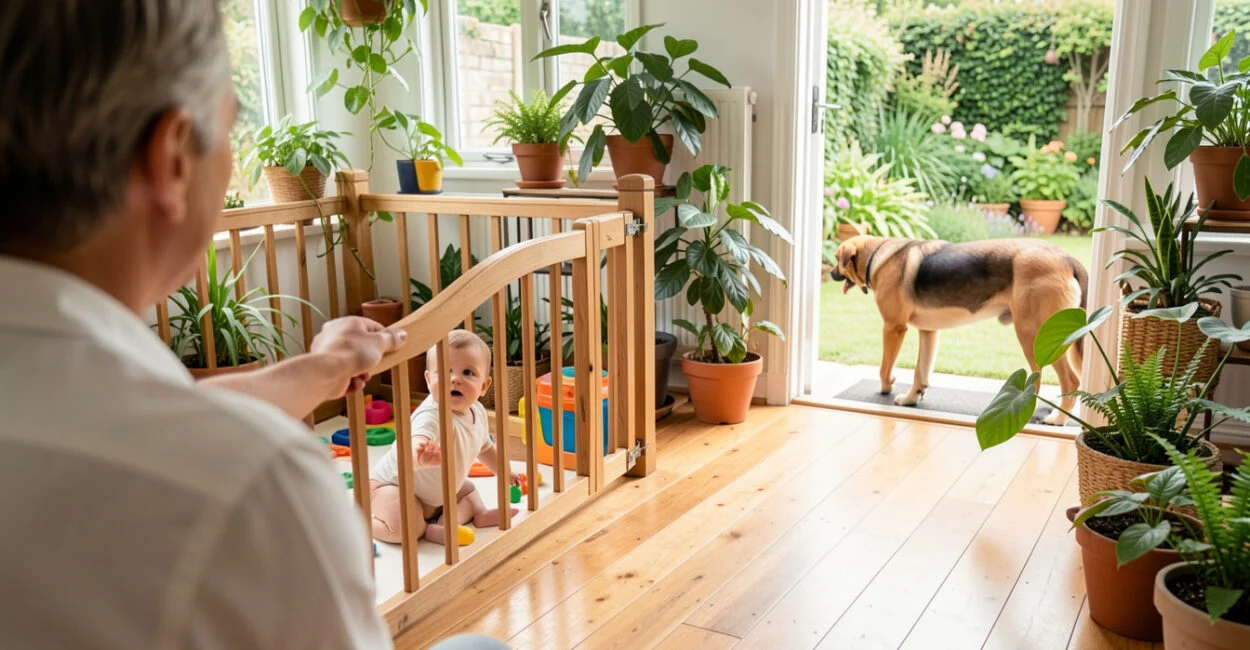
Stress can look like turning away, moving off, lip licking, yawning, a tucked tail, or suddenly becoming very still. A “good with babies” label cannot tell you how a dog will respond to a new baby in its home. Watch the individual dog and make space at the first sign of discomfort.
If the dog disengages, let them leave and calmly increase distance. Don’t punish growling or other warning signals; punishment can suppress a warning without resolving the underlying discomfort. The American Veterinary Medical Association’s guidance on children and pets supports close adult supervision around pets and children.
A baby’s safety depends on adults managing space, supervision, and the dog’s chance to retreat.
Use This Quick Guide for Everyday Situations
Situation Helpful preparation Give more space when Crying Practice low-volume recordings with rewards. The dog startles, paces, or leaves. Feeding Set up a barrier or a quiet dog retreat. The dog crowds the chair or seems tense. Visitors Agree on a calm arrival plan and keep the dog’s retreat open. The dog hides, barks repeatedly, or cannot settle.
Make the plan easy for every adult in the household to follow. A gate is only useful if visitors know to keep it closed.
📱 See this content as a Web Story
Frequently Asked Questions
What If My Dog Avoids the Baby?
Let the dog keep its distance. Avoidance can be a reasonable way to cope, and it does not mean you should force a greeting.
Can I Leave My Dog Alone with the Baby?
No. An adult should actively supervise every interaction, even when the dog seems calm or has lived safely with children before.
When Should I Ask a Professional for Help?
Contact your veterinarian if distress persists or your dog’s behavior changes. For aggression, escalating fear, or specific safety concerns, ask your veterinarian about referral to a qualified behavior professional, such as a board-certified veterinary behaviorist.
Should I Punish Growling Near the Baby?
No. Create distance and separate the dog and baby safely, then seek professional guidance. A growl is a warning that the dog needs space.
Before the baby arrives, choose one likely change and practice it this week. A familiar gate, a shifted walk, or a settled retreat gives your dog something predictable to rely on when the household changes.