
Choosing a Backyard Hammock: Mounting, Materials, and Fit
How to choose between tree-to-tree, post-mounted, or freestanding backyard hammocks based on anchor points, yard space, and setup flexibility.
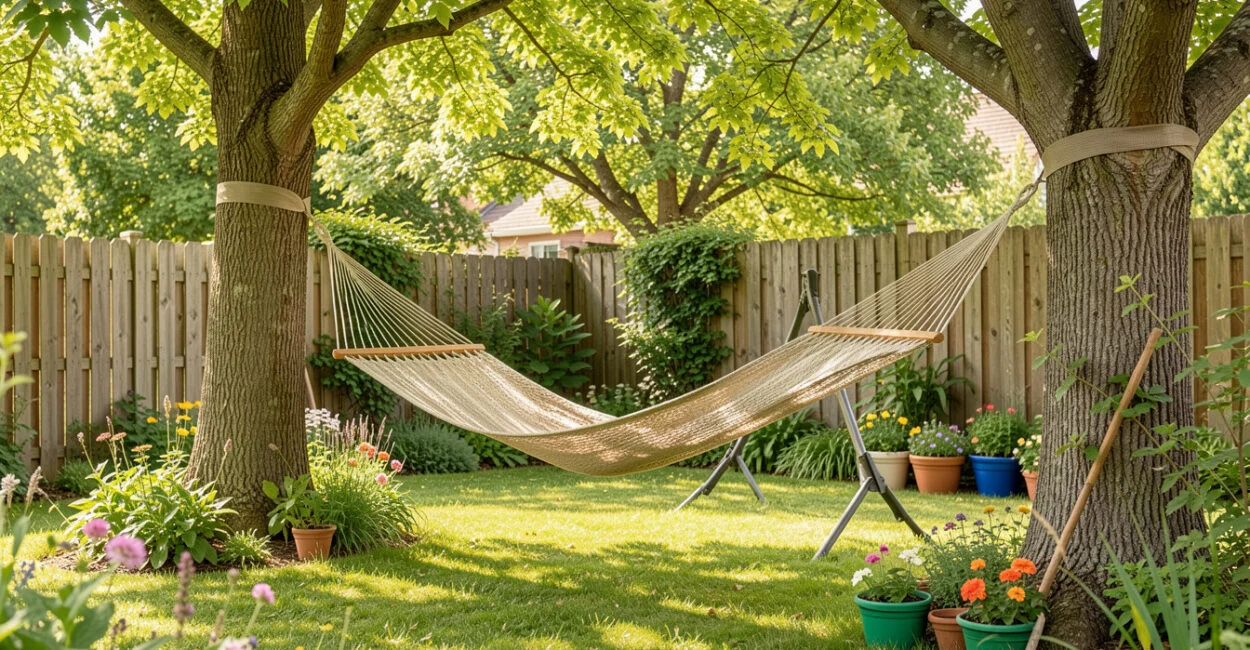 Comparing backyard hammock mounting options
Choosing a backyard hammock comes down to three practical questions: where it can be anchored, what material suits your weather and upkeep preferences, and how much room the full setup needs. Trees or posts can save floor space; a freestanding frame offers more flexibility but takes up more of the yard.
Tree-To-Tree, Post-Mounted, or Freestanding: Which Backyard Hammock Should You Choose?
Choose a tree-to-tree or post-mounted hammock if you have sound, suitably spaced anchor points and want to keep the ground area open. Choose a freestanding hammock if you lack reliable anchors or want to move the setup. The best fit depends on your yard, the product’s mounting instructions, and whether you prefer a fixed or movable location.
How Do the Main Backyard Hammock Setups Differ?
Tree-To-Tree
Two suitable trees provide anchor points without a frame, leaving the ground clear. The trees must be healthy and positioned at a distance that works with the hammock’s instructions and suspension system.
Post-Mounted
Posts can work where trees are absent, but they must be designed and installed to handle the forces from the hammock. A fence post or deck post is not automatically a safe anchor.
Freestanding
A hammock stand creates its own support and can be repositioned, subject to its size and weight. It costs more in floor space than a tree-mounted setup and must match the hammock’s dimensions and capacity.
Criterion Tree-to-tree Post-mounted Freestanding Needs suitable trees Yes No No Needs engineered or suitable supports Healthy trees and rated suspension Yes, verified for the load Matched stand Ground footprint ✓ Usually lowest ✓ Usually low Higher; check frame dimensions Can be repositioned Limited by tree locations Limited by post locations ✓ Often, if the stand can be moved safely Extra installation work Low if suitable trees exist May require proper post installation Assembly and level ground Best fit Yards with suitable trees Purpose-built supports Yards without reliable anchors
For other ways to arrange a gathering space, these rustic outdoor seating ideas can help you plan around the hammock’s location.
Which Hammock Material Suits Your Weather and Upkeep Preferences?
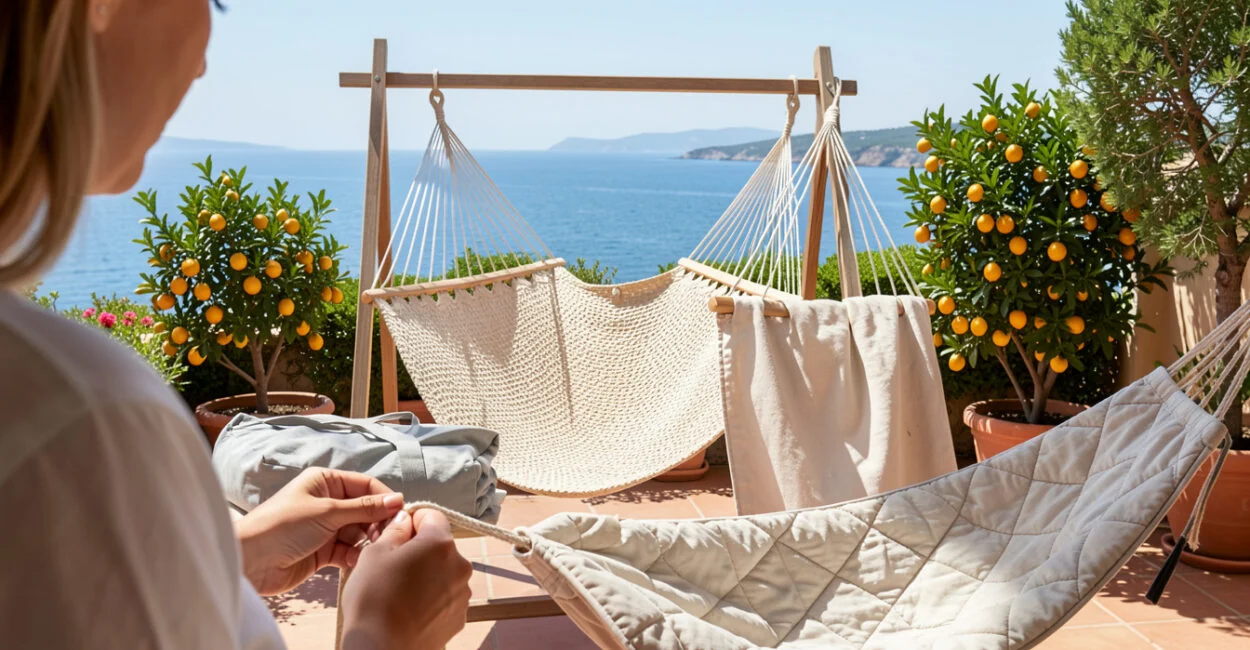
Rope, woven fabric, and quilted hammocks differ in airflow, surface feel, and how they handle exposure. No material should be treated as maintenance-free: check the maker’s care directions and bring the hammock in when conditions or long periods of nonuse call for storage.
Material Comfort and airflow Weather and upkeep Often suits Rope Open weave allows airflow; pressure can feel concentrated without a pad Inspect cords and knots; wetness and sun can affect fibers over time Hot climates and classic open-weave seating Woven fabric More continuous support; feel depends on weave and fabric Dry and store as directed; check for fading, mildew, or weakened stitching Everyday lounging and a wider choice of patterns Quilted Padded surface can feel softer and warmer Padding may retain moisture, so drying and storage matter Cooler evenings or buyers who want a cushioned feel
A rope hammock may feel cool in summer, but the open weave can leave pressure points for longer rests. Adding a compatible pad can change the feel, though the pad also needs to dry fully after rain.
How Much Space Do You Need for a Backyard Hammock?
Use the hammock’s stated overall length and required anchor spacing to estimate the space; allow for sag, entry and exit, and clearance from the ground and nearby objects. For a stand, use the frame’s full dimensions rather than the hammock fabric length alone.
Hammock length, suspension design, and the maker’s setup instructions affect the required distance, so a universal spacing figure can mislead. Before buying, measure the intended spot and compare it with the product’s anchor-spacing range or stand dimensions. Leave room to walk around the setup without stepping over straps or bumping into the frame.
Single and two-person labels describe intended use, not a substitute for checking the manufacturer’s weight rating. For a heavy-duty 2 person hammock with stand, verify the ratings for both the hammock and the stand; the lower applicable limit governs the setup. Also check whether the published capacity assumes a particular mounting configuration.
For a small-yard layout, compare the hammock’s footprint with other seating and circulation space. Backyard decor ideas for entertaining can help you plan a seating area without blocking paths.
Can You Hang a Hammock Between Trees Without Damaging Them?
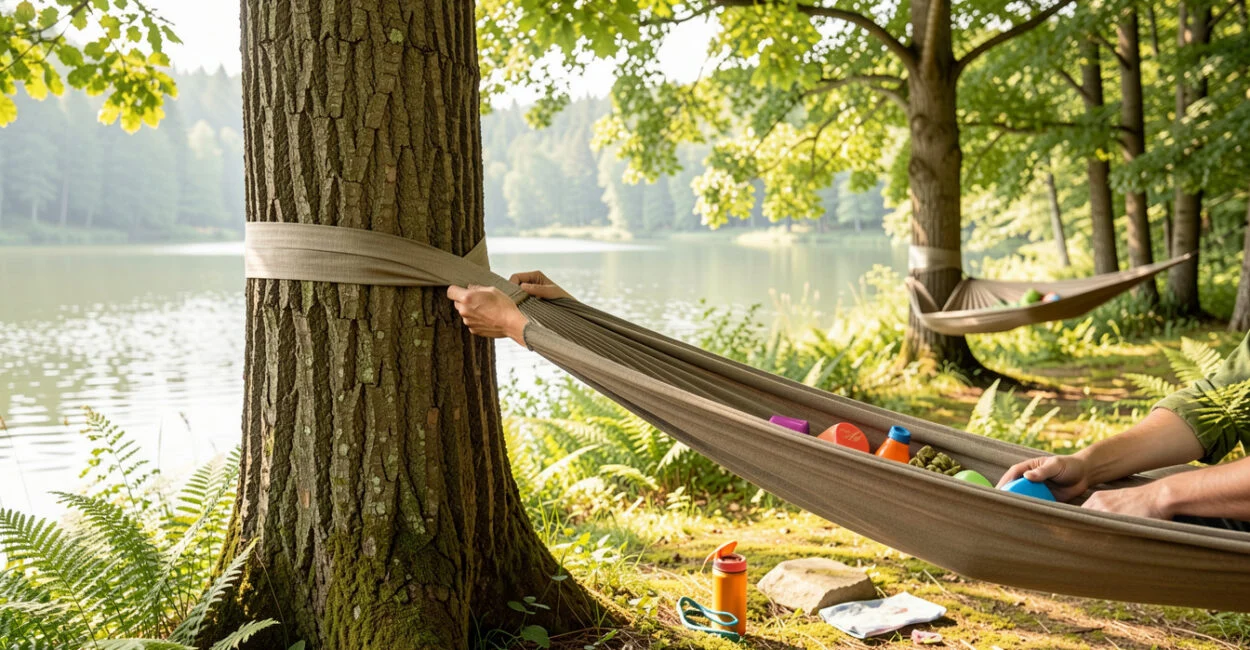
Yes, if the trees are healthy and you use a tree-friendly suspension system that follows the hammock maker’s instructions. Wide straps that spread contact across the bark are generally preferable to narrow cord or hardware that bites into the trunk, but tree species, condition, and attachment method can change the risk.
Avoid drilling into or wrapping thin rope tightly around a trunk unless a qualified professional has confirmed that method is appropriate. Check the attachment regularly for abrasion, bark compression, slipping, and damage to the strap. Do not use a tree with visible decay, major cracks, loose root plates, or dead limbs over the resting area.
The University of Minnesota Extension’s guidance on tree damage explains why impacts to trunks and roots matter. It does not certify a particular hammock attachment; if a tree’s condition or the installation is uncertain, consult a qualified arborist.
For posts, confirm that their construction and footing suit the hammock’s forces. A post that holds a light decorative feature may not be appropriate for a hammock, and attaching to a fence or railing without confirmation can create a failure risk.
Is a Hammock Stand Stable Enough for Two People?
A hammock stand is suitable for two people only when the stand and hammock are both rated for the combined load and are assembled and used as directed. “Heavy duty” is a product description, not proof that a particular frame can safely support two occupants.
Compare the stand’s weight rating, compatible hammock length, material, and required surface. Use it on level, firm ground; an uneven patio or soft lawn can affect stability. A heavy-duty hammock with stand may make sense for frequent use or a larger hammock, but a heavier frame can be harder to move and store.
One common setup mistake is choosing a stand by hammock length alone. A hammock that fits between the frame’s ends may still hang too taut or too low if the suspension geometry differs, so follow the manufacturer’s guidance for both products. A freestanding frame also needs enough clear space around its legs to avoid trips.
Are Hammock Chairs and Outdoor Hanging Chairs with Stands Practical Alternatives?
A hammock chair with a stand is a practical alternative for a small yard when you want upright, one-person seating and can spare a compact floor area. It is less suitable for stretching out or sharing the seat; a full-length hammock is better for reclining, while a chair can fit a patio corner.
A rope hammock chair has an open, airy feel, while an outdoor hanging chair with stand may use a broader seat or cushion. Check the chair’s capacity, stand compatibility, and overhead clearance. If it hangs from a beam or branch instead of its own frame, apply the same anchor checks as for a full hammock.
Before buying, check whether the fabric and suspension are intended for outdoor use, how the manufacturer recommends cleaning and storing them, and what the warranty excludes. “Outdoor” does not mean that a hammock can stay wet or in direct sun indefinitely. For current specifications, rely on the exact product listing and manual rather than a similar-looking model; brand names such as Vivere identify a maker, not a guarantee that every model fits your yard.
For safety context, consult the U.S. Consumer Product Safety Commission’s outdoor safety guidance, and use ASTM International’s standards catalog to check whether a cited standard applies to a specific product or component. Standards and ratings are product-specific; neither replaces the manufacturer’s installation directions.
📱 See this content as a Web Story
Frequently Asked Questions
Does a Hammock Need a Spreader Bar?
No. Spreader bars hold the hammock open, while many traditional hammocks hang without them. The choice affects how the fabric lies and how the hammock behaves, so follow the product’s setup instructions.
Can a Hammock Stay Outside All Year?
That depends on its materials, climate, and the maker’s care guidance. Even outdoor-rated fabric and hardware can wear faster with prolonged exposure to sun, moisture, or freezing conditions.
Is a Vivere Hammock Automatically Compatible with Any Stand?
No. Match the hammock’s length and suspension requirements to the stand’s compatibility information. Similar dimensions do not guarantee a suitable fit.
Should You Leave a Hammock Attached When It is Not in Use?
Follow the manufacturer’s instructions. Taking it down for extended storage can reduce exposure and prevent an unattended hammock from becoming a trip hazard or collecting water.