
How to Manage Garden Pests Without Broad-Spectrum Pesticides
Effective organic garden pest control starts with identifying the pest and assessing damage, so you can choose when to observe, prevent, or act.
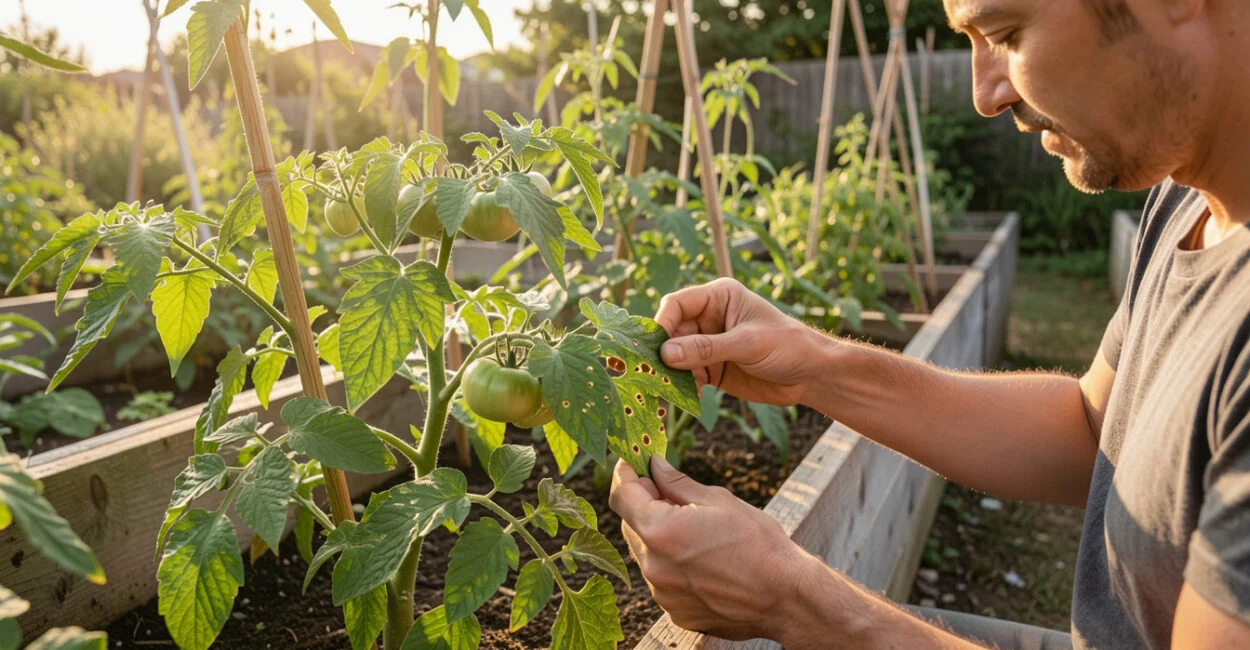 Gardener inspects a lightly damaged tomato leaf
A tomato leaf with fresh holes can send a gardener reaching for a spray, even when the damage is minor or the suspected insect is a helpful predator. Effective organic garden pest control starts with identifying what is there and how much harm it is causing. Then use prevention and targeted controls before considering a pesticide; organic products and homemade mixtures can still harm plants, people, pets, and beneficial insects.
The goal is to protect plants from meaningful damage, not to remove every insect from the garden. A few chewed leaves may call for observation, while a growing infestation on young seedlings may need prompt action.
Start Organic Garden Pest Control with Identification
Identify the organism, assess whether damage is continuing, and choose a response that matches the risk. Inspect the plant and its surroundings before treating: leaf holes alone do not identify the culprit, and some insects on a damaged plant may be feeding on pests rather than on the plant.
Look under leaves and around new growth, where small insects and eggs can be easy to miss. Check nearby plants, too.
Slugs, caterpillars, beetles, aphids, and chewing mammals leave different clues, and an insect’s presence does not always mean it caused the damage.
Some leaf damage is tolerable, particularly when a mature plant continues to grow and produce. If damage is minor and stable, monitor before intervening.
If it is spreading, the plant is young, or the crop is at risk, choose a control suited to the pest and plant.
- Inspect the plant, including leaf undersides and new growth.
- Identify the suspected pest before treatment.
- Check whether the organism may be beneficial.
- Assess how much damage is occurring and whether it is continuing.
- Choose a targeted response and monitor the result.
Reduce the Conditions That Favor Pests
Prevention means making a garden less vulnerable to a particular pest, not guaranteeing a pest-free season. Choose plants suited to local growing conditions, and keep them healthy with watering and care appropriate to the crop.
Water stress or crowded growth can make plant problems harder to spot and manage.
Crop rotation can help when a pest or disease persists in soil or plant debris and affects a particular crop family. It is less useful in a small bed where the same plants occupy most of the space, or against pests that readily move in from nearby areas. Plant diversity may support beneficial organisms, but it does not reliably prevent every outbreak. Remove heavily infested plant parts when pruning will not harm the plant. Clearing debris can help when a pest overwinters or reproduces in that material; removing all garden litter by default may also remove shelter for beneficial wildlife. Keep beds accessible enough to inspect, since pests are easier to catch early when leaves and stems are visible.
Watering choices matter, too. Use methods that suit the crop and avoid creating conditions that favor the particular problem you are managing.
For household water-saving ideas that may also inform garden routines, see this guide to reducing water use at home.
Try Physical and Mechanical Controls First
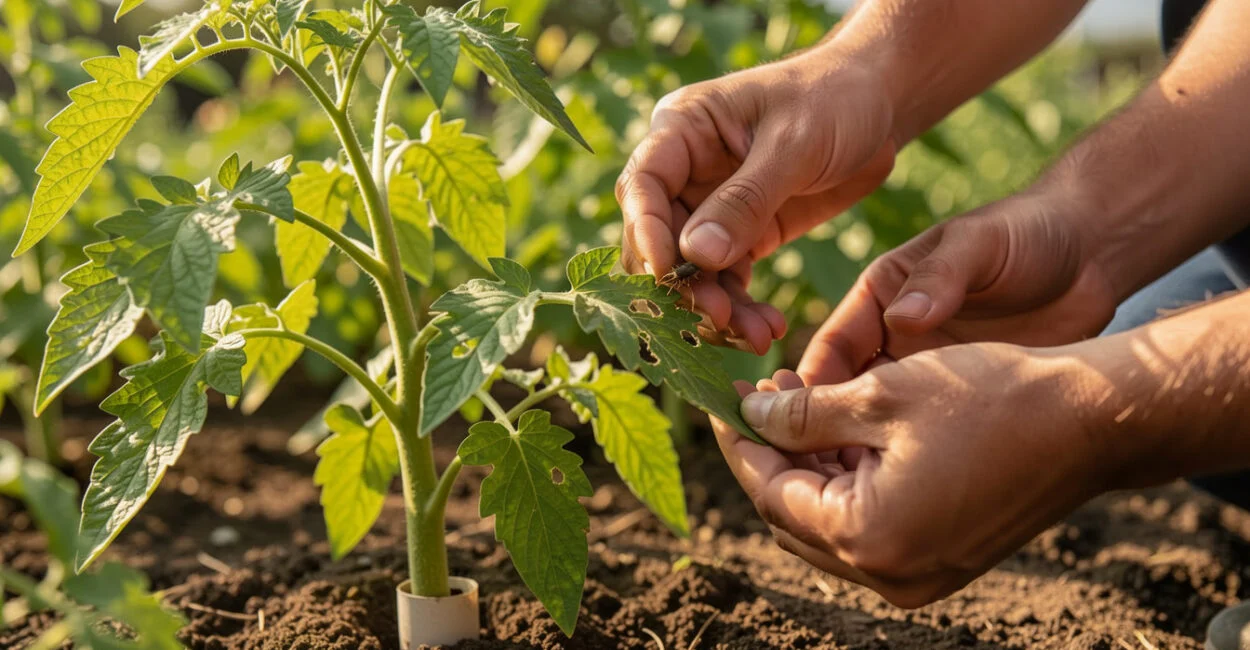
For small, accessible infestations, hand removal often offers the most direct control. Prune affected parts when the damage is localized, or use a stream of water to dislodge certain pests from sturdy foliage. These methods require repeat inspection; a single pass may miss eggs, hidden insects, or pests returning from nearby plants.
Row covers and plant collars can block pests that reach plants from outside, but timing matters. Install a barrier before the pest arrives, and remove or adjust it when crops need pollination or other access. Traps can help monitor or reduce selected pests, but poorly chosen traps may catch beneficial insects. Follow guidance for the pest and dispose of captured organisms or plant material in a way that limits their return.
Method Example Best suited to Limitations or cautions Hand removal Pick off visible pests Small, accessible infestations Requires repeat inspection; identify the pest first. Pruning Remove affected plant parts Localized damage Avoid excessive pruning; dispose of material appropriately. Barriers Row cover or plant collar Pests that can be physically excluded May exclude pollinators; timing and crop needs matter. Water spray Dislodge certain pests from foliage Some pests on sturdy plants May not solve the source of infestation; avoid damaging delicate plants. Traps Pest-specific monitoring or control Selected pests Can catch non-target insects; follow pest-specific guidance.
Aphids clustered on tender growth, for example, may come off with a careful water spray. Check the undersides of leaves again later, because surviving aphids can remain tucked near stems. If the plant is delicate or the infestation returns, reassess the pest and try another targeted method rather than increasing water pressure.
Conserve Beneficial Organisms That Suppress Pests
Biological control uses living organisms, such as predators or parasitoids, to suppress pests. Lady beetles and other beneficial insects can feed on pest species, but their presence does not guarantee control of a particular outbreak.
Conserving habitat and avoiding unnecessary broad-spectrum sprays can help beneficial organisms remain in the garden. Purchased biological controls need accurate pest identification, suitable timing, and conditions that support the organism. They are not an instant or universal fix.
For pest-specific advice, the U.S. Environmental Protection Agency’s Safer Choice and pesticide information can help frame questions about product use and risks. For garden diagnosis and local growing conditions, a cooperative extension office can provide region-specific guidance.
Choose Natural Pest-Control Products by Label, Not by Name
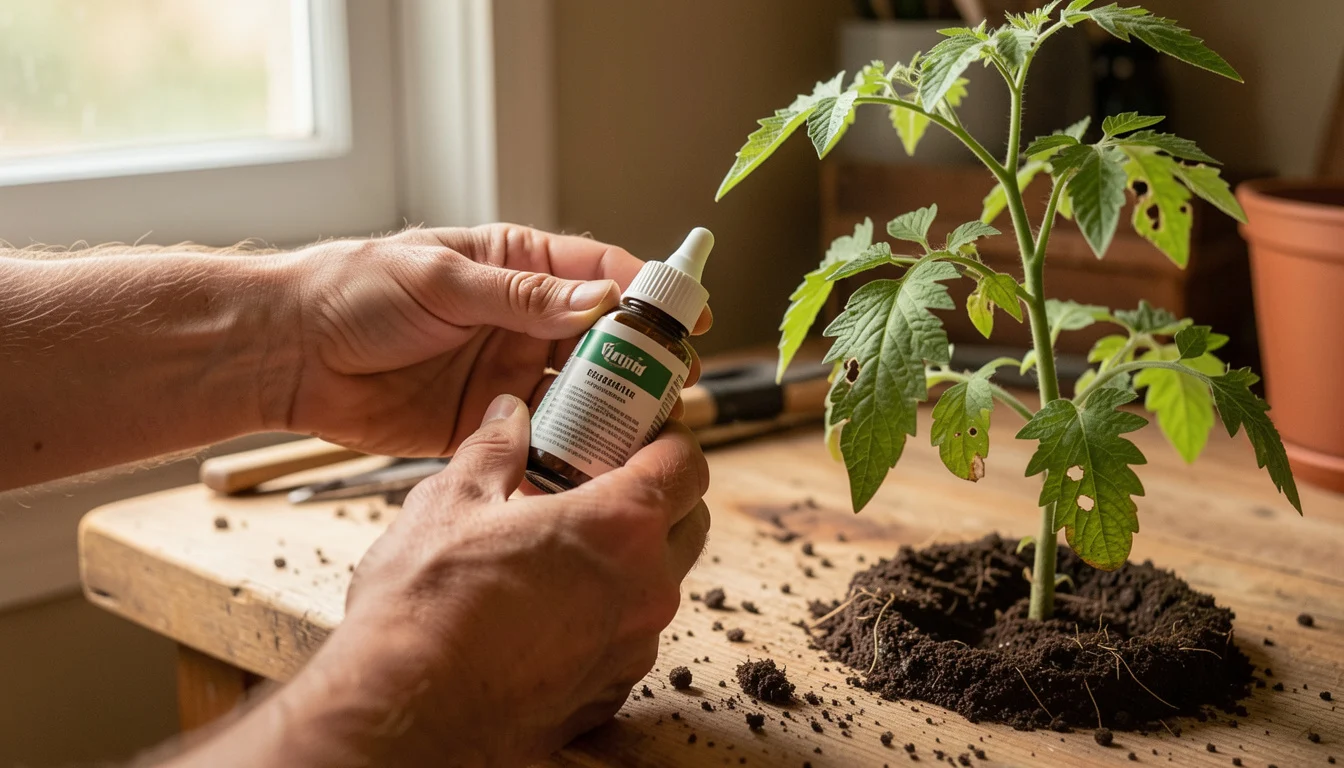
Botanical, microbial, mineral, and other pesticide products differ in their active ingredients, target pests, approved uses, and risks. “Natural” describes an origin or marketing claim; “organic” may refer to a production standard or a product category. Neither term alone establishes that a product is safe for every plant, person, pet, or beneficial insect.
Before using a product, check the label for the plant or crop, the pest, the application directions, and required precautions. Follow any harvest interval stated on the label, and use the product only for a permitted site and purpose. The EPA’s guidance on pesticide labels explains why the label governs how a pesticide may be used.
Option What it does What to verify before use Main caution Botanical product Uses plant-derived active ingredients Target pest, crop, label directions Natural origin does not establish safety. Microbial product Uses a microorganism or its products Target, permitted crop, application directions Not effective against every pest. Mineral or other labeled product Uses a non-botanical active ingredient Label, site, pest, precautions Risk depends on the specific product and use. Homemade spray A home-prepared mixture Reliable evidence, plant sensitivity, exposure risks Can damage plants and non-target organisms; do not assume it is safe.
Homemade mixtures deserve the same caution. Household ingredients can burn foliage, affect beneficial insects, or expose people and pets. Do not assume that a recipe is safe because it uses familiar ingredients; avoid applying an untested mixture to edible crops.
Caution
Never use a pesticide on a crop or plant unless its label allows that use. Check any harvest interval and exposure precautions before application.
Match the Control to the Crop and Setting
Vegetables, ornamental beds, and indoor plants have different constraints. On edible crops, confirm that the product label names the crop or allows its use, then follow the crop-specific directions and harvest interval. A product suitable for an ornamental plant may not be permitted on food crops.
“Garden insect killer,” “natural pesticides for vegetables,” and “best insecticide for vegetable gardens” are broad shopping categories, not reliable recommendations. The right option depends on the identified pest, the plant, where it grows, and the product label. Apply the least disruptive effective control only where and when needed instead of treating the whole garden by default.
For indoor plants, isolate an affected plant when practical and inspect nearby pots before treating. A spray used indoors can create different exposure concerns than one applied outdoors, so follow the label’s site and ventilation instructions. If damage persists or spreads despite targeted steps, ask a local cooperative extension office or another qualified local source to confirm the diagnosis.
Use an Integrated Pest-Management Decision Sequence
Integrated pest management (IPM) is a decision-making approach that combines prevention, monitoring, and targeted controls to keep pest damage at an acceptable level. In plain terms, it means responding to what is happening in the garden instead of spraying on a fixed schedule.
Use this cycle: prevent conditions that favor the pest; inspect and identify it; decide whether the damage warrants action; choose a targeted control; then monitor the result. The action threshold depends on the plant, the crop’s stage, the extent of damage, and the gardener’s goals. A few holes on an established ornamental plant may not justify treatment, while damage to young seedlings may warrant faster intervention.
IPM frameworks group tactics in different ways, so there is no single fixed list of “five main methods.” A useful set of categories is cultural, physical or mechanical, biological, and chemical; some frameworks also list regulatory or genetic controls. Pesticides are one possible tool in IPM, not the starting point or the only form of pest control.
Choose a control only after the pest, the damage, and the plant’s needs point to the same problem.
After treating, inspect again and check whether the damage has slowed. Do not repeat an application unless monitoring shows it is needed and the label permits another treatment. For questions about pesticide disposal, use local instructions; this guide to recycling household chemicals and paint offers related disposal context, but local rules and product labels should guide pesticide handling.
📱 See this content as a Web Story
Frequently Asked Questions
Can Organic Pest Control Harm Bees?
Yes. A product’s organic status does not guarantee that it is harmless to bees or other beneficial insects. Check the label for pollinator precautions and avoid exposing flowering plants or visiting insects when directions advise against it.
Should I Remove Every Insect I Find on a Damaged Plant?
No. First identify the insect and check whether it may be a predator or another beneficial organism. Treat only when the pest and the extent of damage justify action.
When Should I Put Row Covers on Vegetable Plants?
Install them before the pest you want to exclude reaches the crop. Check whether the crop needs pollination, since a cover left in place during flowering may block access for pollinators.
Are Homemade Soap Sprays Safe for Edible Plants?
Not automatically. A mixture can injure foliage or affect non-target organisms, and household products may not be labeled for use on food crops. Check reliable, crop-specific guidance before applying any homemade spray.
What Should I Do If the Pest is Still Unidentified?
Take clear photos of the insect and the damage, including leaf undersides and affected new growth, and contact a local cooperative extension office or qualified garden professional. A correct diagnosis matters because similar-looking damage can have different causes and require different controls.