
How to Choose an Eco-Friendly Mattress That Lasts
Evaluate an eco-friendly mattress by its model-specific certifications, materials, durability, care terms, and realistic end-of-life options—not green...
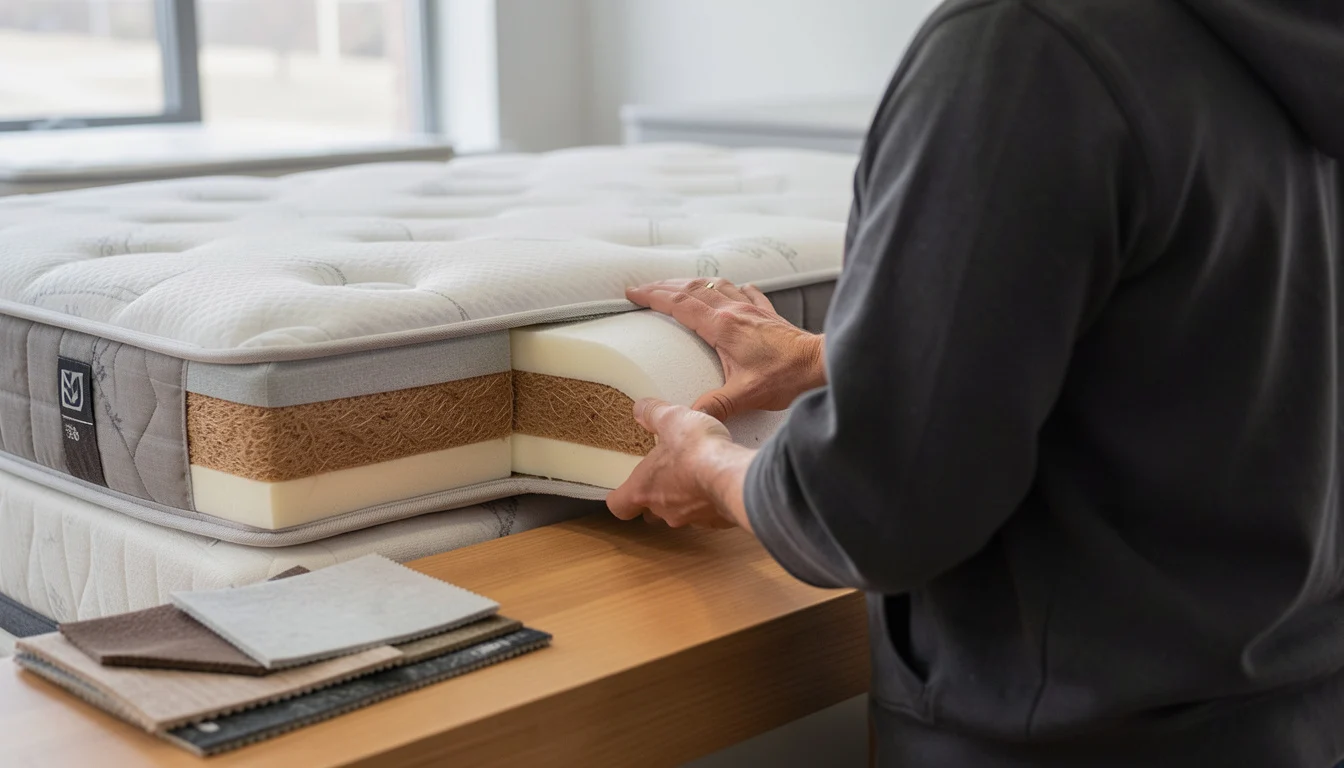 Shopper examines mattress construction closely
Choosing an eco-friendly mattress means weighing documented materials and certifications against comfort, durability, ownership terms, and end-of-life options. Avocado, Birch, and My Green Mattress are useful brands to compare, but their product lines can differ. Check the exact model and current policies rather than treating a brand’s reputation or “green” language as proof.
What Makes a Mattress Eco-Friendly—and What Does Not?
“Eco-friendly” has no single universal mattress grade. Here, it means a set of verifiable attributes, such as certified organic inputs, recycled content, emissions testing, responsible sourcing, or a practical disposal option. Each claim covers a different part of a product’s impact.
“Natural,” “green,” “organic,” and “non-toxic” are not interchangeable. A natural material may not be certified organic; a low-emissions claim does not establish responsible sourcing; and a take-back program does not prove that every mattress component will be recycled. Compare the evidence for the specific model and the specific claim.
A practical detail can prevent a costly mistake: a mattress protector, stain, or foundation that conflicts with the maker’s care instructions may affect a warranty claim. Save the care guidance and confirm that your foundation meets the model’s requirements before delivery.
For a broader framework on choosing products for longevity, see this guide to durable, eco-friendly goods.
Start with Materials and Certifications
Read the full material list, not just the cover description. Look for the comfort layers, support core, cover, fire barrier, and any disclosed adhesives or other components. If the seller does not identify a layer or its material, mark it “not stated” and ask before buying.
Certifications have defined scopes. GOTS concerns organic fibers and textile processing under its standard; GOLS addresses latex products and their supply chain. CertiPUR-US evaluates specified properties of qualifying flexible polyurethane foam. None, on its own, verifies every material in a finished mattress or proves that the mattress will last.
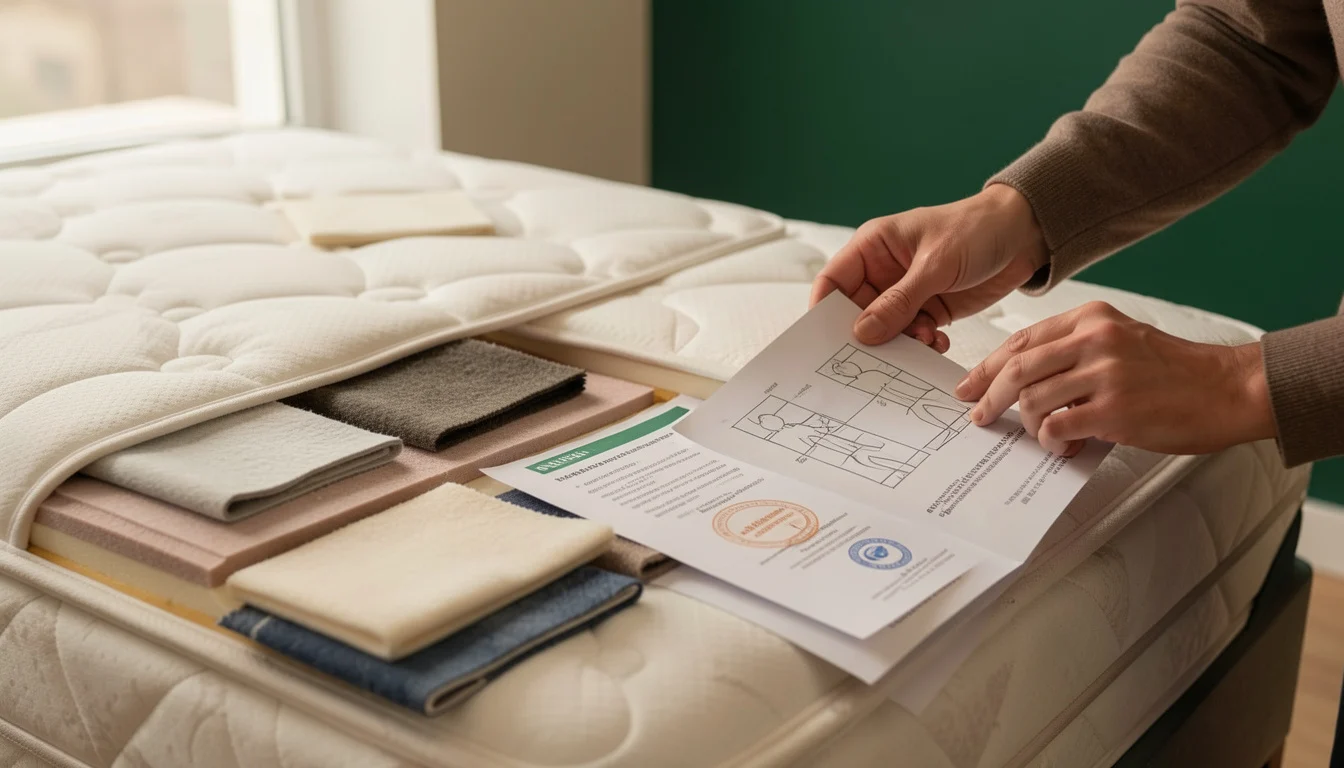
Check the certificate or certification directory for the product, facility, or component named in the claim, and confirm that the record is current. The Global Organic Textile Standard describes its scope, while CertiPUR-US explains what its foam certification covers. If an organic label matters to you, ask which exact components carry the certification.
Compare Avocado, Birch, My Green Mattress, and Other Options
Brand names can help build a shortlist, but they cannot settle a model-level comparison. Product versions, materials, certifications, prices, and policies may change. The table below does not assume current documentation that has not been verified; use each cell as a prompt to check the selected model’s product page and written terms.
Avocado Model Reviewed
Identify the exact Avocado model and configuration first. Verify its layer-by-layer materials, the scope of any organic or other certification, warranty exclusions, trial and return conditions, and available disposal options.
Birch Model Reviewed
For a Birch model, check whether the listed materials and certifications apply to the finished product or only specific components. Confirm the current warranty, return terms, care requirements, and end-of-life options for your location.
My Green Mattress Model Reviewed
Compare the exact My Green Mattress model rather than assuming every product shares the same construction or credentials. Ask for the applicable certification records and written details on returns, warranty coverage, care, and disposal.
Other Shortlisted Model
A fourth option is useful if it provides documentation that fills a gap in the shortlist, such as clearer material disclosure or a more suitable return policy. Apply the same checks; do not give a model credit for claims that cannot be tied to it.
Criterion
Avocado model reviewed
Birch model reviewed
My Green Mattress model reviewed
Other shortlisted model
Materials disclosed by layer
Verify with seller
Verify with seller
Verify with seller
Verify with seller
Certification and what it covers
Verify model and scope
Verify model and scope
Verify model and scope
Verify model and scope
Construction details
Verify with seller
Verify with seller
Verify with seller
Verify with seller
Warranty coverage and exclusions
Check current terms
Check current terms
Check current terms
Check current terms
Trial and return terms
Check model and location
Check model and location
Check model and location
Check model and location
Care requirements
Check instructions
Check instructions
Check instructions
Check instructions
End-of-life or recycling options
Verify with seller
Verify with seller
Verify with seller
Verify with seller
Current price for the same size, if verified
Not verified
Not verified
Not verified
Not verified
How Should You Judge Durability Before You Buy?
Choose the model with construction details and care guidance you can assess, then read the warranty as a contract. A longer warranty does not predict how long a mattress will stay comfortable or guarantee coverage for ordinary wear.
Look for the covered defect, the sagging threshold, the remedy, and exclusions. Check whether the warranty requires a particular foundation, limits transfer to another owner, or excludes damage from spills and improper care. Keep the order confirmation and warranty document.
Ask whether the maker offers repair guidance or replaceable components, such as a cover. Many mattresses are not designed for owner repair, so do not assume that a damaged layer can be replaced. If the company does not state how to handle a repair, treat that as an ownership uncertainty.
Match Materials, Comfort, and Budget
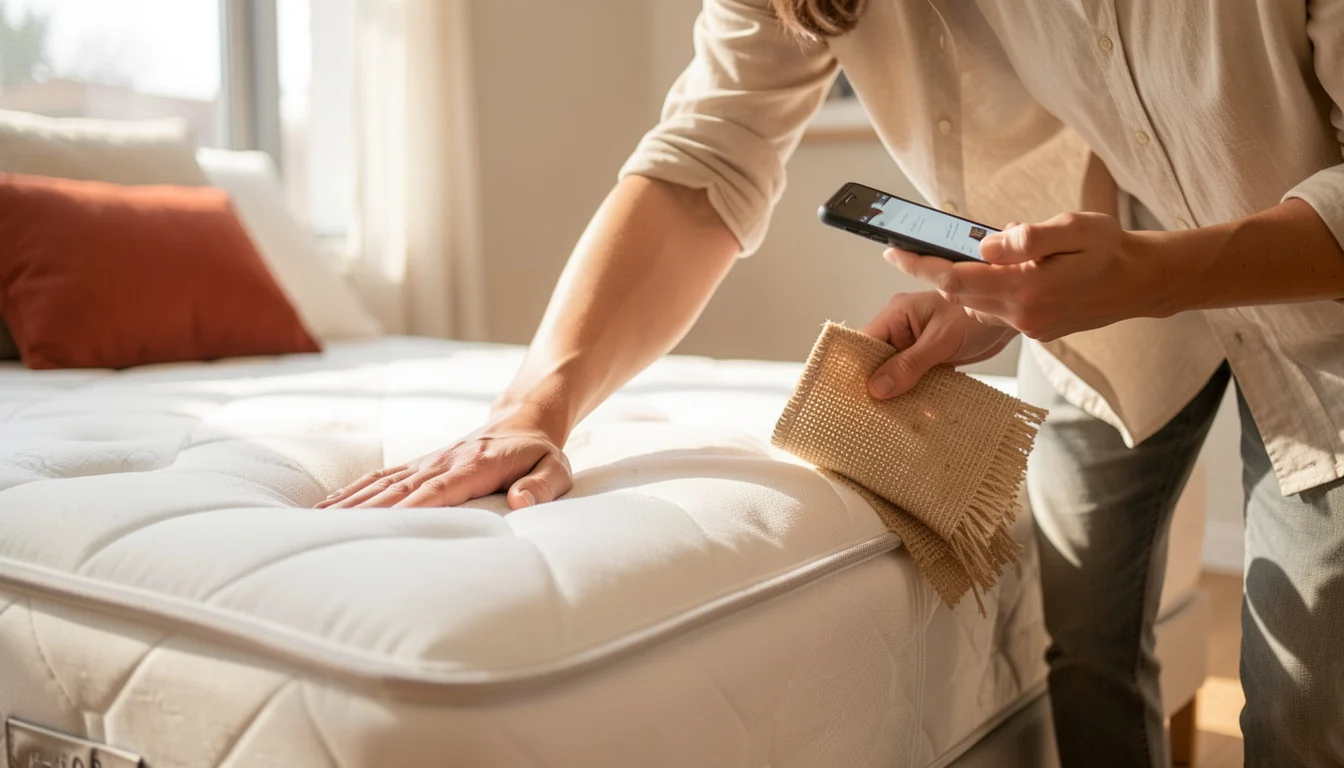
Comfort and environmental claims answer different questions. Compare firmness descriptions and construction with your sleep position and support preferences, then check the trial’s start date, return process, fees, and eligibility. Comfort is personal; a label cannot tell you how a mattress will feel in your bedroom.
If organic materials are your priority, favor the model with current records that identify which components meet the relevant organic standard. If you want a “non-toxic” mattress, ask what specific substances or emissions the claim addresses and what test or certification supports it. The term alone is too broad to compare products.
Prices and promotions vary by model, size, and date, so compare the same size and configuration using current product pages. Include delivery charges and any return fees in the total. A lower purchase price may not be better value if the trial terms or return costs make a poor fit expensive to resolve.
For questions about chemicals and exposure, the U.S. Environmental Protection Agency’s indoor air quality guidance offers general context; it does not certify or rank mattresses. Environmental assessments can also differ in how they weigh sourcing, emissions, durability, and disposal, so there is no single model that wins under every definition.
Check Ownership and End-Of-Life Options
Before ordering, confirm delivery, trial, return, warranty, and disposal terms for your address. Recycling or take-back may depend on local providers, the mattress’s condition, and the seller’s service area. Ask who arranges pickup and whether fees or preparation rules apply.
Do not assume a mattress can go into curbside recycling. Contact your municipality or a local waste provider to ask what they accept and whether they handle mattresses. The EPA’s guidance on recycling and waste reduction can help frame disposal questions, but local rules determine what is available near you. For a similar reminder to check local options before disposal, see this guide to recycling old electronics responsibly.
Keeping a mattress that remains comfortable and supportive may avoid an early replacement, but the size of any environmental benefit depends on the product and how it is made, used, and discarded. Confirm an end-of-life route before purchase instead of relying on a broad recyclability claim.
Use a Shortlist to Make the Final Choice
Choose the best-documented model that fits your comfort needs and budget, not the one with the strongest “green” wording. No mattress is best for every sleeper or every definition of sustainability.
- Can you identify the materials in each layer and verify the scope of the relevant certifications? If not, ask for documentation or move to a better-documented model.
- Do the construction, care instructions, and warranty terms suit how you will use the mattress? If not, do not treat the warranty length as a substitute for fit or durability evidence.
- Can you accept the trial and return terms, and confirm a disposal option where you live? If either answer is no, compare another seller or model before ordering.
By priority: organic-material shoppers should check component-level certification; brand-comparison shoppers should use the same checklist for Avocado, Birch, and My Green Mattress; durability-focused buyers should scrutinize construction and coverage; budget-conscious buyers should compare current total costs and return terms.
For practical clothing repair ideas, this guide to making clothes last longer through repair offers a useful general example of extending product use, though mattress repair options depend on the manufacturer.
📱 See this content as a Web Story
Frequently Asked Questions
Can a Mattress with a Synthetic Component Still Be an Eco-Friendly Choice?
Possibly. Assess the component’s role, material disclosure, emissions evidence, durability, and disposal route; one synthetic layer does not settle the full comparison.
Should I Replace My Current Mattress to Reduce Chemical Exposure?
Not automatically. First identify the specific concern and look for substantiated information about the mattress you own. Replacing a usable mattress has its own material and disposal impacts, and a new product’s marketing language alone does not establish a health benefit.
Can I Recycle a Mattress Through a Retailer?
Some sellers or local providers may offer pickup or recycling, but coverage and conditions vary. Confirm service for your ZIP code, mattress condition, fees, and what happens to the collected materials before placing the order.
What Should I Save After Buying?
Keep the receipt, the product’s material and certification information, warranty terms, and care instructions. These documents help you confirm what was promised and support a future warranty or return request.
Before purchase, verify current product details and policies on the manufacturer’s official pages, certification records, and local waste-provider guidance for your address.