
How to Clean a Dishwasher Filter and Prevent Bad Odors
How to safely clean your dishwasher filter: check your manual, remove the lower rack, rinse debris with a soft brush, and avoid forcing parts for effective m…
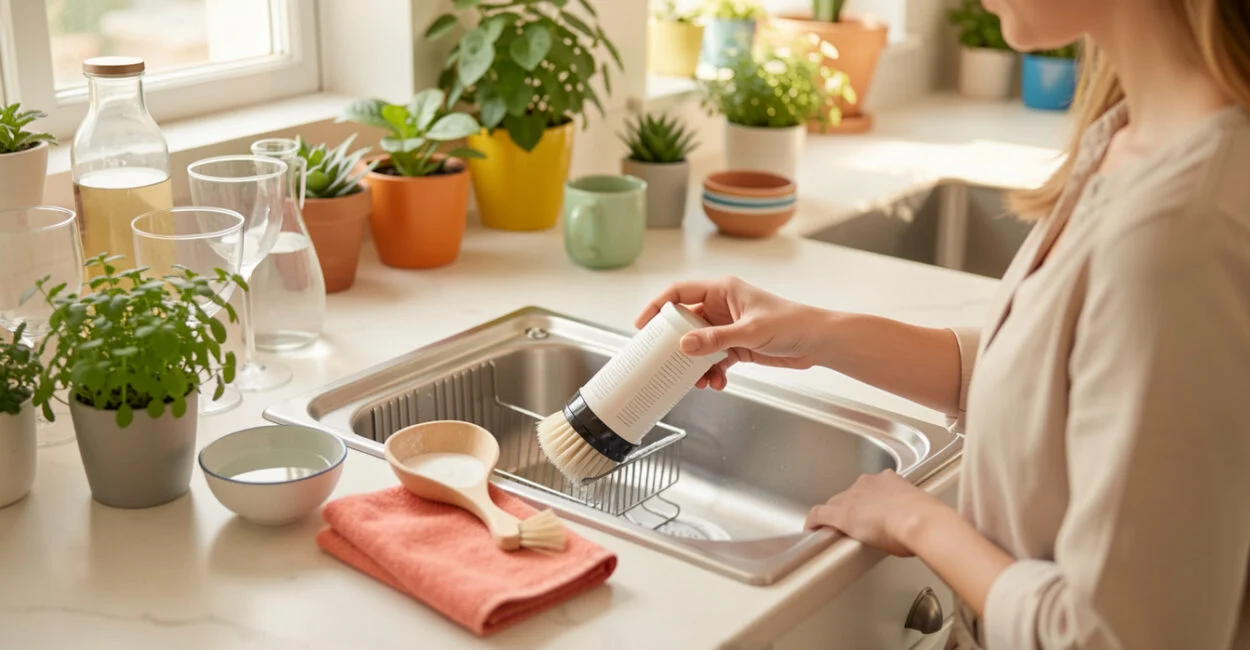 Carefully removing a dishwasher filter
A dishwasher can finish a cycle with cloudy glasses or a sour smell even when the detergent is right. Often, food particles have collected in the filter at the bottom of the tub. Cleaning it is usually a short job, but the safe removal method depends on the dishwasher’s model, so check the owner’s manual before twisting or lifting anything.
A filter that is dirty may need cleaning, not replacement. The distinction matters: scrubbing a damaged mesh can make it worse, while replacing an intact filter won’t fix a clogged drain hose or debris trapped elsewhere.
Dishwasher Filter Cleaning: The Safe, Basic Steps
To clean a dishwasher filter, turn off the appliance, remove the lower rack, and take out the filter only as the manual directs. Rinse it under warm running water, gently brush away stuck-on debris with a soft brush, then reinstall and lock it in place. Filter shapes and release mechanisms vary, so never force a part that resists.
- Check the owner’s manual for your model’s filter location and removal instructions.
- Remove the lower rack and lift out or unlock the filter as directed. Some models have more than one filter component.
- Rinse the parts under running water. Use a soft brush for residue that does not rinse away.
- Check the filter seat for loose debris, then reinstall each part in the correct position and secure it as instructed.
- Run a normal cycle and check that the dishwasher drains as expected.
A common mistake is reinstalling the filter loosely. It may look seated while still being out of position, allowing debris to bypass it. Follow the manual’s locking instructions rather than relying on a quick visual check.
Where the Filter is and How to Remove It Safely
Most dishwasher filters sit on the floor of the tub beneath the lower rack, often near the spray arm. A manual-clean filter may have a round handle that turns to release it, while other designs lift out or use separate coarse and fine filter pieces. The handle’s direction and removal sequence are model-specific.
Some dishwashers use a self-cleaning filtration system, and their manuals may not call for the same routine removal and hand-cleaning used for a manual filter. Don’t assume that a filter you can see should be pulled out. Look up the model number on the appliance label, then consult the matching owner’s manual.
For brand-specific instructions, use the Whirlpool Dishwasher Use and Care Guide and product support, the Bosch Dishwasher Owner’s Manual and support resources, or the Frigidaire Dishwasher Use and Care Manual. These resources help locate the right instructions, but a brand name alone does not identify the filter design.
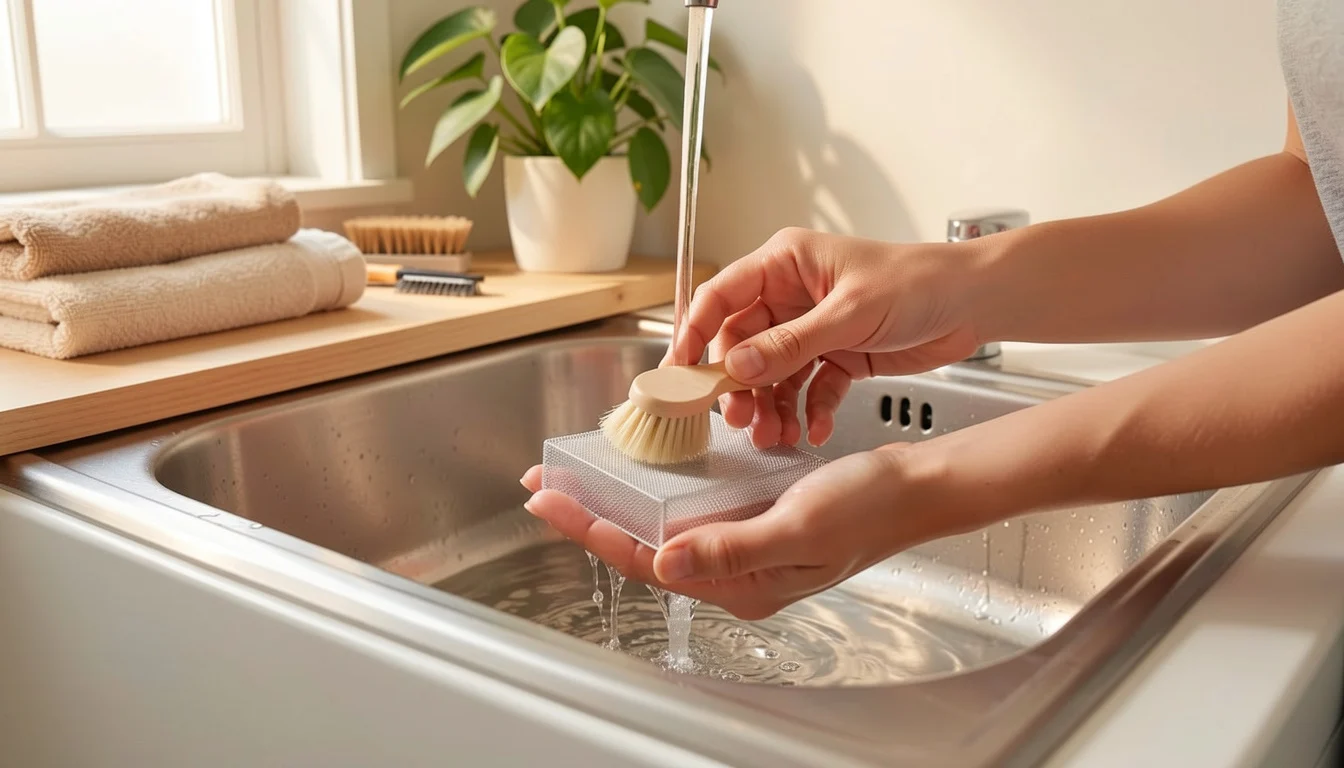
What to Use, and What to Keep Away from the Filter
Warm running water and a soft-bristled brush are usually enough for routine cleaning. A small amount of mild dish soap can help with greasy residue if the manual permits it; rinse thoroughly so no soap remains on the filter.
Avoid wire brushes, knives, picks, and abrasive pads. Fine mesh can tear or deform, and a sharp tool can push debris deeper into an opening. Don’t soak the filter in bleach or mix cleaning products.
Can the filter go in the dishwasher for cleaning? Only if the manual says that the filter is dishwasher-safe. Hand rinsing is the safer default because heat or detergent may not suit every filter material or assembly.
Should you use vinegar or bleach? Neither is a default filter-cleaning solution. Follow the manual’s approved cleaning method; vinegar may be unsuitable for some appliance components, and bleach can damage materials or create a hazard if mixed with other cleaners.
Read also: How to Clean a Refrigerator and Get Rid of Food Odors
A filter should come out only by its model-approved release method, and go back in fully secured.
How Often to Clean It, and What the Warning Signs Mean
Use the cleaning interval in your dishwasher’s manual as the starting point. How often the filter needs attention depends on the appliance, how frequently it runs, and what goes into it. Scraping off large scraps helps, but it does not remove every particle that can collect in a filter.
Check the filter sooner if dishes come out with food particles, water remains in the tub after a cycle, or the dishwasher develops a persistent unpleasant smell. A quick look can also reveal visible buildup. If the filter is clean and the problem continues, don’t keep cleaning it on a fixed schedule in the hope that the symptom will disappear.
For other kitchen surfaces, separate maintenance advice can help: see these kitchen cleaning habits for keeping counters germ-free. Counter care is separate from dishwasher maintenance, so use the appliance manual for anything involving the filter.
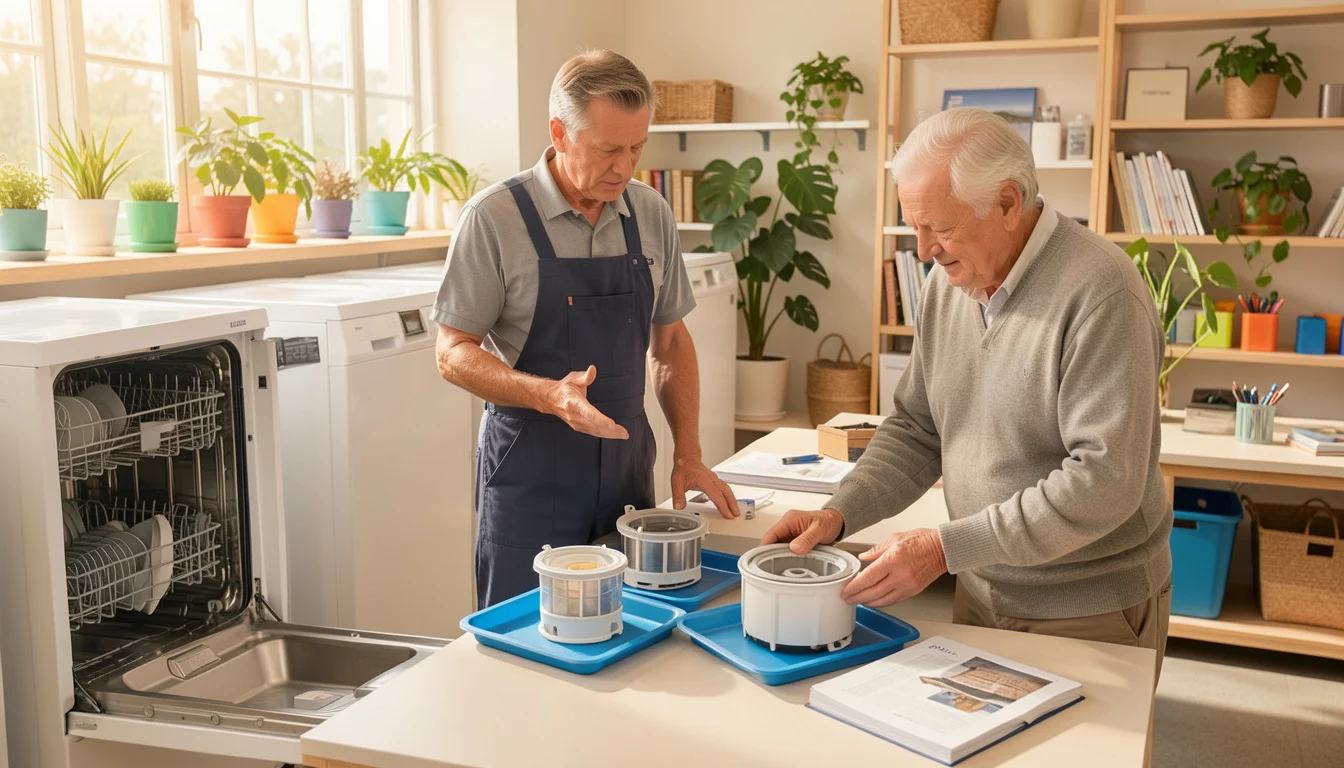
Whirlpool, Bosch, and Frigidaire Filter Differences
Brand names can point you toward support materials, but they do not guarantee one removal method across every model. Use this comparison as a way to find the right instructions, not as a substitute for them.
Brand What to check Model-safe next step Whirlpool Whether your model uses a removable filter and how its parts lock together. Find the model number and follow the matching Whirlpool Dishwasher Use and Care Guide before turning or lifting the filter. Bosch The filter assembly and the manual’s cleaning and reinstallation directions for your model. Use the Bosch Dishwasher Owner’s Manual for the model; don’t transfer instructions from a different Bosch unit. Frigidaire Whether your model’s filter is removable and what cleaning method the manual allows. Consult the Frigidaire Dishwasher Use and Care Manual that matches the appliance’s model number.
That model check matters for Whirlpool dishwasher filter cleaning in particular: two machines with the same brand badge may not have the same filter release or assembly. The same caution applies to Bosch dishwasher filter cleaning and Frigidaire dishwasher filter cleaning. If a part does not release as shown in your manual, stop rather than applying more force.
When to Replace the Filter or Investigate Another Cause
A dishwasher filter needs replacement when it is cracked, torn, warped, or no longer locks into place, or when the manufacturer identifies it as a replaceable part that has reached the end of its service life. Dirt alone is not evidence that a filter has failed. Clean an intact filter first and reassess the appliance’s performance.
For dishwasher filter replacement, match the part to the full model number, not just the brand or the filter’s general shape. If the filter is damaged, the manual does not list it as a serviceable part, or you cannot reinstall it securely, use the manufacturer’s parts guidance or a qualified technician.
Can a dishwasher run without its filter? Don’t run it that way unless the manual explicitly permits it. The filter catches food particles; operating without a required filter can let debris circulate or collect in parts that are harder to clean.
If the dishwasher still smells after the filter is clean, check for food caught around the filter seat, on the door gasket, or in the drain area. A kinked or obstructed drain hose, a drain connection issue, or standing water can also cause trouble. If water remains after a cycle, or the smell persists after accessible debris is removed, follow the manual’s troubleshooting steps or arrange service rather than treating the filter as the only possible cause.
Next Steps for a Clean, Secure Filter
Start with the model number and the matching manual. Clean the filter using the manual’s removal and washing instructions, then confirm that it is locked back in place. If the filter is damaged, check the manufacturer’s part information; if it is intact but the dishwasher still smells or drains poorly, investigate the drain and other areas the manual identifies.
📱 See this content as a Web Story
Frequently Asked Questions
Should I Scrape Every Dish Before Loading It?
Remove large scraps, bones, and seeds, but follow the dishwasher manual on pre-rinsing. Scraping reduces the amount of food entering the tub without requiring you to rinse every dish under the faucet.
Why Does My Dishwasher Smell Worse After a Cycle?
A cycle can move loose food particles into the filter area or leave odors noticeable when the warm, damp tub opens. Check for debris around the filter and door gasket, and confirm that the appliance drains fully.
Can a Clogged Filter Leave Water in the Bottom?
It can contribute to poor drainage, but standing water can also point to a drain hose, connection, or pump issue. If cleaning the filter does not help, use the manual’s drainage troubleshooting steps.
Where Can I Find My Dishwasher’s Model Number?
Check the appliance label, commonly located around the door opening or along the inside edge of the door. Use that complete model number when searching for the manual or a replacement part.
Should I Replace a Filter That Still Looks Stained?
Not necessarily. Staining or discoloration alone does not show that the filter is damaged; look for tears, warping, or a failed locking fit, and follow the manufacturer’s replacement guidance.