
How to Clean Window Tracks Without Scratching the Frames
How to clean window tracks safely: vacuum grit, loosen debris with a soft brush, wipe with a damp cloth, and protect frames by using minimal liquid and prope…
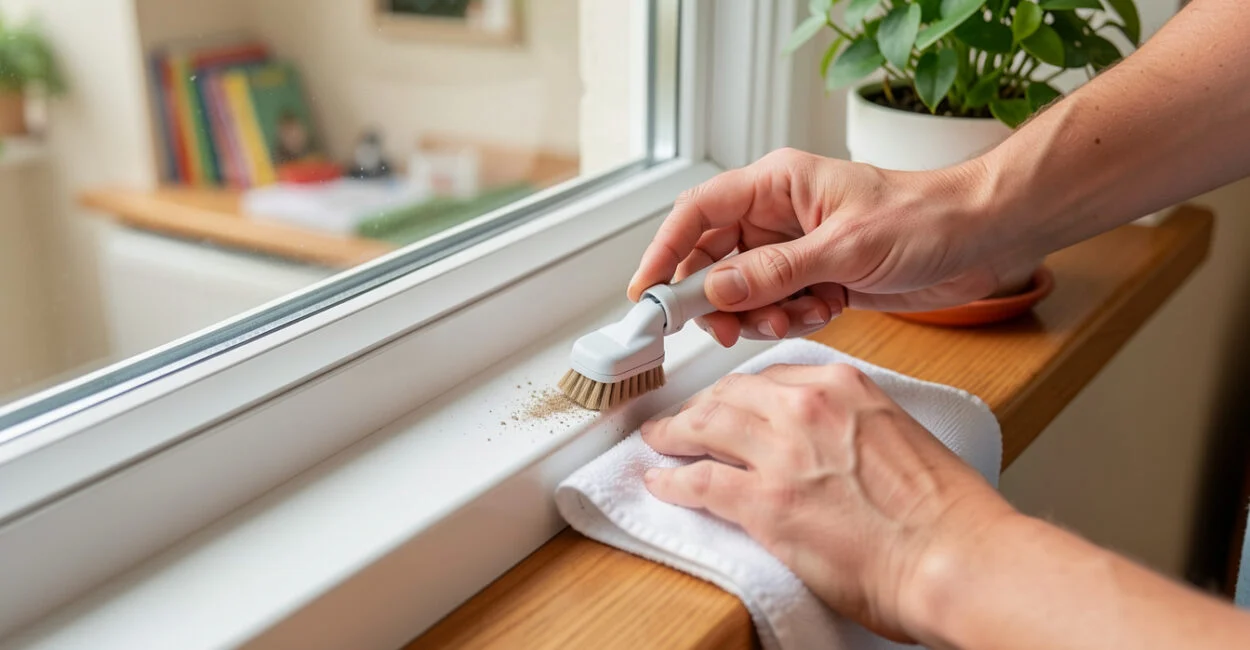 Vacuuming grit from a window track
Fine grit in a window track can act like sandpaper when a sash slides over it. To clean window tracks without scratching the frames, start by vacuuming loose debris, then loosen what remains with a soft brush and wipe it away with a damp microfiber cloth and mild cleaner. Use little liquid, and keep drainage openings clear.
The safest method depends on the frame’s finish and the kind of buildup. A vinyl track, painted surface, and coated metal frame may not tolerate the same cleaner, so check the manufacturer’s care instructions before treating a stubborn stain.
Regular cleaning also makes it easier to spot grit, residue, or blocked drainage before it interferes with a window’s movement. A short routine is usually enough; heavy scrubbing can leave marks or damage a finish.
Quick Takeaways
- Vacuum loose grit before wiping; rubbing it across the track can scratch the finish.
- Use a soft nylon brush or an old toothbrush for narrow channels and corners.
- Apply cleaner to a cloth rather than pouring it into the track.
- Check the window maker’s instructions before using vinegar or any other cleaner.
How to Clean Window Tracks Without Scratching the Frames
Window-track cleaning is the removal of dust, grit, residue, and other debris from the channels that guide a sliding sash or hold a window in place. For routine cleaning, vacuum the channel with a brush attachment, loosen stuck dirt with a soft brush, then wipe with a microfiber cloth dampened with mild, frame-compatible cleaner. Use only a little water, avoid abrasive tools, and dry the track so moisture does not sit in corners or drainage areas.
That order matters. If you wipe first, loose grit can drag across the frame; if you flood the channel, water and loosened grime can collect where they are hard to remove. A narrow vacuum attachment helps, but a soft brush is often the best tool for reaching the corners it misses.
Gather the Right Tools and Cleaning Supplies
Choose tools that lift dirt without scraping the finish. A small amount of cleaner on a cloth gives you more control than spraying or pouring product directly into the channel.
- Vacuum with a crevice or brush attachment: removes loose sand, dust, and pet hair before they can be rubbed into the track.
- Soft nylon detailing brush or old toothbrush: reaches corners and narrow grooves without the cutting edge of a metal tool.
- Microfiber cloths: one for cleaning and a dry one for removing leftover moisture.
- Mild, frame-compatible cleaner: use a product approved for the window’s material, diluted as directed if dilution is required.
- Cotton swabs or a flexible plastic detail tool: useful for small corners, provided they do not press debris into drainage openings.
Look for a product with clear surface-use directions. The EPA’s Safer Choice program identifies products that meet its criteria for safer chemical ingredients; the label is a useful starting point, but you still need to confirm that the cleaner suits your window’s finish. For broader household product choices, see these tips for cleaning without harsh chemicals.
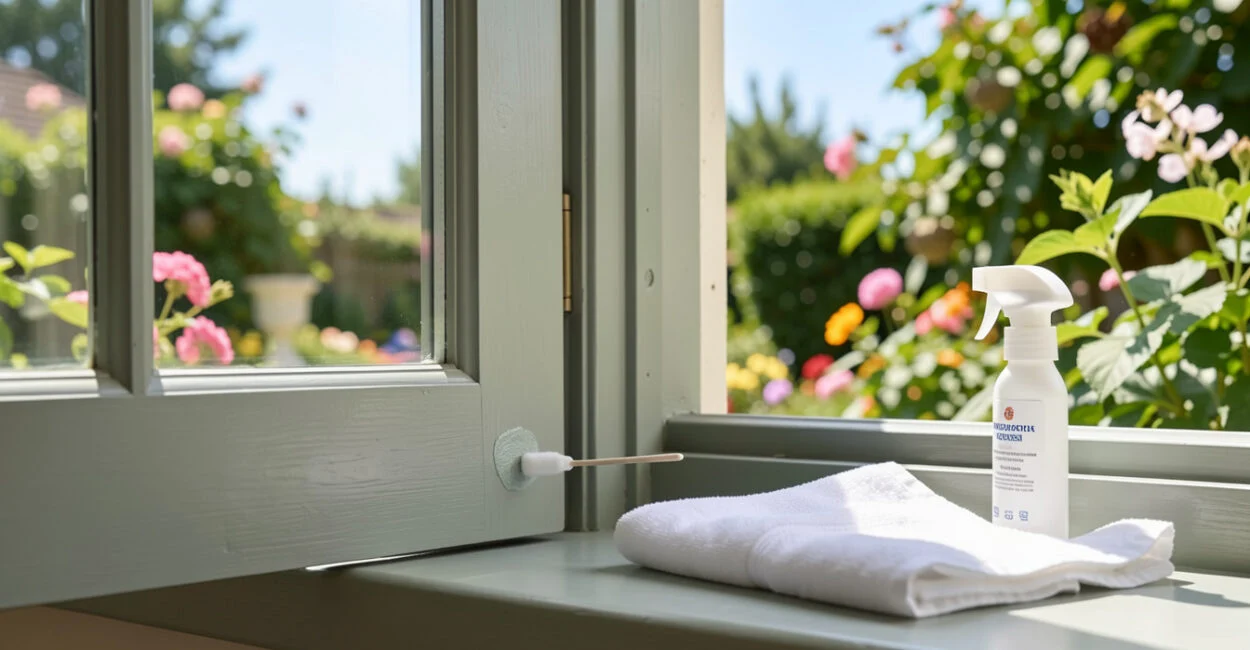
Check the Frame Material Before You Start
Window frames may be vinyl, painted wood, aluminum, or another coated material, and their finishes can respond differently to cleaners and scrubbing. Andersen’s care and maintenance guidance advises following product-specific instructions for window care. Check the documentation for your own window if you can identify its make and model; a general cleaner recommendation cannot account for every coating or finish.
Test the cleaner on a small, inconspicuous area first, especially on painted or coated surfaces. Follow the product label and the window manufacturer’s directions if they differ. If a finish is already peeling, chalking, or scratched, stop and seek material-specific advice rather than trying stronger chemicals.
Can You Use Vinegar?
Vinegar can be used on some window tracks, but it is not a universal choice. Its acidity may be unsuitable for certain finishes or nearby materials, so use it only if the window manufacturer permits it; when guidance is unclear, plain water or a mild, approved cleaner is the safer starting point.
How to Clean Window Tracks Step by Step
- Open the window as far as the manufacturer allows. If the sash is designed to tilt or lift out, follow its instructions rather than forcing it. Keep the work area dry and stable.
- Vacuum the loose debris. Use a crevice attachment or brush head along the full track. Pay attention to the ends, where grit and hair often gather.
- Loosen stuck dirt gently. Brush along the channel and toward the center so debris stays accessible. Do not push dirt toward a drain opening.
- Wipe with a lightly damp cloth. Apply a small amount of approved cleaner to the cloth, not directly into the track. Use short passes and turn the cloth to a clean section as it picks up grime.
- Rinse sparingly if the cleaner calls for it. Use a fresh cloth dampened with clean water. Avoid pouring or spraying water into the channel.
- Dry the track and check its operation. Wipe the channel with a dry microfiber cloth, then slide the sash gently. If it still sticks, look for remaining debris rather than adding lubricant or scrubbing harder.
A common mistake is wiping a sandy track before vacuuming it. The grit can leave fine marks as the cloth moves, even when the cloth itself is soft. For other routine surfaces, these kitchen cleaning habits for keeping counters germ-free offer a separate approach to keeping everyday cleaning manageable.
Choose a Cleaning Method for the Type of Buildup
Match the method to what you see. Start with the gentlest option, then step up only if residue remains and the frame’s care instructions allow it.
Buildup Suitable method Caution Dry dust, grit, or hair Vacuum with a brush or crevice attachment, then use a soft brush for leftovers. Do not wipe loose grit across the finish. Sticky residue Hold a cloth dampened with warm water and mild approved cleaner against the spot briefly, then lift the softened residue with the cloth. Do not scrape with a blade or use solvent unless the manufacturer specifically approves it. Stubborn grime or dark buildup Work in small areas with a soft nylon brush and compatible cleaner; wipe, inspect, and repeat gently if needed. Dark marks may be staining, degraded material, or mildew rather than removable dirt. Avoid stronger chemicals until the cause and material are known.
For sticky or black buildup, patience is safer than pressure: soften the spot with a damp cloth, then brush lightly and wipe it away. If the mark does not lift, do not assume that more force will help. A stain that remains after gentle cleaning may be discoloration or damage rather than surface soil.
Remove Dirt from Corners and Keep Drainage Areas Clear
Use a soft detailing brush or cotton swab to collect dirt from corners, working outward so you can remove what loosens. A flexible plastic tool can help with a packed groove, but keep it nearly flat and avoid levering against the frame or pressing debris farther into the channel.
Many windows have weep holes, small openings that let water drain from the frame. Keep visible openings free of debris, but do not probe deeply with wire, metal picks, or other sharp tools. If an opening appears blocked beyond what gentle surface cleaning can clear, check the manufacturer’s instructions rather than forcing material through it.
Clean the channel around drainage openings gently, and leave the openings themselves clear of tools and pushed-in debris.
How Often to Clean Window Tracks and Keep Them Cleaner
For many homes, a quick vacuum and wipe every few months is a practical starting point; clean sooner if you see grit, pet hair, pollen, or sticky residue accumulating. Windows near a dusty road, a busy yard, or an open kitchen may need attention more often. Pella’s care and maintenance resources provide product-specific guidance, so use them to confirm the right schedule and cleaning method for your windows.
Between full cleanings, vacuum visible debris before it builds up, and check that the sash moves smoothly and drainage openings remain clear. If a window binds after cleaning, stop rather than forcing it; leftover debris, a damaged track, or an issue with the window hardware may need a closer inspection. A regular household schedule can help make small tasks easier to remember, as in this weekend cleaning schedule.
📱 See this content as a Web Story
Frequently Asked Questions
What is the Best Tool for Cleaning Narrow Window Tracks?
A soft nylon detailing brush or an old toothbrush is a good choice for narrow channels because it loosens dirt without a sharp edge. Use a vacuum first to remove loose grit, then wipe away what the brush dislodges.
How Can I Tell Whether a Dark Mark is Dirt or Damage?
Try a small amount of cleaner approved for the frame on a hidden spot, then wipe gently. If the mark stays put, or the surface looks rough, faded, or peeled, stop; the discoloration may be in the material or finish.
Should I Lubricate a Window Track After Cleaning?
Only if the window manufacturer recommends it and specifies a suitable product. Some tracks are designed to operate clean and dry, and an unapproved lubricant can attract dust or interfere with movement.
Can I Use a Steam Cleaner on a Window Track?
Do not use steam unless the window manufacturer explicitly approves it. Heat and moisture can affect finishes, seals, or nearby materials, and steam can drive water into parts of the frame that are hard to dry.
Is Dish Soap Suitable for Every Window Frame?
No. A small amount of mild dish soap may be acceptable for some materials, but finishes vary. Check the window’s care instructions, use a diluted solution only if allowed, and wipe away any residue.
What Should I Do If the Window Still Sticks After Cleaning?
Check for debris at the ends of the track and confirm that drainage openings are unobstructed. If the sash still binds, avoid forcing it or adding an unapproved product; the track, rollers, or other hardware may need inspection.