
How to Create Shade on Your Patio Without Installing a Pergola
How to create patio shade without a pergola: options like umbrellas, shade sails, awnings, plants, and temporary canopies based on sun exposure and installat…
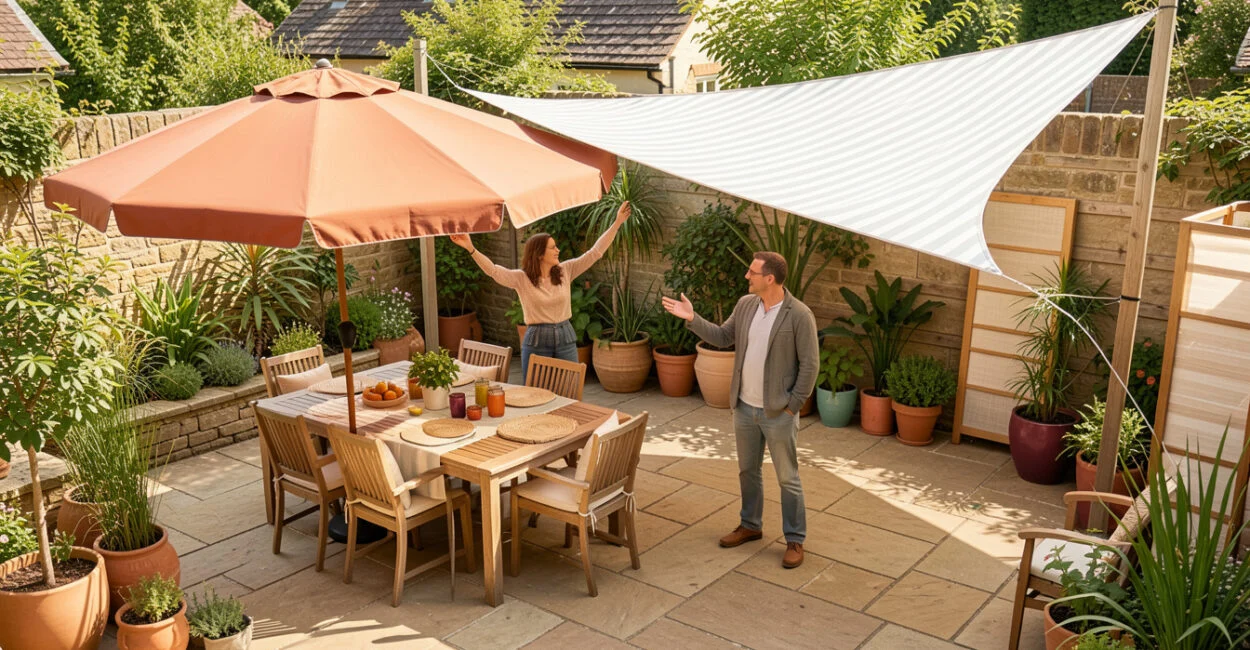 Comparing flexible patio shade options
How to Create Shade on Your Patio Without Installing a Pergola
A patio can feel more comfortable without a pergola by blocking direct sun with a shade sail, umbrella, awning, plants, screen, or temporary canopy. Choose based on where the sun hits, how much of the patio needs cover, local wind exposure, and whether you can install permanent anchors. For renters, freestanding and removable options are usually easiest.
These patio shade ideas are arranged from flexible, lower-commitment fixes to more permanent solutions. Each has different space, anchoring, and maintenance needs, so the best choice depends on the patio rather than on a universal ranking.
1. Add an Outdoor Umbrella for Adjustable Shade
A patio umbrella is a freestanding or table-mounted canopy that blocks direct sunlight over a defined area. It is a practical first choice for small patios because it can shade a dining set or lounge chair without covering the whole space.
A table umbrella works well when the table sits in the sunny part of the patio and has a center hole. For seating areas without a table, a cantilever umbrella places the pole to the side, though its base takes up floor space. Check the canopy’s reach against the area you want shaded, and choose a stable base suited to the umbrella and its location. A light base can shift or tip in gusts.
Umbrellas suit patios where shade needs to move during the day. Close the canopy when it is not in use or when wind picks up, following the manufacturer’s instructions. If outdoor seating is part of the plan, these rustic outdoor seating ideas for cozy get-togethers can help you arrange chairs within the umbrella’s shade.
2. Use a Shade Sail for Flexible, Modern Coverage
A shade sail is a tensioned fabric panel secured to fixed anchor points, such as rated posts or suitable structural supports. In everyday terms, it stretches overhead to block sun across a larger area than many umbrellas can cover. A National Weather Service guide to wind safety is a useful reminder that wind can make exposed outdoor setups hazardous.
Measure the patio and mark the intended anchor points before buying. The fabric needs enough clearance from doors, windows, and branches, and the anchors must withstand the forces created by a taut sail. Install it with a slope so rainwater can drain rather than collect in a sagging pocket. Water pooling adds weight and strain.
A sail can work well over an open patio with solid anchor locations and a layout that does not change often. It is less suitable where wind is strong or unpredictable, where anchors would attach to weak structures, or where a renter cannot make permanent changes. In those cases, a movable umbrella may be a safer fit.
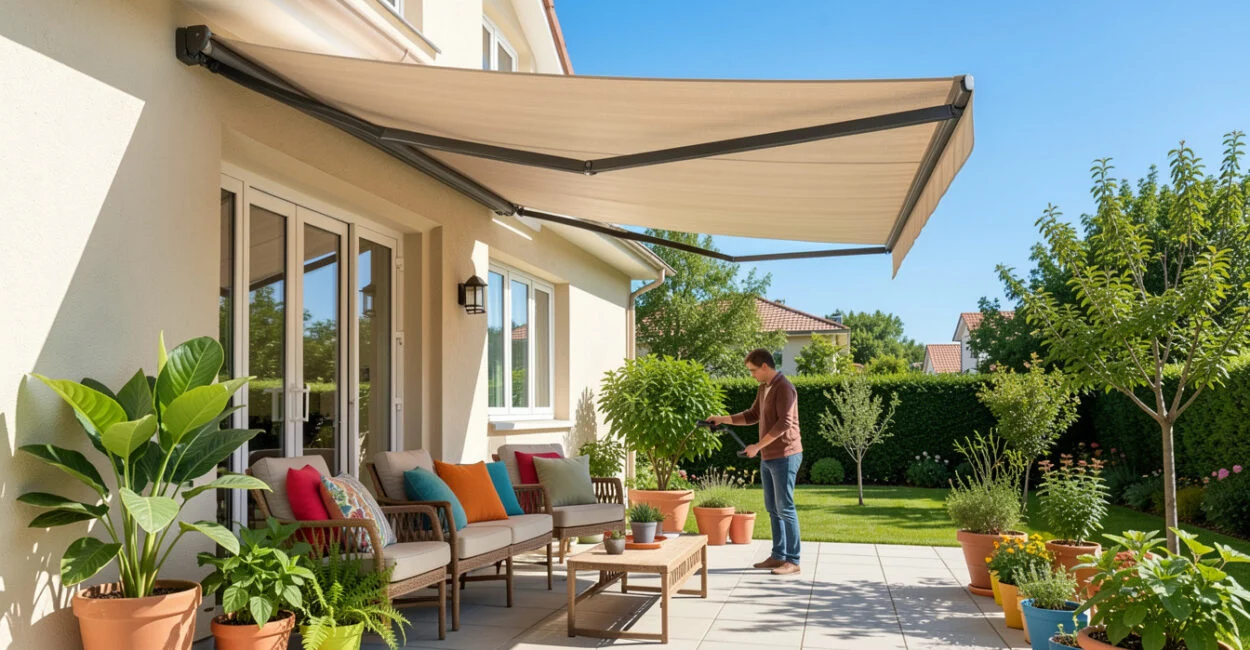
3. Create Shade with a Retractable Awning or Canopy
A retractable patio awning is a fabric cover attached to a building that extends over the patio and can be pulled back when shade is not needed. It can cover a useful stretch beside the house while leaving the sky open when retracted. A fixed canopy offers more constant coverage but cannot be moved out of the way as easily.
Wall-mounted awnings need a sound attachment point and proper installation. Before choosing one, confirm that the wall and mounting hardware can support the system, and check local requirements or building rules. Retract the awning in high winds if the manufacturer advises it; these products are not all designed for the same weather conditions.
Renters can look at portable outdoor canopies instead. A pop-up canopy can provide broad temporary shade for a gathering, but it needs secure placement and should not be left unattended in changing weather. It also occupies more floor space than an umbrella. For a small rental patio, a compact, movable option is often easier to manage than a large canopy.
4. Plant a Shade Tree for Long-Term Coverage
A shade tree creates overhead cover through its crown, the branches and leaves that spread above the ground. It can suit a homeowner planning for long-term shade, particularly where the patio gets strong sun and there is room for roots and mature growth.
Tree shade takes time to develop, and the amount of cover varies by species, climate, planting location, and season. The U.S. Department of Energy’s Energy Saver guidance on landscaping for energy-efficient homes discusses using trees and other landscaping to manage sun exposure around buildings. For a patio, leave room for the tree’s mature size and keep branches clear of structures and overhead lines.
Plants can provide enough shade once established if the tree’s canopy reaches over the area at the right time of day. They are not an immediate fix, and deciduous trees may let more sunlight through in winter. Ask a local university extension service or qualified arborist about species suited to your region and site before planting.
5. Use Tall Planters and Climbing Plants for Partial Shade
Tall planters with trellises or climbing plants can create a narrow strip of shade along a patio edge. This approach suits patios that need some relief near a chair or wall but cannot support overhead anchors. It can also work for renters if the containers are movable and the property rules allow them.
The shade depends on the plant’s height, leaf density, and position relative to the sun. A planter beside a seating area may block low-angle sun from one direction, but it will not provide the broad overhead coverage of a sail or canopy. Choose containers stable enough for their height, and account for the weight of wet soil before placing them on balconies or raised decks.
For renters, this is a relatively adaptable option, but plants still need watering and seasonal care. The Department of Energy’s landscaping guidance can help with thinking through plant placement, while local extension advice is better for selecting varieties that suit local conditions. Use this option for partial coverage, not as a guaranteed substitute for overhead shade.
6. Set Up a Temporary Outdoor Canopy
A pop-up outdoor canopy uses a folding frame and fabric top to create a temporary roof over a patio area. It is useful for occasional gatherings or for renters who want broad coverage without attaching anything to the home.
Check the canopy’s footprint against the patio before setting it up. Its legs need clear, level space, and the frame should be secured according to the manufacturer’s directions. A canopy can catch wind, so take it down or stow it when conditions exceed its stated limits. Never assume that adding a heavier object to a leg makes an exposed canopy safe in strong gusts.
This is a good fit when shade is needed only at certain times or for a specific event. It is less convenient as a permanent everyday solution because setup, storage, and weather checks become part of its use. For a smaller space, an umbrella usually takes up less room.
7. Add a Freestanding Shade Screen for Low-Angle Sun
A freestanding shade screen is a vertical panel designed to filter or block sunlight from the side. It is most useful when the sun comes in low, such as late in the day, and overhead shade alone leaves one seat exposed.
Position the screen on the sunny side of the seating area, then check that it does not block a walkway or create a hazard in wind. A wide panel can act like a sail, so use a stable base and follow the product’s guidance for outdoor conditions. Screens generally shade a limited area and may need repositioning as the sun moves.
This option suits a patio with a predictable sun problem along one edge. It will not cover a whole dining area from overhead, and a fixed screen may not be allowed in some rentals or shared communities. For related ideas that focus on screening rather than sun protection, see these budget-friendly small patio privacy screens.
Compare Patio Shade Ideas by Cost, Coverage, and Permanence
Prices vary by size, materials, installation, and local labor, so compare product quotes rather than relying on a single typical cost. This table focuses on practical trade-offs.
Option Best for Practical trade-off Patio umbrella Small areas and changing sun Adjustable, but needs a suitable base and storage in wind Shade sail Broad coverage with secure anchor points Requires careful tensioning, slope, and wind planning Retractable awning Patios beside a suitable building wall Needs proper mounting and weather-aware operation Shade tree Long-term coverage with room to grow Takes time and requires species selection and care Planters and climbing plants Partial or edge shade in adaptable layouts Coverage depends on growth, placement, and maintenance Pop-up canopy Temporary broad coverage Needs setup, storage, and attention to wind Freestanding shade screen Low-angle sun from one direction Limited coverage and potential wind exposure
How to Choose the Right Patio Shade
Use this checklist before buying or installing anything:
- Track the sun: Note when direct sunlight reaches the patio and whether it comes from overhead or from the side. A solution that works at noon may miss late-afternoon sun.
- Measure the usable area: Include chair movement, door swings, and walking routes. A large canopy can shade well but make a compact patio hard to use.
- Assess wind and anchors: Exposed patios may rule out loosely secured sails, canopies, or screens. A sail also needs suitable anchor points, not just convenient ones.
- Set your installation limits: Homeowners may be able to add anchors or plant a tree; renters often need freestanding, removable options. Check lease and building rules.
- Match maintenance to your routine: Fabric covers need care and weather checks, while plants need watering and pruning.
There is no single “best” wind rating or setup for every patio. Exposure varies with nearby buildings, terrain, and the product’s design, so follow the manufacturer’s limits and local safety guidance. If your patio is small, an umbrella is often the easiest fit. For a low-budget start, use an existing table umbrella or a movable planter for partial shade rather than buying a large structure before measuring.
Choose Shade That Fits the Patio You Have
The most useful patio shade solution is the one that blocks sun where people sit without creating a new problem with wind, access, or upkeep. Start with the sun’s direction and the patio’s constraints; then choose the simplest option that covers the area you actually use.
Shade also changes how a patio functions throughout the day. Once the coverage is in place, details such as weatherproof rug colors for sun-drenched spaces can help the area feel considered without affecting the shade plan.
📱 See this content as a Web Story
Frequently Asked Questions
Which Patio Shade Option is Best for a Small Space?
A table umbrella or compact cantilever umbrella is often the best starting point because it can shade a seating area without filling the whole patio. Check the base footprint and leave clear space for walking.
How Can I Shade a Patio on a Low Budget?
Start with a used or existing umbrella, if it is in sound condition and has a suitable base. A movable planter may also block some low-angle sun, though it will not create full overhead coverage. Measure first so a low-cost purchase fits the area.
What Patio Shade Works Best in a Windy Area?
No fabric shade is automatically safe in strong wind. Follow the product’s operating limits, secure it as directed, and close or remove it when conditions require. A permanent tree may avoid the problems of a loose canopy over time, but it takes years to establish and needs appropriate siting.
Can Plants Provide Enough Shade for a Patio?
Yes, a mature tree with a suitably placed canopy can shade a patio, but results depend on species, growth, season, and sun angle. Planters and climbing plants usually provide partial shade rather than full overhead coverage.
How Can Renters Add Patio Shade Without Permanent Installation?
Consider a freestanding umbrella, movable planters, or a temporary canopy. Check lease and community rules, and avoid attaching sails or awnings to walls or railings without permission and suitable hardware.