
How to Clean and Store Outdoor Cushions Between Seasons
How to clean outdoor cushions safely: check care labels, remove debris gently, use mild cleaners, rinse thoroughly, and ensure cushions dry fully before stor…
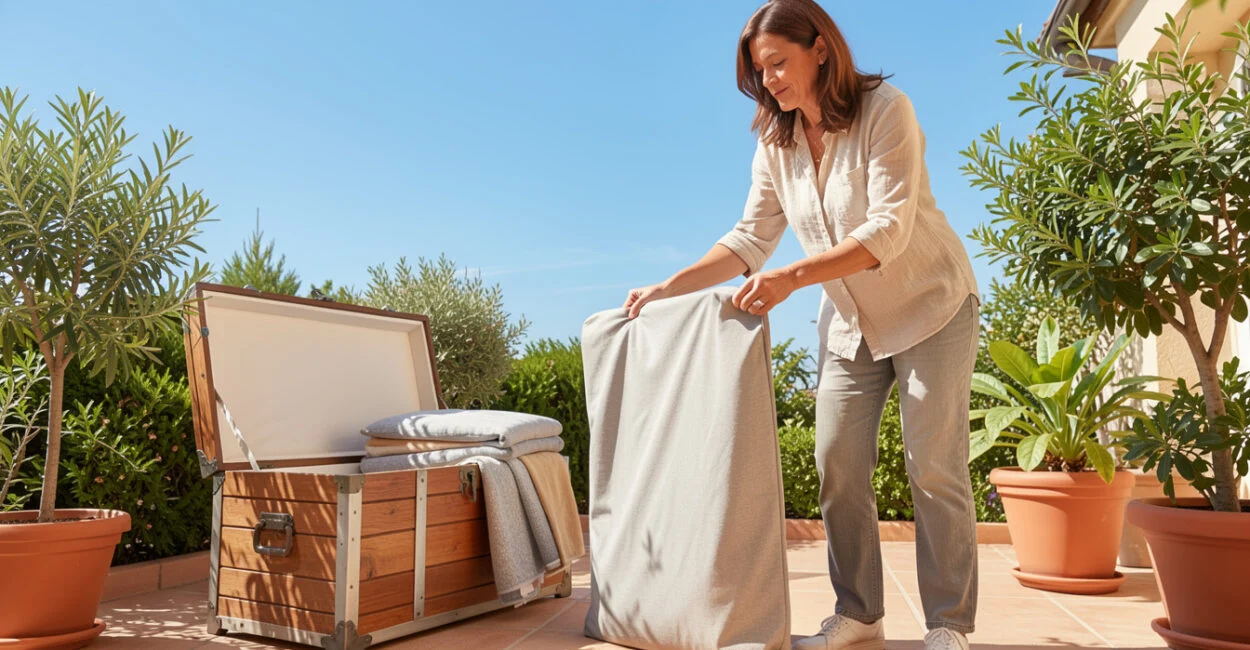 Air-drying cushions before seasonal storage
A cushion can feel dry on the surface while its foam core still holds water, which is why a sunny afternoon is not always enough before storage. To clean outdoor cushions, start with the care label, remove loose debris, and use the mildest suitable cleaning method. Rinse away detergent and let every part dry fully before putting cushions away.
Most routine dirt needs only a soft brush, mild soap, and water. Stains, mildew, and removable covers call for more care because fabrics, finishes, seams, and inserts do not all tolerate the same treatment.
How Do You Clean Outdoor Cushions Safely?
Clean outdoor cushions by checking the care label, brushing or vacuuming away loose debris, and washing the fabric with a compatible mild cleaner. Rinse thoroughly, then dry the cover and insert completely before use or storage. If the label gives different instructions, follow it; fabric type and cushion construction determine what is safe.
Work on a dry day with enough time for the cushion to air out. Remove the cover only if it is designed to come off, and keep the insert out of direct, prolonged sun while it dries. A cushion that feels cool or damp at a seam or zipper is not ready to store.
Cleaners and drying methods should match the whole cushion, not just the visible fabric.
What Should You Check on the Fabric and Care Label?
Before washing, identify the fabric, read its care instructions, and check whether the cushion has a removable cover, foam, or a fiber-filled insert. The label takes priority over general cleaning advice because outdoor fabrics may have coatings or finishes that ordinary laundering can damage.
Material or construction Suitable care to consider Acrylic outdoor fabric Use the manufacturer’s instructions; many fabrics can be cleaned with mild soap and water, but cover removal and machine washing depend on the label. Polyester or printed fabric Spot-test a mild cleaner first. Heat, vigorous scrubbing, or strong chemicals may affect color or finish. Removable cover Wash separately only if the label permits it; close zippers and use the stated water temperature and cycle. Foam or fiber insert Check its own care guidance. Some inserts can be rinsed, while others should only be spot-cleaned or professionally treated.
For branded acrylic fabric, compare the label with Sunbrella’s fabric-cleaning instructions. For general laundering symbols and garment-care principles, the American Cleaning Institute’s fabric-care guidance is a useful reference, though a cushion maker’s instructions still come first.
If you are refreshing an entire seating area, coordinate cushion care with your furniture’s material and finish. These weatherproof sofa and table picks for a deck offer ideas for the broader setup.

Can Outdoor Cushion Covers Go in the Washing Machine?
Outdoor cushion covers can go in a washing machine only when the care label says machine washing is allowed. A removable zipper is not proof that a cover is washable: some fabrics shrink, lose their finish, or distort around seams when laundered.
When the label permits machine washing, remove the cover, close its zipper, and use the recommended cycle, water temperature, and detergent. Avoid adding fabric softener unless the manufacturer allows it, since residue can interfere with water repellency. If the label is missing or unclear, hand-clean a small area first rather than guessing.
For hand-washing, mix a small amount of mild soap into cool or lukewarm water. Clean with a soft brush or cloth, working gently over the fabric; rinse until the water runs clear and no slippery soap residue remains. The outdoor seating layout can also affect how easily cushions can be removed and aired after cleaning.
How Do You Remove Stains, Mildew, and Odors?
To remove stains from outdoor cushions, blot fresh spills, lift solid material without grinding it into the weave, and test a compatible cleaner on a hidden spot before treating the stain. Avoid aggressive scrubbing, which can roughen fibers or spread a mark.
For mildew, brush off loose growth outdoors, then use only a cleaning solution approved for the fabric and follow its directions. Bleach is not universally safe: it may discolor fabric or weaken fibers, and some manufacturers allow specific bleach use only under controlled instructions. Do not mix bleach with other cleaners. If the label does not approve it, choose a labeled alternative or contact the manufacturer.
Persistent mildew can leave discoloration even after the growth is removed. The cause also matters: cushions stored damp, left in a humid spot, or placed against a surface that traps moisture may develop recurring odor or spotting. A cleaner cannot correct that storage condition.
A stain treatment is only as safe as its spot test and the fabric instructions behind it.
When arranging a patio for entertaining, choose a setup that lets cushions come off the seats for airing and cleaning; these backyard entertaining ideas can help with the layout.
How Should You Rinse and Dry Outdoor Cushions?
Rinse cleaned fabric until detergent is gone, then dry the cover and insert separately when the design allows. Leftover soap can attract dirt, while moisture trapped inside foam can encourage musty smells or mildew.
Stand cushions on edge or position them so air reaches both sides. Keep them in a well-ventilated, shaded area, turning them as needed. Follow any label guidance about sunlight or heat; direct sun can fade some fabrics, and high heat can damage covers or inserts.
A common mistake is to zip a cover over an insert that still feels damp at the corners. Seams and dense foam dry more slowly than the outer face, so check those areas by touch before reassembly. If a cushion remains wet inside, give it more time rather than relying on a dry-looking surface.
How Do You Store Outdoor Cushions Between Seasons?
Store outdoor cushions only when they are clean and completely dry, in a cool, dry place with airflow and protection from pests. A breathable storage bag or container is usually a safer choice than sealing damp cushions inside airtight plastic.
- Clean off soil and treat stains before storage, then let all components dry fully.
- Store covers and inserts separately if that improves airflow or the manufacturer recommends it.
- Keep cushions off a damp floor and away from leaks, condensation, and direct sunlight.
- Use a breathable cover, and check stored cushions from time to time for moisture or pests.
Should cushion inserts be stored separately from their covers? It depends on the maker’s instructions and the storage conditions. Separating them can help air reach both pieces, especially after cleaning, but do not pack either component away until fully dry. For a patio with outdoor rugs, keep their separate care needs in mind too; see these weatherproof rug styling ideas.
What Should You Do If Cushions Smell Musty After Storage?
Take musty cushions out of storage, separate covers from inserts where possible, and inspect them for dampness, visible mildew, or stains. Air them in a ventilated shaded area, then clean only as the care label allows and dry every layer completely before reassembling.
If the odor remains, or mildew has reached foam that cannot be cleaned safely, check the manufacturer’s advice before using stronger chemicals. Some odors and stains may not come out without damaging the fabric or insert. Replace an insert if it remains damp, visibly contaminated, or persistently musty after appropriate care.
Question Short answer Where do I start? Read the care label, then remove loose debris. Can I machine-wash a cover? Only when its label permits machine washing. Is bleach safe? Only if the fabric maker explicitly allows it. When can cushions be stored? After the cover and insert are fully dry. How can I prevent storage mildew? Use dry cushions, airflow, and protection from moisture.
Before putting cushions away, check the care label and inspect the slow-drying spots: seams, corners, and the center of the insert. If any part still feels damp, leave it out to dry; that simple check is the best first step toward a cleaner start next season.
📱 See this content as a Web Story
Frequently Asked Questions
Can I Use a Pressure Washer on Patio Cushions?
A pressure washer can drive water into seams and foam, damage fibers, or strip a fabric finish. Use it only if the cushion manufacturer specifically approves that method; a gentle hand-clean is the safer default.
Should I Clean Cushions Before Storing Them, Even If They Look Clean?
Yes. Dust, pollen, and small food residues can remain in the weave and attract pests or contribute to odor while cushions sit unused. Brush or vacuum them and spot-clean visible marks before storage.
How Often Should Outdoor Cushions Be Cleaned?
Brush or shake off loose debris as it collects, and clean spills promptly. Do a fuller wash when the fabric is visibly soiled or before seasonal storage, following the label rather than a fixed schedule.