
How to Clean a Mattress and Remove Common Household Stains
How to clean a mattress safely: check care labels, vacuum thoroughly, spot-treat stains with appropriate products, and ensure complete drying to avoid damage…
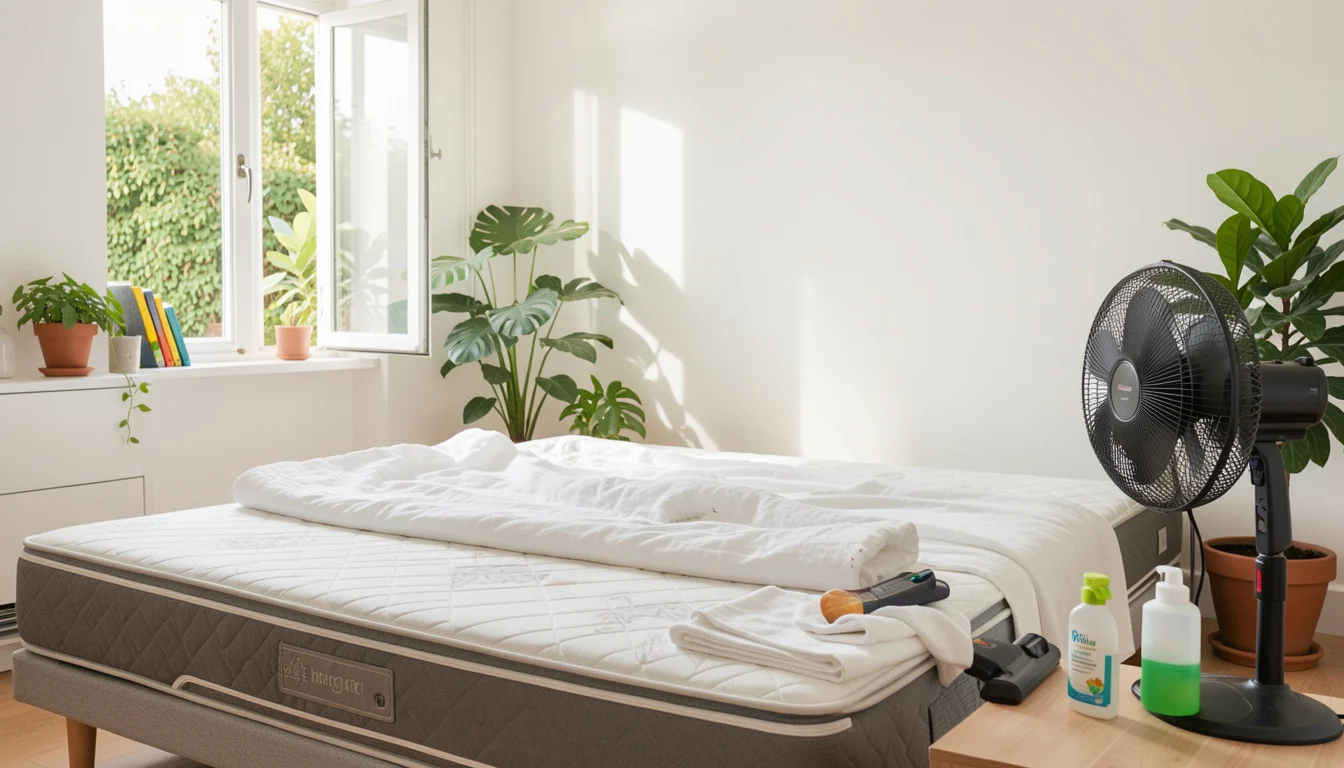 Spot cleaning a mattress carefully
A spilled drink or a pet accident can leave a mattress smelling worse after a well-meant cleanup. To clean a mattress safely, remove bedding, vacuum the surface, and treat only the affected area with a small amount of a product approved for its materials. The safest method depends on the care label: too much moisture or heat can damage some mattresses or leave them slow to dry.
Routine care is usually dry and light. For stains, blot first, spot-test any cleaner, and avoid soaking the foam or upholstery. If a stain has reached deep into the mattress or the odor persists, home treatment may not be enough.
Before You Start
- Check the mattress care label and manufacturer’s cleaning instructions.
- Identify the surface material, such as knit fabric, wool, latex, or memory foam.
- Gather a vacuum with an upholstery attachment, clean cloths, and a suitable cleaner.
- Open a window or run a fan, and choose a spot where the mattress can dry fully.
How to Clean a Mattress: The Basic Steps
To clean a mattress, strip the bed, vacuum the entire surface, and spot-clean stains with a material-compatible product used sparingly. Blot rather than scrub, then let the mattress dry fully before replacing the bedding. Follow the manufacturer’s care instructions first; they take precedence over general cleaning advice because mattress covers and fills vary.
- Remove the bedding. Wash sheets and the mattress protector according to their labels. If there is a fresh spill, lift off the bedding without dragging it across the mattress.
- Vacuum slowly. Use an upholstery attachment on the top, sides, seams, and creases. A slow pass helps collect dust and loose debris that can be missed with a quick sweep.
- Spot-treat marks. Blot fresh liquid with a dry cloth. Apply a small amount of an approved cleaner to a cloth, not directly to the mattress, unless the product directions say otherwise.
- Dry before making the bed. Keep the mattress uncovered in a ventilated room until the treated area feels dry. Check seams and tufted areas, where dampness can linger.
A common mistake is to pour cleaner onto the stain. That can push liquid deeper into the fill, making drying harder and spreading the mark. The surface may look dry while the padding underneath remains damp.
Check the Label, Materials, and Cleaner First
The care label and manufacturer’s instructions are the best guide to which cleaning methods are safe for a specific mattress. Before using a product, check its label for compatible materials, follow the dilution and application directions, and test it on a hidden area. A color change, sticky feel, or altered texture is a reason to stop.
Mattress covers and fills differ. Memory foam and latex can be sensitive to excess moisture, while wool or specialty fabrics may have restrictions on detergents, agitation, or heat. Even a removable cover may have different care requirements from the mattress core, so confirm that it is designed to come off before unzipping it.
Keep the room ventilated while cleaning, and do not mix products. The U.S. Environmental Protection Agency’s guidance on mold explains why controlling moisture and drying damp materials matter. If a mattress has stayed wet or develops a musty smell, continued spot treatment may not solve the underlying problem.
Remove Common Mattress Stains and Odors
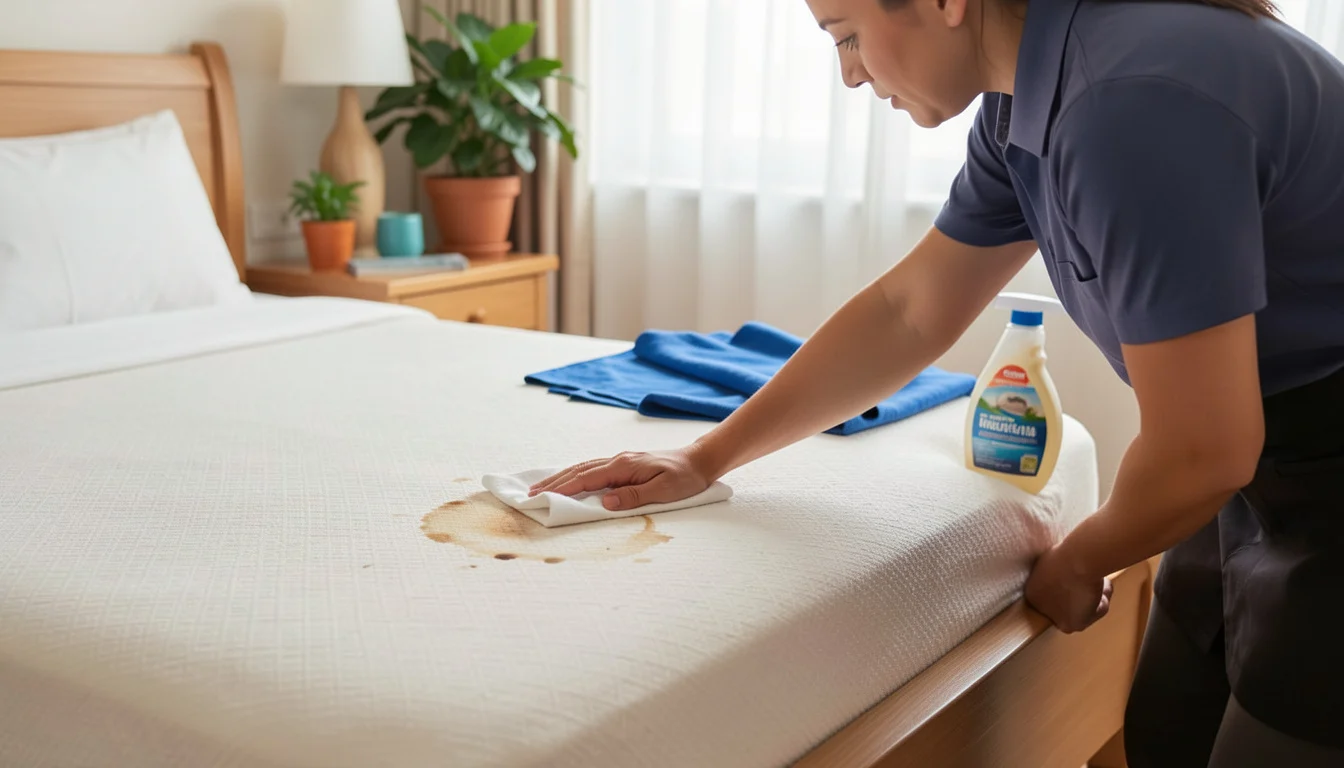
For most stains, remove as much liquid or residue as possible before applying a cleaner. Blot from the outside of the mark toward its center to limit spreading, and avoid hard scrubbing, which can rough up the cover or work residue into the padding.
Stain or odor Cautious approach Urine Blot fresh liquid, then use a compatible enzyme cleaner according to its label. Avoid soaking; allow the treated area to dry completely. Blood Blot with a cool, damp cloth, then spot-test a fabric-safe cleaner. Avoid hot water, which can set protein-based stains. Coffee or other drinks Blot promptly, then use a small amount of a suitable upholstery cleaner. Work from the edge inward. Body oil or makeup Lift away residue without rubbing. Use a cleaner approved for the mattress cover and follow its directions. General stale odor Vacuum the surface and ventilate the room. If the care instructions allow it, a light dusting of baking soda can be vacuumed up after it sits; keep powder away from seams and damp areas.
How to Clean a Mattress That Has Been Peed On
Blot urine immediately, apply a mattress-compatible enzyme cleaner as directed, and use only enough liquid to treat the affected area. Enzymes help break down organic residues that can contribute to lingering odor, but the product needs the contact time specified on its label. Blot again if directed, then let the mattress dry all the way through before covering it.
For dried urine, avoid repeatedly wetting the same spot in an attempt to remove the odor. A persistent smell can mean residue has penetrated beyond the cover, where surface treatment may not reach it. For pet accidents, these pet stain cleaning steps offer related guidance on choosing a careful approach.
The American Cleaning Institute’s stain-removal guidance supports matching the treatment to the stain and checking product directions. No cleaner can guarantee removal from every mattress; results depend on the stain, its age, and the materials beneath the cover.
Choose Mattress Cleaners and Tools with Care
A vacuum is the lowest-moisture tool for routine upkeep. A mattress cleaner spray can help with a localized mark if its label permits use on the mattress fabric, but spraying broadly adds moisture without a clear benefit. Apply cleaner to a cloth when the instructions allow it, and never assume a product labeled for upholstery is safe for every mattress.
Can You Use a Steam Cleaner on a Mattress?
Use a steam cleaner only if the mattress manufacturer explicitly allows it. Steam adds heat and moisture, which can harm some foam, adhesives, or covers and may leave the interior damp; a mattress cleaner steamer is not a safe default for routine cleaning.
A mattress cleaner machine that sprays and extracts liquid can also leave more moisture than a spot treatment. Use one only when both the machine instructions and mattress care guidance permit it, and when you can dry the mattress promptly. A mattress cleaner vacuum that only vacuums is a different tool from a wet-cleaning or extraction machine, so check what the device actually does.
For mild odor, start with ventilation and vacuuming rather than layering on fragrance. If you use baking soda, confirm that the manufacturer permits it and vacuum it up thoroughly; powder left in seams may be difficult to remove. For related advice on reducing household smells, see ways to freshen rooms without harsh sprays.
When to Hire a Professional Mattress Cleaner
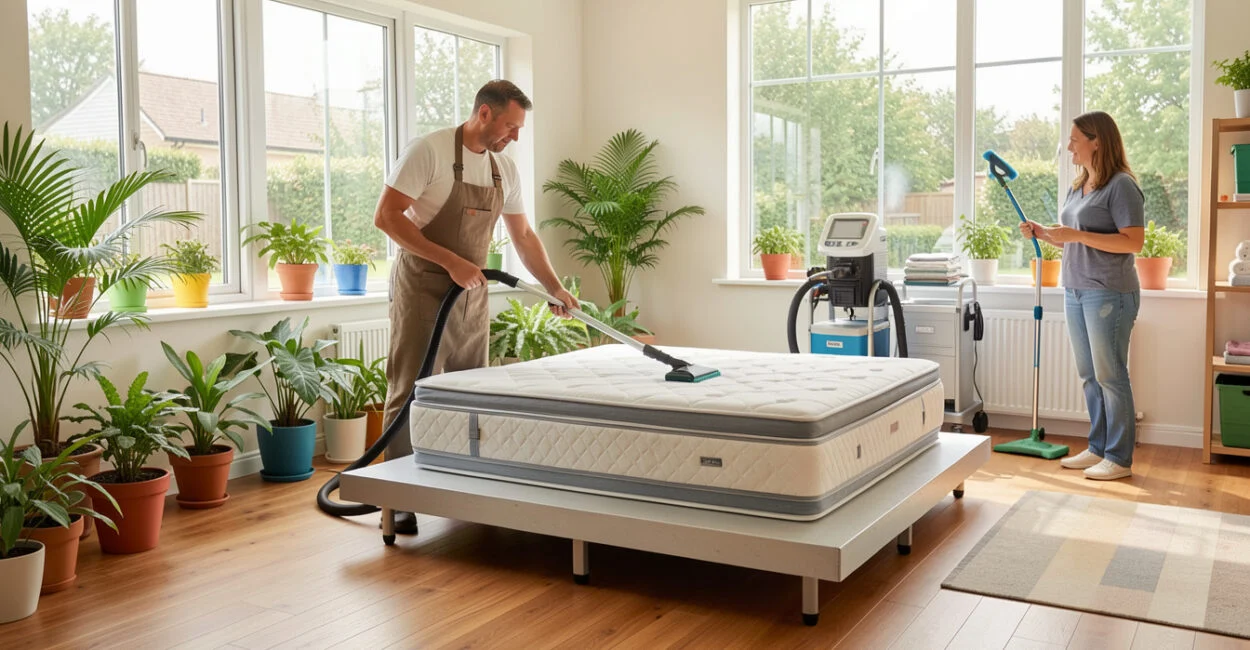
A professional mattress cleaner may be worth considering when a stain has spread into the padding, urine odor returns after the mattress dries, or the manufacturer’s instructions rule out the methods you can use at home. Ask what process the service uses, how much moisture it applies, and how long drying is expected to take.
Professional service is not a guarantee that an old stain or deep odor will disappear. Tell the cleaner the mattress type and what products have already been applied; previous treatments can affect the next method. If contamination is extensive or the mattress remains damp and musty, ask whether cleaning is appropriate or replacement is the safer option.
Dry and Protect the Mattress
Let the mattress dry completely before putting on sheets or a protector. Keep it uncovered in a well-ventilated room, and use a fan to move air across the surface if needed. Do not use a hair dryer or heater unless the manufacturer permits it; concentrated heat can damage fabric or foam.
Once dry, fit a washable mattress protector that matches the manufacturer’s guidance. Wash it after spills and on a schedule suited to household use. A protector can reduce how much liquid reaches the mattress, but it does not make the mattress stain-proof.
Set a Practical Cleaning Schedule and Avoid Common Mistakes
There is no single cleaning interval that fits every home. Vacuum during routine bedding changes when dust or debris is visible, spot-clean spills as soon as possible, and wash bedding and the protector according to their care labels. Homes with pets, allergies, or frequent spills may need more frequent attention.
Skip soaking, aggressive scrubbing, unapproved steam, and heavy fragrance sprays. These methods can spread stains, damage a cover, or leave moisture trapped inside. If a treatment makes the fabric feel tacky or changes its color, stop and check the product and mattress instructions before trying anything else.
For the next cleanup, start with the label and identify the stain before choosing a product. That small decision helps avoid turning a manageable surface mark into a wet, slow-drying mattress.
📱 See this content as a Web Story
Frequently Asked Questions
Can I Flip My Mattress After Cleaning It?
Only if the manufacturer designed it to be flipped. Many mattresses have a designated top side; rotating one head-to-foot may be allowed even when flipping is not.
Should I Use a Scented Spray to Cover Mattress Odor?
A fragrance can mask an odor without removing its source, and some sprays may leave residue. Ventilate and vacuum first, then treat the cause only with a product allowed by the care instructions.
Can I Put a Mattress Cover in the Washing Machine?
Only if the cover is removable and its label says it is machine-washable. Do not remove a cover that the manufacturer says should stay on the mattress.
What Should I Do If a Cleaned Area Still Feels Damp?
Leave the mattress uncovered and improve airflow until the area is dry. If dampness persists or a musty odor develops, stop adding cleaner and consult the manufacturer or a qualified professional.