
How to Clean an Oven Safely and Remove Stubborn Grease
How to clean an oven safely: identify your oven type, choose approved cleaners, protect surfaces, and allow time to loosen grease without damaging finishes.
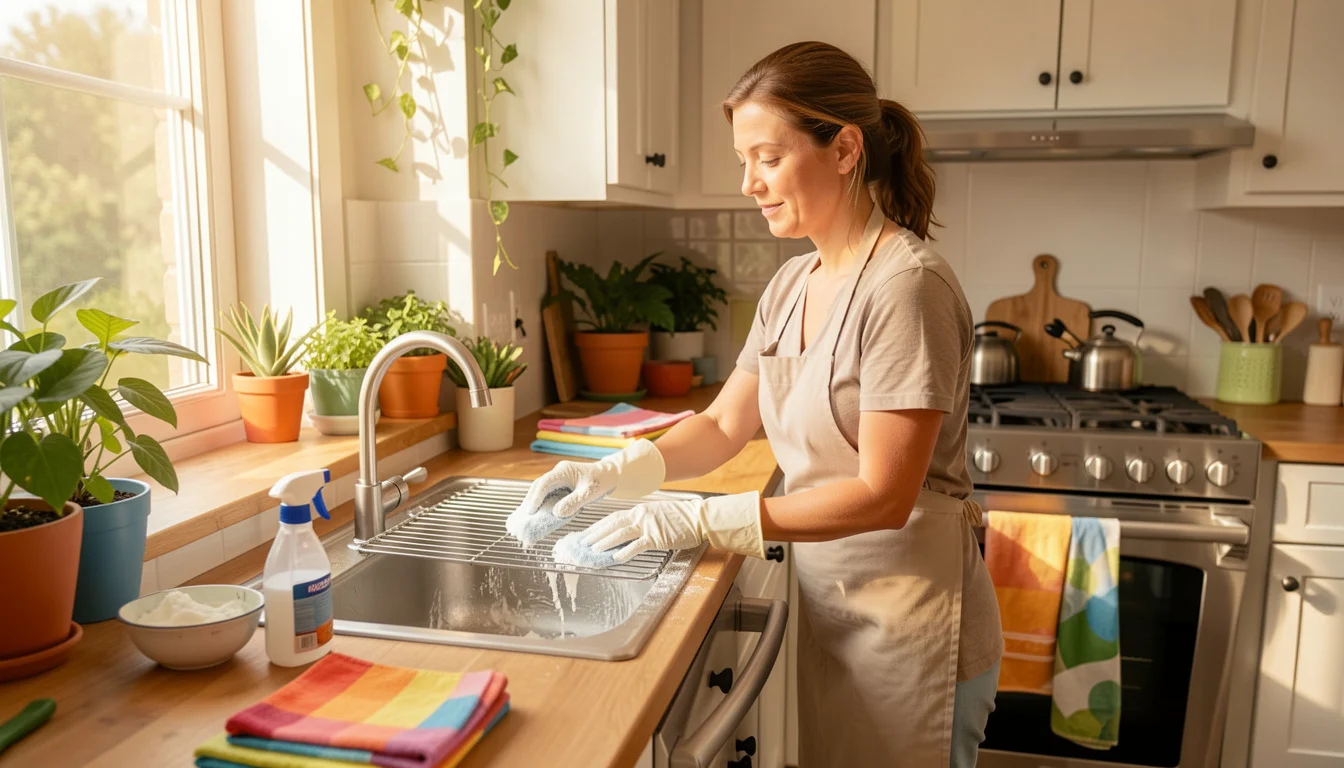 Safely wiping away baked-on oven grease
A layer of baked-on grease can turn a quick oven wipe into a stubborn scraping job, especially when residue has been heated repeatedly. To clean an oven safely, first identify its cleaning cycle and interior surfaces, then choose a method the owner’s manual allows. Baking soda paste suits many routine messes; a labeled commercial oven cleaner may work better on heavy grease.
The safest approach depends on the appliance. Self-cleaning, steam-cleaning, and standard ovens have different restrictions, and a cleaner that is suitable for one may damage another. Check the manual before applying anything.
Give the cleaner time to loosen residue rather than trying to force it off with a sharp scraper. That small adjustment helps protect the oven’s finish.
How Do You Clean an Oven Safely?
Turn the oven off and let it cool completely, remove loose crumbs and racks, and check the manual before choosing a cleaner. Protect your hands, ventilate the room, and keep products away from heating elements, vents, door seals, and any surface the manufacturer restricts. Wipe away all residue and let the interior dry before using the oven again.
- Confirm whether the oven is standard, self-cleaning, or steam-cleaning.
- Use either a compatible commercial product or a mild baking-soda paste, never a mixture of cleaners.
- Follow the product label and your appliance manual, especially for rack and door instructions.
An oven’s interior coating and cleaning system determine which methods are safe. Self-cleaning uses high heat to burn off food residue; steam-cleaning uses moisture and a shorter, lower-temperature cycle. Neither feature means that every part can tolerate a store-bought cleaner or soaking.
What Should You Check Before Cleaning the Oven?
Read the owner’s manual first, because it identifies surfaces and parts that must stay dry or free of cleaner. If the manual is missing, look up the model number on the manufacturer’s website before using a chemical cleaner or starting a cleaning cycle.
Open a window or run the kitchen exhaust fan, and wear gloves if using a product that calls for them. Keep children and pets out of the work area while cleaner is open or applied. The National Capital Poison Center’s guidance on cleaning products is a useful reference for avoiding exposure and responding to accidental contact.
Protect nearby flooring and cabinets from drips. Avoid spraying controls, vents, the oven light, door gasket, and heating elements. A door gasket is the flexible seal around the oven opening; cleaner or scrubbing there can affect its fit and function.
For households with pets, product choice and storage matter beyond the oven itself. These pet-safe cleaning practices offer broader precautions for keeping cleaning products away from animals.
Which Oven Cleaner Should You Choose?
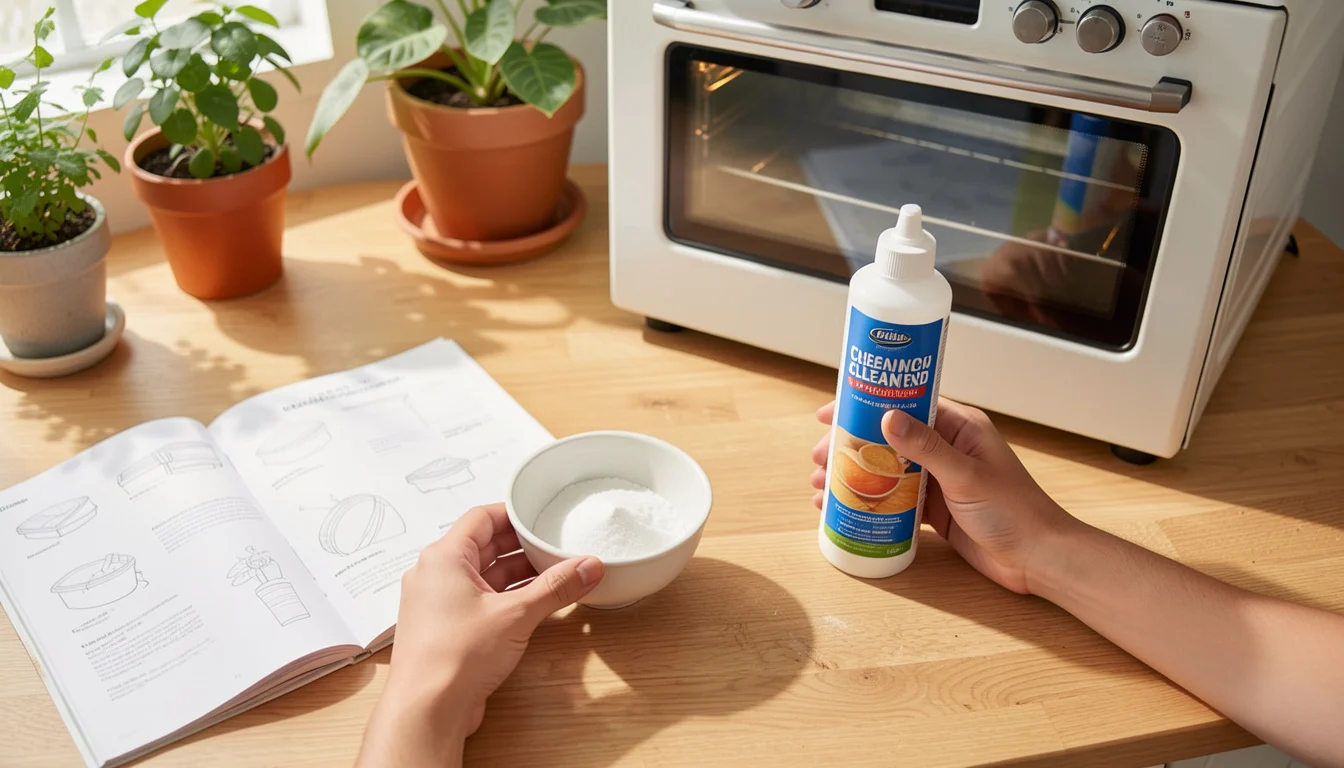
Choose baking soda for light-to-moderate soil when the manual permits it; choose a commercial oven cleaner for heavier buildup only when both the label and appliance instructions allow its use. A product’s strength does not override restrictions on a particular oven finish.
Method Best suited to Effort and precautions Baking soda paste Routine residue and moderate grease Needs several hours to dwell and some wiping; keep it off restricted parts. Commercial oven cleaner Stubborn grease, if approved for the oven Follow label timing, ventilation, protective gear, and residue-removal directions. Self-clean or steam cycle Ovens with the matching built-in feature Use the manual’s cycle instructions; these features are not interchangeable.
The EPA’s Safer Choice product directory can help identify products assessed against its ingredient criteria. That designation does not mean a product is safe for every oven surface, so confirm appliance compatibility separately. If you want a lower-chemical routine for the rest of the kitchen, these counter-cleaning habits can help keep everyday messes from spreading.
The oven manual sets the limits; the cleaner label sets the directions.
How Do You Clean an Oven with Baking Soda and Vinegar?
To clean an oven with baking soda, spread a thin paste over the soiled interior and let it sit for several hours or overnight, then wipe it away with a damp cloth. Vinegar is optional: it can help loosen remaining baking-soda film, but it does not make the method stronger by neutralizing grease.
- Mix baking soda with enough water to make a spreadable paste.
- With the oven cool, apply it to stained interior surfaces, avoiding elements, vents, the door seal, and any area the manual excludes.
- Leave the paste for several hours, checking the manual if the interior coating has specific care rules.
- Wipe with a damp cloth, rinsing the cloth often. Use a small amount of vinegar on the cloth only if a white baking-soda haze remains, then wipe again with clean water.
Baking soda is generally safe on compatible oven surfaces when used as a paste and removed fully. It can leave a chalky residue in corners or around seams if the cloth is too dry; use a fresh damp cloth rather than scraping with metal. Vinegar and baking soda fizz when combined, but the reaction does not create a more powerful cleaner. Do not combine either with bleach, ammonia, or commercial oven cleaner.
For example, a spill of bubbling cheese on the oven floor may soften after a baking-soda paste sits overnight. Wipe the softened residue with a damp cloth the next morning. If a dark, hardened ring remains, switch to a compatible labeled cleaner rather than grinding at the coating.
Can You Use Oven Cleaner on a Self-Cleaning Oven?
Only if the appliance manual and cleaner label both permit it; many self-cleaning ovens restrict commercial oven cleaners on the interior. These models often use a special finish, and applying an incompatible product can damage it.
Use the self-clean cycle only as directed, including guidance about removing racks, ventilating the room, and keeping the oven door closed. A steam-clean cycle is a separate feature with its own steps. Do not treat steam-cleaning as a substitute for high-heat self-cleaning, or run either cycle on a visibly damaged oven without checking the manufacturer’s guidance.
How Do You Remove Stubborn Grease and Clean Oven Racks?
For stubborn grease, use a commercial oven cleaner only when its label and the oven manual approve the intended surface. Apply it exactly as directed, with ventilation and protective gear, then remove the product fully according to the label before cooking.
Avoid the common mistake of spraying a cleaner across the whole cavity, including the fan opening or door seal. Cleaner can collect in restricted areas, where wiping may not remove it; target only approved surfaces and use a cloth or applicator if the label allows. If baked-on grime persists after the specified dwell time, repeat only if the instructions permit, or contact the manufacturer rather than using a metal scraper.
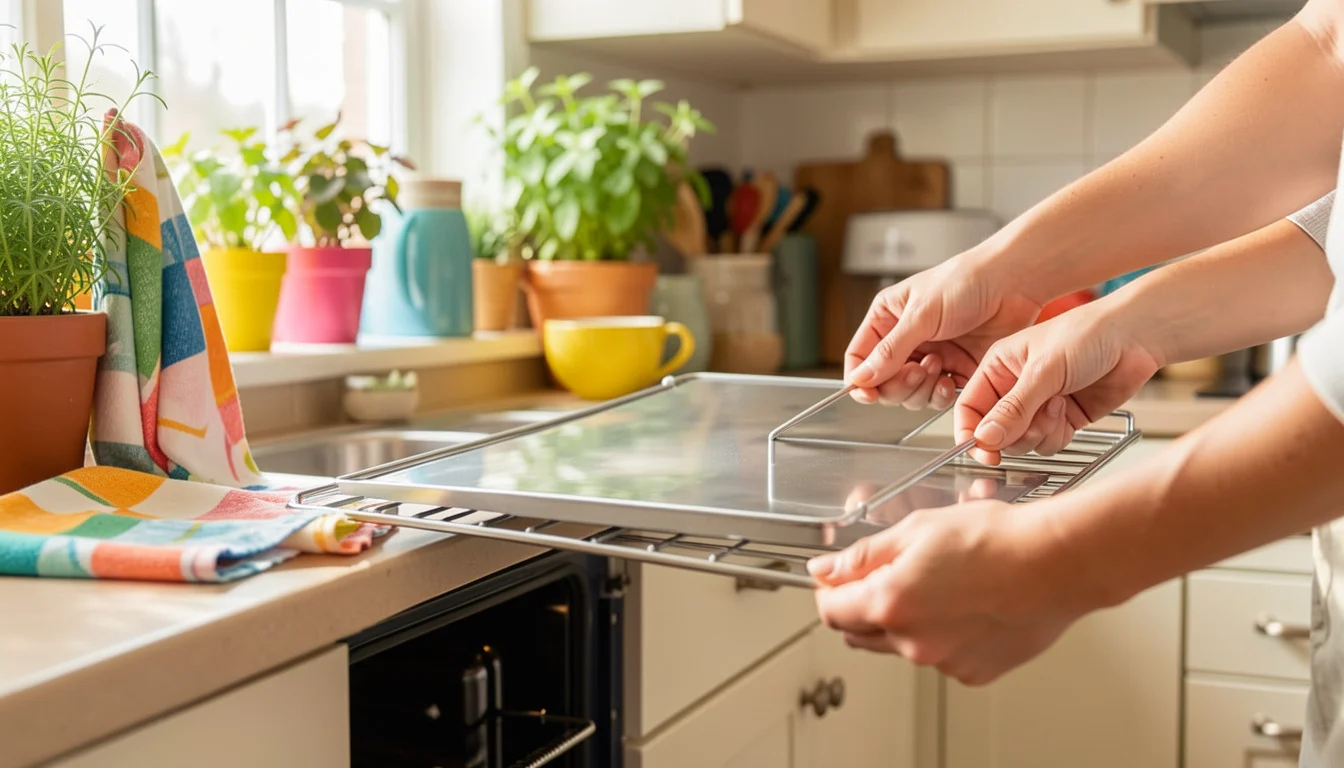
Clean racks separately, since some manuals prohibit leaving them in during a self-clean cycle and some rack finishes should not be soaked. Let racks cool, remove loose debris, and wash them with warm water and dish soap if the manufacturer permits. For grease that remains, use a compatible cleaner in a ventilated area, rinse thoroughly, and dry before replacing them. For ways to manage recurring messes elsewhere, see these practical kitchen and home cleaning routines.
There is no universal low-scrub method for every level of baked-on soil. Dwell time can soften residue, but severely carbonized grease may need repeated approved treatment or professional advice.
How Do You Finish and Keep Buildup from Returning?
Wipe the interior with clean, damp cloths until no cleaner or loosened residue remains, then dry the surfaces and racks before using the oven. If cleaner residue remains, it may smoke or produce an odor when heated, so check the product directions before cooking.
Clean fresh spills once the oven is completely cool, using a damp cloth and a compatible mild cleaner. Avoid wiping a hot oven or pouring liquid onto hot surfaces, which can cause burns or damage. A quick check after messy cooking is easier than removing residue that has been baked on repeatedly.
How often to clean depends on how often the oven is used and what spills inside; clean when residue or smoke appears rather than relying on a fixed calendar. Use the manual’s instructions to decide whether a built-in cleaning cycle is appropriate.
Question Short answer Which method for routine soil? Use baking soda paste if the manual allows it. What about heavy grease? Use a compatible commercial cleaner exactly as labeled. Can cleaner go on a self-cleaning oven? Only when the manual and product label both approve it. How often should you clean? When spills, residue, or smoke call for it; usage varies. What prevents residue? Wipe thoroughly with clean water and dry before cooking.
Start by finding the oven’s model number and checking the owner’s manual for its cleaning restrictions. Then match the method to the mess: baking soda for manageable residue, or an approved commercial product for heavier grease.
📱 See this content as a Web Story
Frequently Asked Questions
Can a Freshly Cleaned Oven Smell When It Heats?
A mild odor may come from remaining cleaner or loosened residue. Turn the oven off, let it cool, and wipe the interior again; follow the product label if the smell continues.
Can You Use a Metal Scraper on Baked-On Spots?
Only if the manufacturer specifically permits the tool on that surface. Metal can scratch enamel or a specialty coating, so use a damp cloth and an approved cleaning method first.
Should Oven Racks Go Through the Self-Clean Cycle?
Check the manual; some manufacturers direct users to remove racks because high heat can discolor them or affect how they slide. Clean them separately if instructed.
Can You Use Dish Soap Inside the Oven?
A small amount on a damp cloth may be suitable for light residue if the manual allows it. Wipe with clean water afterward so soap film does not remain.
What Should You Do If Oven Cleaner Gets on the Door Seal?
Follow the product label and appliance manual for cleanup. Avoid scrubbing or pulling at the gasket, and contact the manufacturer if the seal looks damaged or cleaner has entered a restricted area.
Can You Run the Oven Immediately After Wiping It?
Wait until the interior is dry and the cleaner’s label permits use. If any product residue or odor remains, wipe again before heating the oven.