
How to Stop Resource Guarding in Dogs with Positive Training
How to safely address resource guarding in dogs: prevent triggers, use positive training below tension thresholds, and manage risks with expert guidance when…
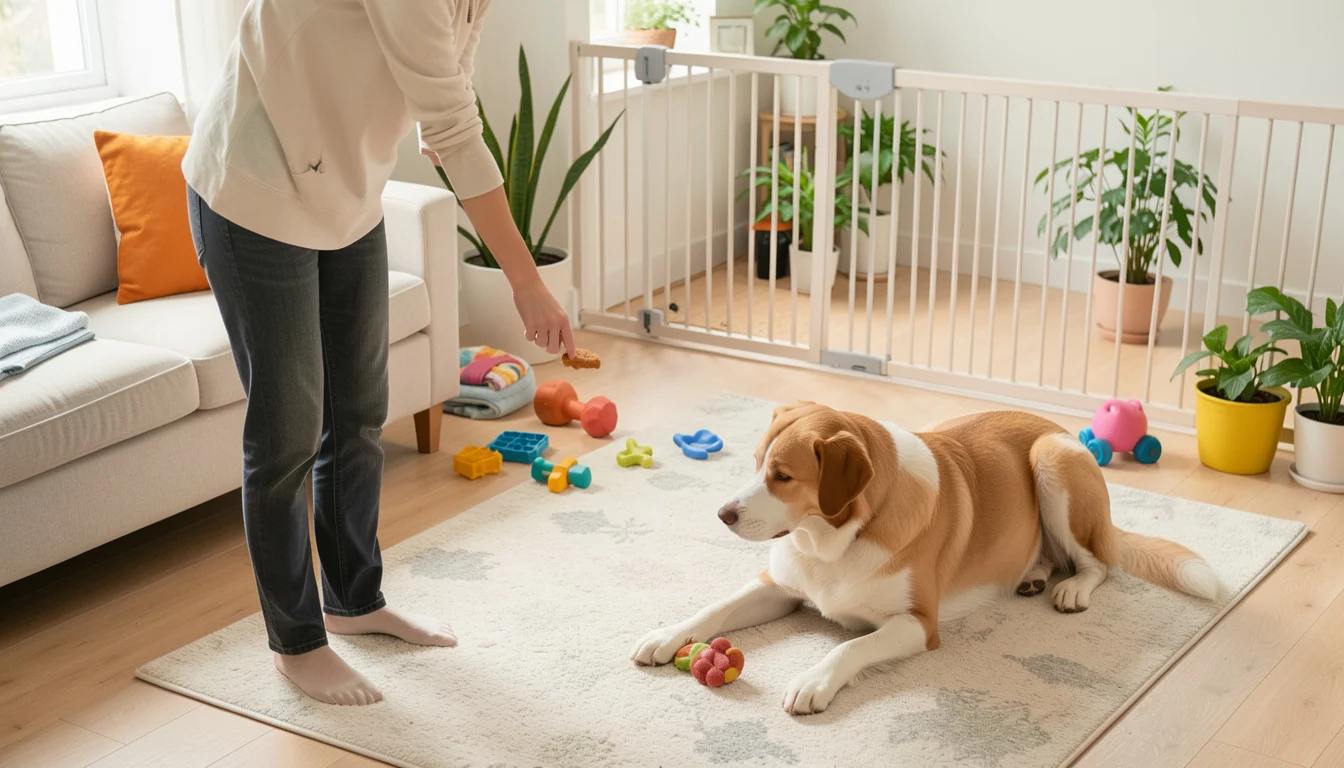 Rewarding calm around a valued chew
How to Stop Resource Guarding in Dogs With Positive Training
Your dog freezes over a chew, and the room suddenly feels tense. To stop resource guarding, first prevent close calls, then teach your dog that a person approaching predicts something good rather than a loss. Work below the point where your dog stiffens or growls, and get qualified help if there is bite history, escalation, or a child at risk.
Resource guarding can involve food, toys, stolen objects, resting places, or even a person. Progress varies: some dogs become much more comfortable, while others need lifelong management around particular items or situations.
Before You Begin
- Identify the resources and situations your dog guards without deliberately testing their reaction.
- Set up barriers or separate rooms so people and other pets can stay at a safe distance.
- Choose high-value treats your dog can eat readily, and practice only when the dog is relaxed.
- Keep children out of the training area; they should never take part in exercises.
What Resource Guarding Looks Like—and How to Stop It Safely
Resource guarding is behavior a dog uses to keep control of something it values when another person or animal approaches. It can include eating faster, hovering over an item, turning away, freezing, showing teeth, growling, snapping, or biting. These signals vary between dogs, and a dog may show little warning before a bite.
A growl over food is useful information: the dog is uncomfortable and needs more distance. It is not proof that the dog is being spiteful or trying to dominate anyone. Punishing the warning can suppress the growl without changing the underlying fear or concern, making the next signal harder to recognize.
Guarding can also involve beds, couches, doorways, or a person’s lap. The ASPCA’s guidance on aggression and guarding in dogs describes how these behaviors can appear in different contexts, not only around a food bowl.
Make the Setup Safer Before Training
Management prevents practice of the behavior and lowers the chance of a bite while you decide what training is appropriate. Use a physical barrier when needed; a verbal reminder to “leave it” is not a safety plan if the dog is already guarding.
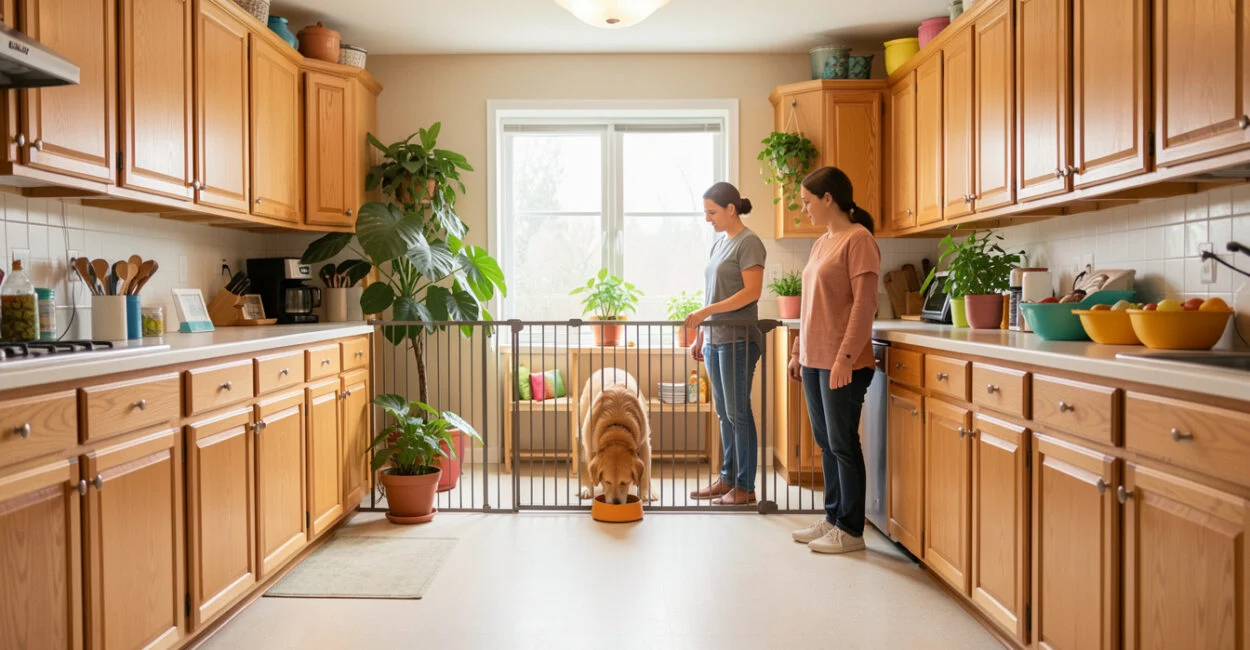
- Feed dogs in separate rooms or behind secure gates, and pick up bowls only after the dogs have left the area.
- Give chews and valued toys only where the dog can enjoy them without people or other pets approaching.
- Keep children away from a dog that is eating, chewing, resting, or holding an item. Use doors or gates, not supervision alone.
- Store tempting household items out of reach to reduce the chances of a dog stealing them.
- Do not reach into the dog’s space to retrieve a guarded object. If a dangerous item is involved, keep others away and contact a veterinarian or qualified behavior professional for case-specific advice.
For homes with multiple pets, enrichment should not mean sharing a scarce resource. Separate feeding and play areas can help prevent competition; for general ideas about providing indoor activities, see this guide to indoor cat enrichment in small spaces. The article is about cats, so use it for activity ideas only, not as dog behavior advice.
Build a Positive Association Gradually
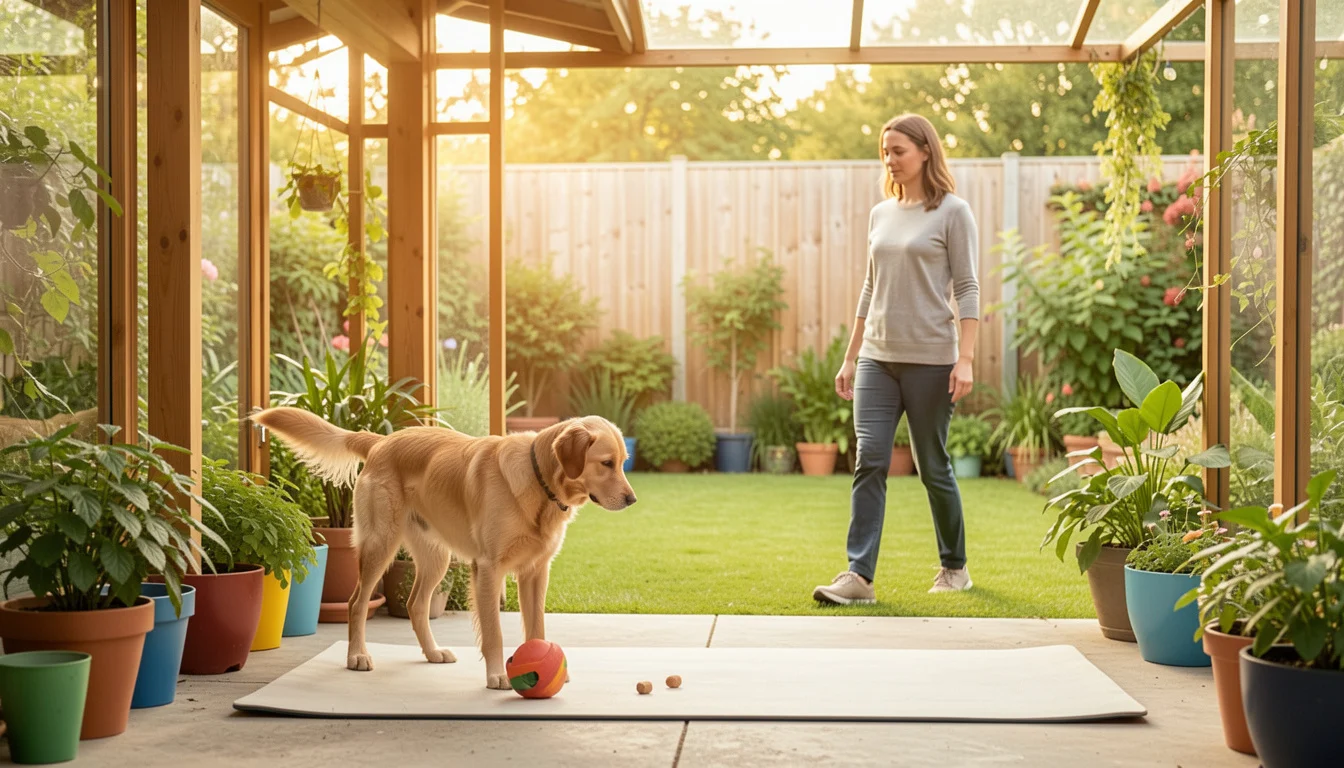
For mild cases with no bite history, a reward-based approach can teach the dog that a person appearing near a resource predicts an added benefit. Start at a distance where the dog remains loose and comfortable. Toss a high-value treat toward the dog, then move away; do not reach for the resource or stay close to see what happens.
- Choose a low-risk setup. Work with a familiar, low-value item in a quiet area, with no other pets or children present. If food is the trigger, use a professional’s guidance rather than starting by approaching the bowl.
- Find a comfortable distance. The dog should be able to notice you and still eat or engage normally. A fixed number of feet does not suit every dog; body language determines the distance.
- Pair your appearance with a treat. Briefly appear, toss the treat so it lands near the dog without making the dog choose between you and the resource, then leave.
- Repeat only while the dog stays relaxed. Over multiple short sessions, and only if the dog remains comfortable, adjust one small detail at a time, such as distance. Do not move closer simply because the dog has tolerated a few repetitions.
- Pause at the first sign of tension. A closed mouth, sudden stillness, hard stare, faster eating, or a growl means the setup was too difficult. Stop, create more distance, and reassess before trying again.
Success means the dog stays relaxed and can take the treat without guarding more intensely. It does not mean the dog lets someone touch the bowl. The American Veterinary Society of Animal Behavior’s humane training position supports reward-based methods and advises against aversive approaches.
Example: A dog stiffens when someone walks toward a chew. The person stops at a distance where the dog can still chew comfortably, tosses a treat, and leaves. If the dog freezes or guards harder, the person increases distance and ends the session; they do not repeat the approach to “get the dog used to it.”
Teach “Trade” and “Drop It” Without Taking by Force
A trade game for dogs teaches that releasing an item can lead to a worthwhile reward. Practice first with a low-value toy the dog is not guarding; do not use the guarded food bowl, a stolen object, or a prized chew as the first lesson.
Offer a treat near the toy, wait for the dog to release it, then mark the release with a calm word such as “yes” and give the treat. In early practice, return the toy when safe. That return helps show the dog that a person’s approach does not always mean permanent loss. Add a “drop it” cue only after the dog readily releases the toy when offered a reward.
If the dog does not release the item, do not pry its mouth open or keep escalating the offer while crowding the dog. End the exercise, make the setup easier next time, and consider professional support if the dog guards the practice item.
Adjust the Plan to the Resource
Resource
Safer management
Training consideration
Food
Feed in a quiet, separate area; keep people and other pets away.
Do not touch the bowl or add food by reaching over the dog. For food aggression in dogs, seek help if the dog stiffens, growls, snaps, or has bitten.
Toys or chews
Offer valued items in a low-traffic space and put them away when the dog is elsewhere.
Teach trades with a different, low-value toy first. Never test whether the dog will surrender a favorite item.
Stolen items
Prevent access to common targets and keep people back if the dog has one.
For a harmless item, a treat toss may encourage the dog to move away so an adult can retrieve it. Do not chase, corner, or grab. A hazardous item needs veterinary guidance.
Resting places
Give the dog a quiet bed and route people around it; use a gate if needed.
Teach a voluntary “go to your mat” cue away from the guarded location. Do not pull the dog off a bed or disturb it to check its reaction.
Know When Professional Help is Needed
Involve a veterinarian and a qualified behavior professional if your dog has bitten, snapped, lunged, guards multiple resources, or shows behavior that is becoming more intense. Guarding around children is not safe to work on at home: separate the child and dog, and arrange professional guidance before attempting training.
A veterinarian can check for pain or medical changes that may affect behavior. For behavior support, look for a board-certified veterinary behaviorist or a credentialed, reward-based professional experienced with aggression and guarding; ask what methods they use and how they manage bite risk. The American College of Veterinary Behaviorists provides information about veterinary behaviorists.
A professional can help assess risk, set a safe starting distance, and decide whether a training plan is suitable for the household. Remote advice may not be enough when a dog has a bite history or children are present; the plan depends on the dog, the home, and the severity of the behavior.
Handle Setbacks Without Raising the Risk
If guarding returns, assume the setup was too hard or something changed; do not treat the setback as defiance. A new location, a more valuable chew, another pet nearby, pain, or a person moving too close can push a dog past its comfort threshold.
Common mistakes include advancing after only a few calm repetitions, repeatedly approaching to “check progress,” and taking food or toys away to show who is in charge. Those actions can teach a dog that people predict loss or pressure. Reduce the difficulty, restore distance, and use management while you reconsider the plan.
Complete resolution is not guaranteed. Some dogs improve enough to handle ordinary routines comfortably, while others still need separation around particular resources. Long-term management is a responsible outcome when it keeps the dog and household safe.
Your first step is to write down what the dog guards, who is nearby, and what the dog does before escalation, without recreating the situation. Then put barriers and separate routines in place; if there has been a bite, the behavior is escalating, or a child is involved, contact a veterinarian and qualified behavior professional before training.
📱 See this content as a Web Story
Frequently Asked Questions
Can a Dog Develop Resource Guarding After Years Without It?
Yes. A change in health, pain, household routine, or access to a valued resource can affect behavior. A sudden change warrants a veterinary check, particularly if the dog also seems uncomfortable or behaves differently in other situations.
Should I Keep a Hand in My Dog’s Bowl to Prevent Guarding?
No. Reaching into the bowl can make meals more stressful and does not teach the dog that people near food are safe. Feed without interruption and use a professionally guided plan if the dog shows guarding behavior.
Will a Basket Muzzle Solve Resource Guarding?
A properly fitted basket muzzle can be one part of a safety plan for some dogs, but it does not change the dog’s feelings about a resource or replace management and training. Introduce it gradually with rewards; never use it to justify approaching or taking a guarded item.
How Long Does Resource Guarding Training Take?
There is no reliable fixed timeline. Progress depends on the dog’s history, the trigger, the household setup, and whether the dog can stay below its stress threshold during training.