
Flying with a Cat: How to Prepare for Air Travel
Factors to consider before flying with your cat: airline and destination rules, your cat’s health, travel conditions, and when to postpone or choose alternat…
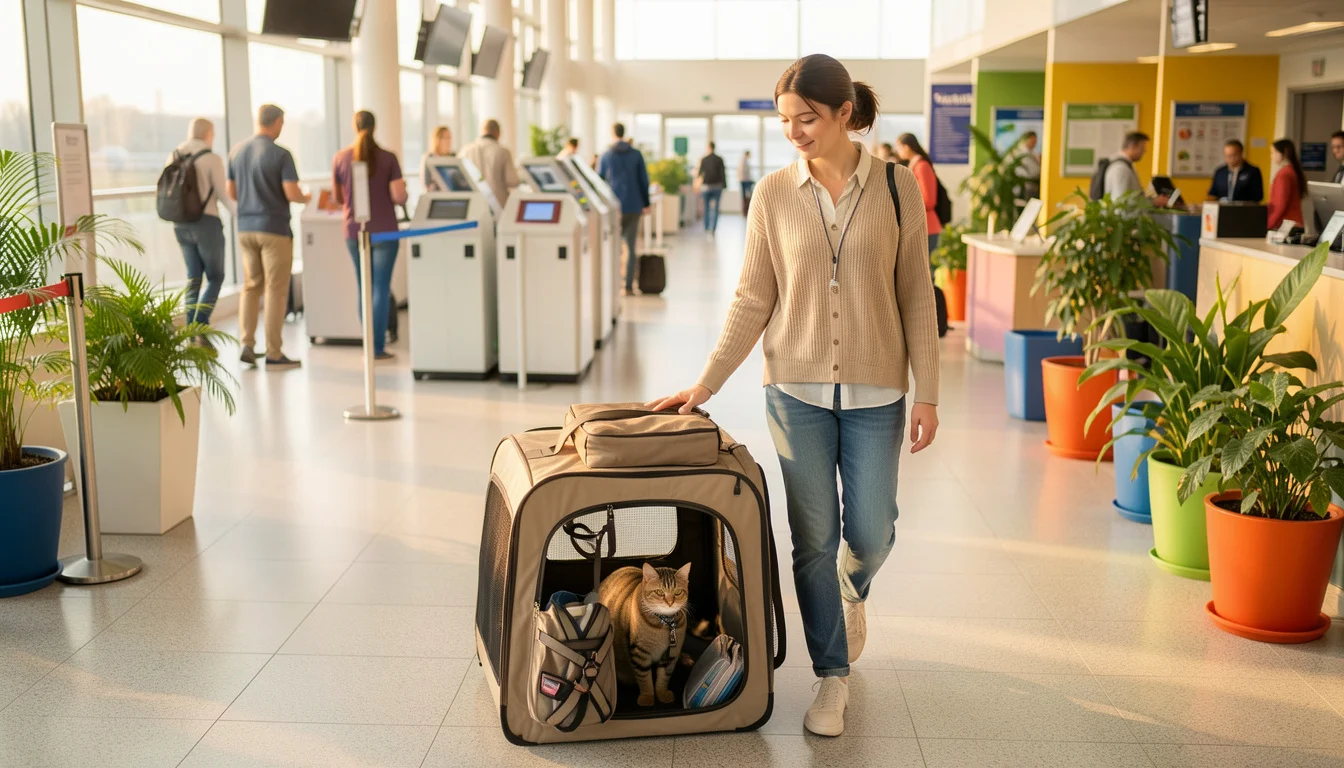 A cat prepared for airport travel
A cat who rides calmly in a carrier at home may still panic when an airport loudspeaker crackles or a security line backs up. Flying with a cat can be manageable when the cat is healthy, the route allows pets, and the carrier fits the airline’s rules. Start by checking the airline and destination requirements before buying a ticket; then ask your veterinarian whether flying is appropriate for your cat.
For many cats, a nonstop flight with the cat in the cabin is the simplest option. But not every cat or itinerary is a good fit. A short drive, a trusted caregiver, or postponing the trip may be safer if your cat has a medical condition, cannot tolerate confinement, or would have to travel under conditions the airline or veterinarian considers unsuitable.
Key Points
- Confirm that your cat is accepted on every flight segment before booking, including connections and return travel.
- In-cabin travel and airline cargo service have separate rules; a pet reservation is not the same as a standard passenger booking.
- Ask your veterinarian about your cat’s health and medication rather than giving a sedative on your own.
- International entry rules come from the destination country, and some requirements need planning well before departure.
Flying with a Cat: Decide Whether the Trip is Suitable
Flying with a cat means transporting the animal by air under the airline’s pet-transport rules and any applicable government health and entry requirements. For a typical U.S. domestic trip, first determine whether your cat can travel in the cabin in an approved carrier; then verify the route, reservation, and veterinary needs before paying for a ticket. If cabin travel is unavailable, do not assume cargo is an acceptable substitute.
Is It Cruel or Unsafe to Take a Cat on a Plane?
Air travel is not automatically cruel or unsafe, but it can be stressful and is not suitable for every cat. The risk depends on the cat’s health and temperament, the length and conditions of travel, and whether the itinerary involves a secure cabin carrier or a separately managed cargo journey.
Consider another option if your cat has a health problem that may worsen with stress, is very fearful of confinement, or would face a long itinerary with uncertain delays. Your veterinarian can help weigh the risks, but cannot guarantee a stress-free flight. Airline policies and destination rules also vary, so the best plan for one route may not work for another.
Compare Airline Options Before You Book
Most owners first compare in-cabin travel with airline cargo. In the cabin, the cat usually remains in a carrier under the seat, subject to the airline’s approval and limits. Cargo transport uses separate acceptance rules and handling arrangements; it is not simply a larger pet reservation. Some routes or aircraft do not accept pets at all.
Option What to check When it may fit In cabin Pet availability on every flight, carrier dimensions, under-seat space, fees, and check-in requirements A cat small enough to fit comfortably in an approved carrier, on a route that accepts cabin pets Airline cargo Whether service currently operates for your route, animal acceptance rules, weather limits, crate standards, and drop-off and pickup arrangements Only when the airline confirms the service and the veterinarian considers the journey appropriate Another travel plan Whether a caregiver, drive, or postponed trip is feasible When the route, cat’s health, or available transport conditions make flying a poor choice
American Airlines has its own pet policy for eligible cabin travel, while its American Airlines pet cargo service, known as PetEmbark, has separate availability and restrictions. Do not treat PetEmbark and an in-cabin pet reservation as interchangeable, and do not assume cargo service is offered on a particular date or route. Check the current American Airlines pet policy and contact the airline to confirm the exact itinerary before booking.
Carrier size limits are airline-specific, and under-seat space can differ between aircraft. Measure the carrier you plan to use and ask the airline to confirm the permitted dimensions for your flights. A carrier that meets a published maximum may still be a poor fit if your cat cannot stand, turn around, and lie down comfortably.
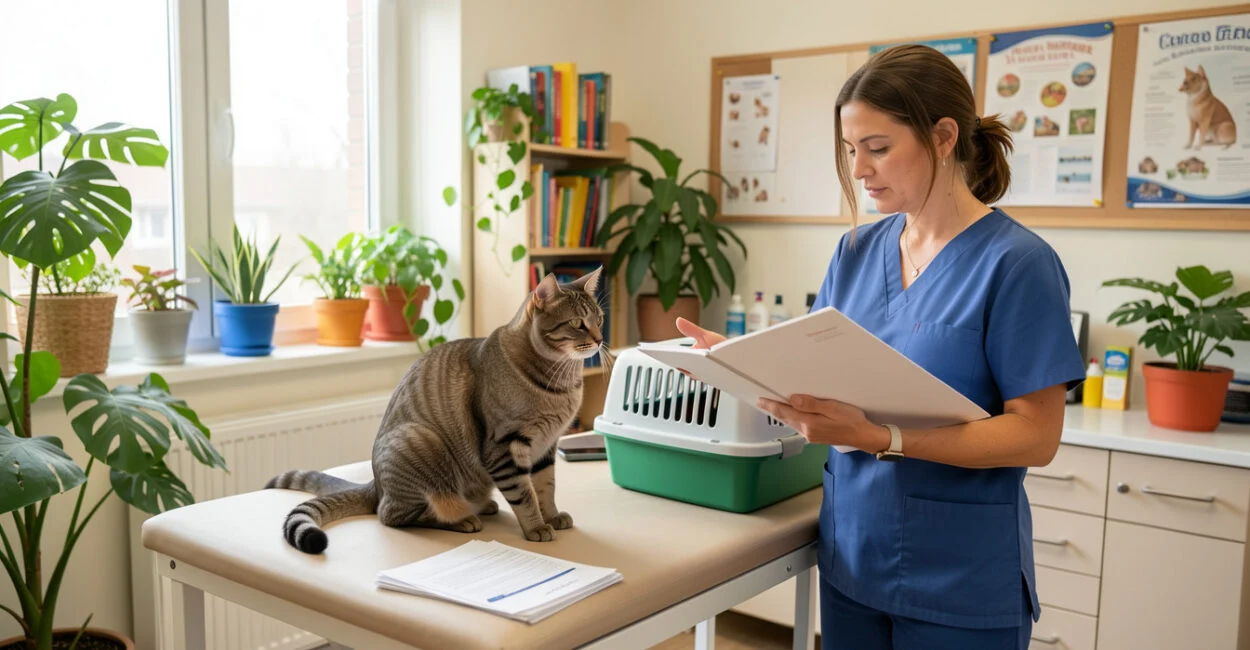
Ask Your Veterinarian About Health and Travel Documents
Book a veterinary check before travel, especially if your cat is older, has a chronic condition, or has not flown before. Ask whether the planned route and duration are suitable, what food and water schedule makes sense, and whether the destination requires a health certificate, vaccination record, microchip, or parasite treatment. Airline requirements and government entry rules may differ.
For travel from the United States, the U.S. Department of Agriculture’s APHIS pet travel requirements pages direct owners to the rules for their destination. Requirements are country-specific and can change; use the destination’s official authority as well as APHIS guidance. A certificate issued for one destination or date should not be assumed valid for another.
Carry original paperwork when required, plus accessible copies of records and your veterinarian’s contact information. If a certificate must be completed within a set period before departure, schedule the examination accordingly rather than relying on an old wellness visit.
Get the Carrier and Cat Ready Before Travel
Carrier acclimation means gradually teaching a cat to enter and remain in its travel carrier without immediate pressure to leave. Start early: leave the carrier open at home with familiar bedding, then build up to short, calm periods with the door closed. A cat that only sees the carrier on the day of travel may resist just when you have the least time to help.
If your cat is new to carrier training, a gradual approach can help; adapt any practice plan for cats rather than assuming a dog-crate schedule applies. Keep the carrier stable and easy to reach, and reward voluntary exploration. Before the trip, confirm that the zipper or latch cannot open accidentally and add an absorbent liner with a spare packed separately.
Pack the cat’s food, a small amount of water, familiar bedding, waste bags, cleaning supplies, and required records. Keep medications in their original packaging and follow your veterinarian’s instructions. Avoid feeding a large meal immediately before departure if your veterinarian recommends a different schedule for your cat.
Should a Cat Be Given a Sedative Before a Flight?
Do not give your cat a sedative or anti-anxiety medication for air travel unless your veterinarian has prescribed it and explained how to use it. Medication can affect an animal’s response to stress and may create risks during transport; airlines may also have rules about medicated pets. If your cat is extremely distressed by the carrier, discuss alternatives with the veterinarian before booking.

Handle Airport Screening and Delays Safely
At check-in, allow extra time for the airline’s pet procedures and keep the carrier closed until staff or security personnel tell you otherwise. At the TSA checkpoint, the cat may need to come out of the carrier while the carrier is screened. Ask for a private screening room if you are worried your cat could bolt, and follow the officer’s instructions.
If your cat escapes during screening, tell TSA officers and airport staff immediately; do not chase the cat toward an exit or runway. Ask staff to secure nearby doors and use a quiet, contained area to recover the cat. A well-fitted harness and leash can provide an extra layer of control when the cat is out of the carrier, but they do not replace secure handling.
The TSA guidance for traveling with pets explains screening procedures. Before leaving home, put your contact details on the carrier and make sure your cat’s identification information is current. At the airport, keep the carrier upright and avoid opening it in a public waiting area, even if your cat is vocal.
For a delay, ask airline staff where you can safely wait and whether you can access water or a pet relief area without risking a missed boarding call. Keep your cat inside the closed carrier in busy spaces. Don’t leave the cat unattended, and don’t rely on a tight connection to provide time for feeding or a litter-box break.
Estimate the Cost of Flying with a Cat
The total cost depends on the airline, route, travel option, and destination paperwork. An in-cabin pet fee, if charged, is separate from your own ticket and may be charged per flight segment or itinerary under that airline’s policy. Cargo costs are calculated separately and may depend on the animal, crate, route, and handling arrangements.
Budget for possible veterinary visits, required certificates or tests, a compliant carrier, and any destination charges in addition to the airline’s pet fee. To answer “how much is it to fly with a cat,” check the exact itinerary and ask the airline what the charge covers. A general pet-travel price found online may not reflect your route or the current policy.
People comparing pet fares for dogs may encounter different carrier, size, and cargo rules, so a dog flight ticket price is not a reliable estimate for a cat. Likewise, the cost to fly a dog internationally does not predict the cost of international cat travel. Use your airline’s quote and the destination authority’s requirements for the animal you are actually transporting.
Plan International Cat Travel and Help Your Cat Settle In
International travel can require more lead time than a domestic flight because each destination sets its own entry rules. Check the destination government’s current requirements for identification, vaccinations, health certificates, permits, and any waiting periods or quarantine. Confirm the rules for every country where the cat will enter or transit, and check return requirements before leaving the United States.
After arrival, set up a quiet room with water, food, a litter box, and a familiar blanket before opening the carrier. Let your cat come out at its own pace and keep doors and windows secured. Familiar scents and a calm space can make the first hours easier; if you are preparing the room, check which household plants are safe with a cat-focused plant identification guide, and keep unfamiliar plants out of reach.
For a typical arrival, the carrier goes into a closed room before its door opens; the cat can then explore when ready, while luggage and visitors stay outside. If your cat hides, allow time and keep food, water, and the litter box accessible rather than pulling the cat out. You can also review cat-friendly houseplant options before adding greenery to the room.
Your next step is to check the airline’s current pet rules for every segment, then confirm your destination’s official entry requirements and discuss the itinerary with your veterinarian. If any part of the plan cannot be verified, pause before buying a nonrefundable ticket.
📱 See this content as a Web Story
Frequently Asked Questions
Can My Cat Stay in the Carrier Under the Seat for the Whole Flight?
Usually, an approved in-cabin pet must remain in its carrier under the seat during the flight, but airline instructions govern. Do not plan to take the cat out in the cabin.
Can I Use a Soft-Sided Carrier?
Some airlines accept certain soft-sided carriers, but permitted dimensions and construction vary. Confirm that your specific carrier fits the airline’s rules and the under-seat space on your aircraft.
Should I Give My Cat Food or Water During the Flight?
Follow your veterinarian’s advice for your cat and the length of the trip. Keep water available when practical, and avoid making an abrupt change to the cat’s feeding routine without guidance.
What If My Cat Meows Throughout the Flight?
Vocalizing can reflect stress, discomfort, or an unfamiliar environment. Keep the carrier secure and follow the airline’s instructions; do not open it in the cabin to soothe your cat.
Can I Take a Cat on a Connecting Flight?
Only if every airline and flight segment accepts pets and the connection leaves enough time to complete required procedures. Confirm the full itinerary with the carrier before booking, including any separate-ticket connections.
Does My Cat Need a Microchip for International Travel?
Some destinations require a microchip, and some specify that it must be implanted before certain vaccinations. Check the destination’s official rules and ask your veterinarian to verify that the identification and records meet those requirements.