
Clicker Training for Dogs: A Beginner’s Step-By-Step Guide
How clicker training uses precise sound markers paired with rewards to teach dogs new behaviors step-by-step, including timing tips and adapting to each dog'…
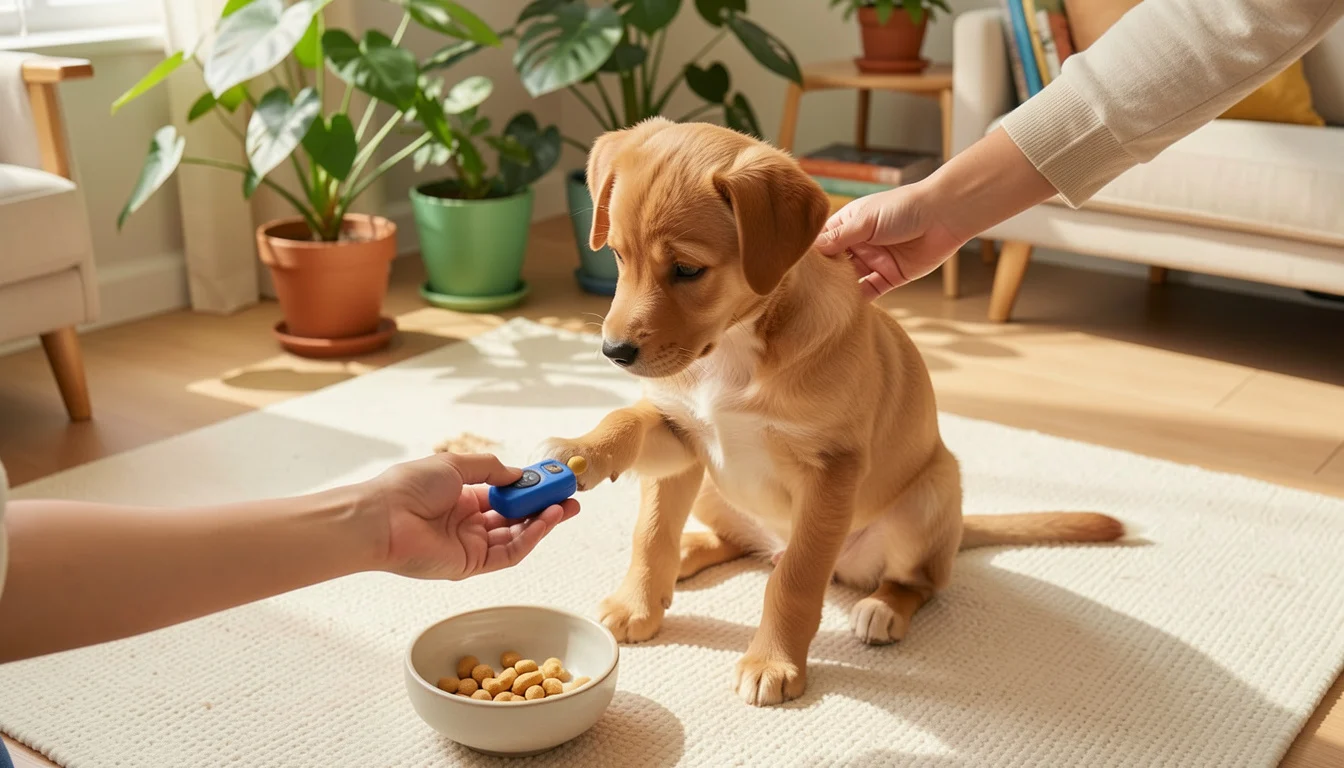 Marking a sit with a clicker
Clicker Training for Dogs: A Beginner’s Step-by-Step Guide
Clicker training for dogs uses a brief, consistent sound to mark the exact moment a dog performs a behavior you want to encourage. The sound predicts a reward, usually food, so the dog can connect an action with its consequence. With careful timing and practice, this method can help beginners teach new skills and reinforce useful choices.
This guide explains what a dog clicker does, how to pair it with a reward, and how to build a behavior one small step at a time. You’ll also learn when to switch to a quieter marker, what to do about common timing problems, and why reward-based training needs to fit the individual dog.
What is Clicker Training for Dogs?
Clicker training for dogs is a form of operant conditioning that uses a conditioned reinforcer: a signal that gains meaning by being paired with something the dog values. In everyday language, the click tells the dog, “That moment was right; a reward is coming.” The click marks behavior. The reward provides the consequence that makes the behavior more likely to happen again.
This distinction matters. A click by itself does not feed, comfort, or reward a dog; its meaning depends on a history of pairing it with a reward. At first, deliver a treat after each click, even if your timing was imperfect. If the sound stops predicting something good, it becomes less useful as a marker.
A training clicker produces a short, distinct sound that can be more precise than a spoken word. Its sound is consistent across repetitions, while a person’s voice can change with mood, volume, or distance. That precision can help you mark a small movement, such as a paw shifting toward a mat, before the dog moves on.
Clickers are optional. The aim is to communicate clearly and reinforce behavior humanely, not to use a particular gadget. The AVSAB Humane Dog Training Position Statement supports reward-based methods and advises against aversive training methods. A clicker is one possible marker within a broader approach built around rewards, clear cues, and manageable training conditions.
What You Need to Get Started
Most beginners need only a marker, a reward the dog wants, and a place to practice without too many distractions. A dog training clicker can be a handheld box-style clicker or a button clicker; choose one you can operate without fumbling. If the sound startles your dog, a quieter alternative may be a better choice.
Option What it does well Considerations Handheld dog clicker Produces a brief, consistent sound and can mark a precise moment. Some models are loud; you need a free hand or a way to carry it. Verbal marker, such as “Yes” Always available and easy to use when your hands are occupied. Its sound can vary; choose one short word and keep it consistent. Other quiet sound A soft tongue click or another repeatable signal may suit a sound-sensitive dog. It must be distinct and consistently followed by a reward. Food reward Small, easy-to-eat treats can support many quick repetitions. Account for treats in the dog’s daily food and check dietary needs. Play or another valued reward A toy, sniffing opportunity, or social interaction can reward some behaviors. What counts as rewarding depends on the dog and the situation.
Rewards do not have to be elaborate. Use small pieces that the dog can swallow quickly, so the next repetition does not stall while they chew. If you use food, set some aside from the dog’s regular daily portion where appropriate, and ask a veterinarian about food restrictions or a weight-management plan.
Keep the clicker accessible. A clicker clipped to a pocket or held with a wrist strap is more useful than one buried in a bag when a behavior happens. A treat pouch can also help, but it is not a requirement. If you’re choosing between a clicker and a verbal marker, select the one you can deliver accurately and comfortably.
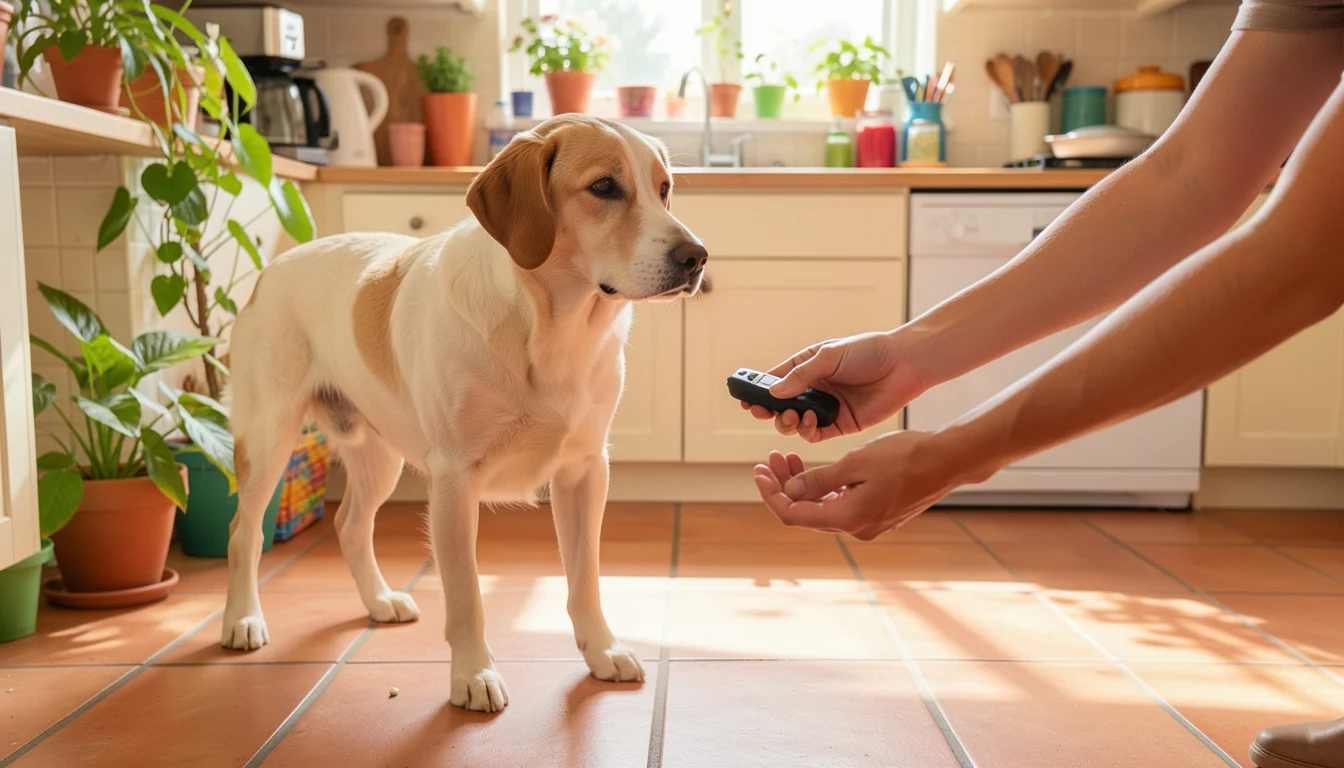
How to Charge the Clicker
“Charging” the clicker means pairing its sound with a reward until the dog learns that the sound predicts something good. It does not mean teaching a behavior yet. Work in a quiet, familiar place, and keep the sound at a comfortable volume.
- Prepare the setup. Have small treats ready and keep the clicker out of the dog’s face. If the dog seems worried about the device, use a quieter marker instead.
- Click once, then give a treat. Make the sound when the dog is not doing anything specific, then promptly offer a treat. Avoid clicking while the dog is reaching for food.
- Pause between repetitions. Give the dog time to eat and return to a relaxed, ready state before clicking again. Do not rapidly click several times to get attention.
- Check for the association. After several pairings, pause briefly, then click once. If the dog readily looks toward the usual treat location or you, the sound may already predict the reward. If not, continue pairing without testing repeatedly.
There is no universal number of pairings that guarantees the association. The dog’s response, comfort, and prior experience matter more than a fixed count. The click should reliably come before the treat, even if delivery takes a moment. If the dog is distracted, anxious, or uninterested in food, make the setting easier or choose a reward they value more.
Watch the dog’s body language. A sudden startle, lowered posture, retreat, or reluctance to approach the treats can mean the sound is too intense or the situation is uncomfortable. Stop using the clicker in that moment. Move farther away, reduce the volume if the device allows it, or pair a soft verbal marker with rewards instead.
Charging is complete when the sound has a clear, positive meaning for that dog, not when the dog performs a trick. The click should predict a reward each time you use it during early training. That consistency gives the marker its value and helps the dog learn what the signal means.
How to Teach a Dog a New Behavior Step by Step
Choose one behavior and decide what you will count as a successful first step. Mark the moment the dog performs that action, then give the reward. At first, keep the task easy enough that the dog can succeed without guessing or becoming frustrated.
- Define the behavior you want. Be specific. “Go to the mat” is easier to teach than “settle down,” because you can identify observable actions such as stepping onto a mat or lying on it.
- Set up an easy opportunity. Place the mat nearby and wait. If your dog looks at it, mark and reward that first approximation, or start with a closer, simpler step if needed.
- Mark the exact action. Click as the dog performs the chosen behavior, not after they have moved away or started a different action.
- Deliver the reward. Give the treat promptly after the click. The click marks the behavior; the reward follows to maintain the marker’s meaning.
- Build gradually. Once the dog offers the current step easily, raise the criterion a little. For a mat behavior, that might mean rewarding a paw on the mat, then all four paws, then a brief pause or a lie-down.
- Add a cue after the behavior is predictable. Say the cue just before the dog is likely to perform the action, then mark and reward. Avoid repeating the cue over and over if the dog does not respond.
This gradual approach is called shaping: reinforcing successive approximations that move toward a final behavior. If a step becomes difficult, lower the criterion rather than waiting for a perfect performance. A dog that repeatedly misses may need a smaller step, a less distracting space, or a more motivating reward.
For example, with a hypothetical mat exercise, you might first click a glance toward the mat, then a step toward it, then standing on it. You would not necessarily need to reward every glance forever. Once the dog is reliably stepping onto the mat, focus your clicks on that more complete action. Change one difficulty at a time, such as distance or duration, so it remains clear what earned the reward.
A cue is a signal that tells the dog which behavior may earn reinforcement. Add it only when the dog is already offering the action with some consistency. If the dog does not respond to the cue, avoid repeating it louder; return to an easier setup and help the dog succeed before trying again.
What to Train First—and How to Use the Clicker in Daily Life
Start with behaviors that are easy to notice and useful at home. A hand target, a voluntary step onto a mat, looking toward you, or walking beside you for a moment can all make good early exercises. Pick one goal per short session, and stop while your dog can still engage.
Short sessions are easier to fit into daily routines than long drills. A few well-timed repetitions can be enough to practice one skill; end sooner if the dog loses interest or seems tired. Make sessions shorter for puppies, older dogs, or dogs who find the setting demanding. If your dog walks away, pause rather than trying to hold their attention with repeated clicks.
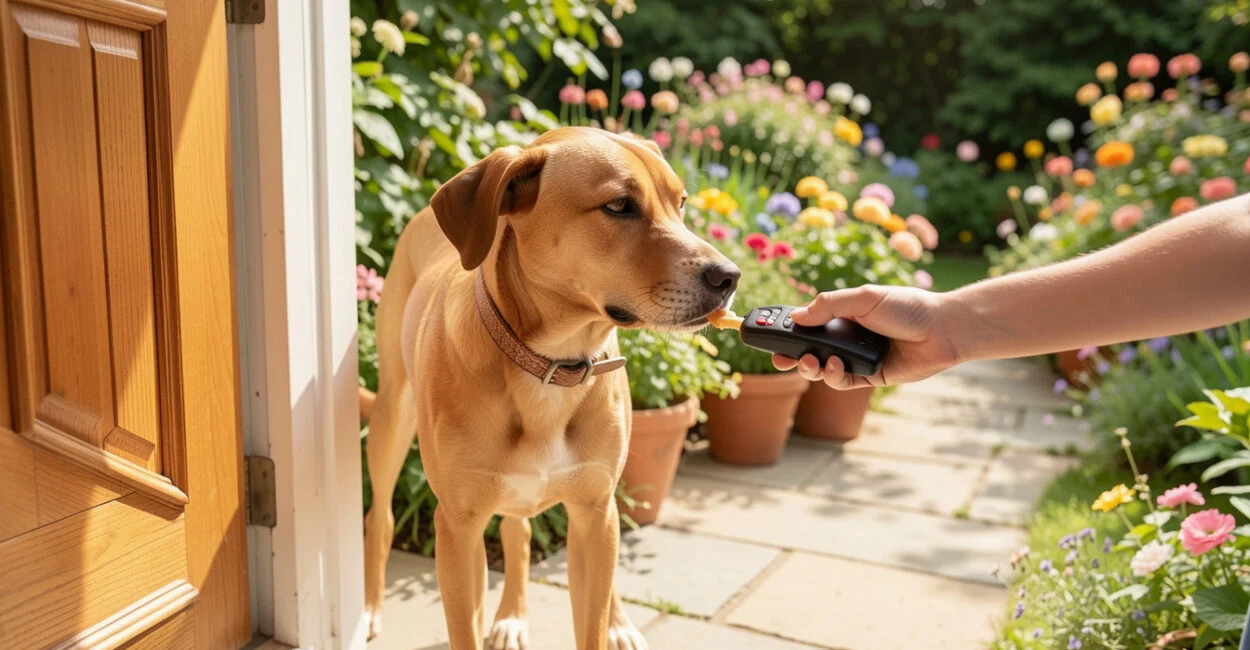
You can also mark a behavior that happens naturally. For example, if your dog pauses calmly before going out, you can mark that pause and reward it before opening the door. If your dog settles on a bed, a click and reward can help reinforce that choice. Make sure the reward does not pull the dog away from a behavior you want them to continue; place food so it supports the next repetition.
Consistency between people helps the dog understand what earns reinforcement. Agree on the marker, the behavior you are rewarding, and the cue you plan to use. One person clicking for four paws on the mat while another waits for a lie-down can make learning less predictable. If several people are involved, begin with a simple, observable criterion everyone can recognize.
Reward choice should fit the context. Food can work well in a quiet room, while a toy or permission to sniff may be more motivating in another situation. The reward must be something the dog values then, not merely something a person assumes should be rewarding. Keep an eye on the environment, too: practicing near a busy sidewalk may be too difficult before the dog has learned the behavior at home.
Enrichment activities can offer other chances to reward calm exploration and problem-solving. For households with cats, guides to indoor cat enrichment in small spaces and puzzle feeders that turn meals into a hunt offer related ideas for making an indoor environment more engaging. They are cat-specific activities, not dog-training instructions; choose dog activities that are safe and appropriate for your own pet.
Common Clicker-Training Problems and How to Fix Them
A click that comes too late marks the wrong moment. If a dog sits and then stands before the click, the click may reinforce standing rather than sitting. Watch for the action you want, click as it happens, and make the exercise easier until you can reliably catch that moment.
Another common problem is clicking without following through with a reward. A missed treat can happen, but repeated missed rewards weaken the click’s predictive value. Keep treats within reach and deliver one after every click while the dog is learning. If you click by mistake, still give the reward; use a clearer setup on the next repetition.
Inconsistent timing can happen when a trainer tries to watch the dog, manage the clicker, and reach for treats all at once. Prepare the treats before starting and practice a few repetitions of an easy behavior. If you are using a clicker, hold it so pressing the button does not make you turn away or move your hand toward the treat before the dog acts.
When the dog is afraid of the dog clicker sound, stop clicking at that volume. Do not keep sounding it to “get them used to it.” Choose a quieter clicker or a verbal marker, and pair that signal with rewards at a distance or volume the dog can tolerate. If fear persists or appears alongside other distress, consult a veterinarian or a qualified reward-based behavior professional.
Sometimes the marker is clear but the dog stops participating. The task may be too difficult, the environment may be distracting, or the reward may not compete with what is happening nearby. Reduce distractions and ask for an easier action. If the dog repeatedly declines a reward, reassess the training conditions rather than assuming stubbornness.
Keep a simple note of the behavior you are marking and what counted as success. This can reveal accidental changes in criteria, such as clicking for a brief sit in one repetition but waiting for a long sit in the next. The goal is not mechanical perfection; it is a pattern the dog can understand. If you cannot deliver the click accurately, use a marker that makes the task easier.
Is Clicker Training Right for Every Dog?
Clicker training can suit many dogs, but a clicker itself is not right for every dog or every situation. A dog that is startled by sharp sounds may do better with a soft verbal marker. A dog who cannot take food in a stressful setting may need more distance, a calmer environment, or a different reward before training can proceed.
Can a Verbal Marker Work Instead of a Training Clicker?
Yes. A short, consistent word such as “Yes” can work as a marker if it reliably comes before a reward. Keep the word distinct from ordinary conversation and use it at the moment the desired behavior occurs. If your voice changes a lot in tone or timing, a clicker may be easier to use consistently, but it is not required.
Can You Clicker Train a Dog Without Using Treats?
Yes, if you follow each click with another reward the dog values, such as a brief game, petting if the dog enjoys it, access to sniffing, or permission to move toward something they want. Food is often convenient because it can be delivered quickly, but the right choice depends on the dog and situation. A click should not be left unrewarded as a routine shortcut, particularly while the dog is learning the marker.
Why Do Some People Say Clicker Training is Bad?
Some people object to the noise, worry that the dog will become dependent on treats, or have seen poor timing and inconsistent reinforcement produce confusion. Others use “clicker training” to describe a wider approach that they disagree with, even though the click itself is only a marker. The relevant questions are whether the method is humane, whether the dog is comfortable, and whether the trainer can communicate clearly.
The RSPCA’s guidance on training dogs recommends reward-based training and cautions against methods that cause pain or fear. Karen Pryor Academy’s clicker-training materials explain the marker-and-reward approach. These sources support humane, reward-based practice, but no single tool guarantees a particular outcome; learning depends on the dog, the setting, the trainer’s timing, and the behavior being taught.
Use a different approach when the clicker causes distress, when the dog is unable to engage, or when the behavior involves fear or aggression beyond basic skills. Do not use punishment, intimidation, or deprivation of essential needs to force a response. A veterinarian can help rule out pain or health factors, and a qualified behavior professional can help tailor a safe plan.
Choose one easy behavior, prepare a reward, and decide exactly what action you will mark. Pair the marker with a reward, practice in a calm setting, and adjust if the dog shows discomfort or confusion. The tool matters less than clear timing, humane treatment, and a plan suited to the dog in front of you.
📱 See this content as a Web Story
Frequently Asked Questions
What is Clicker Training for Humans?
Clicker training for humans applies the same basic learning principle: a clear signal marks a specific action, and a consequence follows. In coaching or teaching, the marker might be verbal feedback rather than a physical clicker. The dog-training version is one example of this broader use of reinforcement.
Does a Clicker Have to Make a Loud Sound?
No. The marker only needs to be distinct and comfortable for the dog. If a standard clicker is too sharp, try a quieter device or a consistent verbal signal.
Can I Use a Phone App as a Dog Clicker?
You can, if the sound is consistent, easy to trigger at the right moment, and comfortable for your dog. A phone may be less convenient if unlocking or handling it delays the click, so test the setup during an easy exercise first.
Should I Keep Giving Treats After My Dog Learns a Behavior?
Continue rewarding the behavior, but the schedule can change as the dog becomes reliable. Keep reinforcement valuable, and return to more frequent rewards when you increase difficulty or practice in a new setting.
How Long Does It Take for a Dog to Learn a Behavior?
There is no fixed timeline. A simple behavior in a quiet room may become familiar sooner than a behavior that requires calm responses around distractions. Progress depends on the dog, the task, the reward, and how clearly the trainer marks each step.
Can More Than One Person Use the Same Clicker-Training Plan?
Yes. Agree on the marker, cue, and behavior criterion first, then practice the same easy repetitions. Consistent expectations help prevent one person from rewarding a different action than another.