
How to Clean a Refrigerator and Get Rid of Food Odors
How to prepare to clean a refrigerator: protect perishable food, gather mild supplies, follow care instructions, and remove odors by targeting hidden residue…
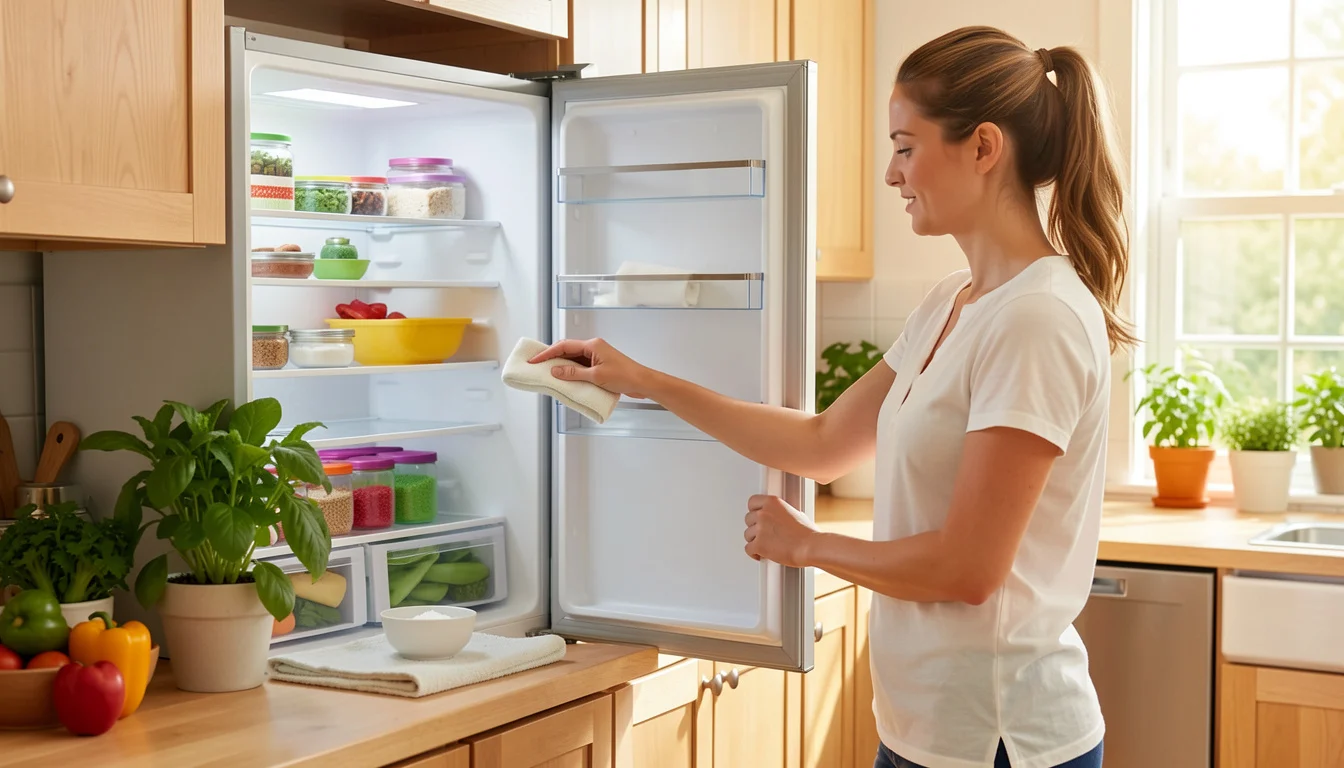 Cleaning shelves and checking refrigerator seals
A sour smell can linger in a refrigerator even after the obvious spill is gone, because residue often collects under drawers, around door seals, or inside a forgotten container. To clean a refrigerator and remove odors, discard spoiled food, wash every affected surface with a mild cleaner, rinse and dry it, then use an odor absorber only after the source is gone.
The safest approach is to protect perishable food while you work and follow your refrigerator’s care manual for removable parts and interior finishes. A quick wipe may handle a fresh spill; an odor that returns usually calls for a closer check of hidden areas.
How Do You Prepare to Clean a Refrigerator and Remove Odors?
Keep perishable food cold, gather gentle supplies, and check your refrigerator’s manual before cleaning. Set food in a cooler with ice or another refrigerator while you work, and keep the door closed as much as possible. The USDA Food Safety and Inspection Service (FSIS) advises keeping a refrigerator at 40°F or below; if you are unsure how long food has been warm, use its food-safety guidance rather than guessing.
Gather dish soap, clean cloths or a soft sponge, a small soft brush, towels, and a cooler. Avoid scouring pads and strong-scented cleaners, which can scratch surfaces or leave a fragrance that mingles with food odors. For broader guidance on products around animals, see these pet-safe cleaning practices.
Unplugging is not usually needed for routine interior cleaning, but follow the appliance manual if it calls for a particular procedure. Don’t remove fixed panels or reach into mechanical compartments.
Where Should You Look for the Source of a Refrigerator Odor?
Check spoiled food, leaking packages, and dried spills first, then inspect spots that are easy to miss: drawer corners, shelf supports, door bins, and the folds of the door gasket. Deodorizing before removing the source may cover the smell for a while, but it will not remove residue that continues to produce it.
Take out containers one at a time and inspect their bottoms and lids. A small leak from a meat package or a jar of sauce can run beneath a drawer, where it is hard to see from standing height. Look for sticky film, discoloration, or a wet patch rather than relying on smell alone.
For example, a refrigerator may smell sour even though every visible shelf looks clean. Removing the crisper drawer can reveal a thin line of juice beneath its back edge. Clean that spill and the odor source is addressed; an open box of baking soda cannot clean the hidden residue.
What is the Right Order for Cleaning a Refrigerator?
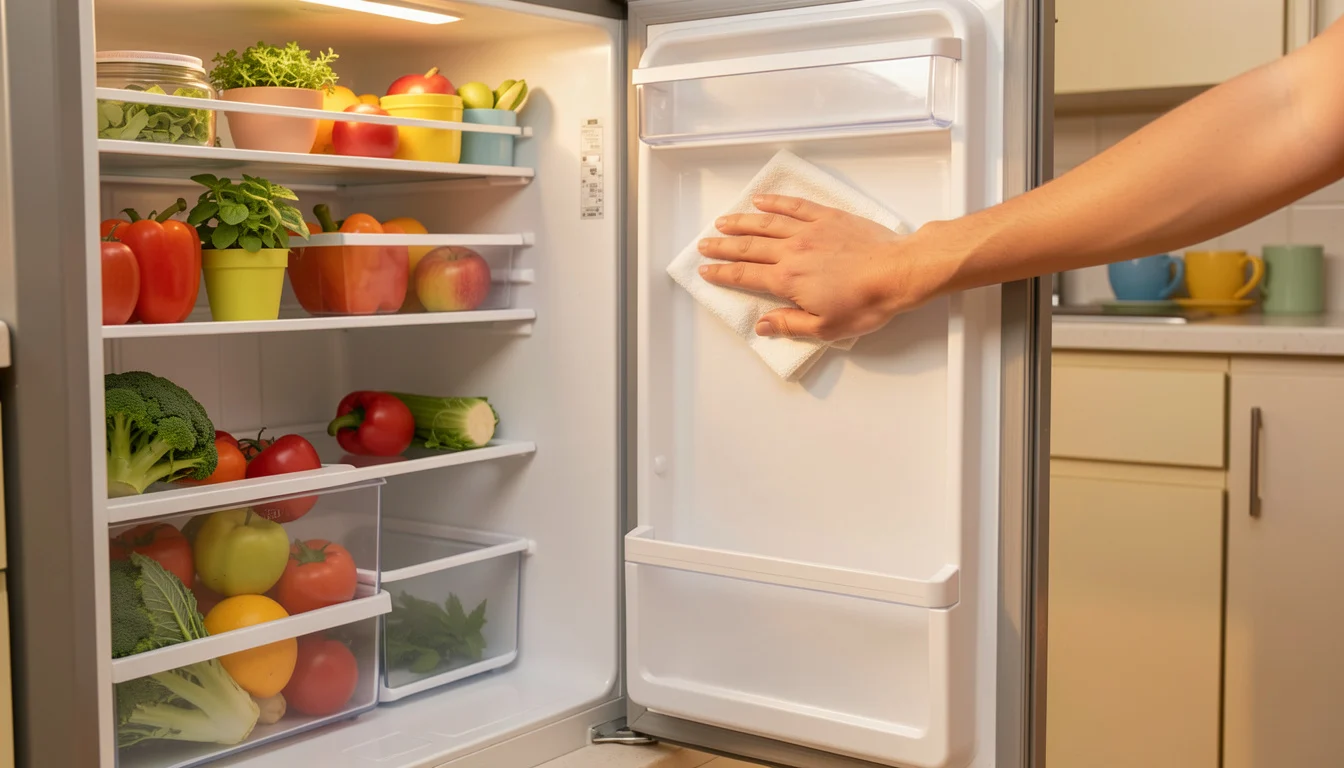
Empty the refrigerator, remove washable shelves and drawers, wash, rinse, dry, and reload. Work from top to bottom so drips do not land on surfaces you have already cleaned. If a glass shelf feels cold, let it warm toward room temperature before washing; a sudden temperature change can crack some glass.
- Move food to a cooler or another refrigerator, and discard spoiled items or food with leaking packaging.
- Remove shelves, drawers, and door bins that the manual identifies as removable. Don’t force parts that resist.
- Wash removable parts with warm water and dish soap. Clean the interior from top to bottom with a soft cloth and mild soapy water.
- Wipe with a clean damp cloth to remove soap residue, then dry all surfaces before reinstalling parts.
- Reload food in closed, clean containers, and wipe any drips from packaging before putting it back.
Promptly cleaning spills between full cleanings prevents sticky buildup from spreading into seams. Keep raw meat and its juices contained, and use a washable tray or sealed container when needed. The USDA FSIS resource on refrigeration and food safety covers safe storage and handling.
How Do You Clean Refrigerator Shelves, Drawers, and Seals?
Wash removable shelves and drawers with mild dish soap, rinse them well, and dry them before putting them back. For corners and narrow tracks, use a soft brush or cloth-wrapped fingertip; metal tools and abrasive pads can damage plastic, coatings, or glass.
Clean refrigerator seals with a damp cloth and mild soapy water, gently opening the folds to lift crumbs and residue. Dry the gasket afterward. Don’t pull hard on it or apply oily products, which may interfere with the seal; check the manual for care instructions if the gasket is stained or damaged.
Door-bin tracks, shelf ledges, and the channel around a drawer are common places for sticky residue to hide. A soft brush can loosen it without forcing liquid into openings. If parts are not designed to come out, clean what you can reach rather than prying them free.
Which Cleaners Help Remove Food Odors from a Refrigerator?
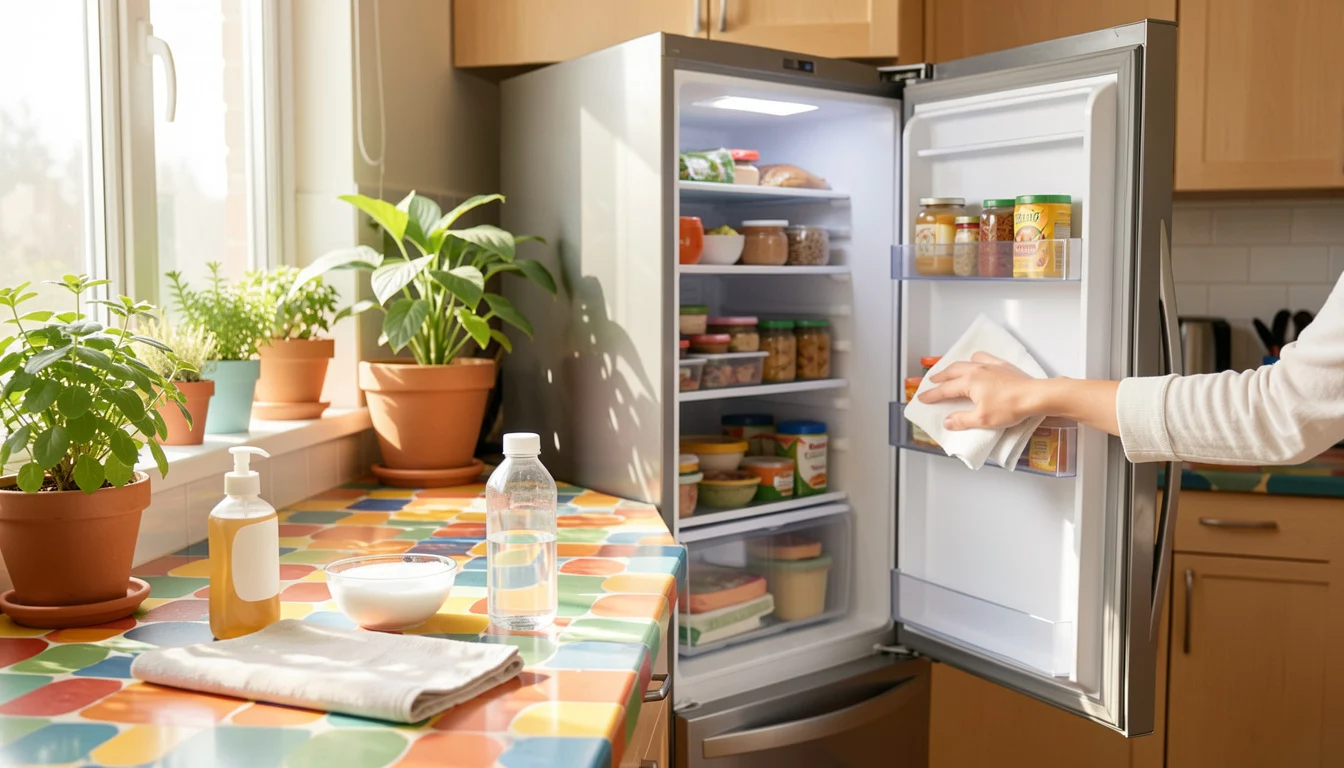
Warm water with a little dish soap is a good default for most washable refrigerator interiors. The best choice depends on the appliance finish and the mess: use a mild cleaner for routine residue, and follow the manual for specialty surfaces. The FDA’s safe food handling guidance emphasizes keeping food-contact surfaces clean; rinse away cleaner residue before returning food.
Cleaner When to use it and what to watch for Dish soap and water Best starting point for everyday spills; wipe afterward with clean water and dry. Baking soda and water Can help lift some residue and reduce odors; use a soft cloth, then rinse so powder does not remain in seams. White vinegar diluted in water May suit some surfaces, but check the appliance manual first. Never combine it with bleach or another cleaner. Bleach solution Not a routine refrigerator cleaner. Use only if the manufacturer or an official food-safety instruction calls for it, and follow the stated dilution and contact time exactly.
Never mix cleaning products. In particular, combining bleach with vinegar or ammonia can release dangerous gases. The refrigerator manufacturer’s care-and-use manual takes priority because finishes and components vary by model.
How Often Should You Clean and Deodorize a Refrigerator?
Wipe spills as soon as they happen, check for old food during regular grocery restocking, and clean the interior when it needs it rather than relying on a fixed schedule. A heavily used refrigerator, frequent leaks, or uncovered leftovers may call for more frequent attention than a lightly used one.
Baking soda can absorb some odors, but it cannot remove the food residue causing them. Once the refrigerator is clean and dry, an open box or refrigerator-specific odor absorber may help with mild lingering smells. Replace it according to its label, and don’t expect it to fix a persistent odor on its own.
For recurring musty smells in other appliances, this guide to cleaning a washing machine and preventing musty odors explains why residue and trapped moisture matter there, too.
What Should You Check If the Refrigerator Still Smells After Cleaning?
If the refrigerator still smells after cleaning, look again for hidden residue and check the drain area, drip pan, and surrounding floor only as directed by the appliance manual. Persistent odor can come from a spill that escaped the food compartment, a clogged drain, or an issue with a component that should not be dismantled during routine cleaning.
- Remove drawers and inspect beneath and behind them, along with door-bin tracks and gasket folds.
- Check whether the smell is coming from a food container, ice bin, or freezer compartment rather than the refrigerator interior.
- Look for standing water or a blocked drain only where the manual says it is safe to inspect.
- If the odor resembles burning, chemicals, or an electrical problem, stop using the appliance and contact the manufacturer or a qualified technician.
Some odors can remain in plastic after a strong spill, and the right treatment depends on the material and the manufacturer’s instructions. If washing and drying do not resolve the smell, avoid escalating to harsher chemicals. Consult the manual or a qualified appliance professional, particularly if the odor seems to come from behind an interior panel.
Question Short answer What comes first? Keep food cold and remove spoiled items and spills. What cleaner should I start with? Use mild dish soap and water, then rinse and dry. Will baking soda solve the problem? It may absorb some lingering odor, but it cannot remove the source. What if the smell remains? Check hidden areas and consult the manual before inspecting components.
Start by removing questionable food and checking beneath the drawers, where hidden spills often escape notice. If cleaning does not resolve the odor, use the refrigerator manual to identify safe next checks rather than applying a stronger product or taking the appliance apart.
📱 See this content as a Web Story
Frequently Asked Questions
Can I Put Refrigerator Shelves in the Dishwasher?
Only if the appliance manual says those parts are dishwasher-safe. Heat can warp plastic bins or damage shelf components, and cold glass may crack if exposed to hot water.
Should I Leave the Refrigerator Door Open While It Dries?
Drying with the door open can help after cleaning, but keep perishable food in a cooler or another refrigerator and limit the time the appliance stays open. Dry surfaces with a clean towel to shorten the process.
Can an Air Freshener Get Rid of a Food Smell?
An air freshener may cover an odor, but it does not clean food residue or spoiled items. Avoid placing scented products near food; find and remove the source instead.