
How to Introduce Your Dog to Other Dogs on Walks
How to introduce dogs on walks: assess comfort, start with distance and parallel walking, allow brief loose-leash greetings only if both dogs stay relaxed an…
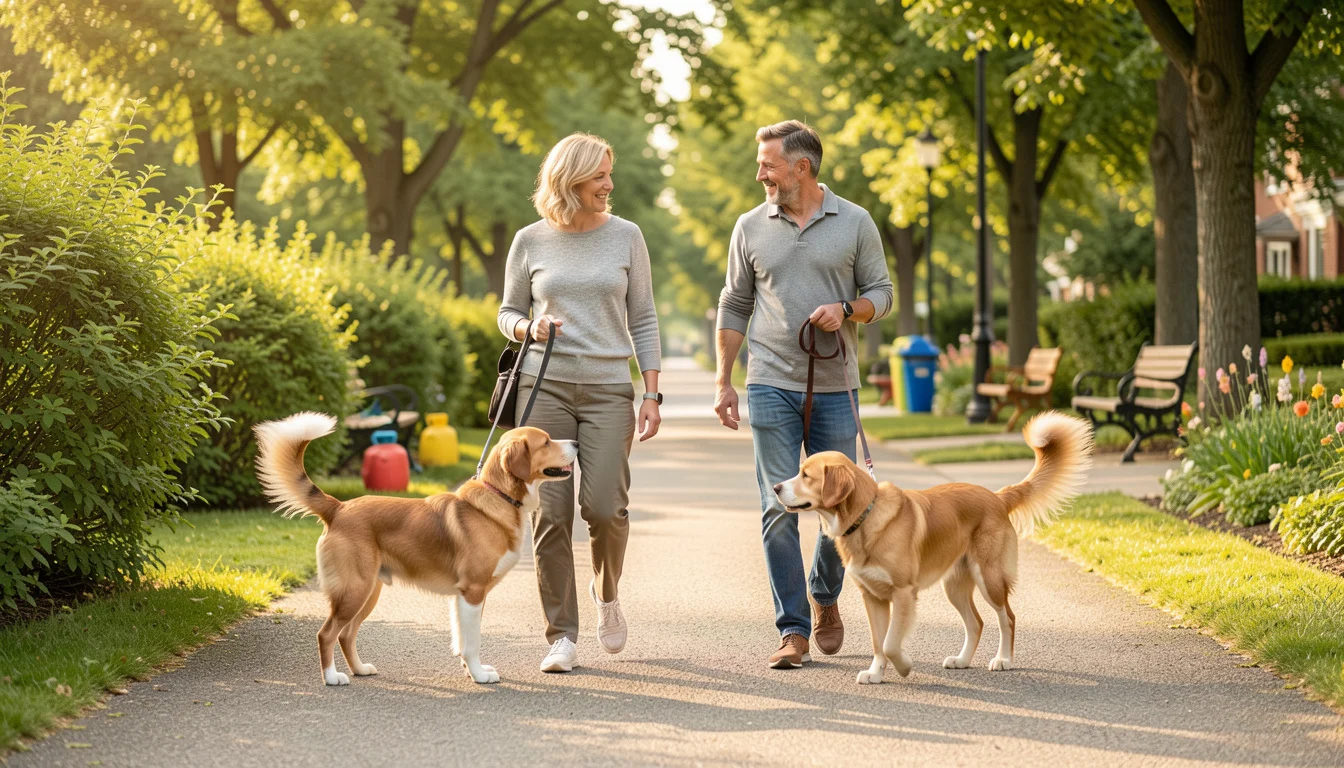 Calm dogs meet at a comfortable distance
A narrow sidewalk, two short leashes, and a dog that suddenly stops can turn a casual walk into a tense encounter. To introduce dogs on walks safely, first decide whether both dogs are comfortable enough to meet; if they are, begin with distance and parallel walking, then allow a brief, loose-leash greeting only while both remain relaxed.
A greeting is optional. Dogs can share a neighborhood without meeting, and moving on is often the best choice when either dog seems worried, overexcited, or difficult to guide.
A leash greeting is a short, managed interaction between dogs restrained by their handlers. Restraint can limit a dog’s ability to move away, so distance, slack in the leash, and a clear way to leave matter more than getting the dogs close.
How to Introduce Dogs on Walks
Start with the dogs far enough apart that each can notice the other and still respond to their handler. If both stay loose and willing to move, walk in the same direction, gradually reduce the distance, and allow a brief side-on sniff only if both dogs continue to look comfortable. Then call them apart and continue walking.
Skip the greeting if either dog is barking, lunging, hiding, stiffening, or unable to disengage. A calm pass at a distance is a successful outcome, even if the dogs never touch.
Decide Whether a Leash Greeting is a Good Idea
Judge the whole dog, not one signal. A wagging tail alone does not prove comfort: look at the tail’s position and movement alongside the dog’s posture, face, ears, and ability to turn away.
Green flags include a loose body, soft facial expression, curved approach, and the ability to glance away or respond to a handler. These signs suggest a dog may be ready for a cautious approach, not that a greeting is guaranteed to go well.
Keep moving if a dog is staring hard, leaning forward with a tense body, tucking its tail, repeatedly trying to retreat, or barking and lunging. Pain, illness, fatigue, past frightening encounters, and frustration at being restrained can all affect how a dog responds. If you are unsure, choose distance; a walk is not a good place to test whether a worried dog will “get over it.”
A good greeting preserves both dogs’ ability to approach, pause, and leave.
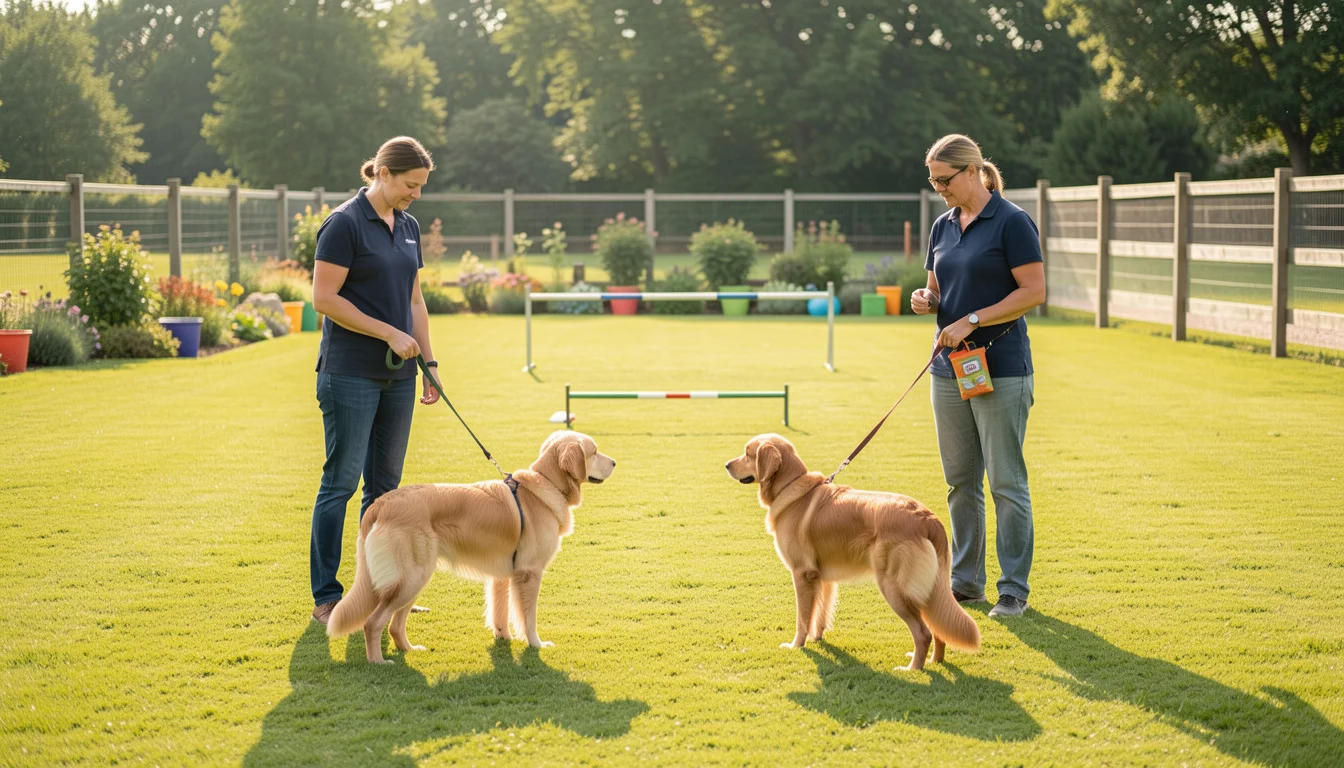
Prepare Before the Dogs Meet
Choose an open, low-pressure area where neither dog has to pass through a narrow doorway, crowd, or dead end. Give the dogs room to arc rather than forcing them to approach nose-to-nose. Ask the other handler whether their dog is comfortable meeting, and accept “no” without trying to negotiate.
Use secure, well-fitted equipment and hold each leash so it stays slack. Keep your hands ready to guide the dogs apart, but avoid wrapping a leash around your hand or pulling it tight as the dogs approach. A tight leash can increase restraint and make it harder for a dog to turn away.
Position yourself so you can move in a curve and leave in either direction. Keep treats handy if they help your dog respond to you, but don’t use food to lure a hesitant dog closer to another dog. If your dog often pulls when it spots dogs, work on that behavior separately with loose-leash walking practice before attempting greetings.
Follow a Step-By-Step Introduction
- Begin at a comfortable distance. Let each dog notice the other without closing the gap. Reward your dog for checking in with you or calmly looking away.
- Walk in the same direction. Keep the dogs on the outside of their handlers if that gives them more room. Parallel walking lets them share space without having to approach head-on.
- Close the distance gradually. Move closer only while both dogs remain loose and able to respond. If either dog stiffens, pulls, or stops taking in the surroundings, increase the distance.
- Allow a brief greeting if both still seem comfortable. Let the dogs approach from an angle with slack in the leashes. Keep the first sniff short, then cheerfully call or guide them apart.
- Continue walking or end the interaction. Give the dogs a chance to settle as they move away. If either dog wants more distance, respect that choice rather than trying again right away.
Parallel walking is useful because it gives dogs time to observe each other while moving, instead of making a close greeting the first test. It is not a guarantee: some dogs remain uncomfortable even when given space, and they should be allowed to pass without meeting.
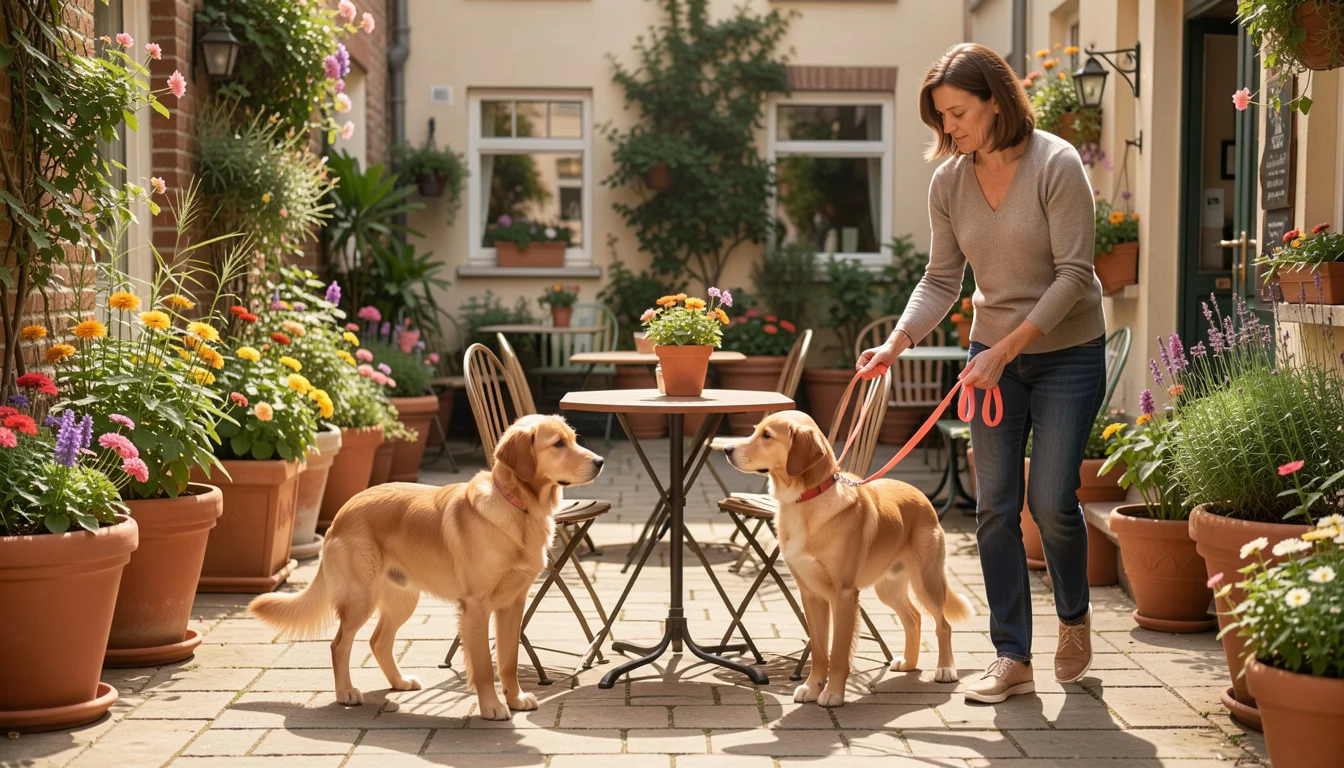
Read the Dogs’ Body Language and Adjust
Watch for changes as the dogs get closer. A dog can seem relaxed at a distance and tense up once the gap narrows; act on that change rather than waiting for a growl or lunge.
What you notice What to do Loose posture, soft face, easy movement, and ability to look away Continue parallel walking; approach gradually only if both dogs remain comfortable. Repeated sniffing of the ground, turning the head, or moving away Give more space. Let the dog disengage rather than steering it back toward the other dog. Stillness, a closed mouth, hard staring, or a rigid posture Pause the approach and create distance. Do not encourage a closer sniff. Tail tucked, crouching, hiding, or trying to retreat Move away calmly and end the greeting attempt. Barking, lunging, snapping, or repeated attempts to rush forward Skip the greeting. Create distance and focus on safely leaving the area.
Body-language guidance from the RSPCA’s information on understanding dog behavior can help you recognize signs of stress, but no single signal predicts exactly what a dog will do. Context matters: a dog may turn away to sniff because it is relaxed, or because it needs space. When signals conflict, choose the more cautious interpretation.
What to Do If a Dog Pulls, Freezes, or Reacts
If your dog pulls toward the other dog, freezes, barks, or lunges, do not drag it closer or punish the reaction. Turn away in a wide arc, use a calm voice, and put distance or a visual barrier—such as a parked car—between the dogs if you can do so safely. Avoid grabbing collars or placing your hands between dogs that are already fighting.
If the other handler insists on a greeting, say, “We’re giving our dog space today,” and keep moving. You do not need to explain or allow contact. If your dog is too worked up to respond, prioritize getting out of view; practice can wait until the next walk.
Leash reactivity describes barking, lunging, or other intense responses to triggers while a dog is on leash. It can have different causes, including fear and frustration, so a single response plan may not suit every dog. For recurring reactions, seek a qualified, reward-based trainer or a veterinary behavior professional. The American Veterinary Society of Animal Behavior’s position statements on humane training support using reward-based methods and avoiding aversive training.
Build Calm Walks and Household Compatibility
To train two dogs to walk on a leash together, first teach each dog to walk calmly with a handler on their own. Then have two handlers walk the dogs in the same direction at a distance where both can focus. Reduce the gap gradually over multiple sessions; if either dog pulls, freezes, or fixates, increase the distance and make the exercise easier.
To train your dog to walk with you, reward check-ins and a loose leash in low-distraction places before practicing near other dogs. Letting a dog walk ahead of you is fine if the leash stays loose and the dog can respond to cues; walking at your side is not a requirement for a successful walk. For a safe recall before practicing in more distracting places, follow a step-by-step recall training plan.
Walking together does not establish that two dogs can live together. Home introductions involve shared spaces and resources, so they need their own gradual plan. The ASPCA’s guidance on introducing dogs recommends managing the first meetings carefully; at home, provide separate areas and supervise interactions while the dogs adjust. Some dogs may never become comfortable sharing a household, so proceed at a pace guided by their behavior rather than a fixed deadline.
📱 See this content as a Web Story
Frequently Asked Questions
How Long Should a First On-Leash Greeting Last?
Keep the first sniff brief, then separate the dogs and see how they respond. There is no fixed duration that suits every pair; end the greeting sooner if either dog becomes tense or tries to move away.
What Should I Do If the Other Dog is Off Leash?
Move your dog away calmly and look for a barrier or route change. Ask the other handler to call their dog back if it is safe to do so, but don’t let an approaching dog turn into a forced greeting.
Should I Let My Dog Greet Every Dog We Pass?
No. Passing calmly is a useful skill, and frequent greetings can make some dogs expect to approach every dog they see. Choose encounters based on both dogs’ comfort, not on politeness or routine.
Are Treats Appropriate During an Introduction?
They can reward calm attention to the handler at a comfortable distance. Avoid using a treat to draw a reluctant dog closer, and give treats in a way that does not make the dogs crowd or compete.
Can Puppies Meet Unfamiliar Dogs on Walks?
They can meet appropriate dogs when the setup is calm and safe, but a puppy’s size or inexperience calls for extra care. Choose a gentle, comfortable dog and keep enough distance for the puppy to retreat or stay near you.
When Should I Get Help from a Qualified Trainer or Veterinary Behavior Professional?
Seek professional guidance if your dog repeatedly lunges, snaps, panics, or cannot recover after seeing another dog, or if you are concerned about a bite risk. A veterinarian can also check for pain or health issues that may affect behavior; ask for a professional who uses humane, reward-based methods.