
Whole-House Water Shutoff Valves: What Homeowners Should Know
How a whole-house water shutoff valve works: locating and operating manual controls, understanding automatic leak detection, and troubleshooting stuck or hid…
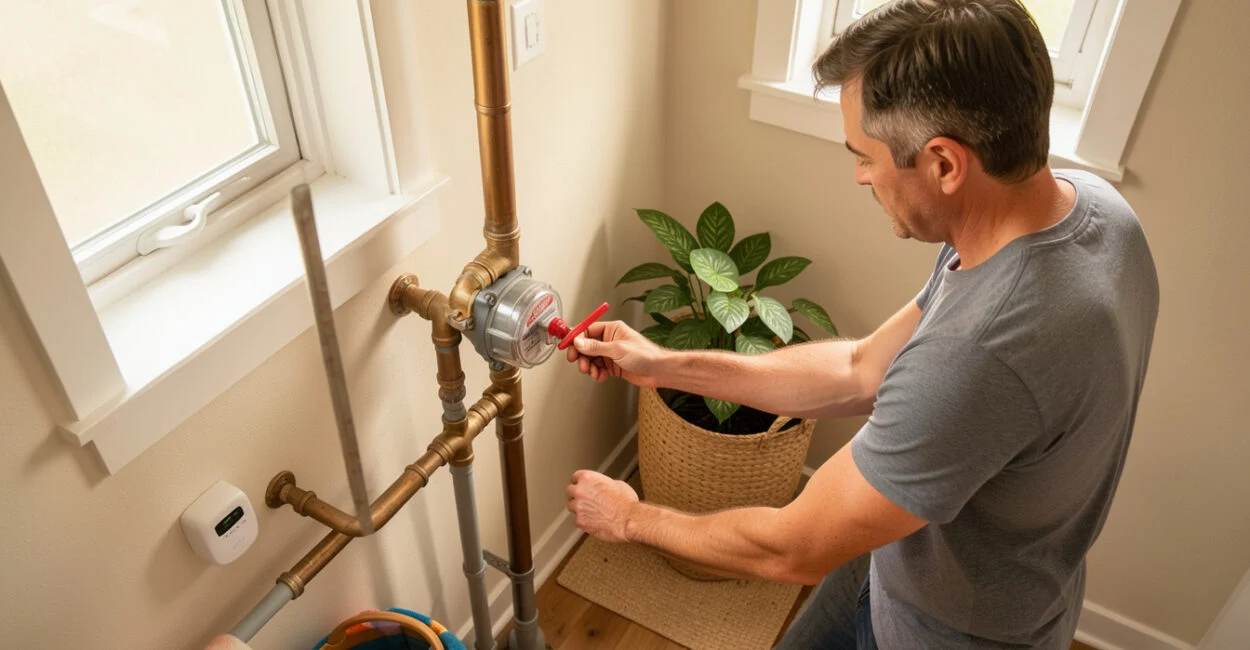 Homeowner locating the main water shutoff
Whole-House Water Shutoff Valves: What Homeowners Should Know
A whole-house water shutoff valve controls the supply line that brings water into a home. Closing it stops incoming flow, which can limit damage when a pipe, appliance, or fixture leaks. Knowing where the valve is and how it works can save time during an emergency, but the valve at the street may belong to the water utility rather than the homeowner.
This guide explains how to find and operate a manual shutoff, how automatic leak-detection systems work, and what to consider before installing one. It also covers what to do if a valve is stuck, buried, or difficult to identify.
What a Whole-House Water Shutoff Valve Does
A whole-house water shutoff valve is a manually or automatically operated valve installed on a building’s incoming potable-water service line. Closing it isolates the home’s plumbing from the supply, stopping new water from entering. In everyday terms, it is the control that can stop a leak from continuing to draw water from the main.
It does not remove water already in pipes, a water heater, or a flooded room. A leak may also continue from a tank, appliance, or pipe section on the supply side of the closed valve. The shutoff can limit ongoing flow, but it cannot guarantee that water damage will be prevented.
That distinction matters in an emergency. A failed washing-machine hose can release water for as long as the line remains pressurized. Closing the main valve may stop that supply, while shutting off the washer’s individual hot and cold valves can be a quicker option if they are accessible and working. The EPA’s WaterSense leak guidance also recommends tracking down and repairing leaks rather than letting them persist.
Some homes have more than one control. A main valve may be near where the service line enters the building, while separate branch valves serve fixtures or appliances. A property may also have a water meter and a curb stop outside. These components have different purposes and may have different owners.
The International Plumbing Code (IPC), published by the International Code Council (ICC), addresses water-service and distribution piping, including shutoff provisions. The adopted code and local amendments vary by jurisdiction. The code is useful context for plumbing work, but it does not determine who may operate a particular street-side valve; local utility rules and property records matter there.
Where to Find the Main Water Shutoff: Inside, Outside, or at the Street
The homeowner’s main shutoff is commonly near the point where the water service enters the building, but its location varies with climate, construction, and local utility layout. Look in the basement, crawlspace, utility room, garage, or near an exterior foundation wall. In a slab-on-grade home, it may be in a cabinet, closet, garage, or a utility box near the meter.
Start by tracing the visible supply pipe from the water heater or meter toward where it enters the home. The main valve is usually on the incoming line before it branches to fixtures. If the meter is indoors, the shutoff may be close to it; if the meter is outdoors, the building’s valve can still be inside. Do not assume the meter itself is the homeowner’s shutoff.
What Does the Outside Water Shutoff Valve Look Like?
An outside water shutoff valve may be inside a small ground-level meter box or a larger access box with a lid. The box may sit near the property line, sidewalk, driveway, or front yard. Beneath it, the water meter and a valve or curb stop may be visible. Some setups use a valve that requires a long key or curb-stop tool, while others have a handle accessible by hand.
That description is not a reliable way to identify ownership. A box near the street can contain utility equipment, a homeowner-side valve, or both. The water meter and curb stop are often utility-controlled, while a separate valve on the property side may serve the building. The dividing point depends on local policy and the service layout.
How Can You Tell Whether It Controls the Home or the Utility Main?
Check the meter location, property documents, and your water provider’s service-line guidance before turning an outdoor valve. Some utilities allow customers to use a customer-side valve but reserve the curb stop for utility crews. Others restrict access to the meter box altogether. A street-side valve is not automatically the homeowner’s control.
Local utility guidance is the best source for the ownership boundary and approved operating method. The International Plumbing Code governs plumbing requirements where adopted, but it does not replace a water provider’s rules for its equipment. If the box is sealed, damaged, flooded, or marked as utility property, leave it alone and contact the provider.
For broader exterior upkeep, a clear path around the meter box helps crews reach it; the same planning often applies to front-yard landscaping choices. Never bury a box under soil, paving, or plantings, and do not dig to expose a suspected valve without utility guidance. Underground lines may be damaged by digging, and the valve may not be where you expect.
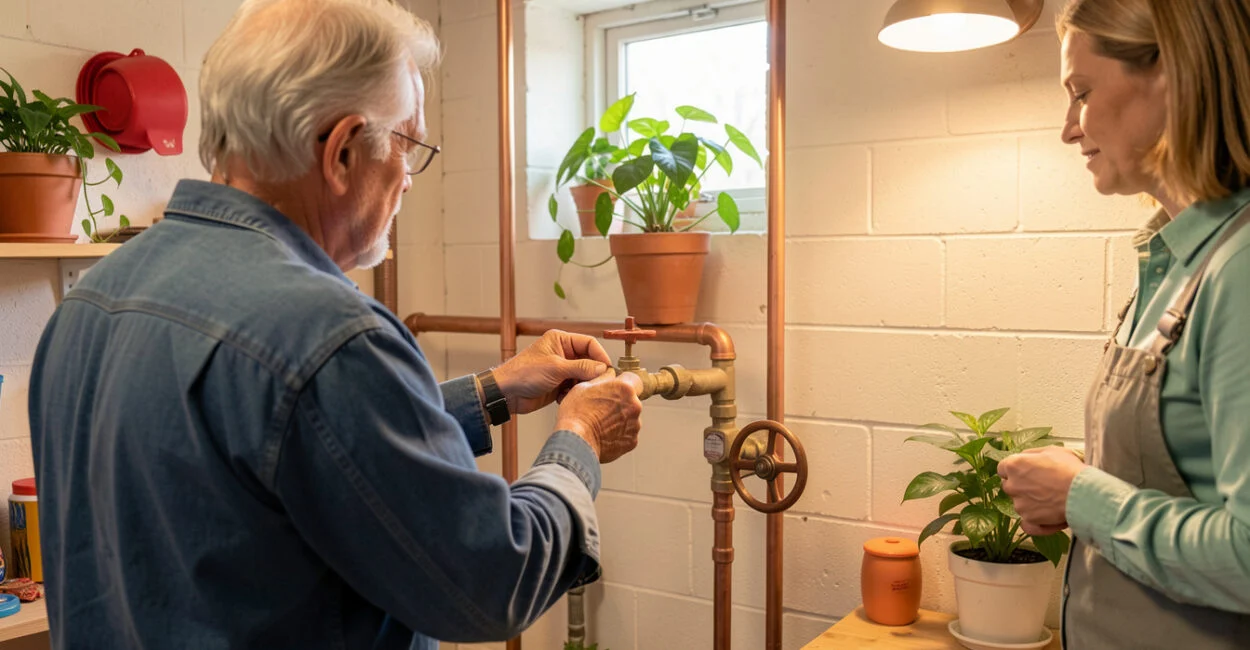
How to Identify and Operate a Manual Shutoff Valve
Most residential main shutoffs use either a ball valve or a gate valve. A ball valve has a lever handle: the lever generally aligns with the pipe when open and sits across it when closed. A gate valve has a round wheel that turns a stem; it closes by lowering a gate inside the body. Older gate valves can seize or fail internally even when the handle turns.
- Ball valve: Turn the lever one quarter-turn, usually until it is perpendicular to the pipe. Do not force it past its stop.
- Gate valve: Turn the wheel clockwise to close, using gentle pressure. If it resists, stop rather than applying extra leverage.
- Fixture or appliance valve: A smaller valve may shut off only one sink, toilet, or appliance, not the whole house.
- Curb stop: This may be in a ground box and may require a special tool. Confirm with the water utility before operating it.
Before an emergency, identify the valve and make sure it can be reached without moving stored items or stepping into standing water. If the valve is indoors, label it. If safe, take a photo that shows the valve and nearby landmarks, so another household member can find it quickly.
To test a known homeowner-operated valve, turn it slowly through its normal travel, then return it to its original position. Avoid repeated cycling on an old or corroded valve. Watch for seepage around the stem or body. If it leaks, will not turn, or leaves the home without water after reopening, contact a licensed plumber.
A common mistake is using pliers or a pipe wrench to get extra leverage on a stuck handle. The added force can crack the valve body, twist the pipe, or turn a small problem into a sudden leak. A proper valve key is appropriate only when the utility confirms that the valve is customer-operated and specifies the tool. If that is unclear, call first.
After closing a working main valve, open a faucet to confirm that the flow has stopped; a brief release of water already in the pipes is normal. If water continues at full pressure, the valve may not control the line you think it does, or it may have failed. Do not keep tightening it. Contact a plumber or the water provider, depending on the valve’s location and ownership.
Automatic Water Shutoff Devices: How Leak Detection Works
An automatic water shutoff device uses a motorized valve to close the home’s supply when its control system detects a possible leak or abnormal water use. Detection methods differ: some systems monitor flow through the main line, while others depend on separate sensors placed near likely leak sources. When the system identifies a trigger, it signals the actuator to close the valve and may send an alert to a phone or alarm panel.
A flow-monitoring system measures patterns such as continuous flow, unusually long use, or a change in the home’s normal consumption. Depending on the model, it may learn typical use over time or apply preset thresholds. A dedicated leak-detection sensor instead detects water at a specific location, such as beside a water heater, under a sink, or near a washing machine. It can trigger a shutoff even when the flow pattern alone would not be unusual.
A whole-house automatic water shutoff valve may combine both approaches. The main-line monitor watches the overall supply, and wireless or wired sensors add coverage at selected risk points. A system with only flow monitoring may miss a small leak that resembles normal use. A sensor-only setup can miss a leak in a room without a sensor. Coverage depends on placement, settings, communications, and whether the valve can physically close.
Most systems use a motorized ball valve fitted to the main line. Some can be installed around an existing valve, while others require cutting and reconfiguring the pipe. A float valve is different: it mechanically responds to a rising water level in a tank or pan. An automatic shutoff float valve can limit filling in the vessel it serves, but it is not interchangeable with a whole-home leak-detection system.
Automatic controls have limits. A dead battery, failed sensor, blocked radio signal, power outage, stuck valve, or incorrect installation can prevent detection or shutoff. Some devices have battery backup or local alarms; others depend on household power or an internet connection for remote alerts. Check what remains functional during an outage and how the device reports a fault.
The Insurance Institute for Business & Home Safety (IBHS) promotes practical water-loss mitigation, including attention to plumbing and leak risks. A shutoff system can be one part of that plan, alongside maintained hoses, appliance valves, and prompt repairs. It is a risk-reduction measure, not a promise that every leak will be detected or every loss prevented.
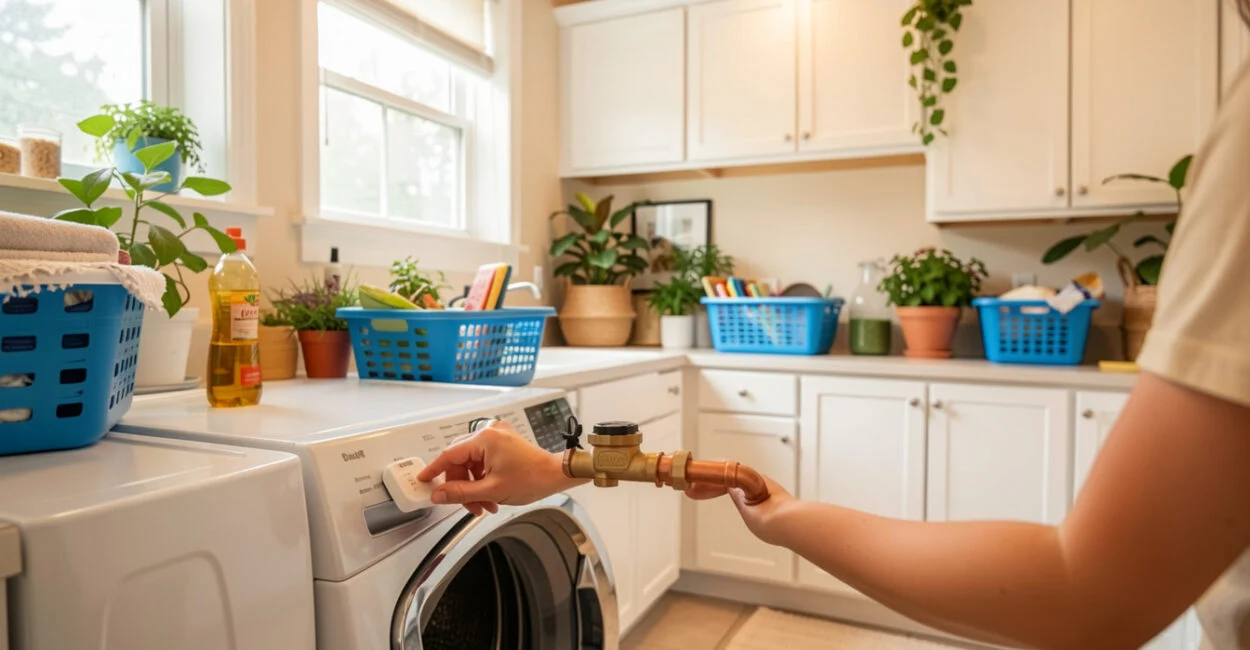
How to Choose a Whole-House Automatic Shutoff Valve
Choose a system by matching its detection method and installation requirements to the home’s plumbing and risk points. If a leak might occur in several rooms, flow monitoring plus dedicated sensors can provide broader coverage than either method alone. If the main concern is a single appliance, a sensor near that appliance may be a practical first layer, though it will not monitor the rest of the home.
System type Detection method Power and connectivity Compatibility and installation Inline flow monitor Measures flow and flags patterns such as continuous or unusual use May use household power, batteries, Wi-Fi, or local controls; check outage behavior Must match pipe size and material; installation may require cutting the main line Sensor-triggered shutoff One or more floor sensors detect water at selected locations Sensors may be wired or wireless; some systems send alerts through a hub or app Sensor placement and signal reach matter; valve installation may require a plumber Combined flow monitor and sensors Uses main-line patterns and local water sensors May rely on power, batteries, a hub, or internet for some features Check pipe compatibility, sensor count, and whether the system supports the home’s layout Float-operated valve Responds to water level in a specific tank or pan Often mechanical, though designs vary Protects only the vessel or fixture it serves; not whole-home leak monitoring
Before buying, verify the pipe diameter, pipe material, water pressure limits, valve orientation, and available clearance. Confirm whether the unit supports the home’s plumbing configuration and whether a licensed plumber must install it to preserve a warranty or meet local code. For systems with sensors, consider where a leak could spread before it becomes visible: behind a washing machine, near a water heater, or in a basement low point.
Ask how the system behaves if Wi-Fi fails. Local leak detection and valve closure may continue even when remote alerts do not, but that is model-specific. Also check the alert method, sensor battery life, replacement-part availability, manual override, and whether the device can be tested without shutting off water to the whole home.
Insurance discounts are not guaranteed. Some insurers may offer incentives for approved leak-prevention equipment, while others may not, and eligibility can depend on the policy, device, and installation. Ask the insurer before purchasing, and request the requirements in writing. Do not assume that installing an automatic shutoff changes coverage or prevents a claim from being denied.
For homes with a history of nuisance alerts, consider how the system distinguishes ordinary use from a leak. Irrigation, filling a large tub, or extended appliance cycles can resemble abnormal flow to some monitors. Look for adjustable thresholds or a temporary bypass, and understand how to use it without leaving the home unprotected longer than necessary.
Installation, Replacement, and Maintenance
A licensed plumber should install or replace a main-line valve when the work requires cutting pipe, soldering, joining pressurized lines, or changing the service connection. Local permit and licensing rules vary. A professional can also confirm valve orientation, pipe material compatibility, pressure conditions, and whether the chosen location leaves enough room to operate or service the valve.
Outdoor valve replacement deserves extra caution. A homeowner-side valve may be accessible near the foundation, but a curb stop or meter assembly may belong to the utility. Before excavation or replacement, ask the water provider to identify the service boundary and locate underground utilities. Never dig around a meter box or buried valve based only on an assumed location.
For a motorized system, the plumber should confirm that the valve closes fully and that the manual shutoff remains accessible. The installer should explain how to isolate the system, test sensors, restore water, and respond to a fault. Keep the product instructions and installation details with household records.
Maintenance is modest but should be deliberate. Follow the manufacturer’s schedule for testing sensors, changing batteries, cleaning contacts, and checking communication. Periodically inspect the valve and nearby pipe for moisture, corrosion, or mineral deposits. A sensor hidden beneath storage cannot alert when it gets wet, so keep its detection area clear.
Do not repeatedly operate an old valve just to prove it works. A neglected gate valve can leak at the stem or fail to reseal after movement. If a test is due and the valve looks corroded or damaged, have a plumber assess it first. This is particularly useful before leaving a home vacant for an extended period, when a small failure could go unnoticed.
For other exterior projects, such as choosing durable siding, make sure contractors do not cover access points or conceal the water service entrance. Likewise, plans for low-maintenance exterior improvements should preserve access to utility boxes and shutoff controls. Marking and keeping the valve accessible is a small coordination step that can prevent confusion later.
What to Do When You Find a Leak or Cannot Locate the Valve
If water is actively escaping, protect people first, then stop the water at the nearest safe control. For a leaking toilet, sink, or appliance, close its local valve if you can reach it safely. If the leak continues or its source is unclear, close the known homeowner-operated main shutoff. Keep clear of standing water near electrical equipment and call emergency services if there is an immediate safety hazard.
- Reduce immediate risk. Move people away from wet electrical areas. If it is safe, switch off power to the affected area at the breaker, not by touching wet equipment.
- Close the nearest appropriate valve. Use the fixture or appliance valve when it controls the leak; otherwise use the home’s main shutoff if you have identified it.
- Check whether flow stops. Open a faucet briefly or observe the leak. Water remaining in the plumbing may drain after closure, but continued pressurized flow suggests the valve may be ineffective or the wrong one.
- Call for the right help. Contact a licensed plumber for a home-side valve or pipe problem. Call the water utility if the suspected valve is in a street-side box, appears utility-controlled, or the home’s shutoff cannot stop the service-line flow.
- Document the damage. Once the area is safe, take photos and keep repair records. Contact the insurer according to the policy’s reporting requirements.
If you cannot find the main valve, do not guess by turning every outdoor handle. Ask the water provider where its equipment ends and which customer-side valve may be operated. Utility guidance can also clarify whether a curb stop requires a service call. If the leak is severe and the customer valve is inaccessible, tell the utility that water is actively escaping and follow its emergency instructions.
Once the leak is controlled, do not reopen a valve against an unrepaired break. A plumber can isolate the damaged section, make repairs, and restore service safely. If the leak came from an appliance hose, replace the failed part and inspect nearby connections before turning the supply back on.
The practical next step is to locate the home-side valve, confirm its ownership, and make sure household members know how to reach it. If you cannot identify a safe, operable control, ask a licensed plumber to inspect the plumbing and label the valve. Consider an automatic system only after matching its detection method and installation needs to the home.
Frequently Asked Questions
Can a Whole-House Shutoff Stop Water from a Broken Pipe Inside the Home?
It can stop new water from entering through the service line if the valve works and controls that line. Water already in the plumbing may still drain, and a leak on the supply side of the valve may continue. A plumber can identify which sections the valve isolates.
Will an Automatic Shutoff Device Work During a Power Outage?
That depends on the model. Some systems use batteries or have backup power, while others may lose certain functions when household power or connectivity fails. Check whether local detection and valve closure still operate without Wi-Fi.
Can I Install a Leak Sensor Without Replacing the Main Valve?
Yes. A standalone sensor can alert when water reaches its location, but it will not shut off the home’s supply unless it is paired with a compatible valve system. Place it where a leak could reach it early.
Should I Shut Off the Main Water Supply Before Leaving Home?
There is no single rule for every household. Consider the home’s plumbing condition, how long it will be vacant, and whether shutting off water affects heating, fire protection, irrigation, or other equipment. Ask a plumber before changing a system that depends on continuous water supply.
Why Does Water Still Come Out After I Close the Main Valve?
Water left in the pipes can flow briefly after closure. If flow continues under pressure, the valve may be partly open, defective, or connected to a different line. Stop operating it and have a plumber check the setup.
Does a Water Leak Detector Need Internet Access?
Some devices use the internet for phone alerts, while local alarms and automatic valve operation may work without it. Features vary by product, so check the manufacturer’s outage and connectivity documentation before choosing a system.