

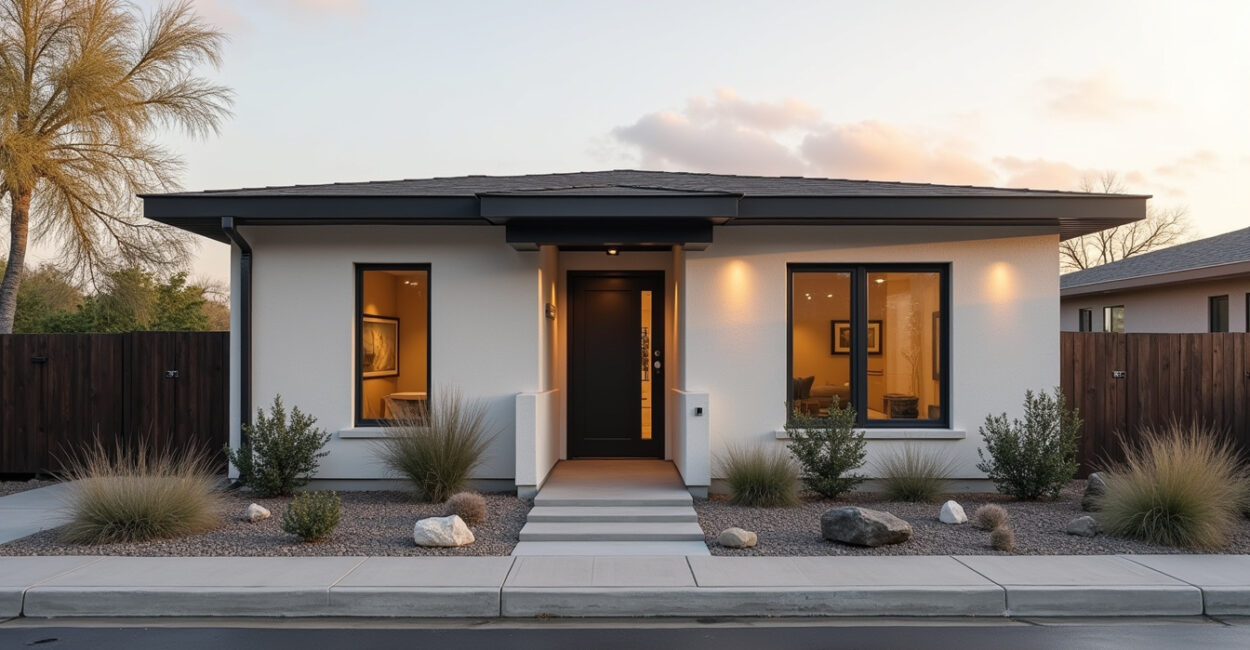
Most exterior upkeep problems start with one simple mistake: choosing a look that only works if you stay ahead of paint, mulch, pruning, and leaks. The best low-maintenance house exterior ideas are not about cutting corners; they are about choosing finishes, plants, and details that age well and tolerate real weather.
If your goal is a cleaner facade that still looks intentional in July humidity, winter slush, and weekend neglect, the answer is to simplify the system, not just the style. Durable cladding, restrained landscaping, smart drainage, and fewer fragile details do more for curb appeal than constant cosmetic touch-ups.
Key Takeaways
- Low maintenance starts with materials that resist water, UV exposure, and paint failure; design matters less than durability once the house faces a few seasons.
- The cheapest exterior is often the most expensive over time if it demands repainting, sealing, edging, or frequent plant replacement.
- Simple massing, wider drip edges, and fewer transitions reduce weak points where rot, staining, and dirt buildup usually begin.
- Native shrubs, gravel, and mulch used sparingly can cut weekly yard work without making the front of the house look bare.
- The best results come from combining low-upkeep materials with a maintenance schedule that is short, repeatable, and seasonal.
Low-Maintenance House Exterior Ideas That Start with Durable Materials
The most reliable exterior is one that needs protection less often because the material itself does the heavy lifting. In practice, that means fiber cement, brick veneer, stone veneer, composite trim, aluminum soffits, and high-quality vinyl in the right application; they hold up better than wood in places that see sun, splashback, and repeated freeze-thaw cycles.
Choose the Material for the Weather, Not the Showroom
If a facade gets direct rain or strong afternoon sun, wood siding needs far more attention than many homeowners expect. Fiber cement usually wins for a balance of appearance and upkeep, while brick and stone excel when the structure and budget support them. For a deeper look at how envelope details affect durability, the window side of the house matters too; see these frame problems to check before replacing windows.
Pick Fewer Finishes, Then Repeat Them
One of the easiest ways to reduce upkeep is to limit the number of surfaces that age differently. A house with three siding materials, ornate trim, and decorative cutouts will almost always need more inspection than a simpler elevation. Who works on exteriors for a living knows this: every seam is a place for caulk failure, staining, and algae growth.
What separates a low-maintenance exterior from a merely attractive one is not the color palette — it is how few points of failure the design creates.
When the goal is a cleaner facade, restraint beats decoration. That is also why practical window choices matter; older homes often improve more from fixing weak edges than from adding new features, as explained in this guide to energy-efficient windows for older houses.
Rooflines, Gutters, and Trim That Do Not Demand Constant Repairs
Roof edges and trim fail quietly, then all at once. Water gets behind fascia, gutters clog, paint peels at the same corners every year, and homeowners end up paying for a problem they could have prevented with simpler detailing.
Keep the Roof Edge Simple and Accessible
Complex rooflines look dramatic, but they create valleys, flashing changes, and debris traps. A straightforward roof with good overhangs and easy gutter access is far easier to live with. If the home is older, it can be worth comparing repair paths before replacing everything; the trade-offs are laid out well in this comparison of storm windows versus full replacement.
Use Trim That Holds Paint Longer
Composite trim and wrapped fascia reduce the annual cycle of scraping, sanding, and spot-priming. That does not mean every wood detail is a bad idea. It means wood belongs where it can be sheltered and inspected, not where rainwater lands every afternoon. The National Park Service has long emphasized that moisture control is the real defense in exterior preservation, not just the surface finish: NPS guidance on protecting exterior materials from weather.

Windows, Doors, and Small Details That Cut Maintenance in Half
Windows and doors are maintenance multipliers because they combine paint, seals, glass, hardware, and flashing in one place. If those details are overdesigned or poorly installed, the rest of the exterior spends years paying for it.
Favor Simpler Casings and Fewer Decorative Layers
Deep trim profiles collect dirt, and layered moldings create tiny ledges where water lingers. Clean-lined casings, durable thresholds, and factory-finished components need less attention and usually weather more predictably. For older properties, the best choice is not always replacement; sometimes the smarter move is targeted repair, as discussed in single-pane window replacement for older homes.
Choose Finishes That Do Not Force Repainting Every Few Years
Factory-applied coatings, fiberglass doors, and cladding systems with stable pigments reduce the need for frequent touch-ups. That matters because sun and moisture do not fade evenly; they punish the south and west sides first. In other words, the maintenance burden is rarely uniform across the house.
Simple Landscaping That Looks Intentional, Not Neglected
Landscaping is where many homeowners accidentally create more work than they want. The low-maintenance version is not a blank yard; it is a yard with fewer plant types, cleaner edges, and species matched to the site. The USDA Plant Hardiness Zone Map is the most practical starting point for plant survival by region: USDA hardiness zone map.
Use Native Shrubs and Repeat Them in Groups
Repetition looks more polished than a mixed collection of impulse buys from a garden center. Three to five shrubs of the same species, planted with proper spacing, are easier to prune and read cleaner from the street. The EPA’s WaterSense program also makes a strong case for planting choices that reduce irrigation demand: WaterSense landscaping guidance.
Reduce Lawn Edges, Not Just Lawn Size
Most of the labor comes from edging, trimming, and cleaning up the border between grass and beds. A narrower lawn with wider planting beds, or a hard edge made of steel, stone, or concrete, cuts a surprising amount of weekly work. This is one of those low maintenance house exterior ideas that sounds small but changes the entire routine.
A Small Real-world Example
A homeowner with a 1960s ranch swapped patchy foundation shrubs for three inkberry hollies, widened the mulch bed, and replaced a crumbling edging strip with stone. The front yard did not become flashy. It just stopped looking tired every time the weather shifted. By the second season, the difference was not visual drama; it was the absence of constant cleanup.
Hardscape Choices That Stay Clean Without Frequent Sealing
Driveways, walks, porches, and stoops set the tone for the whole facade. If these surfaces stain easily or need constant sealing, the house looks older than it is no matter how good the siding looks.
Pick Surface Textures That Hide Dirt Without Trapping Debris
Smooth concrete, properly installed pavers, and dense stone surfaces usually age more gracefully than highly textured finishes that grab mud and leaf stains. But there is a trade-off: some smooth surfaces show salt, tire marks, or mildew sooner in damp climates. No rule fits every site, and that is where climate and drainage decide the outcome more than taste does.
Design for Runoff Before You Design for Style
Water management is one of the quietest maintenance savers in the whole exterior. A slight slope away from the house, a drip edge that actually sheds water, and downspouts that discharge away from planting beds reduce staining, erosion, and foundation splashback. The result is not just less cleanup; it is less repair.
Drainage problems rarely start as dramatic failures. They start as dirt lines, mildew, and a front walk that never seems fully clean.
Colors, Fixtures, and Porch Details That Age Gracefully
The easiest way to make an exterior feel lower maintenance is to stop choosing details that show every speck of dust and every faded patch. Mid-tone colors, matte or low-sheen finishes, and sturdy fixtures tend to hold a more forgiving look than high-gloss surfaces and tiny decorative parts.
Use a Color Palette That Hides Normal Wear
Very dark and very light exteriors both expose different problems. Dark colors can show salt streaks and fading; stark white can look dirty fast near entries and beneath windows. Warm grays, muted greens, clay tones, and earth colors often age better because they do not magnify every small stain.
Choose Lighting and Hardware with Fewer Delicate Parts
Wall lanterns with sealed housings, stainless or powder-coated hardware, and simple house numbers last longer than ornate fixtures with narrow channels for insects and grime. If a porch has lots of trim, brackets, and turned details, someone has to clean them. Simple hardware just disappears into the design, which is usually the point.
A Seasonal Maintenance System That Keeps the Exterior Easy
Low upkeep is not the same as no upkeep. The difference is that the work becomes short, predictable, and seasonal instead of constant and reactive. A solid system keeps small issues from becoming weekend projects.
Do a Short Inspection Each Season
Walk the perimeter in spring, midsummer, fall, and after major storms. Look for peeling caulk, clogged gutters, pooling water, loose flashing, and plant growth touching the siding. That ten-minute check catches most of the issues that later become expensive. If the house has older openings, this is also a good time to compare them with window strategies for historic homes.
Keep the Routine Short Enough That You Will Actually Do It
Maintenance plans fail when they rely on perfect weather and a free Saturday. The better version is a small checklist: rinse siding, clear drains, trim back shrubs, check sealant, and spot-clean walkways. If a task takes too long, it usually needs redesign, not more discipline.
The strongest exterior strategy is the one that survives ordinary life: rain, pollen, holidays, travel, and a few missed weekends. If you want a house that keeps its curb appeal without constant intervention, choose fewer materials, simpler edges, and plants that fit the climate rather than fighting it.
Before changing anything, evaluate the house as a system and then make one upgrade at a time. Start with drainage, then siding, then planting, then trim. That sequence usually delivers the biggest visual payoff with the least ongoing work.
Frequently Asked Questions
What Exterior Material is Easiest to Maintain?
Fiber cement is one of the best all-around choices because it balances appearance, durability, and repaint cycles better than many wood-based options. Brick veneer and stone veneer also perform well when installed correctly, especially in climates with frequent moisture. The easiest material for your house still depends on exposure, detailing, and whether water can dry quickly after rain.
How Can I Make the Front of My House Look Better Without Adding More Work?
Use repetition, not complexity. A restrained plant palette, one or two durable siding colors, and clean hardscape lines usually look more polished than a busy mix of finishes. The trick is to remove maintenance-heavy details first, then add only the elements that improve the silhouette or frame the entry.
Are Low-maintenance Landscaping Ideas Always Drought-friendly?
Not always. Low maintenance means less pruning, replanting, edging, and replacement, but some climates still need regular watering. Drought-friendly plants help in many regions, yet shade, soil type, and drainage can matter just as much as rainfall totals. The best plan matches the plant to the site instead of assuming one rule works everywhere.
Do Darker Exterior Colors Require More Upkeep?
They can, but for different reasons than light colors. Dark paint often shows fading, salt streaks, and chalking sooner, while white and very pale colors reveal dirt, mildew, and splashback quickly. Mid-tone colors are usually the safest compromise because they hide normal wear without flattening the design.
What is the Biggest Maintenance Mistake Homeowners Make Outside?
The biggest mistake is adding details that look attractive on day one but create ongoing cleanup later. Ornate trim, dense planting at the foundation, poor drainage, and too many material transitions all raise the workload. A simpler exterior almost always ages better because it gives water, dirt, and time fewer places to cause damage.