
How to Give Your Cat Medication Without a Stressful Struggle
How to verify your cat’s medication prescription: check dose, timing, route, and food instructions before each dose to ensure safe and effective administration.
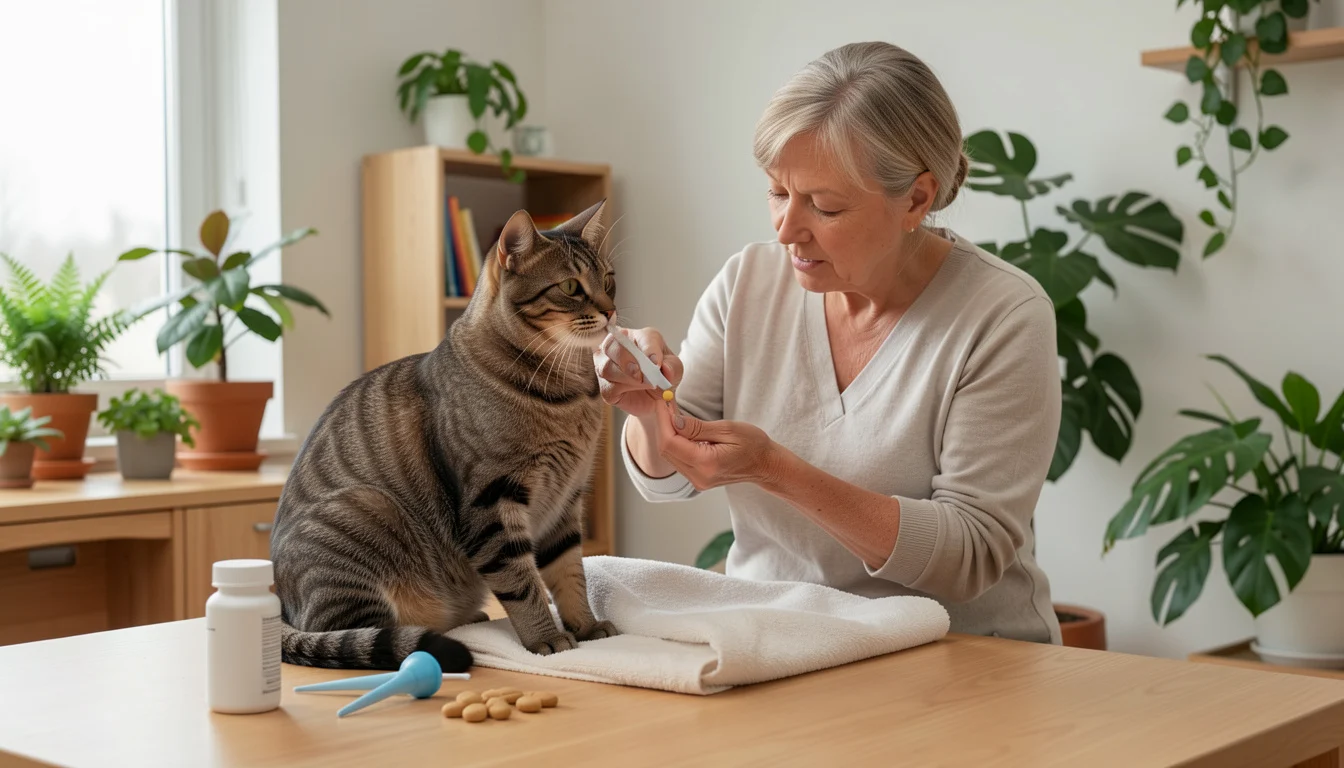 A calm approach to giving medication
A pill can turn a calm cat into a fast-moving escape artist in seconds. To give a cat medication safely, first confirm the prescription and whether the medicine can be given with food; then use a technique suited to its form and your cat’s tolerance. If a dose is spat out or missed, get dose-specific advice before giving more.
Before You Start
- Have the medication label and your veterinarian’s instructions in front of you.
- Check the dose, timing, route, and whether it must be given with food or on an empty stomach.
- Prepare the right supplies, such as a pill treat, dosing syringe, or towel, if your veterinarian recommends one.
- Choose a quiet spot and decide when to stop if your cat becomes distressed.
Step 1: Confirm the Prescription Before Giving Your Cat Medication
Giving a cat medication means administering the exact prescribed drug and dose by the instructed route and schedule. Before each dose, match the label to your cat, check the amount and timing, and follow any food or handling directions. A pill’s appearance alone cannot tell you whether it is safe to split, crush, or mix into a meal.
Some medications have special release coatings or must reach the stomach intact. Altering them can affect how the drug works. Ask the prescribing veterinarian or pharmacist whether a specific tablet can be split, crushed, or hidden in food; do not assume the answer applies to another medication.
Also check what to do if your cat vomits after a dose, since advice depends on the drug and how soon vomiting occurs. The Cornell Feline Health Center’s medication guidance covers common administration approaches, but your cat’s prescription instructions take priority.
Step 2: How to Give a Pill to Your Cat
To give a pill, keep your cat steady without squeezing, place the tablet toward the back of the tongue if you can do so safely, then let your cat swallow and check before releasing them. A pill pocket or other approved food option may work better for some cats. The right approach depends on the tablet and your cat’s comfort; if your cat struggles or you risk being bitten, stop and ask the veterinary team to demonstrate another method.
- Prepare first. Read the label and have the pill, a small reward, and any veterinarian-approved follow-up ready. Do not open a capsule or alter a tablet unless you have permission.
- Use gentle positioning. Place your cat on a stable, nonslip surface. Some cats do better sitting on your lap, while others feel safer on the floor. A towel wrap can limit pawing, but it should leave the chest free and never pin the cat down.
- Deliver the pill calmly. If using your hands, support the head gently and open the mouth only as much as needed. Place the pill over the back portion of the tongue, then close the mouth softly and allow the head to return to a neutral position. A veterinarian can show you the safest hand position for your cat.
- Check that it went down. Watch for swallowing and look for the pill if your cat spits or paws at the mouth. Some cats appear to swallow, then spit the tablet onto the floor a moment later. A small treat or water may help afterward only if your veterinarian says it is appropriate for that medication.
For example, a cat may take a tablet hidden in a tiny approved treat but leave the rest of dinner untouched. Give the medicated portion separately so you can see whether it was eaten. If the cat rejects it, do not put another tablet into the full meal or assume the dose was swallowed.
A dose counts only when you know what your cat actually swallowed.
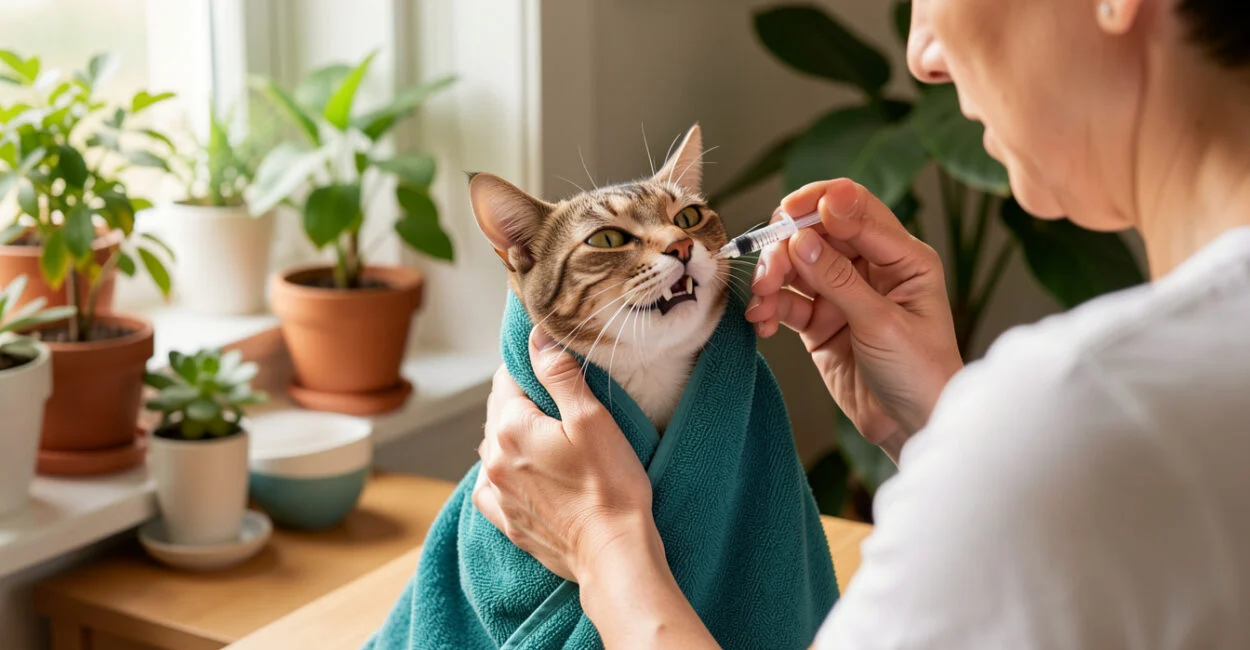
Step 3: Give Liquid, Topical, and Other Forms the Right Way
For liquid medicine, use the supplied dosing syringe and follow the prescribed amount. Slide the tip into the side of the mouth, behind the canine teeth, and give small amounts at a time so your cat can swallow. Do not aim a stream straight down the throat, which can cause choking or aspiration.
Some liquid medications need shaking, refrigeration, or careful measuring; the label or veterinary team should confirm those details. If the taste causes drooling or foaming, that can happen with some medicines, but call the clinic if you are unsure whether the full dose was swallowed or your cat shows other concerning signs.
For a topical medication, apply it only to the specified site and keep your cat from licking it until the product’s instructions say it is safe. Wear gloves if directed, and do not substitute a human product or another pet’s medication. Ear and eye medicines also have product-specific steps, so use the clinic’s demonstration rather than improvising.
The 2022 AAFP/ISFM Cat Friendly Veterinary Interaction Guidelines emphasize adapting handling to the individual cat. Ask the clinic to show you a technique with a demonstration item or to discuss alternatives if home dosing is becoming difficult.
Step 4: Choose a Method That Fits the Medication
Start with the medication’s instructions, then choose the least stressful method that preserves the prescribed dose. A method that works for a flavored liquid may be unsafe for a tablet that must remain whole.
Medication form Typical technique Key caution Pill or capsule Give by hand or use an approved pill treat or pill device. Do not crush, split, or open it without approval. Liquid Measure with the supplied syringe and give slowly into the side of the mouth. Do not squirt toward the throat or estimate the amount with a kitchen spoon. Topical Apply to the directed skin or ear site as labeled. Prevent licking when instructed; do not use a product intended for people or dogs. Eye drops or ointment Follow the clinic’s demonstrated method and product directions. Keep the applicator tip from touching the eye or surrounding surfaces.
If the prescribed form seems impossible to give, ask whether the same medication is available in another suitable formulation. Not every drug can be changed safely, and compounding or flavoring does not automatically make a medication appropriate for every cat.
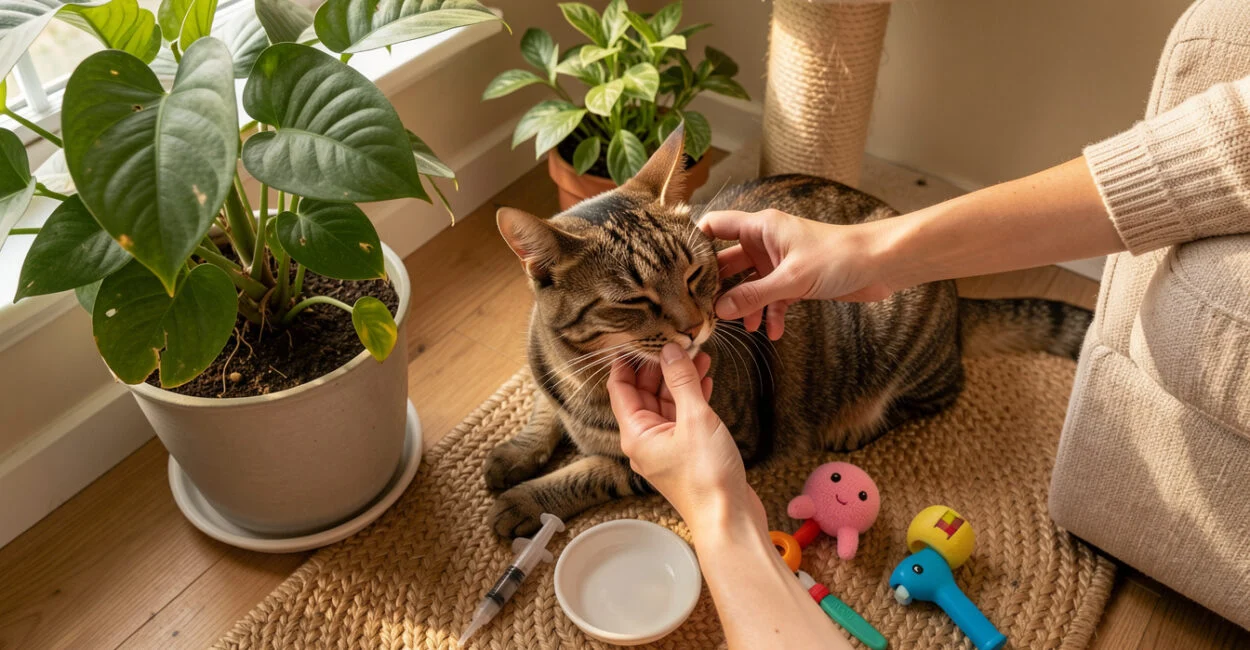
Step 5: Make Medication Less Stressful
Prepare supplies before bringing your cat over, and choose a familiar, quiet place. Keep the session brief. A treat, play, or calm attention afterward can help create a more positive association, provided the reward does not conflict with food instructions.
Practice the motions without medication when possible: touch the cheek, lift the lip briefly, then reward and stop. This can make handling less surprising over time. For more ideas on building a comfortable home routine, see these approaches to indoor cat enrichment.
Stop if your cat is panting, thrashing, growling intensely, or becoming increasingly fearful. Repeatedly chasing, pinning, or forcing a dose can raise stress and increase the chance of injury or a bite. Ask the veterinary team about a different technique, another formulation, or whether the clinic can administer the medication.
Calm, repeatable handling is safer than turning each dose into a wrestling match.
Step 6: If Your Cat Spits Out a Dose or You Miss One
If your cat spits out a pill or you are unsure how much medicine was swallowed, do not automatically give another dose. If a dose is missed, do not double the next one. Call the prescribing clinic or follow the medication’s written instructions, because the correct response depends on the drug, amount, and timing.
Tell the veterinary team the medication name, the scheduled time, what you saw, and whether any portion may have been swallowed. A photo of a spat-out pill or the medication label can help. This is also a good time to ask for a written missed-dose plan for future doses.
When medication is mixed into food, use a small portion you can monitor rather than hiding it in a full bowl. If the cat eats only part of it, you may not know how much medicine they received.
Step 7: Know When to Call the Veterinarian
Call the prescribing veterinarian about a suspected adverse reaction, repeated vomiting, marked lethargy, refusal to eat, or any sudden change after starting a medication. Trouble breathing, collapse, seizures, or facial swelling require urgent veterinary attention. These signs can have different causes, so a symptom list cannot diagnose a reaction or an illness.
Four possible signs that a cat is suffering include hiding or withdrawing, reduced appetite, unusual aggression or vocalizing, and changes in grooming or movement. Cats may show pain in subtler ways, and these behaviors can also result from other problems. A veterinarian’s examination matters, particularly if a change is sudden or persists.
The “3-3-3 rule” is a broad adoption-adjustment guideline describing possible settling-in phases over the first days, weeks, and months. It is not a medical rule or a fixed schedule; individual cats may adjust faster or slower, and illness or medication effects should not be dismissed as normal adjustment.
“Silent killer” is a phrase sometimes used for serious conditions that may have subtle early signs, including chronic kidney disease or heart disease. It does not identify what is wrong with a particular cat. New changes in drinking, urination, breathing, appetite, or activity warrant veterinary advice rather than a guess based on the phrase.
For concerns beyond dosing, Cornell’s Feline Health Center offers information on feline health topics; use it as background, not as a substitute for advice about your cat’s prescription.
Frequently Asked Questions
Can I Hide My Cat’s Medication in a Treat?
Only if the prescribing veterinarian confirms the medicine can be given with food. Use a small amount your cat is likely to finish, and check that the entire dose was eaten.
Can I Use a Pill Popper for a Cat?
A pill-giving device may help some caregivers place a tablet without putting fingers near the teeth, but it can injure the mouth if used incorrectly. Ask a veterinary professional to demonstrate how to use one safely with your cat.
Should I Give a Dose If I Am Not Sure Whether My Cat Swallowed It?
No. Contact the prescribing clinic for instructions rather than repeating a possibly swallowed dose. The safe choice depends on the medication and how much your cat may have received.