
How to Teach a Puppy to Use Indoor Potty Pads
How to train a puppy to use indoor potty pads: set a consistent spot, guide your puppy at key times, reward success, and handle accidents without punishment.
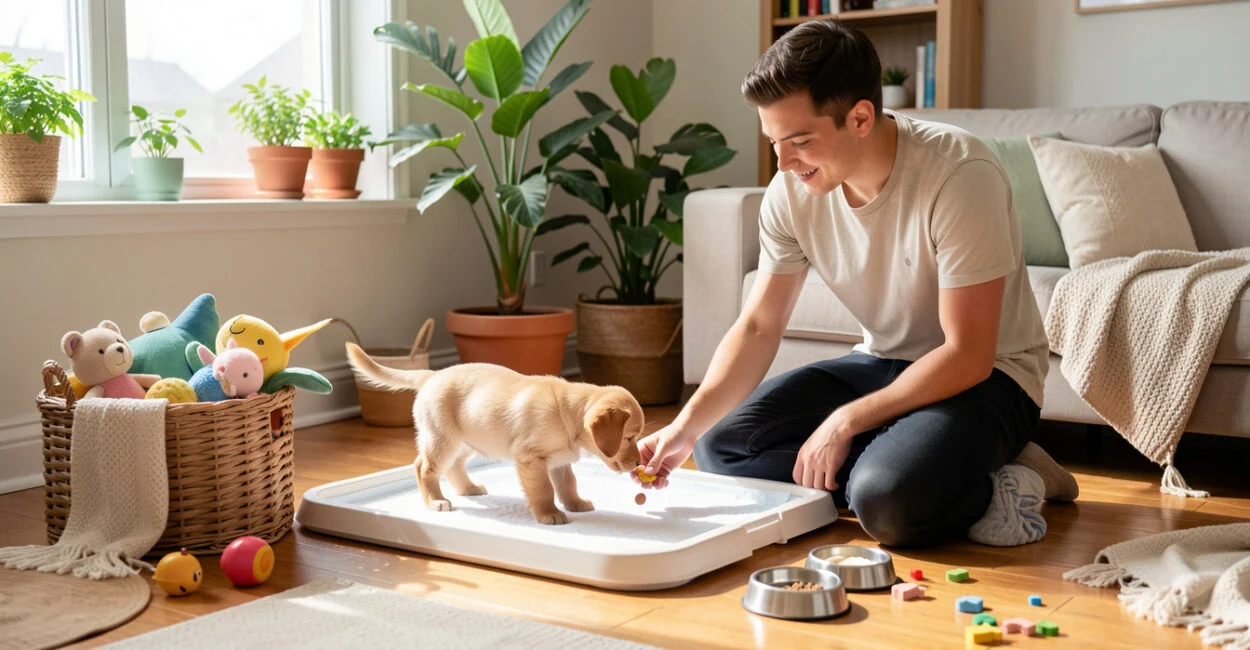 Guiding a puppy to its pad
A puppy can learn to use an indoor potty pad, but the lesson depends on a clear setup and repeated chances to get it right. Puppy potty pad training works best when you guide your puppy to the same spot after waking, eating, drinking, and playing, then reward success right away. Accidents are part of learning, not a reason to punish.
Pads can help when outdoor trips are impractical, such as in a high-rise apartment or during early vaccination precautions advised by a veterinarian. They can also make outdoor toilet training less direct if a puppy learns that indoor surfaces are acceptable, so choose the plan that fits your home and long-term goal.
How Do You Teach a Puppy to Use Potty Pads?
To teach a puppy to pee on pads, set one pad in a consistent, easy-to-reach place, take the puppy there at predictable times, and reward them immediately after they finish. Stay nearby and watch for sniffing, circling, or sudden pauses in play. If the puppy misses, clean the spot and resume the routine without scolding.
- Choose one potty spot. Keep the pad away from food, water, and bedding, but close enough for a young puppy to reach quickly.
- Offer the pad at likely times. Guide your puppy there after waking, meals, drinks, play, and naps, and whenever you notice pre-potty signals.
- Wait quietly. Give the puppy a few minutes. A familiar cue such as “go potty” can help, but say it once rather than repeating it while the puppy investigates.
- Reward as soon as they finish. Offer a small treat and calm praise while the puppy is still beside the pad. A reward given after the puppy wanders away may not connect to the behavior.
- Supervise between trips. If you cannot watch closely, use a puppy-safe, easy-to-clean area with access to the pad. If an accident starts, gently guide the puppy to the pad if there is time.
A common miss happens when the pad is technically nearby but blocked by a door, furniture, or an exercise-pen edge. Puppies may also step onto the pad, turn around, and pee with their back end off it. A larger pad or a tray that holds it flat can help; once aim improves, you can decide whether to reduce the surface area.
How Do Pee Pads Work, and What Attracts Puppies to Them?
Pee pads are absorbent, disposable or washable layers designed to take in urine and keep it from spreading across the floor. Puppies may choose them because of their texture, consistent placement, or an attractant scent in some products, but no scent guarantees that a puppy will use a pad.
Choose a pad that stays put, absorbs enough for your puppy’s size, and fits the potty area with room for the puppy to stand and turn. A leaking pad, a crinkly surface that frightens the puppy, or a pad that slides underfoot can undermine training. For dogs that shred disposable pads, consider a washable pad or a secure pad holder, and supervise to prevent chewing or swallowing pieces.
Some owners try a “potty training spray for dogs,” including products such as Bodhi Dog potty training spray. Treat these as optional cues, not as a substitute for timing, access, and rewards; a puppy may ignore the scent or prefer another spot. The American Kennel Club’s puppy potty-training guidance also emphasizes supervision and a consistent routine.
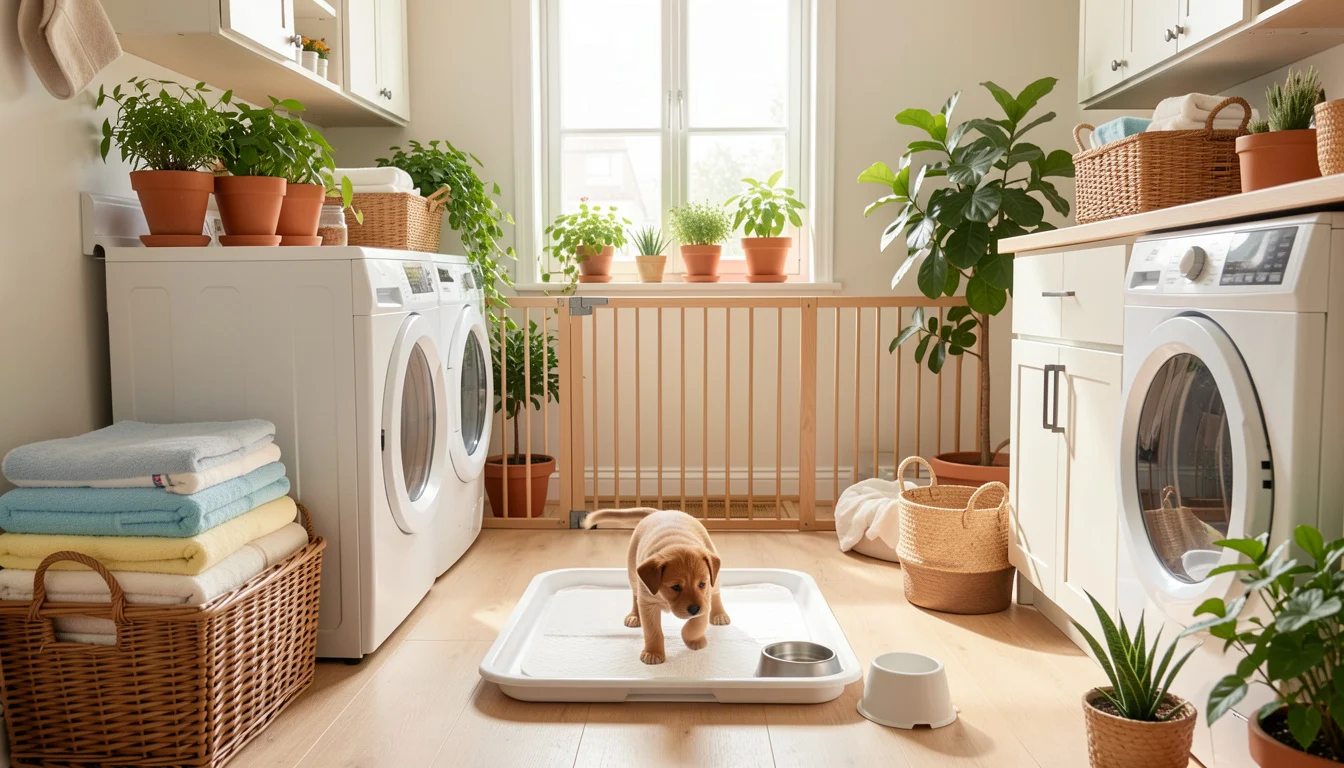
Where Should You Set Up the Potty-Pad Area?
Put the pad in a quiet, consistent location that your puppy can reach at all times, with a clear route and enough space to move onto it. Avoid shifting the spot during early training, since a puppy may return to the old location after the pad moves.
Separate the potty area from the puppy’s sleeping and eating spaces. A bathroom corner, laundry area, or gated section may work if it is accessible and not noisy or startling. In a larger home, temporarily limiting access to one puppy-proofed room can prevent accidents in distant corners while the puppy is learning.
If you use a crate or pen, keep the pad at the opposite end from the bed and water. A pad should not be used to justify leaving a puppy confined for longer than they can comfortably manage. For information on reward-based handling more broadly, see the American Veterinary Society of Animal Behavior’s humane dog training position statement.
How Often Should You Offer a Pad by Puppy Age?
A puppy potty schedule by age is a starting point, not a guarantee: younger puppies usually need more frequent chances, while waking, meals, drinking, and activity can trigger a need at any age. Adjust the interval to your puppy’s actual patterns, and ask a veterinarian about unusual urgency or accidents.
Age or situation Practical starting point About 8–10 weeks Offer the pad every 30–60 minutes while awake, plus after transitions such as naps and meals. About 10–12 weeks Try roughly every 1–2 hours while awake, then shorten the interval if misses occur. About 3–4 months Many puppies can begin stretching intervals, but continue offering the pad after sleep, food, water, and play. Any age after a nap or vigorous play Go directly to the pad; these transitions often matter more than the clock.
These ranges are practical estimates, not medical limits. Body size, health, water intake, excitement, and individual development affect how long a puppy can wait. The VCA Animal Hospitals guide to house-training puppies explains why close supervision and frequent opportunities are central to housetraining.
What Should You Do When Your Puppy Has an Accident?
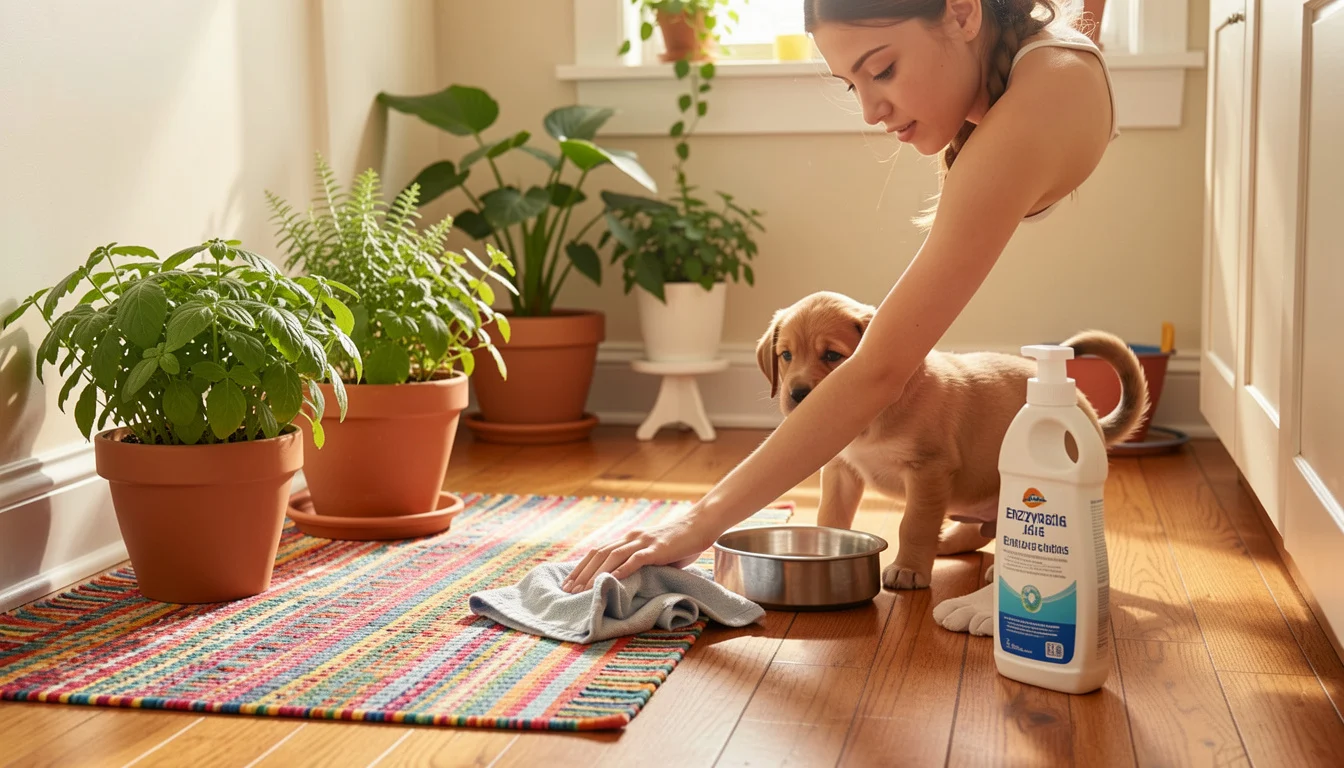
Clean accidents calmly with an enzymatic pet cleaner labeled for the surface, and avoid punishment. Scolding after the fact cannot teach a puppy where to go; it may instead make the puppy hide to pee when people are nearby.
If you catch the puppy starting to go, interrupt gently with a neutral sound and guide them to the pad. Reward them if they finish there. For a completed accident, blot up the urine, use the cleaner according to its label, and review what happened: Was the pad too far away, was supervision interrupted, or had too much time passed since the last opportunity?
Repeated accidents in a previously reliable puppy, straining, blood in the urine, or a sudden increase in urination warrant a call to the veterinarian. Training cannot rule out a urinary or other medical problem.
What is the 10-10-10 Rule, and How Long Does Training Take?
The 10-10-10 rule is an informal training mnemonic: allow about 10 minutes to settle in a new space, supervise for about 10 minutes, then offer a potty opportunity for about 10 minutes. It is not a veterinary standard or a reliable countdown to a successful trip, and it does not fit every puppy or every situation.
Keep the parts that help: supervise closely, give the puppy time to settle, and offer the pad before accidents are likely. If the puppy does not go, return to active supervision and try again soon rather than leaving them unattended. A puppy may need several attempts before the routine becomes predictable.
Searches for “how to toilet train a puppy in 7 days” or “how to potty train a puppy in 3 days” reflect a wish for a quick plan, but neither timeline can be promised. Progress depends on age, consistency, health, and how well the puppy can reach the pad. Keep a brief log of meals, naps, pad visits, and accidents for several days; patterns in that record are more useful than a fixed deadline.
Can You Use Pads and Still Teach Outdoor Potty Training?
Yes, a puppy can learn both, but consistency helps prevent confusion: use one indoor pad location and one outdoor toilet area, and reward the same behavior in each place. If the end goal is outdoor-only toileting, make outdoor trips the main routine and use pads as a planned backup rather than adding pads in several rooms.
To transition, move the pad gradually toward the exit if your layout allows, then place it near the outdoor toilet spot before phasing it out. Alternatively, take the puppy outside on a regular schedule and reward outdoor success, while keeping the indoor pad available only when needed. For outdoor trips, a consistent leash routine and a reliable recall cue can make transitions smoother; see these guides to walking without leash pulling and teaching a dog to come when called.
Pad training may not suit every household. If the puppy is chewing pads, repeatedly missing them, or becoming confused between rugs and pads, a small outdoor potty area or more frequent supervised trips may be a better fit. Your veterinarian can help you weigh outdoor access against vaccination and local disease risks.
Question Short answer How do I teach pad use? Guide the puppy to one accessible pad at predictable times and reward immediately after success. What attracts puppies? Texture, location, and sometimes scent can prompt interest; none works for every puppy. How often should I offer it? Offer it frequently, especially after sleep, meals, drinks, and play; adjust to your puppy’s pattern. Does 10-10-10 guarantee success? No. It is a loose mnemonic, not a universal schedule or training deadline. Can pads lead to outdoor training? Yes. Keep the routine clear and gradually make outdoor toileting the primary option if that is your goal.
Start by choosing one pad location and recording when your puppy wakes, eats, plays, and needs to go. Use that pattern to set the next day’s opportunities, and change one variable at a time if misses continue.
📱 See this content as a Web Story
Frequently Asked Questions
Should I Leave a Used Pad Down So My Puppy Recognizes the Scent?
A faint scent cue may help some puppies, but leaving a saturated pad can discourage use and spread urine. Replace it when wet or soiled, and keep the area clean.
Can I Put a Potty Pad Inside a Crate?
For routine crate training, a pad inside the sleeping space can blur the distinction between resting and toileting areas. If a puppy must stay in a larger pen with a pad because of unavoidable time alone, place the pad well away from the bed and do not use the setup as a substitute for appropriate supervision and breaks.
What If My Puppy Tears Up or Eats the Pad?
Remove the pad and switch to a secured holder or washable option while supervising. If you suspect your puppy swallowed pad material, contact a veterinarian for advice.
Can an Older Dog Learn to Use Pee Pads?
Yes. Use the same consistent placement and reward routine, while first checking with a veterinarian if indoor accidents are new or frequent. Older dogs may need a different schedule because of health or mobility needs.