
How to Remove Hard Water Stains from Shower Glass
How to remove mineral buildup from shower glass using vinegar or mineral removers safely, distinguishing surface deposits from permanent glass etching.
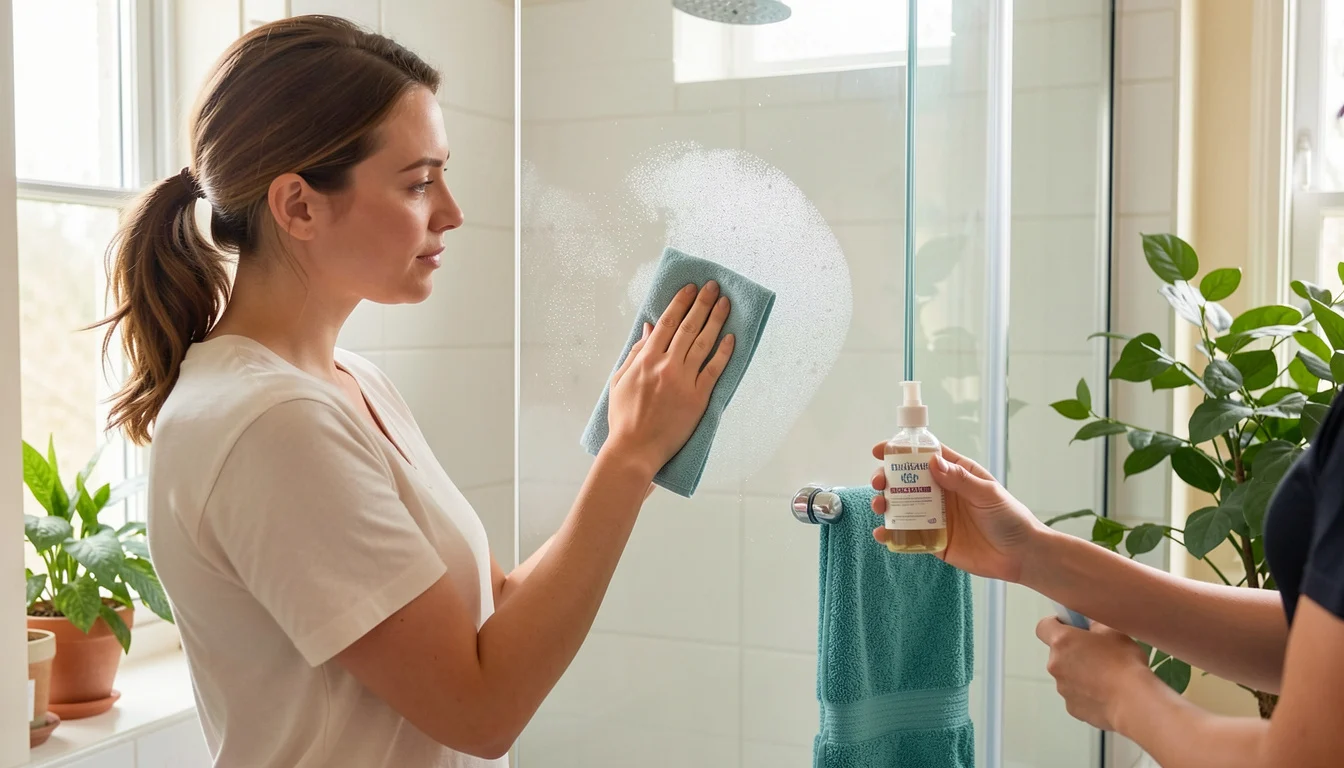 Wiping mineral spots from shower glass
A clear shower door can turn cloudy after only a few weeks of repeated splashes and drying. To remove hard water stains from shower glass, dissolve the mineral film with a glass-compatible cleaner, then wipe it away with a soft non-scratch applicator. Start with diluted white vinegar if the glass manufacturer allows it; move to a labeled mineral remover only if deposits remain.
The key is to distinguish residue sitting on the surface from etching in the glass. Deposits often improve with careful cleaning, while etched or otherwise damaged glass may stay cloudy no matter how much you scrub.
Use the door manufacturer’s care instructions as your limit. Coatings, metal finishes, seals, and nearby stone can change which cleaner is safe.
Quick Takeaways
- Use a mild, glass-safe acid first, and give it contact time rather than scrubbing harder.
- Work in small sections so the cleaner stays wet on the mineral deposit.
- Never mix vinegar, CLR, bleach, or other cleaning products.
- Stop if the haze does not change after repeated, label-compliant treatments; the glass may be etched or coated.
How to Remove Hard Water Stains from Shower Glass
To remove hard water stains from shower glass, wet a small area with a solution of equal parts white vinegar and water, if the glass maker permits vinegar. Let it sit for several minutes without drying, gently wipe with a soft microfiber cloth or non-scratch sponge, then rinse and dry. Repeat before switching to a stronger product.
Mineral deposits form when water evaporates and leaves dissolved minerals, often calcium and magnesium, on the glass. The mild acid in vinegar can help loosen those deposits. It cannot restore glass that has been etched or damaged, and some shower doors have coatings that require a different cleaner.
- Check the door’s care instructions and test the cleaner on a small, inconspicuous area.
- Apply the diluted vinegar to the affected glass. A cloth dampened with the solution can help keep a vertical area wet.
- After a few minutes, wipe gently. Rinse thoroughly with clean water and dry with a microfiber cloth.
- Inspect the dry glass in angled light. Repeat the treatment if the residue is improving; if it is unchanged, reassess the surface before escalating.
A common cleaning mistake is spraying the whole door and walking away. On warm glass or in a ventilated bathroom, the solution may dry before it has time to work, leaving fresh streaks. Treating a smaller section and keeping it wet avoids that problem.
Why Hard Water Leaves Stains on Shower Glass
Hard water deposits are mineral residue left behind when water evaporates; in ordinary language, they are the chalky film or spots that build up on glass. A haze that softens or disappears when wet may be surface buildup. A persistent dull patch that remains after careful cleaning may be etching, which is physical damage to the glass surface.
Can Hard Water Stains Be Permanent?
Yes. Mineral deposits can often be removed, but etching and other surface damage may be permanent. A useful check is to clean and dry one small patch, then compare it with the surrounding glass under angled light; if the patch remains uniformly cloudy and does not improve, more aggressive scrubbing is unlikely to help.
That check is not a definitive diagnosis. A protective coating, residue from another cleaner, or damage to the glass can look similar, so consult the door manufacturer if the finish or coating is uncertain. The Pilkington glass-cleaning guidance emphasizes using appropriate cleaning methods and avoiding damage to glass surfaces.
What to Gather Before Cleaning
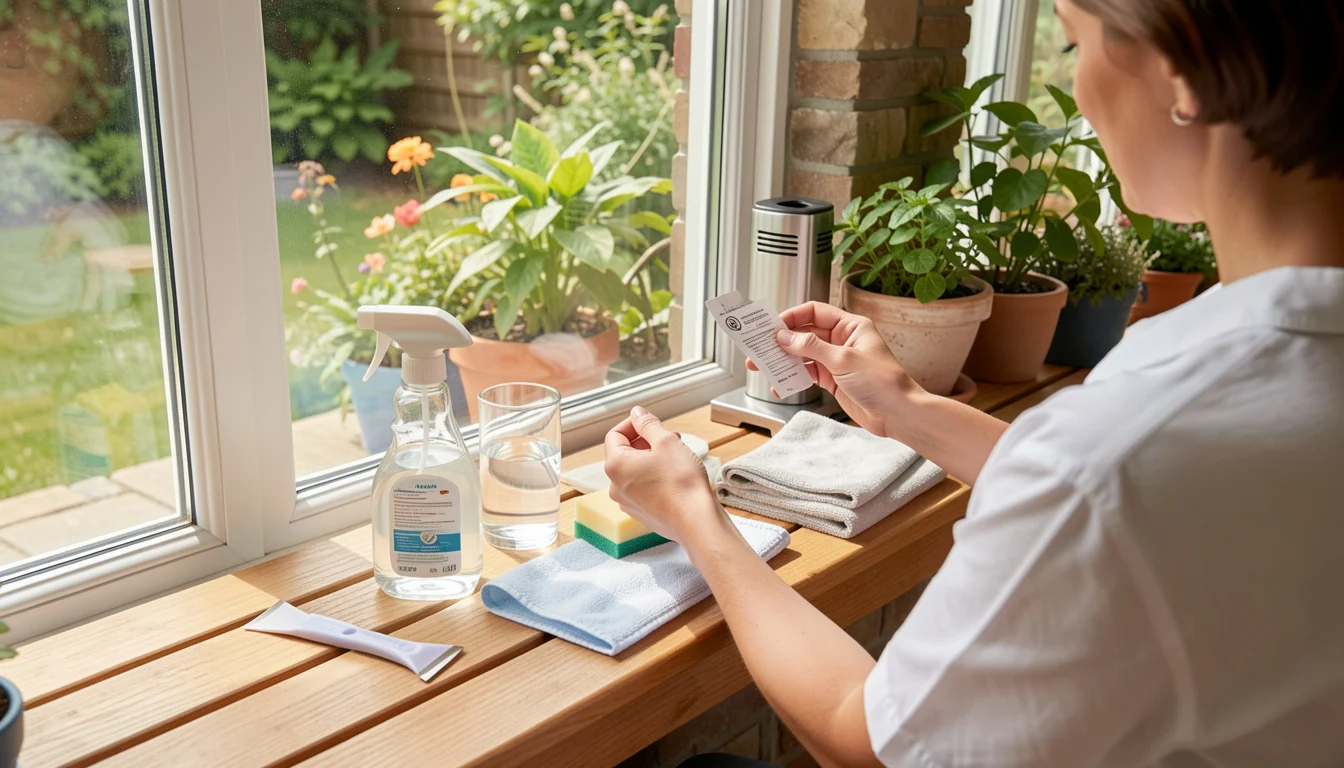
Use a spray bottle, white vinegar, water, a soft microfiber cloth, and a non-scratch sponge. Keep a second cloth for drying. A plastic scraper is not automatically safe: use one only if the glass manufacturer specifically permits it.
Before applying any cleaner, check the door’s care label and identify nearby materials. Vinegar and many mineral removers can harm natural stone, some metal finishes, or other surfaces if they sit or run onto them. Ventilate the room, wear the protective gear required by the product label, and keep cleaners away from children and pets. For broader household product precautions, see this guide to using cleaning products more safely at home.
Let the cleaner do the loosening; use the cloth to lift the residue, not to grind it into the glass.
Read also: How to Clean a Refrigerator and Get Rid of Food Odors
Comparing Hard Water Stain Removers for Glass
The right hard water stain remover depends on how heavy the buildup is and what the shower-door manufacturer allows. Household vinegar is a reasonable first step for light deposits; a dedicated mineral remover may suit heavier residue, but its label and surface compatibility decide whether it belongs on your door.
Cleaner Best suited for Key caution Diluted white vinegar Light mineral film and fresh spots Check coating and nearby-material instructions; do not let it dry on the surface. Dedicated mineral remover, such as CLR Stubborn deposits when the label permits use on the surface Follow the current label, including contact time, ventilation, protective equipment, and rinsing directions. Bio-Clean hard water stain remover Deposits for which the product’s directions and the door maker’s guidance are compatible Follow the product directions; do not assume an abrasive or specialty product is safe for coated glass.
Does CLR Damage Glass Shower Doors?
Do not assume CLR is safe for every shower door. Check the current product label and the door manufacturer’s care instructions, test a discreet spot, and protect surrounding finishes. CLR’s product directions and safety information take precedence over general cleaning advice. Never combine CLR with vinegar, bleach, or another cleaner.
Bio-Clean and other products marketed for mineral deposits can vary in ingredients and directions. A product name alone does not confirm compatibility with a protective coating. If the label does not clearly cover your surface, contact the door maker before use.
How to Remove Thick or Calcified Limescale
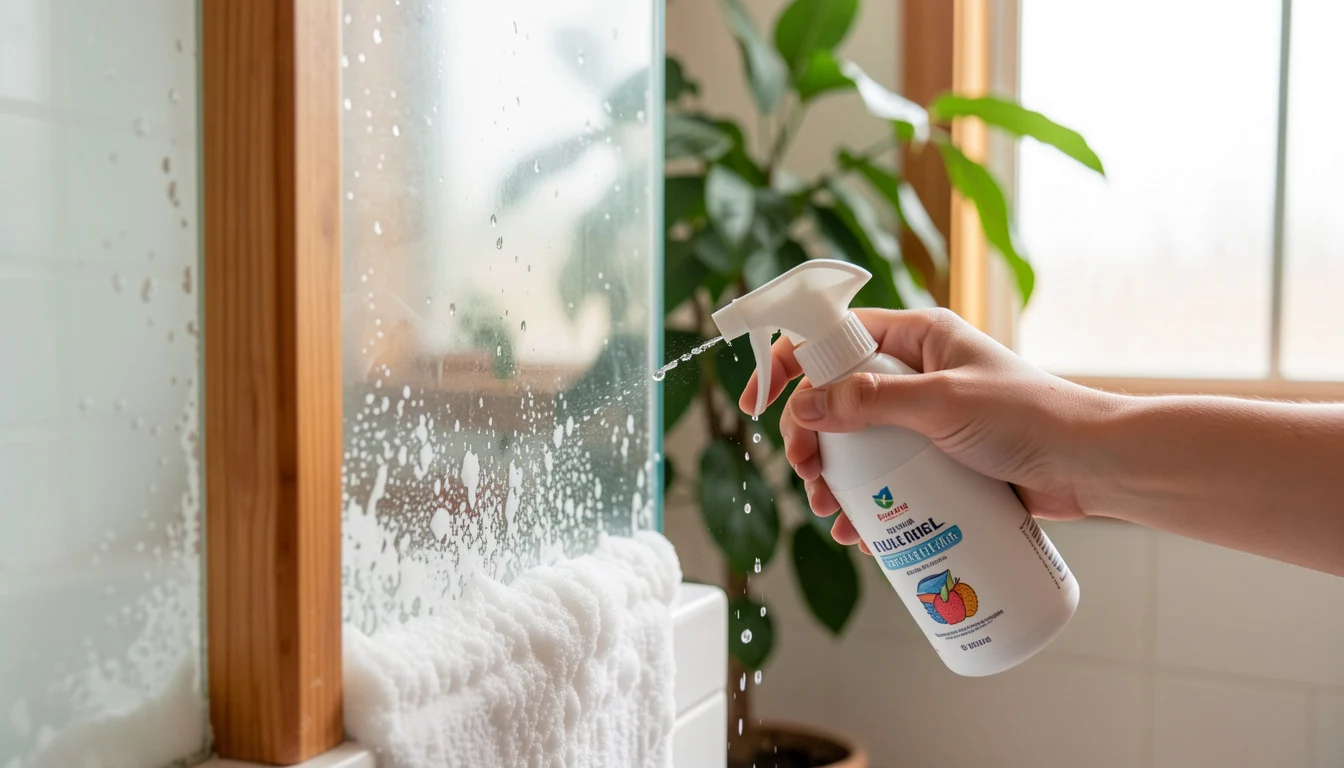
For hard limescale, repeat a label-approved treatment and allow the stated contact time before trying a stronger cleaner. Calcified deposits may be firmly bonded, so several gentle applications can be safer than one session of forceful scrubbing. If a suitable specialist remover does not improve the glass, stop rather than escalating to harsher chemicals or abrasives.
For example, a lower corner of the door may have a white, rough-feeling crust where water repeatedly pools. Dampen a small area with an approved cleaner, keep it wet for the label’s specified time, then wipe and rinse. If the crust softens, repeat the same process; if the glass beneath still looks cloudy when dry, the remaining mark may be etched.
Professional glass care may be preferable when the deposit covers a large area, the door has a specialty coating, or the surface remains unclear after a careful test. A professional can assess whether polishing is appropriate, but polishing itself may not be safe for every coated or damaged door.
Tools and Techniques to Avoid Scratching Glass
Use a clean microfiber cloth or a soft sponge labeled non-scratch. Avoid steel wool, scouring pads, powdered abrasives, and stiff brushes. Grit caught in a cloth or sponge can also scratch, so rinse the applicator as it collects residue.
A magic eraser for hard water stains on glass is not a default safe choice: its abrasive action may dull a coating or damage a finish. Avoid razor blades and other blades unless the shower-door manufacturer explicitly permits them and provides a method; a blade can scratch glass or catch on a coating. The International Window Cleaning Association’s glass-care resources provide additional guidance on careful glass maintenance.
Keep cleaner off the frame and seals as much as possible, and rinse any drips promptly. For routine care around a window frame, the same habit of using gentle tools can help when cleaning window tracks without scratching them.
How to Prevent Water Spots from Returning
After each shower, pull a squeegee down the glass and dry the lower edge, where water tends to collect. A few seconds of drying prevents droplets from evaporating into a new mineral film. For a weekly routine, use a cleaner approved for the door rather than waiting until the deposits form a rough layer.
A water softener may reduce mineral spotting where installation is practical, but it does not remove deposits already on the glass. If the bathroom is shared or cleaning tasks are easy to forget, add the quick wipe-down to a regular household schedule, such as this weekend cleaning routine.
Start with one small test area and the mildest cleaner allowed by the door maker. If the mark improves, repeat that method; if it does not, check whether the surface is coated or etched before buying a stronger hard water stain remover.
📱 See this content as a Web Story
Frequently Asked Questions
Can I Use Vinegar on Every Shower Door?
No. Some manufacturers restrict acidic cleaners on coated glass or particular finishes. Check the care instructions first, and test a small hidden area if vinegar is permitted.
Why Does the Glass Look Cloudy Again After Cleaning?
Water left on the surface can dry into new mineral spots, while cleaner residue can also leave a film. Rinse well and dry the glass; if one patch stays cloudy after it is clean and dry, it may be surface damage.
Should I Leave Vinegar on the Glass Overnight?
No. Long exposure is unnecessary and may affect nearby finishes or materials. Follow the door maker’s guidance and the cleaner’s directions, keeping the treated area wet only for the recommended contact time.
Can I Use a Bathroom Cleaner After Vinegar?
Do not apply one cleaner over another. Rinse the glass thoroughly, ventilate the room, and follow both product labels before using a different product; never mix cleaning products.
Will a Water Softener Prevent Every Spot?
It can reduce mineral deposits in areas with hard water, but it cannot prevent all marks from soap, shampoo, or other residues. Squeegeeing and drying the door still help.