
How to Choose Sustainable Cleaning Products for Your Home
How to choose sustainable cleaning products by evaluating ingredient transparency, verified environmental claims, packaging impact, and task-specific effecti…
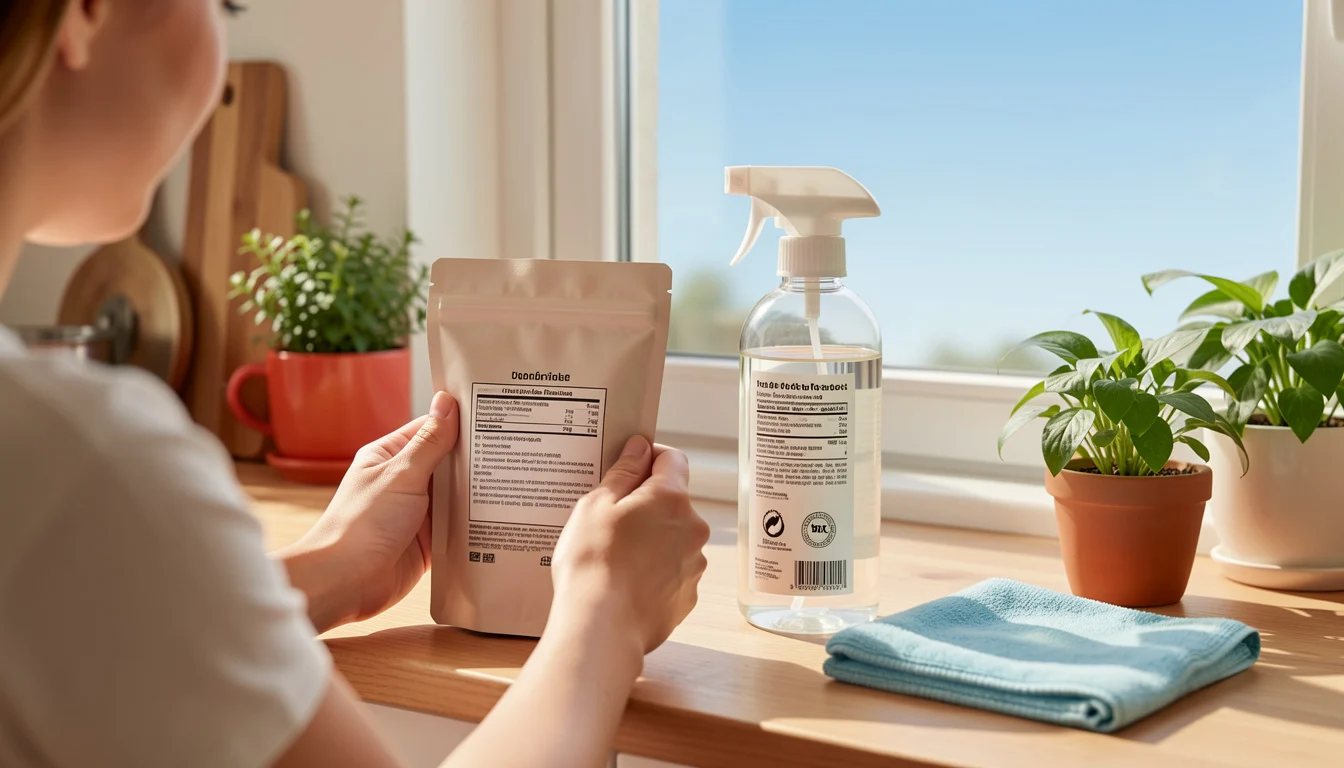 Comparing refillable household cleaning products
Choosing a lower-impact cleaner means balancing the job it needs to do with ingredient transparency, credible label evidence, packaging, and cost per use. “Natural,” “non-toxic,” and “eco-friendly” are not guarantees on their own. Start with the surface and soil you need to clean, then compare products that make specific, verifiable claims.
Sustainable Cleaning Products: Which Should You Choose?
Choose a cleaner with clear ingredient information and a certification or specific environmental claim you can verify; then confirm that its label lists the surface and task you need. Concentrates and refills can reduce packaging, but only when you use the product as directed and the refill system actually suits your household.
What Makes a Cleaning Product Sustainable?
In technical terms, sustainability is a product’s impact across relevant parts of its life cycle, including ingredients, manufacturing, use, packaging, and disposal. For household shoppers, that means comparing evidence across the product’s whole use, rather than treating one “green” feature as proof of low impact.
- Task fit: The label supports the intended use and surface, so you do not need extra products or repeat cleaning.
- Ingredient information: The manufacturer provides enough detail to assess the formula, including fragrance where possible.
- Credible verification: A recognized certification or clearly explained claim backs up the product’s environmental or health-related statements.
- Packaging: The container, refill, or concentrate reduces material use in a way that works for your routine.
- Cost per use: Compare the amount needed for each cleaning job, not just the shelf price.
There is no single label that captures every environmental impact, and a product that performs well for one household may not suit another. Surface material, water hardness, soil type, and sensitivity to fragrance can all affect the choice.
For a broader approach to weighing product longevity and environmental claims, see this guide to choosing durable, eco-friendly goods.
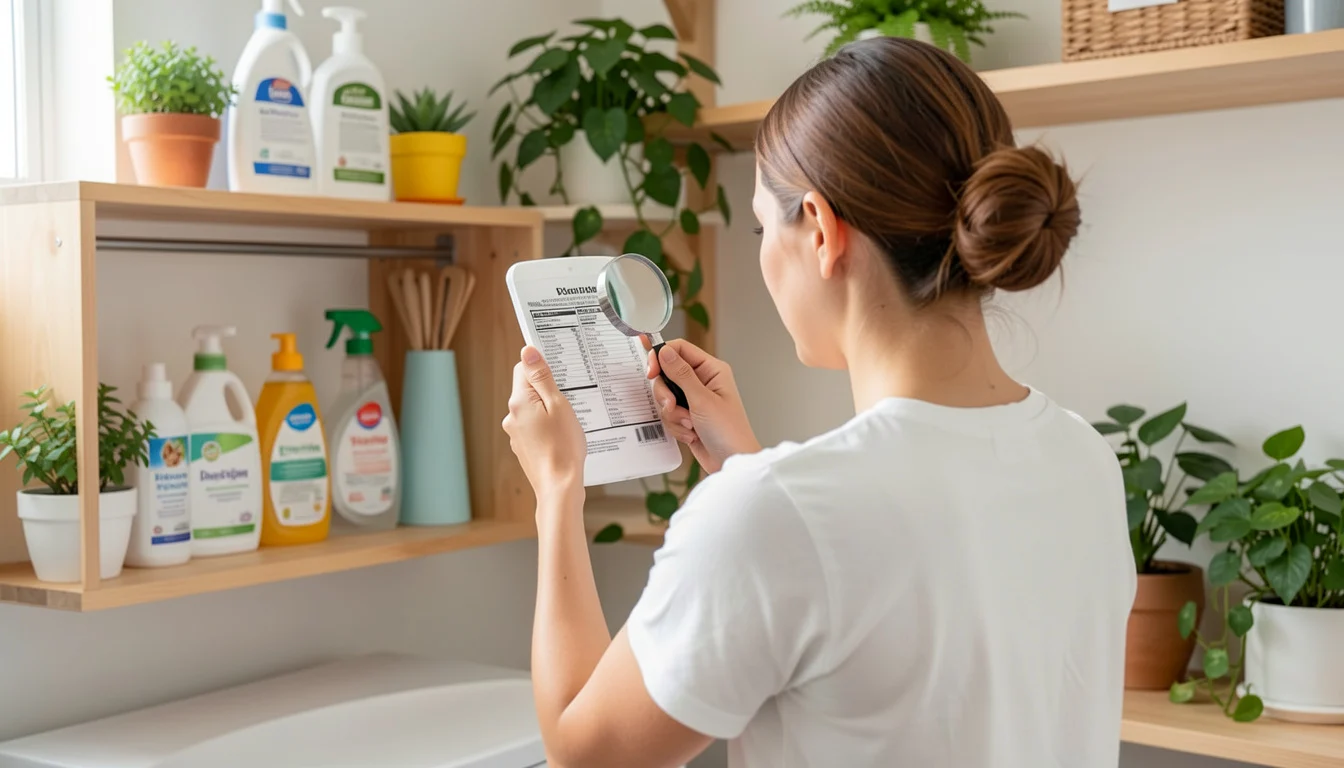
How to Evaluate Ingredients, Labels, and Green Claims
Look for specific, checkable claims rather than broad words such as “green” or “planet-friendly.” The U.S. EPA Safer Choice Standard sets criteria for evaluating ingredients in covered product categories. EPA’s Design for the Environment (DfE) program identifies qualifying antimicrobial pesticide products that meet its program criteria. Neither mark means a product is harmless in every situation or appropriate for every surface.
The Federal Trade Commission’s Green Guides explain how environmental marketing claims should be qualified and supported. A vague statement like “eco-friendly” gives little useful information by itself; look for the specific benefit, its scope, and the evidence behind it.
“Non-toxic” is not a universal guarantee of safety. A cleaner can still irritate skin or eyes, trigger fragrance sensitivity, or cause harm if misused. Check the directions, warnings, and ingredient disclosure. Fragrance-free may be preferable for some households, but it does not automatically mean the formula has a lower environmental impact.
A common mistake is assuming that a concentrated cleaner is always the better buy. If you use too much, mix it incorrectly, or cannot reuse the bottle, the expected savings in packaging or cost may not materialize.
Match the Cleaner to the Cleaning Task
Choose by soil, surface, and label instructions. An all-purpose product may work for routine wipe-downs, but it is not a substitute for a product designed for scale, glass, laundry, or a particular floor finish.
Task What to look for Check before use All-purpose A general-purpose cleaner labeled for the surfaces in your home Whether it is ready to use or needs dilution Bathroom A product suited to soap residue, soil, or mineral deposits, as needed Compatibility with stone, grout, fixtures, and finishes Glass A glass cleaner labeled for windows or mirrors Use instructions that help prevent streaks Floors A cleaner made for the floor material and finish Whether the surface tolerates water and the listed formula Laundry A detergent labeled for the machine and load type Dosing instructions, fabric needs, and fragrance details
For the best cleaning products for a bathroom, first identify the problem: everyday grime, soap scum, or hard-water deposits may call for different formulas. Never assume a bathroom cleaner is safe for natural stone or every metal finish. Test a small, inconspicuous spot when the surface instructions are unclear.
For laundry, use the dose on the label rather than adding extra detergent in hopes of improving results. If reducing fiber shedding is also a concern, this guide to limiting microplastic shedding during laundry covers related habits.
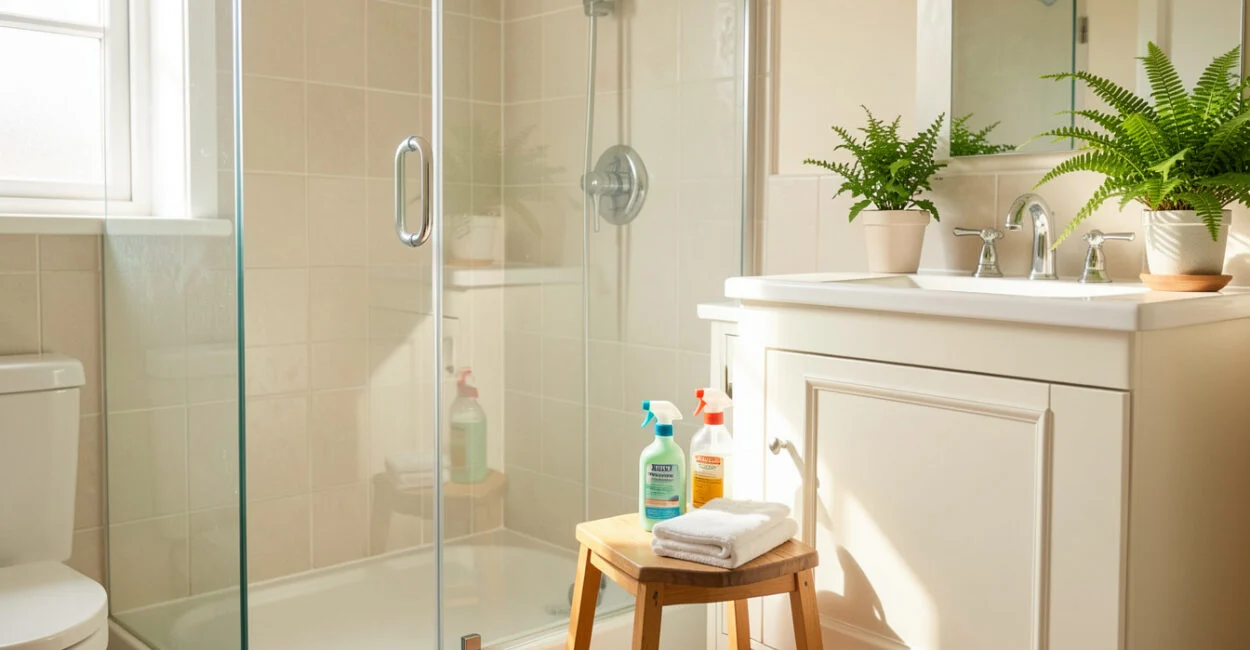
Sustainable Products for Common Areas of the Home
Kitchen: For counters and appliance exteriors, a labeled all-purpose cleaner can be a practical choice if it is compatible with the material. Use a separate product when the label or surface manufacturer calls for one. Food-contact surfaces may require rinsing or other specific steps, so follow the product directions.
Bathroom: Keep the surface in mind when choosing among general bathroom cleaners, descalers, and glass products. “Bathroom cleaner” does not mean suitable for every finish. A formula intended for mineral deposits, for example, may not be appropriate for all stone or metal.
Floors and living areas: Match floor cleaner to the finish, and use a general-purpose product on other surfaces only when its label allows it. A smaller, task-based set of products can prevent buying a specialized cleaner that duplicates one already at home.
For a bathroom product swap, this overview of plastic-free bathroom essentials offers related ideas. Packaging still needs to be weighed against whether the product itself suits the cleaning task.
How to Compare Brands and Product Formats
Compare a ready-to-use bottle with a concentrate or refill by looking at the full routine: purchase price, amount used per cleaning, packaging, shipping if relevant, and whether you will reuse the container. A concentrate may take less packaging to transport, but the result depends on its dilution directions and the refill system available to you.
Hypothetical example: Suppose a $12 concentrate makes 24 labeled-use portions. Divide $12 by 24: that is $0.50 per portion. If a $6 ready-to-use bottle provides 8 comparable portions, divide $6 by 8: that is $0.75 per portion. In this example, the concentrate costs less per portion, but the comparison only holds if the portions do the same job and are measured as directed.
Check whether the brand discloses ingredients, explains its claims, and identifies a certification that applies to the specific product. Do not assume every product from a brand has the same certification or formula. Claims and product lines can change, so confirm current details on the product label and manufacturer’s product page.
Are Homemade Cleaners a Sustainable Alternative?
Homemade cleaners can reduce purchases of some packaged products, but they are not a universal replacement. A mild soap solution may suit certain routine cleaning jobs, while glass, stone, finished wood, and other surfaces may require different care. Follow the surface manufacturer’s guidance and test an inconspicuous area first.
Do not mix cleaning products. In particular, never combine bleach with ammonia or acids, including vinegar. Homemade mixtures should not be treated as disinfectants or sanitizers unless an authoritative product label specifically supports that use.
For a next purchase, use this checklist:
- Name the task and surface before choosing a formula.
- Read the directions, warnings, and available ingredient information.
- Verify certifications and look for specific evidence behind environmental claims.
- Compare packaging and cost per labeled use, including any dilution steps.
- Choose a fragrance and format your household can use safely and consistently.
Frequently Asked Questions
What Are Some Environmentally Friendly Cleaning Products?
Look for task-appropriate cleaners with transparent ingredient information and a credible certification or specific, substantiated environmental claim. Refillable or concentrated formats may also be worth comparing, provided the directions and packaging system fit your household.
Are Fragrance-Free Cleaners Always the More Sustainable Choice?
No. Fragrance-free can help people who prefer to avoid added fragrance, but it does not by itself establish a product’s overall environmental impact. Compare the formula, evidence, packaging, and intended use.
How Can Shoppers Tell Whether a Cleaning Product’s Environmental Claims Are Credible?
Check what the claim specifically means, whether it applies to the whole product or only one feature, and what evidence supports it. Look for recognized program criteria, such as EPA Safer Choice where applicable, and compare the wording with the FTC Green Guides’ approach to clear, qualified environmental claims.
Are Concentrates Always Cheaper Than Ready-To-Use Cleaners?
No. Calculate the price per labeled-use portion and compare products intended for the same job. Incorrect dilution, overuse, or buying a refill bottle you will not reuse can change the practical value.