
A Simple System for Organizing Household Paperwork
How to organize household paperwork by sorting urgent tasks from records, setting up a clear filing system, and creating routines to manage bills and documen…
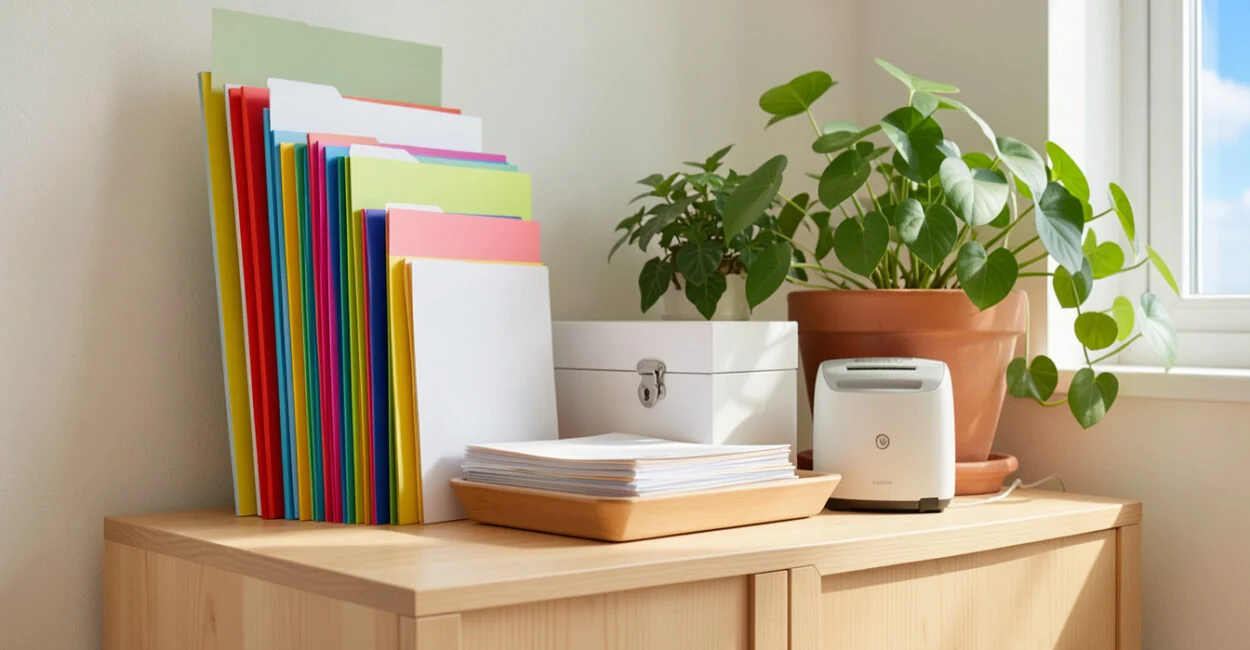 A clear, secure home filing system
A Simple System for Organizing Household Paperwork
To organize household paperwork, sort every page into a small set of categories, separate urgent actions from records to file, and store important documents in a secure, clearly labeled place. A consistent system helps everyone in the home find what they need, reduces paper clutter, and makes it easier to keep records for the right amount of time.
This paper-first guide is for anyone managing bills, home records, medical paperwork, and personal documents for one person or a household. You’ll learn how to tackle an existing pile, choose a filing setup, make records easy to retrieve, and create a routine that keeps new papers from taking over a counter or kitchen table.
Start with a Simple Household Paperwork System
A household filing system is a repeatable method for classifying, storing, retrieving, and disposing of physical records. In everyday terms, it gives each paper a clear next step and a predictable home, so important documents don’t get buried under mail and old receipts.
Use four destinations: Action for anything that needs a response, File for records to keep, Reference for information you may need briefly, and Shred or Recycle for papers you no longer need. Keep Action papers visible in one inbox; file records by category; put short-term reference material in a separate, dated spot.
The distinction between “action” and “file” matters. An insurance statement that needs a correction is still an action paper, even if you also need to retain it after resolving the issue. Write the next step and due date on a sticky note or directly on the envelope, then move the document to its permanent category once the task is complete.
Set up the system before you sort a large backlog. Choose a file box, drawer, or binder and label the core categories. If your storage is ready, each decision has an immediate destination. Otherwise, “I’ll put this away later” tends to create a new pile beside the pile you meant to clear.
Keep the system small enough to use. A single household may need folders for home, finances, medical, insurance, vehicles, and personal records, but not a separate folder for every company or year. Add detail only when a category becomes difficult to search. The aim is a structure people can remember without consulting a complicated index for every envelope.
Gather and Sort the Papers You Already Have
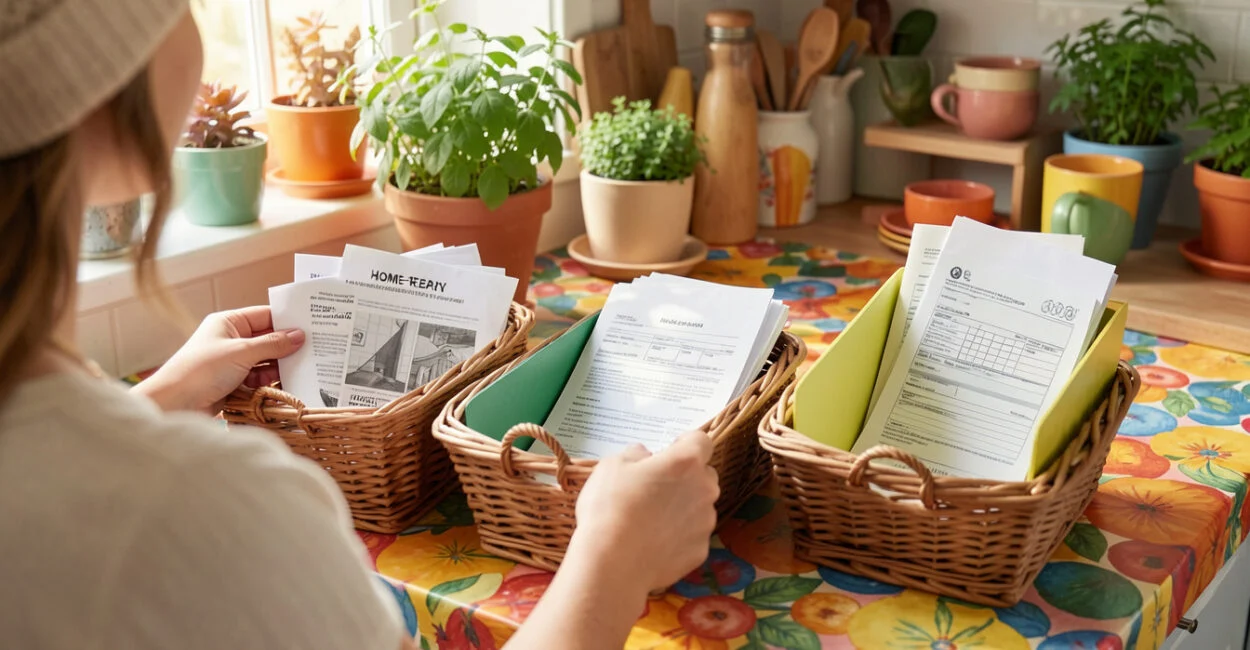
Begin by collecting household papers from the places where they accumulate: mail trays, kitchen counters, bags, desk drawers, glove compartments, and folders. Sort one manageable area at a time. A large mixed pile can feel impossible; one stack of mail or one drawer gives you a clear stopping point.
Before opening everything, prepare containers labeled Action, File, Reference, and Shred. Recycle ordinary, non-sensitive paper only after checking that it contains no information you should protect. If you are unsure whether a document is important, put it in a temporary “Review” folder with a date to revisit it instead of making a rushed discard decision.
- Action: bills to pay, forms to complete, renewal notices, appointment instructions, and correspondence awaiting a reply.
- File: records that document ownership, a transaction, coverage, a payment, or a significant personal event.
- Reference: instructions, return details, or information you expect to need soon but don’t need to retain as a permanent record.
- Shred or recycle: expired promotional mail, duplicate copies, and routine papers that no longer serve a tax, legal, financial, insurance, or personal purpose.
Open envelopes and check every page. A short cover letter may contain a deadline, while a document inside may carry the account number or terms you need later. Remove staples only when they make filing awkward, and keep pages from one transaction together so a receipt does not become separated from its explanation.
What Should You Do with Paperwork That Needs Action?
Put action papers in one visible inbox, assign each item a next step, and give it a deadline when one applies. A bill might need payment by a stated date; a notice might require a phone call or a signed form. Once the task is done, move any record worth keeping into its category.
A practical detail: envelopes often hold the clue to a deadline, so don’t discard one until you’ve checked the postmark, return address, and any date printed on it. If someone else in the household will handle the task, write that person’s name beside the next step. This avoids the common handoff problem where everyone assumes another person has taken care of it.
For a long sorting session, set a stopping rule. For example, finish one drawer or a small stack, then file what you’ve sorted before starting another area. This prevents a temporary sorting project from spreading across the dining table for days. If paper clutter is part of a wider storage problem, this guide to deciding what to keep in a small apartment can help with the surrounding clutter without replacing the document-sorting steps here.
Create Categories for Household Documents
Group papers by the reason you might need them, rather than by the company that sent them. A document about a home repair belongs with home records; a tax form belongs with finances or taxes. Category names should make sense to the people who will search them, including anyone who did not sort the original stack.
Start with a short list and divide a category only when it becomes hard to navigate. For example, a “Home” folder can hold purchase or lease records, major repairs, warranties, and utility setup papers. If it grows, split it into “Property” and “Repairs and warranties.” Avoid creating subfolders before you know that a real search problem exists.
- Home: purchase or lease documents, property tax records, major repairs, contractor agreements, warranties, and utility account details.
- Finances and taxes: tax returns and supporting records, bank or loan statements worth retaining, and documents for major financial transactions.
- Medical: insurance explanations, test results, care instructions, and records needed for ongoing treatment or reimbursement.
- Insurance: active policy summaries, claim records, and correspondence. Keep the current policy easy to reach.
- Vehicles: title or ownership documents, registration, maintenance records, and insurance information.
- Personal records: birth and marriage certificates, passports, legal name-change documents, and other records that establish identity or status.
Which Household Documents Should Be Kept in a Secure Place?
Keep identity and ownership records, legal documents, and records that would be difficult to replace in a secure, access-controlled location. Examples include birth certificates, passports, Social Security cards, property deeds, vehicle titles, estate documents, and current insurance information. The exact set depends on your household and jurisdiction.
Store active documents separately from papers you consult often. A locked, fire-resistant safe may suit original records, but it should be accessible to the people who may need them in an emergency. For records that are difficult to replace, consider a second protected copy or secure backup kept separately from the original. Don’t leave sensitive paperwork in an unlocked entryway tray or a vehicle.
For everyday retrieval, arrange folders in a consistent order and use labels that describe the contents rather than vague names such as “Miscellaneous.” A folder called “Home—Repairs and warranties” tells another household member more than “House.” Put the newest active policy or statement at the front when that makes it faster to find.
Moving adds a temporary category. Keep closing or lease paperwork, move-in and move-out condition reports, deposit records, utility start and stop confirmations, insurance changes, and receipts for major work. Retain records that support ownership, taxes, insurance claims, or a deposit dispute for the period relevant to that purpose. A change of address doesn’t automatically make those papers obsolete.
Decide What to Keep and What to Shred
Keep a document for as long as it supports a tax filing, legal right, financial transaction, insurance claim, warranty, or ongoing medical need; shred it when that purpose has ended and no rule or dispute requires it. There is no single retention period that fits every household record, because deadlines depend on the document, jurisdiction, and personal circumstances.
The table offers a starting point, not legal or tax advice. Check the issuing agency’s instructions, applicable state or local rules, and any open audit, claim, loan, or legal matter before destroying records. The IRS guidance on how long to keep records explains that tax-record retention depends on the circumstances, including the type of return or issue involved.
Record type Practical starting point Before discarding Tax returns and supporting documents Keep the return and related proof for the period that applies to the filing and any specific tax issue. Check current IRS guidance; retain longer when a special rule, amendment, or unresolved matter applies. Home purchase, sale, or major improvement records Keep while you own the property and as needed to document tax basis, sale, insurance, or a dispute. Ask a qualified tax professional about records affecting basis or a sale. Lease, deposit, and move-out records Keep through the deposit process and any related dispute or claim. Check your lease and local landlord-tenant rules. Insurance policies and claim papers Keep active policy details and claim records for as long as a claim or coverage issue may arise. Follow the insurer’s instructions and applicable limitation periods. Medical and health insurance records Keep records needed for ongoing care, reimbursement, tax support, or an unresolved claim. Consider privacy, provider access, and rules that apply to the record. Routine bills and statements Keep until payment is confirmed and the paper no longer supports a warranty, tax record, or dispute. Retain proof longer if it documents a major purchase or unresolved account issue.
Some records deserve long-term or permanent storage because they establish identity, ownership, or legal status. Others are useful only while a transaction is active. A receipt for a small household purchase may have little value after the return window and warranty period end; proof of a major home improvement may matter much later if you sell the property.
Before shredding, check both sides of every sheet and remove pages that belong to a record you’re keeping. Use a cross-cut shredder or a reputable shredding service for papers containing account numbers, government identifiers, medical details, or signatures. The Federal Trade Commission’s guidance on protecting personal information recommends taking steps to protect sensitive data; shredding is a practical way to reduce exposure when disposing of paper records.
Don’t destroy records connected to an open insurance claim, tax examination, court matter, debt dispute, or other unresolved issue. Retention guidance can differ between federal, state, and local rules, and a professional adviser may be appropriate when a document affects a significant tax or legal decision.
Choose a Filing Setup That Fits Your Home
Choose storage based on how often you need to carry documents, how much you keep, and how sensitive the records are. A portable file box works for a modest set of household papers; a filing cabinet suits a larger collection; binders help when a group of documents needs to travel together or be reviewed in sequence.
Setup Best fit Watch for Portable file box Small homes, renters, or households that need to carry records to appointments or a tax preparer. Choose a stable box with a lid and keep it out of public view; an ordinary box is not secure storage. Filing cabinet A larger collection with several active categories or records used by multiple people. Place it where everyone can reach it, and lock it if it contains sensitive papers. Binders Records that benefit from a sequence, such as a home project, medical treatment, or move. Binders can become bulky; store original legal documents elsewhere when appropriate.
Use a separate locked location for documents that could enable identity theft or create serious problems if lost. A home safe can protect papers from casual access, but its fire and water ratings vary, and no safe guarantees protection in every emergency. Check the product’s stated rating and installation requirements rather than assuming that “fire-resistant” means every paper inside will survive every fire.
Keep a small current-use folder near the place where household mail is handled. It might hold the latest insurance card, a school form awaiting return, or a bill due soon. Don’t use that folder as long-term storage. When the immediate task ends, file the record in its main category or dispose of it according to your retention rules.
Physical space can be a deciding factor. If you rent or have limited storage, a labeled portable box may be easier to keep together than loose binders spread across shelves. These small-apartment storage ideas may help identify a stable, out-of-the-way location for the box without placing sensitive records in a damp basement, hot attic, or public-facing spot.
Make Important Papers Easier to Find
Use labels that answer two questions: what does this folder contain, and whose record is it? A label such as “Medical—Jordan” or “Vehicle—2019 sedan” can reduce confusion in a shared system. When a document concerns two people or a shared asset, file it under the household category and add both names to the label or index.
Create a one-page household index and keep a copy near the filing setup. List the category, folder name, and where the record is stored. For example, “Vehicle title: locked file box, Personal records section” is more useful than “Important papers.” The index should guide someone to the record without repeating account numbers or other sensitive details.
How Can a Household Filing System Work for More Than One Person?
Use shared category names, agree on who handles incoming action items, and make the filing location accessible to the adults who may need it. Give each person a clearly marked section for individual records, while keeping shared home, insurance, and financial papers in common folders.
Set one rule for papers that need a response: place them in the shared Action inbox and identify the responsible person and due date. Don’t rely on one household member’s memory or leave a bill on that person’s desk without recording the deadline. For sensitive individual records, agree on who can access the folder and where the key or combination is kept.
Limit digital copies to records that are hard to replace or useful during an emergency, such as a passport identification page, insurance details, or key ownership records. A scan can help with access, but it does not always replace an original or meet the requirements of a government agency, court, insurer, or lender. Store backups with access controls, avoid sending sensitive scans through unprotected email, and keep the physical original when required.
The National Archives and Records Administration’s family archives preservation guidance recommends handling and storing personal records with care. For paper, that includes protecting records from damaging conditions such as excess heat, moisture, and light. Keep boxes off the floor where leaks are possible, and avoid storing originals in a spot with wide temperature swings.
Digital paperwork is a useful companion, not a replacement for a workable paper system. For help with the separate task of keeping electronic records in order, see these digital organization tricks for inboxes and files.
Maintain the System with a Short Routine
A brief weekly check prevents action papers from disappearing into the filing system. Open the Action inbox, review due dates, remove completed items, and move records that need long-term storage to their folders. If nothing needs attention, the check can take only a few minutes.
Once or twice a year, review stored records for expired policies, outdated reference sheets, duplicate copies, and papers that have passed their useful retention period. Use the table as a prompt, then confirm any tax, legal, insurance, or local requirements before shredding. Avoid a “purge everything older than a year” rule; that shortcut can remove proof you need for a property transaction or unresolved claim.
A seasonal review also catches changes in the household. Update emergency contacts, current insurance information, vehicle details, and any folder labels affected by a move or a change in who handles bills. If a category has become difficult to search, split it then. Don’t build extra folders merely because a new calendar year has started.
For incoming paper, decide where it goes when you first handle it. Recycle obvious advertisements, route bills and forms to Action, and file records that need keeping. Some mail needs a closer look before disposal, particularly notices about accounts, insurance, taxes, or legal matters. A small tray for unsorted mail is useful only if it is emptied on a regular schedule.
The system should be easy for another adult to maintain when the usual organizer is away. Keep labels plain, the index current, and the locked records accessible to the right people. A household filing setup that only one person understands is hard to use when that person is unavailable.
Start with one inbox, a handful of categories, and a secure place for originals. Sort one area, file the records worth keeping, and set a weekly time to review papers that need action. Once that routine works, adjust labels or storage only where the household’s actual searches reveal a problem.
📱 See this content as a Web Story
Frequently Asked Questions
How Should I Handle Duplicate Copies of a Document?
Keep the most complete, legible copy and check that the duplicate contains no unique notes or attachments before shredding it. If a duplicate proves a payment or delivery, retain it until the transaction is settled.
Should I Keep Original Receipts?
Keep receipts that support a tax record, warranty, insurance claim, return, or major purchase. For routine purchases, keep the receipt only as long as you may need it to verify payment or resolve a problem.
Is a Scanned Copy Enough for an Important Document?
Sometimes, but not always. Agencies, courts, lenders, or insurers may require an original or a certified copy, so check the specific requirement before relying on a scan.
What Should I Do If I Can’t Identify a Document?
Place it in a dated Review folder and set a reminder to investigate it. Look for an issuer, account reference, date, or connection to a home, tax, insurance, or legal matter before deciding whether to keep or shred it.
Where Should I Store Paperwork During a Move?
Keep important records in a labeled container that stays with you rather than in a moving truck or an unattended box. Separate documents needed for closing, utilities, or move-in from records that can remain packed until you settle.
How Often Should I Replace a Household Filing Box or Binder?
Replace it when it no longer protects the papers or makes them easy to retrieve. A damaged lid, broken lock, or overloaded binder is a reason to move records into safer, more usable storage.