
Small Apartment Decluttering: What to Keep, Donate, and Toss
How to declutter a small apartment by deciding what truly earns space: keep what’s used and loved, donate usable items you don’t need, and toss the rest.
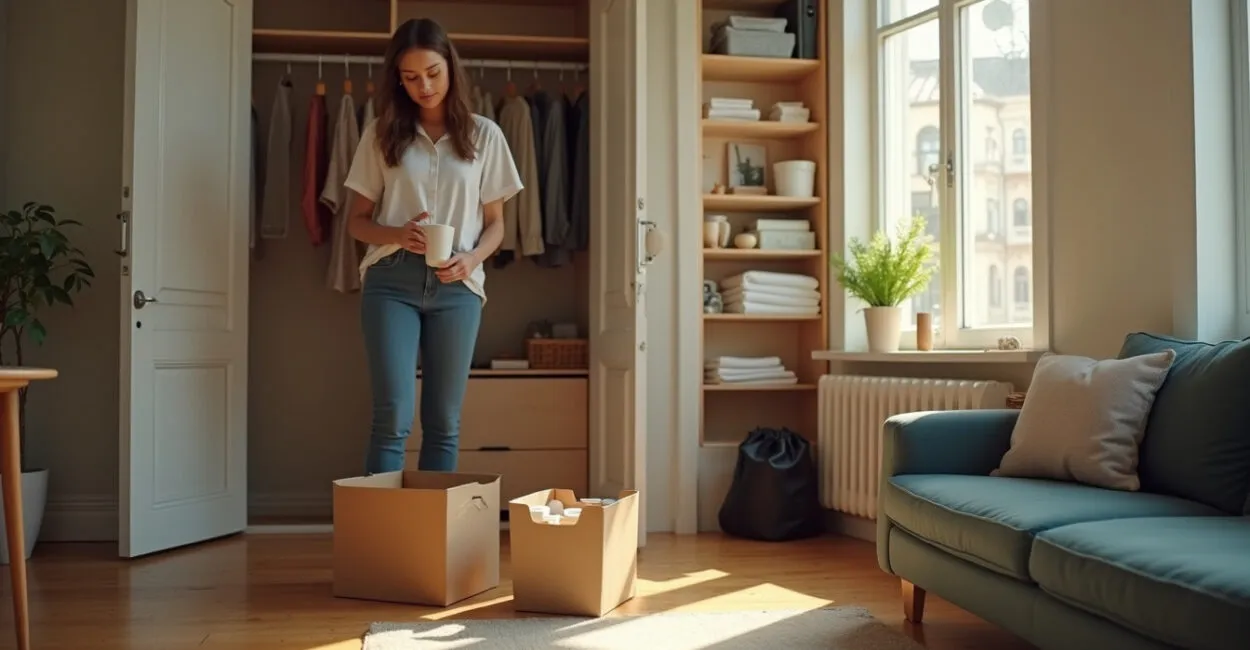 Woman sorts belongings into keep, donate, and toss piles
Small apartment decluttering keep donate toss gets easier when you stop asking what something means and start asking what it still does.
That shift matters because tiny spaces punish hesitation. One box “for later” becomes a permanent shelf tenant, and before long you’re storing the same unused things from one corner to the next.
Small Apartment Decluttering: What to Keep, Donate, and Toss
Use a few clean rules, and sentimental clutter loses its grip fast. The goal is not to become ruthless. It’s to stop paying rent, in square feet and attention, for items that already left your life.
Start with One Brutal Rule: If It Earns No Space, It Goes
In a small apartment, every object competes with your peace. So the first filter is simple: if you would not choose this item again today, it should not keep a permanent spot. That includes duplicate kitchen tools, decor you never notice, and gifts you’re keeping out of guilt.
Read also: Before You Clean, Tackle These 5 Clutter Hotspots First
For small apartment decluttering keep donate toss decisions, use this test:
- Keep if you use it regularly, love it, and could replace it only with real effort.
- Donate if it works, but you do not use it and someone else could.
- Toss if it is broken, expired, incomplete, or unsafe.
The hard part is sentimental stuff. A mug from a trip is not the trip. A sweater from an ex is not closure. If the memory lives in your head, the object does not need to live on your shelf.
Read also: Weekend Cleaning Schedule for Studio Apartments: Morning to Night
The Keep/Donate/Toss Split That Actually Works in Tight Spaces
The cleanest way to decide is to sort by function, not emotion. Walk room by room and ask one question: Does this item improve my daily life enough to justify the space it steals? If the answer is shaky, it usually belongs in donate or toss.
Here’s the fast version:
Category Keep Donate Toss Kitchen Used weekly Extra but usable Chipped, expired, warped Clothes Fits and gets worn Good condition, never worn Stained, damaged, worn out Paper/receipts Legal or current Rarely applicable Old, redundant, sensitive
According to record-retention guidance, many documents can be discarded after their useful window closes, which is a reminder that “just in case” has a shelf life. And for donation etiquette, EPA recycling and reuse guidance reinforces the same idea: usable items should move back into circulation, not into storage limbo.
Mini-story: I watched a friend keep three rolling carts in a studio apartment because each one “might” solve a different problem. They didn’t. They just blocked the closet. When she finally emptied them, she found one working lamp, two unopened notebooks, and a blender she hadn’t touched in a year. She felt lighter by dinner.
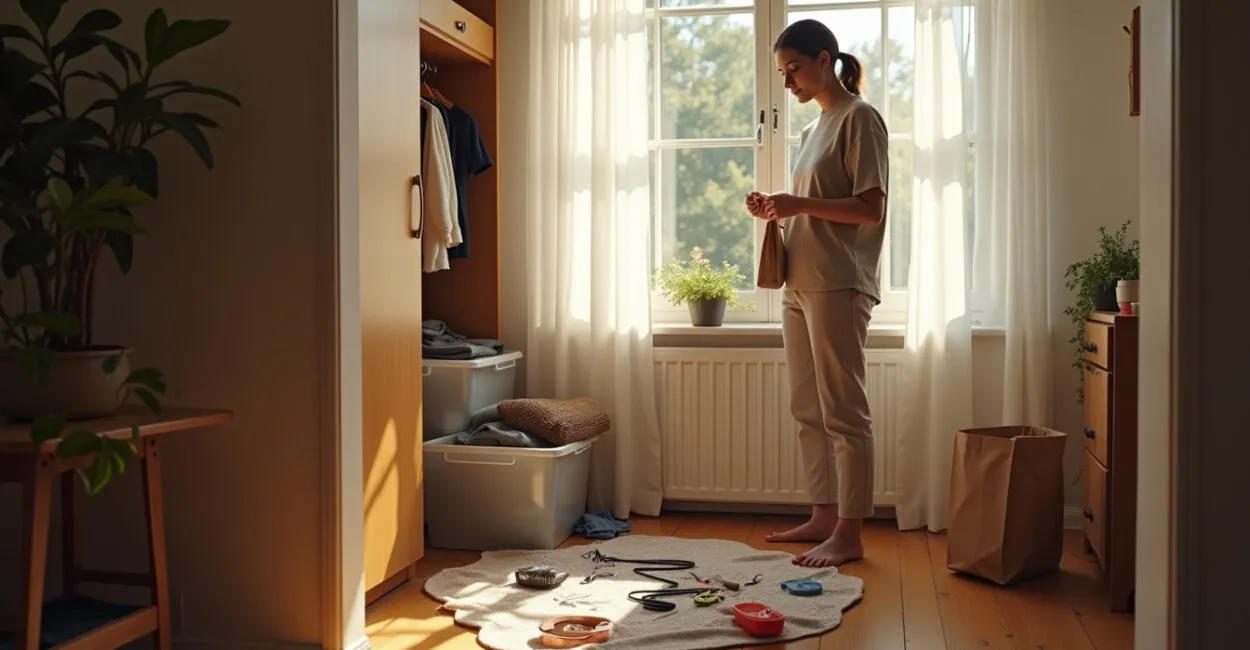
What to Avoid So You Don’t Re-Clutter the Same Square Footage
Recluttering happens when you move decisions instead of making them. You don’t need a prettier pile. You need fewer piles.
Watch for these mistakes:
- Keeping “maybe” items in a box for months.
- Donating things that are stained, broken, or missing parts.
- Saving duplicates because each one feels harmless.
- Holding onto hobby supplies for a future life you have not started.
The rule is not “own less.” It is “own what can justify its footprint.” That’s the real engine behind small apartment decluttering keep donate toss. Not minimalism theater. Not guilt. Just honest math.
This method works best when you can decide in minutes, but it can fail with highly personal collections or items with real resale value. In those cases, pause and evaluate separately. The point is clarity, not speed for its own sake.
How Do I Decide Whether Something Sentimental Should Be Kept?
Keep it only if it still carries meaning that is hard to replace and it earns its space. If a photo, note, or digital scan can preserve the memory, the physical item may not need to stay. Sentimental clutter becomes expensive in small apartments because it asks for visible, daily real estate. If you feel relief at the idea of letting it go, that is useful information.
Should I Donate Items Even If I’m Not Sure Someone Will Want Them?
Donate only what is clean, functional, and complete. If you would feel embarrassed handing it to a friend, it probably belongs in the trash or recycling stream instead. Good donation centers can use many everyday items, but they are not a landfill with a nicer sign. The standard should be usefulness, not your wish that the item finds a home.
What is the Fastest Room to Declutter First in a Small Apartment?
The kitchen usually gives the quickest win because it has obvious duplicates, expired goods, and tools you either use or you don’t. Closets are next, but they can slow you down if you start with emotional clothing. Start where the decision is easiest. Early momentum matters more than perfect order, especially when you are trying to stop moving clutter from shelf to shelf.
How Do I Avoid Buying Back the Clutter I Just Removed?
Use a waiting rule before any nonessential purchase: if you can’t name exactly where it will live and how often you’ll use it, don’t buy it. Also, match purchases to the space you actually have, not the space you wish you had. Most repeat clutter comes from optimistic shopping, not bad organizing. Empty shelves make people feel capable; that feeling can get expensive fast.
What If My Partner or Roommate Wants to Keep Everything?
Separate shared items from personal ones and agree on boundaries before sorting. People get defensive when decluttering feels like a moral judgment, so keep the conversation practical: space, function, and maintenance. Shared apartments work better when each person owns a defined zone. If both of you keep using the same “temporary” pile as storage, it stops being temporary and starts being a lifestyle.
📱 See this content as a Web Story