
How to Repair Clothes to Make Your Wardrobe Last Longer
How to assess clothing damage, match repairs to fabric and construction, and choose discreet or visible fixes to extend your garment’s life effectively.
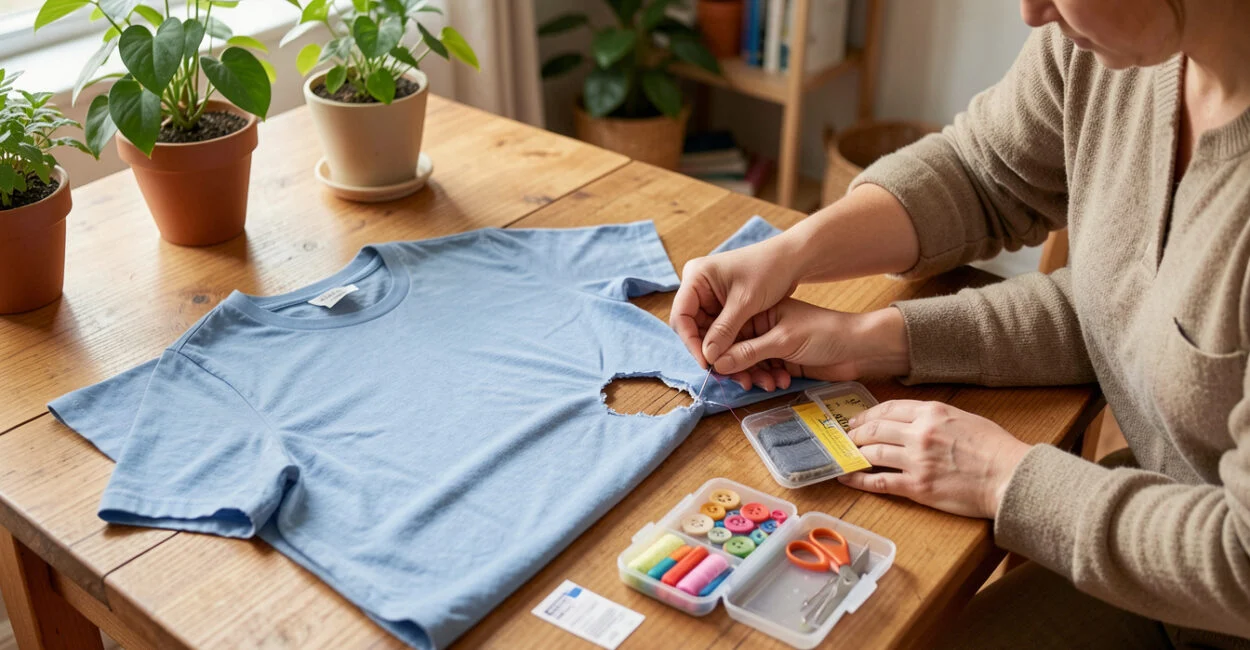 Careful stitches give a favorite shirt new life
Your favorite shirt may need only one careful stitch to earn its place back in the weekly rotation.
A loose button, split seam, or small hole can make a garment feel finished before the rest of it is worn out. To repair clothes, first assess the damage, match the fix to the fabric and construction, then try a basic repair such as sewing on a button or closing a seam.
The right fix depends on where the damage sits and how the garment is made. A discreet mend can suit a work shirt; a visible patch may be the better choice for jeans. And if the fabric is delicate or the damage affects a load-bearing seam, getting help can save a small problem from becoming a bigger one.
Repair Clothes by Reading the Damage First
Clothing repair means restoring a damaged area so the garment can be worn again, either by stitching, reinforcing, patching, or replacing a component. For a small, stable problem, a basic hand-sewn fix may be enough; for a tear under tension or damage to delicate fabric, a tailor or repair service may be the safer choice.
Look at the fabric, the garment’s construction, and the damage’s location. A tiny hole in a loose shirt is different from one at the inner thigh of jeans, where movement puts the fabric under repeated strain. Check whether the surrounding cloth feels thin or frayed, too. If the fabric around the damage is failing, reinforce a wider area or seek help instead of closing only the visible gap.
Keep a Small Repair Kit Within Reach
You do not need a sewing room or specialist equipment to start. A few basic supplies handle many everyday fixes:
- Needles in a couple of sizes and thread that matches the garment
- Small scissors and straight pins or clips
- Spare buttons and a needle threader, if threading is tricky
- A fabric patch or iron-on patch suited to the garment’s care instructions
For stretchy or slippery fabrics, use a needle and thread appropriate to the material; a stiff repair can pucker or restrict movement. If you are unsure which supplies to choose, a local sewing shop or repair café may be able to point you toward a suitable option.

Start with Buttons, Open Seams, and Small Holes
For a loose button, sew through the existing holes and leave a little thread slack beneath it. That small bit of space lets the button pass through thicker fabric when fastened. Knot the thread securely on the inside, and check that the button sits firmly without pulling the cloth into a wrinkle.
For an open seam, turn the garment inside out and bring the intact edges together. Use small, even stitches along the original seam line, then secure the thread at both ends. A seam that has split because the fabric itself is worn may need reinforcement beyond the opening.
Read also: Where to Donate or Recycle Clothes You No Longer Wear
A tiny hole in woven fabric can often be closed with small stitches that draw the edges together without bunching them. Don’t pull the thread hard: puckering is a clue the repair is under too much tension. If the hole is growing, patching from behind can spread the strain across a larger area.
Match the Fix to the Fabric and Damage
The best repair depends on the garment, not just the size of the hole. Use this as a starting point, then consider whether the area must stretch, bear weight, or stay smooth against the skin.
Problem Suitable approach When to get help Loose button Resew with matching thread; reinforce thin fabric behind it. The fabric is tearing or the button has a special attachment. Open seam Stitch along the original seam and secure both ends. The seam is under heavy strain or the garment is lined. Small hole in woven cloth Close with small stitches or add a patch behind it. The cloth is delicate, unraveling, or worn across a broad area. Hole in stretchy knit Use a flexible repair that allows the fabric to move. The repair puckers or blocks stretch.
These are starting points, not guarantees: fabric blends, finishes, and garment construction can change what works.
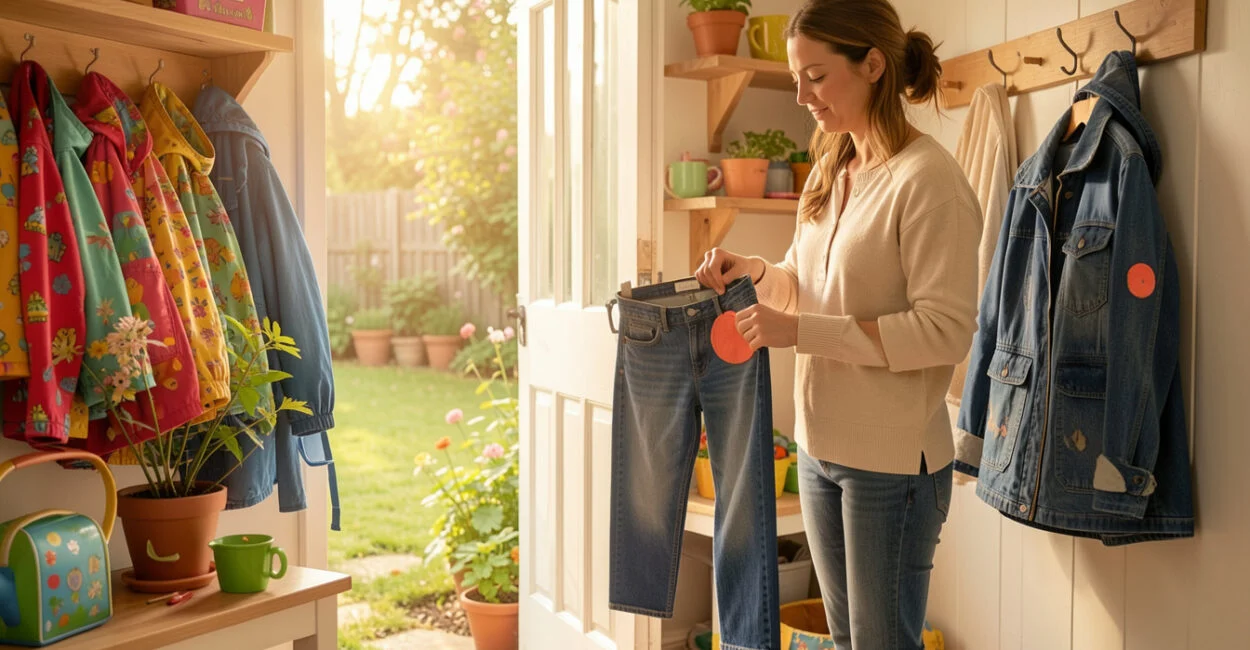
Let a Patch Show When It Suits the Garment
A repair does not have to disappear. A neat contrasting patch can give jeans, a jacket, or a child’s play clothes more time in use, while a discreet patch on the inside may suit a garment where appearance matters more. Choose a patch with a similar weight to the fabric so it does not pull or feel bulky.
Before attaching an iron-on patch, check that the fabric can tolerate heat and follow the patch maker’s instructions. For delicate, coated, or heat-sensitive materials, stitched patches are often a more cautious option. For inspiration beyond repair itself, see these sustainable fashion ideas for building a more thoughtful wardrobe.
Test the Repair Before You Wear It
Turn the garment right side out and check how the repaired area looks at rest. Then gently flex or stretch the fabric as it would move when worn. A seam should lie flat, a button should hold without tugging, and a patch should not pull the surrounding cloth into folds.
If the repair feels stiff, rubs against your skin, or opens when you move, adjust it before wearing. A quick try-on can reveal a problem that is hard to spot with the garment laid flat.
Care for Repaired Clothes with the Label in Mind
The U.S. Federal Trade Commission’s Care Labeling Rule concerns instructions for washing, drying, and other garment care; it is not a guide to how to mend the item. Still, those instructions can help protect a repair from heat, harsh washing, or handling that the fabric cannot take.
WRAP’s guidance on extending the life of clothing and the Repair Café Foundation’s repair resources both offer useful context for keeping garments in use. After mending, follow the garment’s care label and check the repaired area after washing. If the fix loosens, address it early, before strain spreads.
A repair can be modest: one button, one seam, one patch. Pick a garment you already like, make the smallest sound fix, and put it back where you can reach for it.
📱 See this content as a Web Story
Frequently Asked Questions
Can I Repair Clothes Without a Sewing Machine?
Yes. Many loose buttons, small holes, and short open seams can be fixed by hand with a needle and thread.
Should a Clothing Repair Be Invisible?
No. A visible patch can be a practical, attractive choice when it suits the garment. The repair should hold securely and feel comfortable when worn.
When Should I Take Damaged Clothing to a Professional?
Consider professional help for delicate fabrics, complicated linings, damaged zippers, or tears in areas under heavy strain. A repair may not be worthwhile if the surrounding fabric is worn through or the garment no longer fits comfortably.