
How to Start Vegetable Seeds Indoors Without Leggy Growth
How to start seeds indoors by timing sowing from last frost, using fine seed-starting mix, providing strong light, and hardening off seedlings for compact gr…
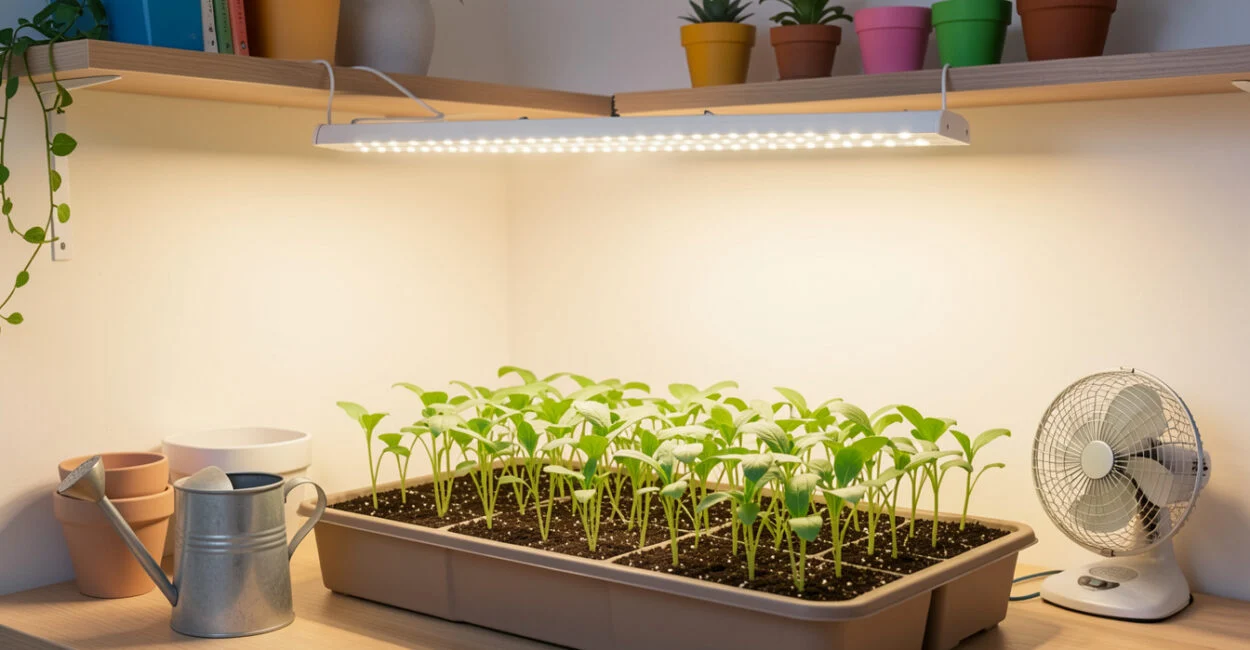 Compact seedlings thriving under grow lights
A tray of crowded seedlings under a dim window can turn into a batch of thin, leaning stems before spring arrives. To start seeds indoors successfully, count backward from your local last-frost date, use a fine seed-starting mix, and give seedlings strong light as soon as they emerge.
The goal is compact growth that can handle life outdoors. Sow only crops that benefit from an indoor start, then harden seedlings off before transplanting; starting too early often creates overgrown plants that are harder to manage.
Quick Takeaways
- Calculate sowing dates from your expected last spring frost and the crop’s recommended lead time.
- Place seedlings under a full-spectrum LED grow light soon after emergence, keeping the light close enough to prevent stretching.
- Use containers with drainage holes and a clean, fine-textured seed-starting mix rather than garden soil.
- Direct-sow crops such as carrots and radishes when outdoor soil and weather suit them; their quick growth rarely justifies an indoor start.
How to Start Seeds Indoors: The Short Answer
To start vegetable seeds indoors, check each crop’s recommended sowing window, fill clean containers with moist seed-starting mix, and sow at the depth on the seed packet. Keep the mix evenly moist and warm enough for germination, then move seedlings under a strong grow light as soon as they emerge. Harden them off before planting outside.
Seed starting is the controlled germination and early growth of plants in containers before they move to the garden. In everyday terms, you’re giving young plants a head start while managing light, moisture, temperature, and root space.
Compact seedlings begin with a calendar that fits the crop and a light placed close enough to meet its needs.
When to Start Seeds Indoors
Use your local expected last-frost date as a planning anchor, then count backward by the number of weeks recommended for each crop. Seed packets and regional extension guidance are better references than a single calendar date because frost timing and growing conditions vary by location.
For a customizable when to start seeds indoors chart, find your local frost date and subtract the crop’s suggested lead time. The dates below are planning ranges, not guarantees; use the packet instructions when they differ.
Crop group Typical lead time before last frost Planning note Tomatoes and peppers About 6–8 weeks Warm-season crops that need time to develop before outdoor planting. Broccoli, cabbage, and other brassicas About 4–6 weeks Often started indoors for an earlier spring or fall harvest. Squash and cucumbers About 2–4 weeks Grow quickly; sow close to transplant time to avoid root-bound plants.
Example for Zone 7: USDA Zone 7 covers a range of climates, so it does not provide one dependable last-frost date. If your local expected last frost is April 15 and a tomato packet recommends sowing 6–8 weeks ahead, count back to roughly February 18–March 4. Replace April 15 with the date used by your local extension service or gardening records.
For flowers, use the same method: check the packet for when to start flower seeds indoors, then count back from the appropriate outdoor planting date. Some flowers prefer direct sowing, and others need a longer indoor start, so their instructions can differ from vegetable schedules.
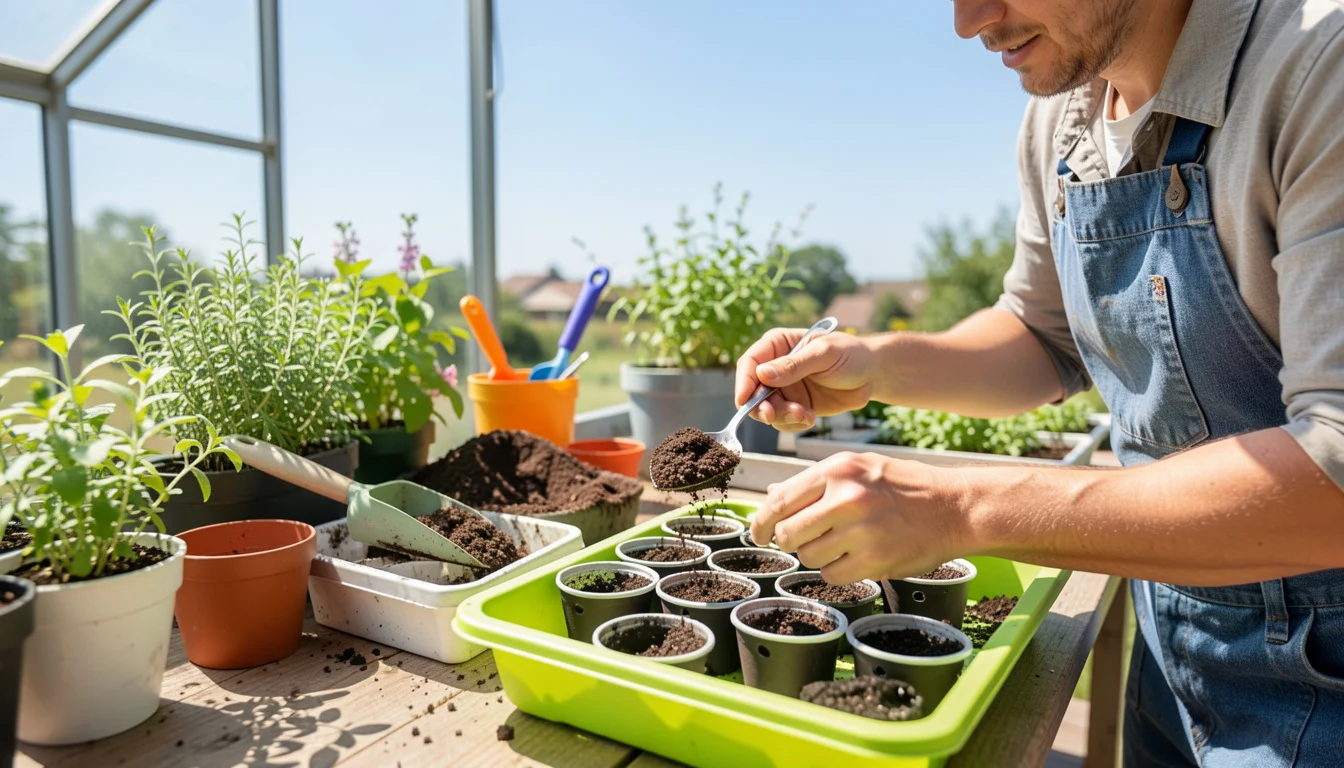
Choose the Right Seed-Starting Mix and Containers
Seed-starting mix is a lightweight, fine-textured growing medium formulated to hold moisture while leaving air around developing roots. Compared with garden soil, it is usually less dense and better suited to small seeds and shallow containers. Garden soil can compact indoors and may carry weed seeds or disease organisms.
Use clean seed trays, cell packs, or small pots with drainage holes. The holes matter: waterlogged mix reduces oxygen around roots and can encourage damping-off, a fungal disease that causes young stems to collapse at the soil line. Set containers in a waterproof tray to catch runoff, but don’t leave them standing in water.
Moisten the mix before sowing so it feels evenly damp, not saturated. Sow each seed at the packet’s depth; tiny seeds often need light or only a thin covering, while larger seeds are planted deeper. The University of Minnesota Extension’s seed-starting guidance offers further advice on sowing and transplant care.
Provide Enough Light to Prevent Leggy Seedlings
Full-spectrum LED grow lights for seedlings can provide the intensity and broad range of light young plants need when a sunny window is not enough. A bright-looking room may still be too dim: seedlings near windows often lean toward the glass and develop long, weak stems. Use a grow light positioned above the leaves and follow the fixture maker’s distance guidance, adjusting as plants grow.
Run the lights for about 12–16 hours a day, with a dark period overnight. A timer makes the schedule consistent. Turn on grow lights as soon as seedlings emerge; there’s no need to light a covered tray while seeds are still germinating unless the seed packet says light is required for germination.
What Color Light is Best for Germinating Seeds?
Most vegetable seeds do not need a particular light color to germinate; many germinate in darkness when covered as directed. Some seeds need light exposure, so follow the packet. Once seedlings emerge, adequate light intensity, close placement, and a consistent daily schedule matter more for preventing legginess than color alone.
Starting seeds indoors with grow lights is often more reliable than depending on a windowsill, especially in late winter. Keep the light close enough to serve the seedlings without letting leaves touch a hot fixture. If stems stretch or lean, raise the light only if it is too close, or lower it if the seedlings are reaching; check the manufacturer’s recommended distance before making an adjustment.
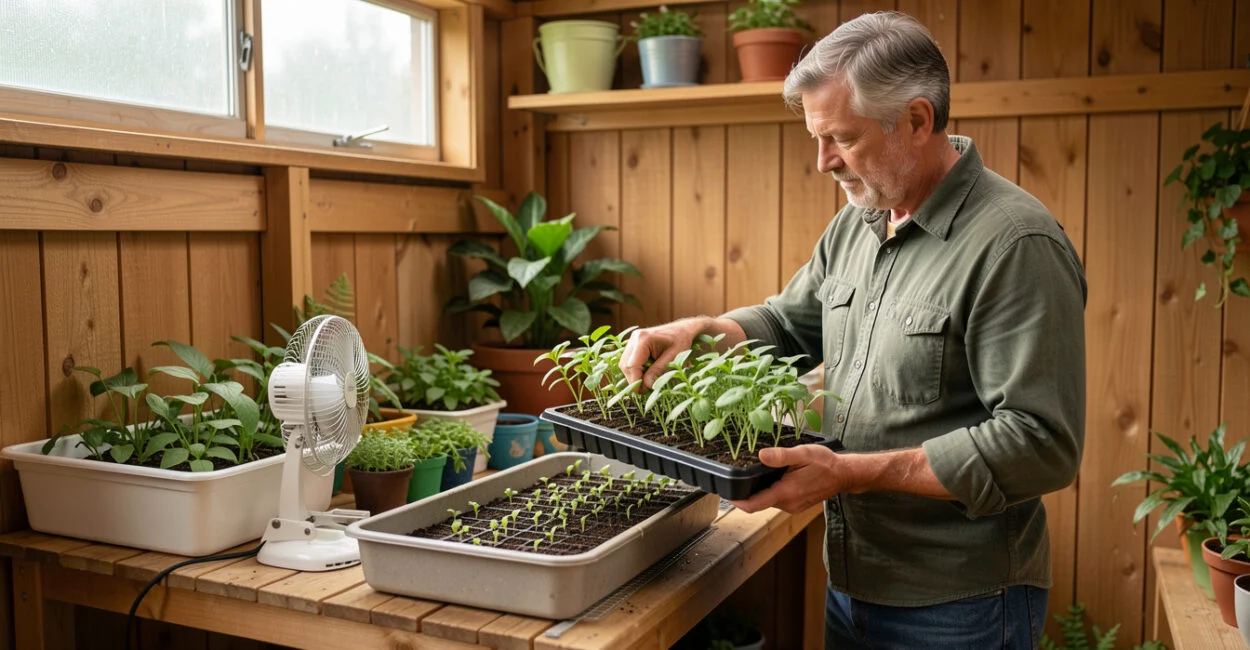
Water, Temperature, and Airflow for Strong Seedlings
Keep the mix evenly moist during germination, then water when the surface begins to dry rather than following a rigid daily schedule. Container size, room temperature, and airflow all affect how fast mix dries. Bottom-watering can help wet the mix evenly, but drain excess water after the cells have absorbed it.
Warmth can speed germination for many warm-season crops, while most seedlings grow best in conditions that are cooler than their germination conditions. Follow crop-specific recommendations instead of applying one temperature target to every vegetable. A heat mat can help with warm-loving seeds, but remove or switch it off when seedlings emerge if the crop does not need continued bottom heat.
A small fan on a gentle setting can improve air movement and encourage sturdier stems. Avoid directing a strong stream of air at young plants, and don’t crowd trays so tightly that leaves stay damp. Overwatering, poor airflow, and crowded seedlings often show up together as weak growth or disease.
Which Vegetable Seeds Should You Sow Outdoors Instead?
Carrots, radishes, beets, and many other root crops are usually better direct-sown because moving them can disturb their roots. Peas and beans also tend to grow quickly outdoors and may resent transplanting. The right choice still depends on your season: in a short growing season, a carefully handled indoor start may be useful for some crops.
What Vegetable Seeds Should Not Be Started Indoors?
Carrots and radishes are common choices to sow outdoors because they grow quickly and are prone to root disturbance during transplanting. Peas and beans are also often direct-sown once conditions suit them. If your spring is unusually short or your soil warms late, follow local extension advice rather than treating this as an absolute rule.
Direct sowing also fits crops that fill a bed quickly once the weather warms. Plan their locations before planting, using a guide to vegetable spacing in raised beds to avoid crowding as plants mature. If you want a longer harvest, succession planting in raised beds can help you stagger quick-growing crops.
Seed saving and replanting are separate from the decision to start seeds indoors. It is not universally illegal to replant saved seed; restrictions can depend on the variety, plant patents, a purchase or licensing agreement, and local rules. Check the seed company’s terms and applicable law if a particular variety carries restrictions.
When to Transplant Seedlings Outdoors
Transplant seedlings when they are healthy, the weather suits the crop, and the outdoor soil is ready, not just because a certain number of weeks have passed. Cool-season vegetables can tolerate conditions that would damage tomatoes or peppers. Check the forecast and the crop’s recommended planting temperature before moving plants outside.
Harden seedlings off by gradually increasing their exposure to outdoor sun, wind, and temperature changes over several days. A sudden move from a sheltered room to full sun can scorch leaves or stress plants. Follow this step-by-step guide to hardening off seedlings before transplanting.
Water the seedlings before planting, handle them by the leaves or root ball rather than squeezing the stem, and set each plant at the depth appropriate for that crop. Some tomatoes can be planted deeper along the stem; most vegetables should go in at roughly the same depth they grew in their containers. Water after planting to settle the soil around the roots.
Start with your local frost date and the sowing instructions for the crops you actually plan to grow. If you want a printable when to start seeds indoors chart PDF, make one by recording those crop-specific dates alongside your local calendar; a generic chart can’t account for every region or growing season.
Frequently Asked Questions
Is It Better to Germinate Seeds in Water or a Paper Towel?
Neither method is universally better; for most vegetables, sowing directly into moist seed-starting mix is straightforward and avoids handling a delicate emerging root. A damp paper towel can help you check whether older seeds are viable, but transfer seedlings as soon as the root appears so it does not grow into the towel. Don’t soak seeds unless the packet recommends it.
How Do You Germinate Seeds Faster Indoors?
Use fresh seed, sow at the recommended depth, and keep the mix within the crop’s preferred temperature range. A heat mat can help with warm-season crops, but too much heat or saturated mix can reduce success rather than speed it up.
When Should You Turn on Grow Lights for Indoor Plants?
For vegetable seedlings, switch on the grow light as soon as shoots emerge. Seeds that need light to germinate should receive it as directed on the packet, but most do not need a grow light before they sprout.
When Should You Transplant Seeds from a Paper Towel?
Move a germinated seed into mix as soon as a small root is visible. Hold the seed by its shell, place the root gently downward, and cover it to the depth recommended for that crop.
Can You Use Regular Potting Mix to Start Vegetable Seeds?
Some potting mixes work, but coarse or heavily fertilized products may be a poor fit for tiny seeds and young roots. A fine, clean seed-starting mix gives better control over moisture and texture during germination.