
Garage Clutter is Costing You Time Every Morning—Here’s the Fix
How disorganized garage clutter causes daily delays by forcing repeated searches and decisions, and how creating a simple, consistent storage zone saves time.
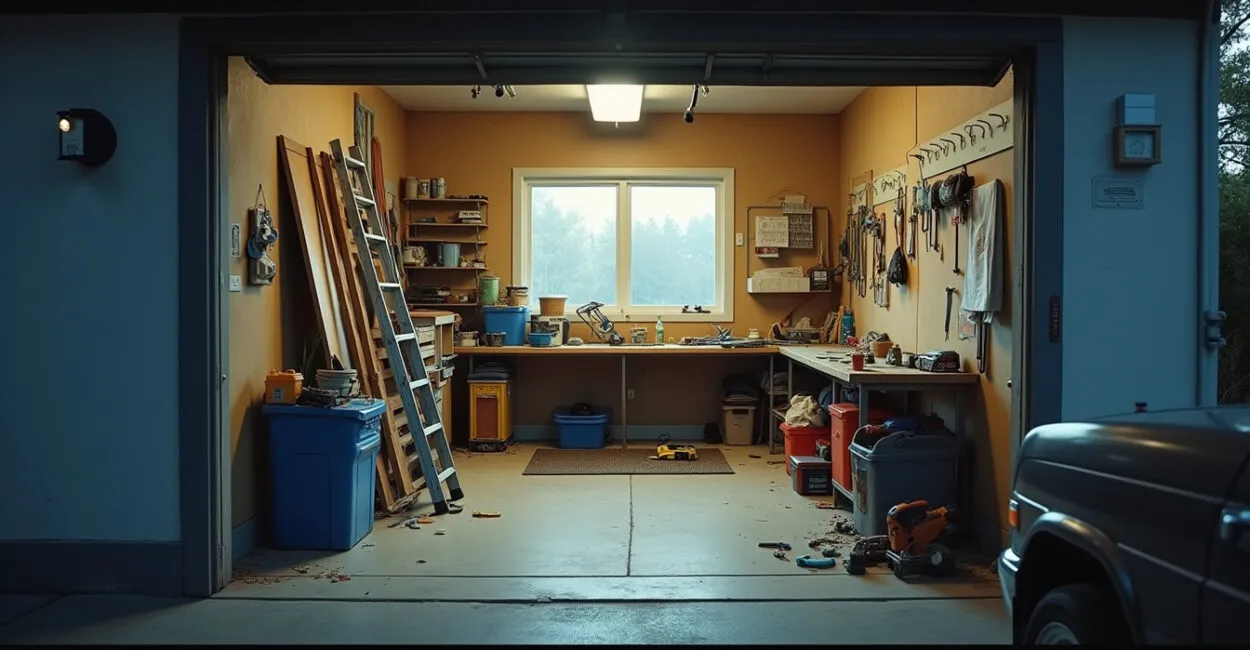 Cluttered garage contrasts with organized tool storage
📅 Updated on 10/21/2026
The hidden time cost of garage clutter is the repeated delay of searching for everyday items, moving obstacles, and deciding where things belong. A few minutes lost on a rushed morning can often be prevented by giving frequently used items one clear, convenient home.
Most garages become frustrating gradually. A tape measure migrates, batteries disappear, and a ladder blocks the bins. A quick trip to the garage turns into a scavenger hunt. You don’t need a full makeover to improve the routine; start by fixing the storage gap that causes the most repeated searching.
The Hidden Tax on Your Morning Routine
Garage clutter creates a recurring time leak by forcing you to search for items and make small decisions when you’re trying to leave. When a tool, bag, or charger has no consistent home, you may have to remember who last used it, look in several places, and move something else to reach it.
Those delays add up across a week. Items also tend to migrate when they’re set down on open surfaces instead of returned to a designated spot. Flat surfaces collect piles, and piles slow down the next search.
Start with a single launch zone near the door you use most. Use one shelf, bin, or hook rail for the items you reach for before leaving: keys, work gloves, a flashlight, a charger, a dog leash, or sports gear. Keep the zone limited to items that actually support your daily routine.
The One Setup That Stops Tool Drift
A simple setup is easier to maintain than a complicated storage system. A wall track, a shallow bin, and a few hooks can work well if each item has a clearly assigned place and is easy to return.
Compare how the setup works before and after. Before, you may search several surfaces and containers. After, each frequently used item has one predictable landing spot. Aim for storage that lets you see, retrieve, and return an item without shifting a stack of other things.
Item type
Useful storage choice
What to watch for
Frequently used hand tools
Wall track, pegboard, or shallow drawer
Keep the assigned spot visible and within easy reach.
Small parts and supplies
Small, clearly labeled bins
Group similar items and avoid mixing unrelated hardware.
Daily bags and outdoor gear
Hooks or a shelf in the launch zone
Leave enough room to hang and remove items easily.
Seasonal equipment
Clearly marked storage away from daily-use items
Keep access paths and frequently used tools unobstructed.
- Keep high-use tools at eye level or within comfortable reach.
- Store duplicates together and decide whether you need all of them.
- Use clear bins for small parts when seeing the contents helps.
- Label the assigned return spot, not just the container.
A storage system works when returning an item is as easy as taking it out. The hidden time cost of garage clutter often appears first in the areas you touch every day, rather than in a neglected corner.
What to Fix First, and What to Ignore
Fix the items that block movement or interrupt your usual route before tackling deep storage. A hook for a broom, a bin for cords, or a shelf for things that keep landing on the floor may solve a recurring problem faster than reorganizing every box.
Use this quick triage: notice what you move to reach the door, what you search for most often, and what repeatedly gets left on the floor. Choose one of those problems and give it a specific home. Test the location for a week before buying more storage; if it’s inconvenient to use, adjust the placement.
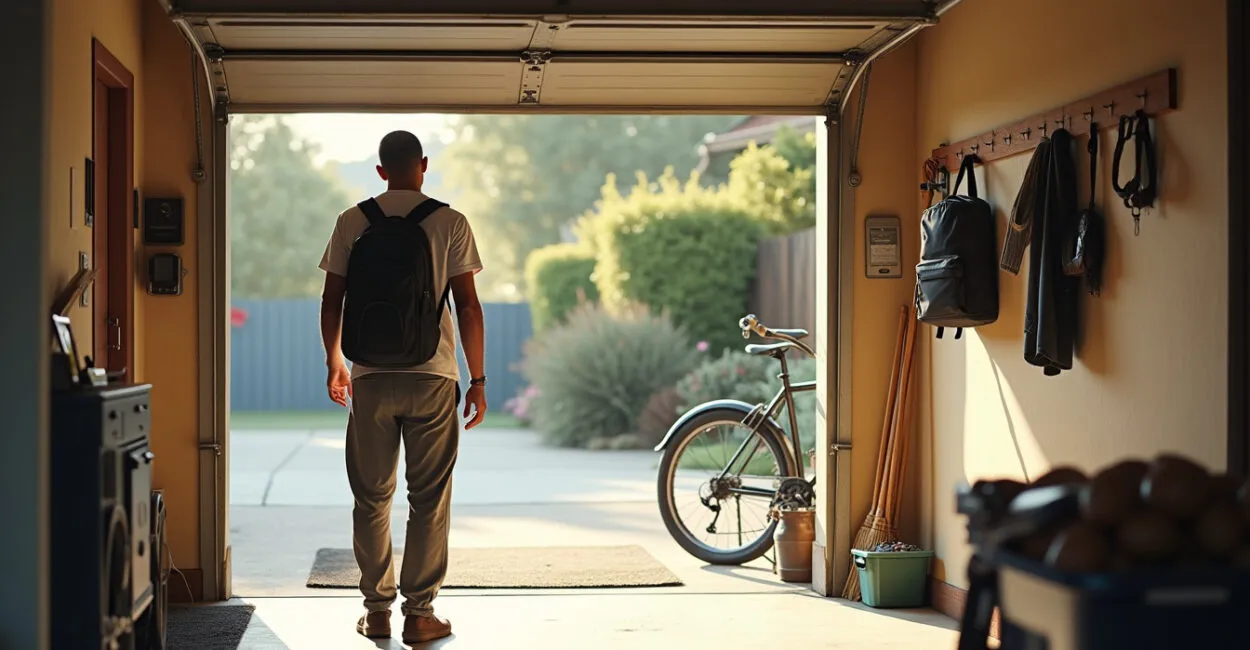
A small change beside the garage entrance can reduce morning friction. Put keys, backpacks, or chargers where they can be returned easily, and keep that space clear enough to use. The best location is the one that fits the route your household already takes.
Read also: Small Backyard Patio Ideas on a Budget That Look Expensive
For broader home-organization guidance, see the U.S. Department of Energy’s storage and efficiency tips at Energy Saver. For product-safety guidance, consult the Consumer Product Safety Commission.
How Much Clutter is Too Much?
A useful warning sign is that you can’t return an item promptly because its home is blocked, hard to reach, or unclear. If you regularly leave things on the floor because putting them away feels like a chore, the system needs a change.
Read also: Hidden Storage Solutions for Small Houses: Easy DIY Wins
Notice the pattern rather than judging the garage by appearance alone. A busy space can still function if its routes are clear and daily items are easy to find. Repeated searching, blocked access, and objects gathering in the same temporary piles point to specific fixes.
What Should Stay in the Garage?
Keep items in the garage when they’re used there, needed for entry and exit, or appropriate for seasonal storage. Tools, outdoor equipment, and some sports gear may fit, provided they don’t block walkways or access to frequently used items.
Keep temperature-sensitive or moisture-sensitive belongings elsewhere when garage conditions could damage them. Avoid treating the garage as a general overflow area for household items; mixing unrelated categories makes it harder to find and return things.
Do Labels Actually Help?
Yes, when a label identifies a fixed, easy-to-use home. A label on an unassigned bin won’t prevent clutter from spreading, but a label on a specific shelf, hook, or drawer can remove the guesswork about where an item belongs.
Use short, specific labels such as “extension cords” or “bike lights.” If several people share the garage, choose wording everyone will understand and place the label where it can be seen when returning the item.
What’s the First Thing to Do This Weekend?
Pick one wall near the door and clear the area you need for daily-use items. Sort out anything that belongs elsewhere, then assign the remaining items a hook, shelf, or bin. Don’t reorganize the entire garage before testing this one zone.
After a few days, check whether the items are going back to their assigned spots. If not, adjust the setup: the storage may be too high, too crowded, or too far from where you naturally set things down.
Can This Work in a Small Garage?
Yes. In a small garage, a narrow, well-defined zone can be more useful than adding large containers that take up floor space. Use vertical storage where it’s suitable, and keep the walking route and access to stored items clear.
Choose storage based on the size and weight of what it holds, and secure wall-mounted systems according to the manufacturer’s instructions. Even one clean landing strip can make a small garage easier to use.
How to Keep the Garage Clutter-Free
Keep a garage clutter-free by giving new items a planned place and reviewing crowded zones before they become hard to use. When something comes home, decide whether it belongs in the garage, where it will go, and whether another item needs to leave to make room.
- Choose a small zone. Work on one shelf, wall, or launch area rather than emptying the whole garage.
- Sort by use. Separate daily items, occasional items, and belongings that should be stored elsewhere.
- Remove what no longer belongs. Donate, recycle, dispose of, or relocate items using the appropriate local options.
- Assign a home. Store each remaining item where it can be reached and returned without moving a pile.
- Review the zone. If clutter returns to the same surface, change the storage arrangement or reduce what it holds.
For household hazardous waste such as certain paints, cleaners, or automotive products, check the U.S. Environmental Protection Agency’s household hazardous waste guidance and follow local disposal instructions. Don’t assume these products belong in regular trash or in an unmarked container.
How Often Should You Clean Out Your Garage?
Review the garage whenever a zone becomes difficult to use, and schedule a brief check at a frequency that fits your household. A quick reset can be as simple as returning misplaced items, clearing the floor, and checking whether seasonal gear needs to move.
A larger cleanout makes sense when you can no longer reach stored items safely, when boxes are accumulating without a clear purpose, or when the season changes and equipment needs to be swapped. The right interval depends on how the garage is used; consistency matters more than following a rigid calendar.
How Much Does It Cost to Organize a Garage?
The cost depends on what you already own, how much storage you need, and whether you do the work yourself or hire help. A small reset may only require sorting and reusing existing shelves or bins. A larger project can involve new storage equipment or paid labor.
Before buying anything, measure the available space and list the specific items that need homes. Price only the storage that solves those problems, and check weight limits and installation requirements for wall-mounted products. Buying containers before sorting often leaves you with more things to store and little improvement in access.
What Items Should Not Be Stored in a Garage?
Avoid storing items in a garage when heat, cold, moisture, pests, or product hazards could damage them or create a safety concern. Food, delicate belongings, and temperature-sensitive supplies may be better kept in a more suitable indoor location.
Use product labels and manufacturer guidance for chemicals, fuels, and other potentially hazardous materials. Keep them in appropriate, clearly identified containers and follow local storage and disposal instructions. The Consumer Product Safety Commission also advises consumers to follow safety information supplied with products and equipment.
Garages shape the routines that pass through them. Give daily items a dependable landing spot, keep routes clear, and adjust the storage when it becomes hard to maintain.
📱 See this content as a Web Story