
How to Find and Shut Off Your Home’s Main Water Valve
How to locate your home’s main water shutoff valve by tracing the incoming pipe, common valve spots, and steps to close it safely before water damage spreads.
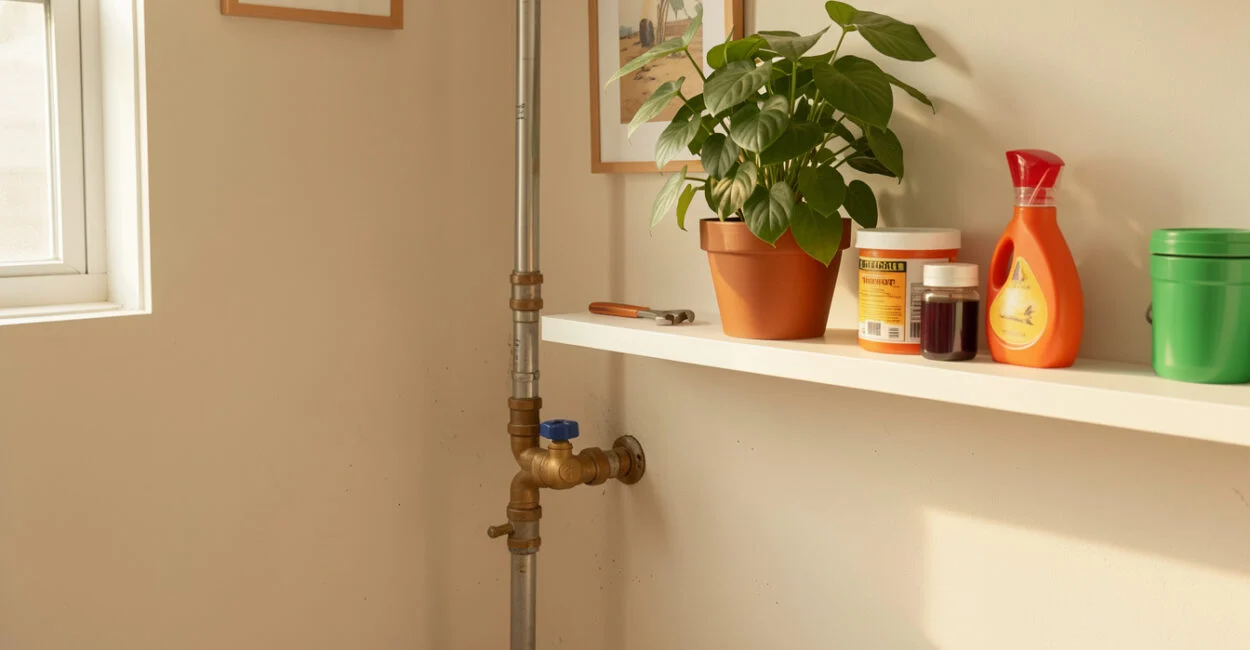 Main water shutoff valve in basement
A burst supply line can send water across a room before you have time to find a wrench. To shut off your home’s main water valve, first look where the water service enters the house, often in a basement, crawl space, utility area, or garage. Close the valve by hand if it moves freely, then open a faucet to relieve pressure and confirm the flow is stopping.
Finding the valve before a leak happens is far easier than searching while water is spreading. If you live in an apartment, have a shared meter, or cannot tell which valve serves your home, check with your building manager or water utility before an emergency.
Where is the Main Water Shutoff Valve in Your House?
The main water shutoff valve is the control valve on the service line that brings potable water into your home. To find it, follow the incoming pipe from where it enters the building; common locations include a basement or crawl space, a utility room, and a garage near an exterior wall. In a house without a basement, check a closet or cabinet near the water heater, or the side of the house facing the street.
Look for a valve on the larger pipe coming from the ground or exterior wall, upstream of the branches that supply sinks, toilets, and appliances. A whole-house valve may have a round wheel handle or a lever. Do not mistake a fixture’s local shutoff, such as the small valve behind a toilet, for the main.
Once you find the right valve, label it and make sure the path to it stays clear. A valve hidden behind stored boxes or a tightly fitted access panel is hard to reach when seconds matter. If you are unsure whether a valve controls the entire house, ask a plumber to identify it rather than testing it during a leak.
How Do You Shut Off the Main Water Valve?
To shut off the main water supply, identify the correct valve, turn it clockwise if it has a wheel handle, or turn a lever one-quarter turn until it is crosswise to the pipe. Stop if it resists, leaks, or appears corroded; forcing an old valve can damage it or the pipe.
- Keep clear of standing water near electrical outlets or equipment. If water is near energized electrical components, do not step into it; leave the area and contact emergency services or the utility as appropriate.
- Find the valve on the incoming service line. If the leak is localized and the main valve is difficult to reach, a nearby fixture shutoff may stop that fixture’s supply while you get help.
- For a lever-style ball valve, rotate the handle 90 degrees so it sits across the pipe. For a wheel-style gate valve, turn the wheel clockwise until it stops gently. Do not use pliers or an extension for extra leverage.
- Open a faucet at a low point in the home, if safe, to release pressure and check whether the flow slows. The supply stops feeding the plumbing when the valve closes, but water already in the pipes can continue to drain.
How long it takes for water to stop depends on the leak, pipe layout, and how much water remains in the system. A faucet may run briefly after the shutoff, and a damaged pipe can keep draining stored water. If the flow does not taper off, the valve may not be fully closed or may not control the line you found.
Closing the main is generally appropriate for a plumbing emergency, planned work, or a home that will be vacant, provided the valve is in good condition and serves only your home. The EPA’s WaterSense leak guidance encourages homeowners to address leaks promptly; if shutting off water affects a shared system or a specialized home setup, confirm the right procedure with the responsible professional.
What Are the Main Water Shutoff Valve Types?
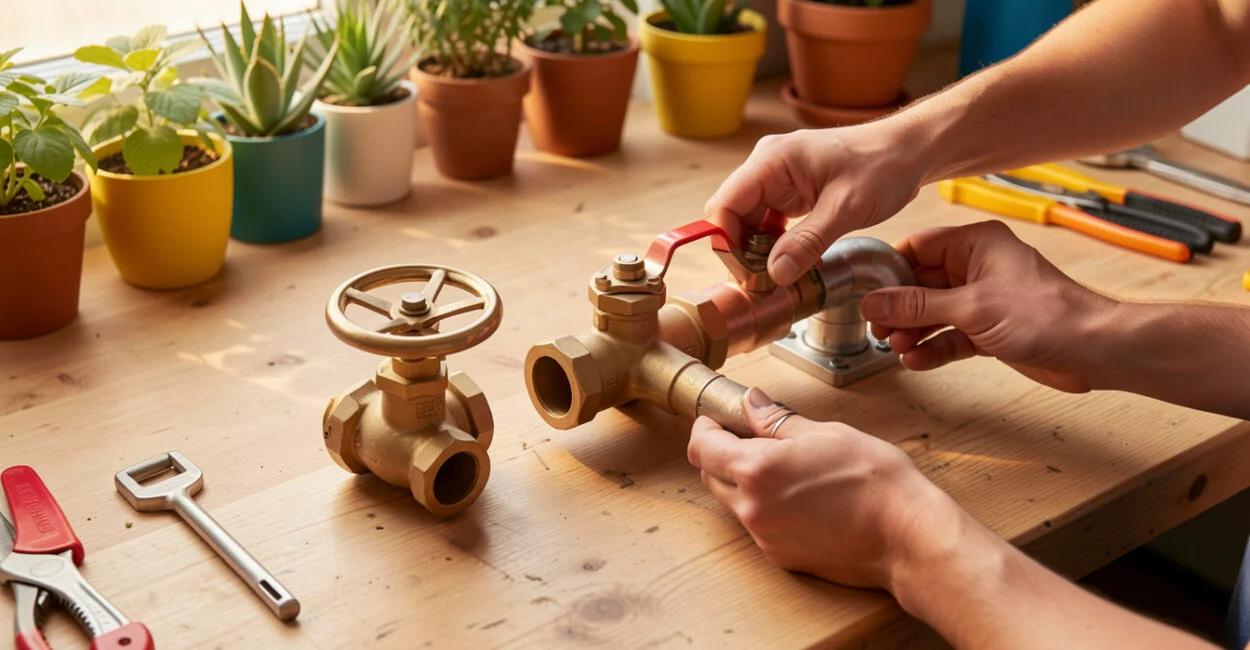
Home water shutoffs are commonly gate valves, ball valves, or curb-stop valves; their appearance and operating method differ. The best choice for a main line depends on the installation, local requirements, and pipe compatibility, so a plumber should select a replacement rather than choosing by handle style alone.
Valve type How to recognize and operate it Gate valve Usually has a round wheel handle. Turn clockwise to close and counterclockwise to open; do not force it if it binds. Older gate valves can become stiff or fail to seal fully. Ball valve Has a lever handle. The lever is parallel to the pipe when open and crosswise when closed. It typically needs only a quarter-turn. Curb-stop valve Located in a utility or meter box near the property line, often operated with a special key. The water utility may own or control it; ask before operating it.
Photos can help with recognition, but do not rely on appearance alone: handles and installations vary, and a valve may be partly hidden. Check where the pipe goes and whether it is the incoming service line before turning anything.
How Do You Shut Off Water at the Street or Outside?
A water shutoff valve outside may be inside a meter box near the sidewalk or property line, or in an access box near the house. If your indoor valve cannot stop an urgent leak, call the water utility and ask whether it can close the service at the meter; utility rules and ownership vary by location.
Do not assume the valve in the meter box is yours to operate. A curb stop may require a special tool, and turning utility-owned equipment can damage it or interfere with service. Never reach into a box if it contains standing water, insects, exposed wiring, or other hazards. If the utility authorizes you to use the valve, follow its instructions rather than improvising with a wrench.
For a typical water main shutoff valve at the street, the curb stop is the control point between the water main and the building’s service line. In some homes, a separate exterior valve may belong to the homeowner, but its location and access vary. If you cannot tell which arrangement you have, contact the utility before trying to turn a street-side valve.
What Should You Do After Turning Off the Water?
After closing the main, reduce pressure safely, protect the area, and deal with the immediate leak. The American Red Cross includes water-damage prevention in its home water-damage guidance; keep people away from wet electrical equipment and call for professional help when a leak is beyond a safe, contained response.
- Open a faucet to relieve pressure and see whether water continues to flow. If it does, do not assume the main is closed; recheck the valve only if it is safe and turns freely.
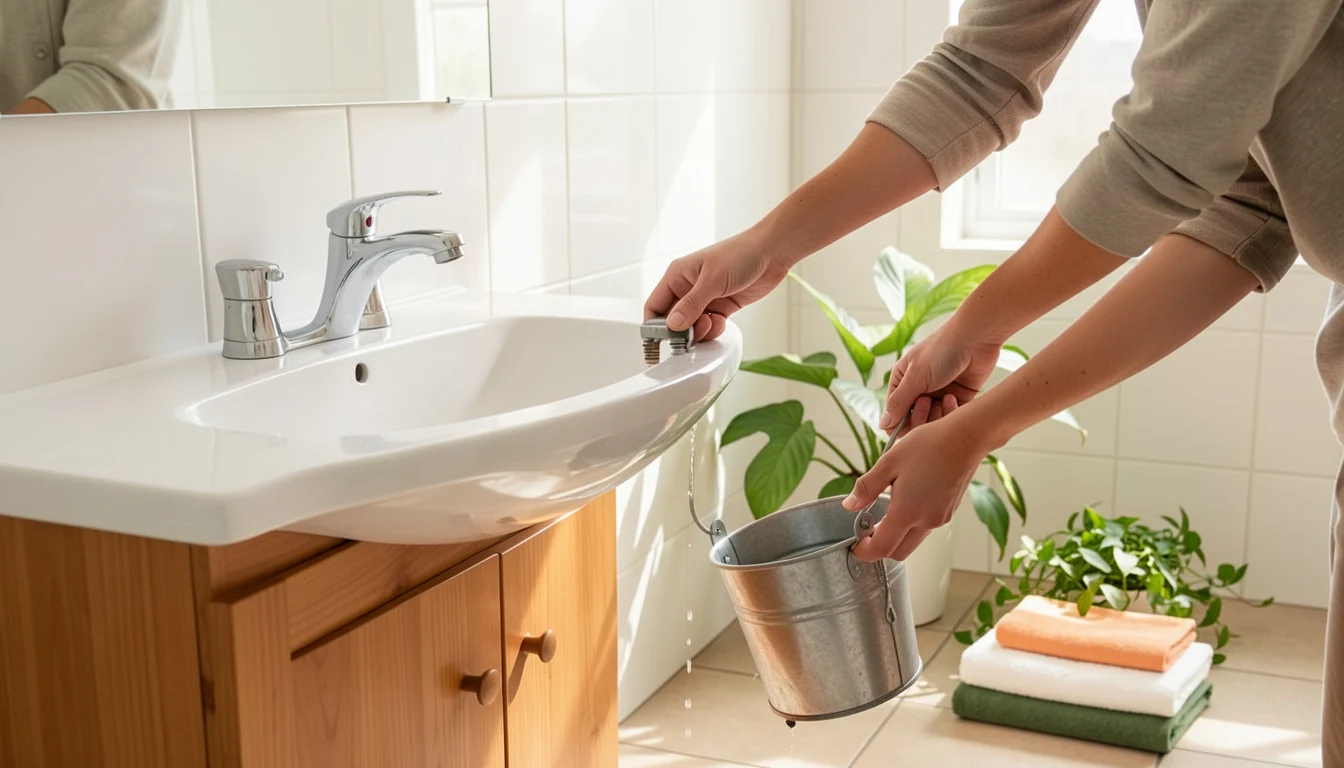
- Move belongings away from water and contain a small, accessible leak with a bucket or towels. Avoid entering flooded areas where electricity may be present.
- Turn off affected appliances only if their instructions allow it and the area is dry and safe. Do not run a dishwasher, washing machine, or ice maker while the supply is off.
- Tell household members that the water is off. If the repair will take time, consider whether anyone needs water for medication, caregiving, or other immediate needs.
For a toilet issue, the small shutoff valve beside the toilet may be enough if it works and the leak is limited to that fixture. A repair guide for replacing a toilet fill valve can help once the immediate water risk is under control.
How Do You Turn the Water Back on After a Shutoff?
To restore water, open the main valve slowly, then check exposed pipes and fixtures for leaks before turning appliances back on. Gradual reopening helps limit pressure surges and gives you a chance to spot a problem early.
Turn a lever-style valve until it is parallel with the pipe. For a wheel-style valve, turn counterclockwise; if it sticks or begins to leak around the stem, stop and call a plumber. Once water returns, open a faucet slightly to let trapped air escape, then close it when the flow steadies. A brief sputter can happen as air leaves the pipes.
Check the valve itself, nearby joints, and any area where work was done. Restore water-dependent appliances according to their manuals, and check that toilets refill and faucets run normally. If you see a fresh leak, close the valve again only if it operates safely, then get professional help.
When Should You Call a Plumber or Water Utility?
Call a plumber if the indoor valve is stuck, damaged, leaking, buried behind an inaccessible panel, or uncertain in purpose. Call the water utility when the only usable shutoff appears to be at the meter or street, or when you need to know whether that equipment is utility-owned.
A main shutoff valve can fail when its internal parts are corroded or worn, and twisting harder may turn a manageable problem into a broken pipe or a leak at the valve stem. If the valve will not move with gentle hand pressure, leave it alone. A plumber can identify the correct control and replace a faulty valve safely.
For code questions or work that changes the plumbing installation, consult the applicable local rules; requirements can differ by jurisdiction. The International Association of Plumbing and Mechanical Officials’ plumbing-code resources provide code information, but local authorities determine which requirements apply. A utility or plumber can also clarify which shutoff points you are allowed to operate.
Quick Reference
Question Answer Where should I look first? Follow the incoming water pipe where it enters the home. How do I close the valve? Turn a wheel clockwise or move a lever crosswise to the pipe. Can I operate the street valve? Ask the water utility first; it may control the curb stop. Why is water still draining? Water already in the pipes can continue flowing after the supply is shut off. What if the valve is stuck? Do not force it; call a plumber or the utility, depending on its location.
When the water is flowing unexpectedly, start with the indoor valve if you can reach it safely and it turns without force. If it does not work or the only remaining control is outside, call the utility or a licensed plumber rather than risking damage to the service line.
📱 See this content as a Web Story
Frequently Asked Questions
Is It Safe to Leave the Main Water Valve Off While I’m Away?
It can reduce the risk of a supply-line leak while a home is vacant, but consider how shutting off water affects heating, fire-protection, or other systems in your home. Check those systems’ instructions or ask a qualified professional before leaving the supply off.
Will Shutting Off the Main Drain All the Water from My Pipes?
No. It stops new water from entering, but water already in the lines can still come out of open faucets or a damaged pipe. The amount and duration depend on the plumbing layout and the location of the leak.
Should I Replace an Old Gate Valve with a Ball Valve?
A ball valve is often easier to operate because it closes with a quarter-turn, but the right replacement depends on the pipe, installation, and local code. Have a plumber assess the existing valve and confirm a suitable, compliant replacement.